

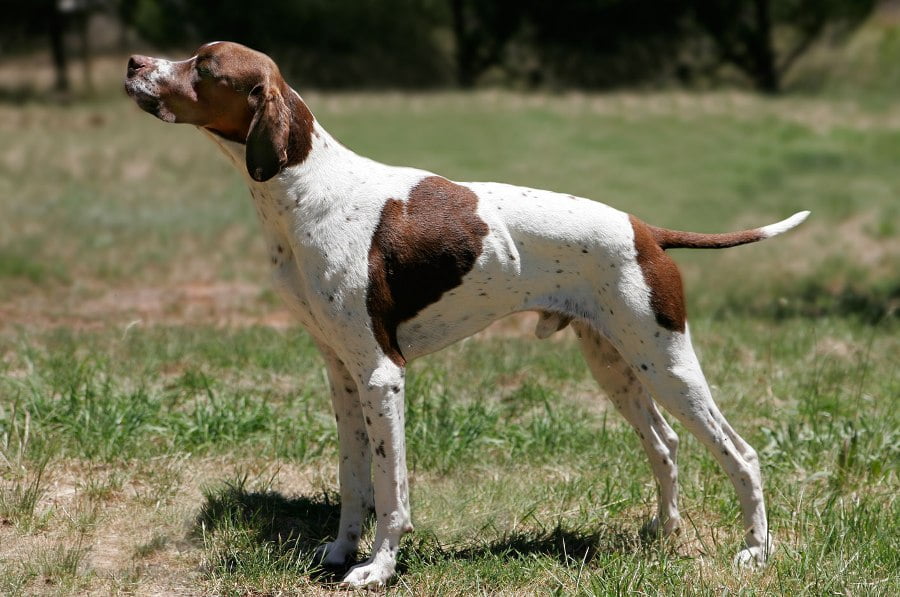
You might first notice an English Pointer out in the world as a quiet sort of brilliance. A dog who can look almost still, then cover ground in long, effortless strides. Or you might meet one in a home setting and feel the contrast: calm in the lounge, but always ready to go the moment the lead appears.
That mix can be confusing at first. People sometimes assume a Pointer is simply a “high-energy dog”, full stop, and therefore not suited to ordinary life. Others see the smooth coat and gentle manners and expect an easy-going companion who will be content with a daily potter. In practice, they tend to do best with owners who enjoy routine, outdoor time, and training that feels like a shared project rather than a chore.
The English Pointer is a sporting gundog developed for field work, and much of what makes them lovely also shapes what they need: space to move, time with their people, and a life that includes both exercise and thought.
- Breed group: Sporting (gundog)
- Origin: England
- Height (at withers): Dogs 63 to 69 cm, bitches 61 to 66 cm1
- Coat: Short, fine and smooth
- Typical lifespan: Often around 12 to 15 years (varies by individual and care)
The English Pointer in context
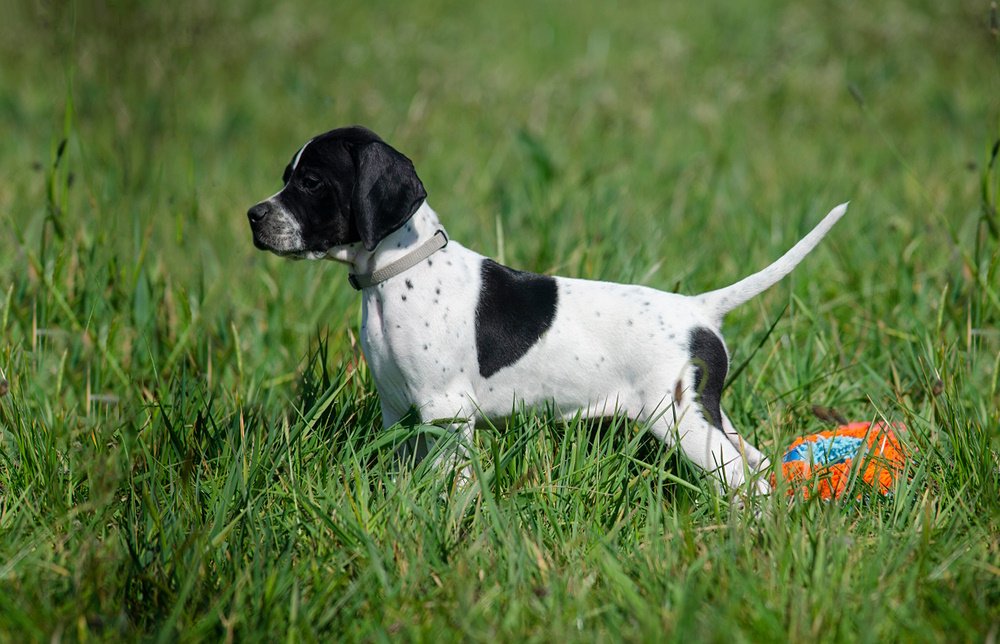
The Pointer’s signature behaviour, the “point”, is a practical working trait: the dog locates game by scent and freezes, indicating direction. That stillness can look almost theatrical, but it is essentially a well-rehearsed hunting strategy built into generations of selective breeding.
It is also why English Pointers often have such a clear off-switch and on-switch. Indoors, with their needs met, many are settled and polite. Outdoors, movement and scent can light them up quickly, which is not “naughtiness” so much as a dog doing what their body and brain were designed to do.
If you enjoy dogs who are athletic, responsive, and happiest when they have something to do, the Pointer can feel like a natural fit. If you prefer a dog whose exercise needs are modest, it is worth being honest early, because their daily requirements are real, and they are not the type to simply outgrow them.
Temperament and day-to-day suitability
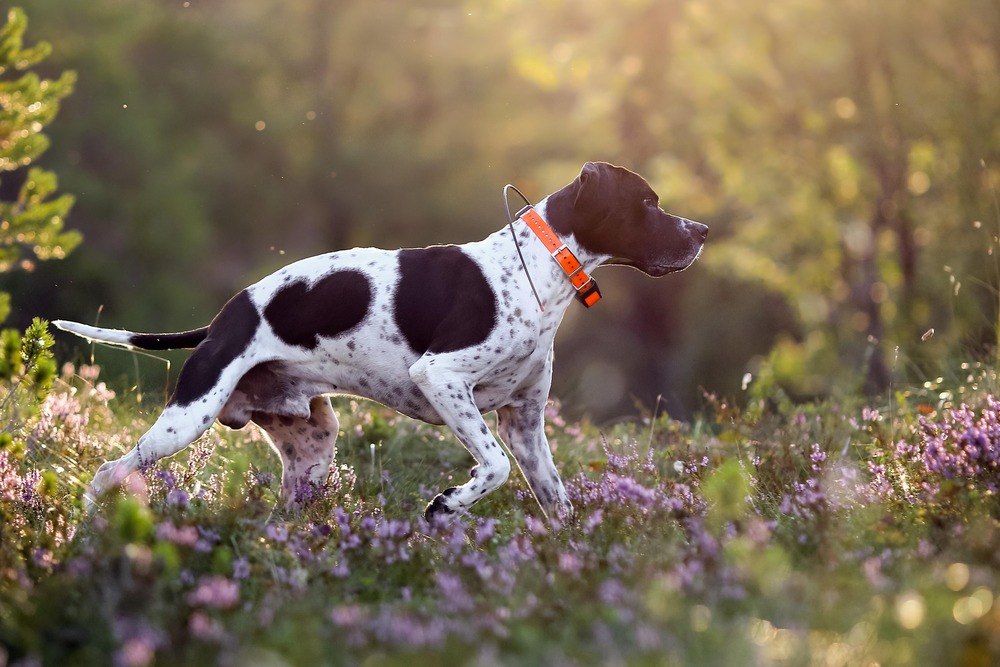
Most English Pointers are people-oriented and social, often enjoying visitors and family life when they have been raised with gentle handling and steady exposure to everyday situations. They are frequently described as friendly and intelligent, but it helps to translate that into daily reality: they notice patterns, they learn quickly, and they can become restless if their world is too small.
With children, the picture is usually positive when supervision is sensible and both dog and child are taught appropriate behaviour. A Pointer’s enthusiasm can be the only real snag, especially with very young kids. Think in terms of management and training rather than blame: calm greetings are taught, not assumed.
With other pets, early socialisation matters. Many Pointers live happily with other dogs. Smaller animals can be more complicated, not because the dog is “bad”, but because prey drive is part of the breed’s history. Good fences, thoughtful introductions, and clear routines make a noticeable difference.
Training that works with the breed
English Pointers tend to respond best to training that is consistent, reward-based, and built around short sessions that keep the dog engaged. They are often sensitive to harsh handling, and heavy corrections can create avoidance or a dog who switches off. The aim is not to dampen the dog’s drive, but to give it a shape you can live with.
Useful early focuses include recall, loose lead walking, and settling on a mat. These are not flashy skills, but they are the ones that make a high-energy dog workable in a household. If you are planning any off-lead time, especially in open areas, recall is non-negotiable, and it needs to be trained and maintained like any other skill.
- Keep cues simple and consistent across the household.
- Reward calm behaviour as actively as you reward active behaviour.
- Use sniffing as a reinforcer, for example, “sit” then “go sniff”. For many Pointers, this is more valuable than food in exciting environments.
Exercise needs and enrichment

English Pointers are built for endurance. A quick walk around the block may cover toileting, but it rarely meets their broader needs. Many do best with a mix of aerobic exercise (walking, running, field-type exploring) and brain work (training, scent games, structured play).
It is also worth knowing that “exercise” is not always the answer to “my Pointer is a bit much”. Some dogs become fitter and busier if we only add more running. What often helps most is a balance: appropriate physical outlets plus skills that support calm, predictable behaviour at home.
For puppies and adolescents, be especially cautious about overdoing intense, repetitive exercise. Growing dogs need activity, but they also need joint-friendly habits, rest, and gradual conditioning. Guidance on safe exercise for young dogs commonly highlights the risk of over-exercising puppies, particularly in larger breeds that can take longer to mature.2
Health considerations to discuss with your vet
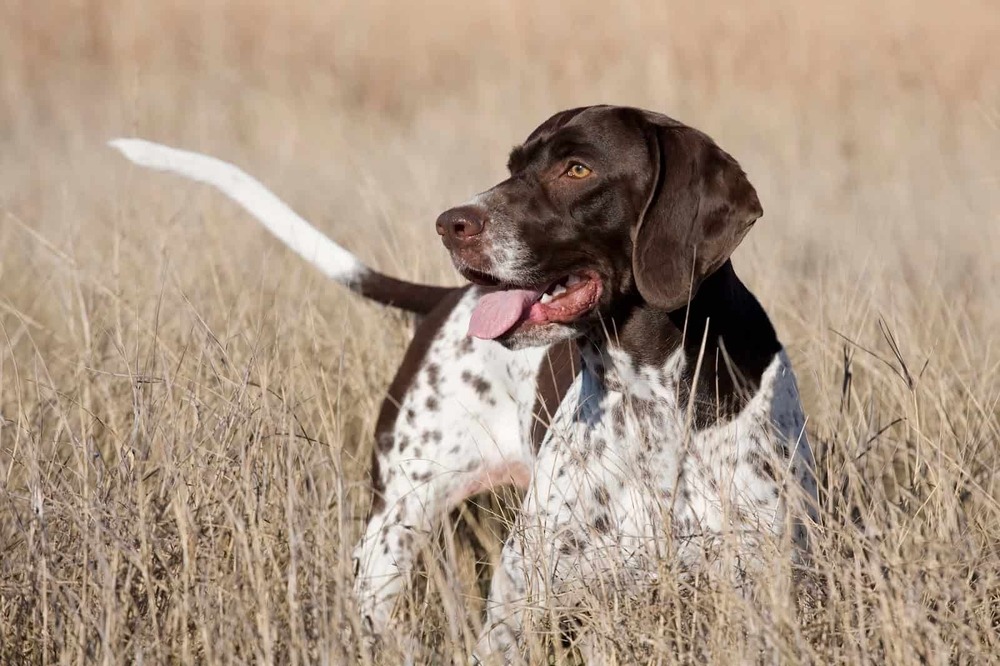
No breed is guaranteed a clean bill of health, and individual lines can differ. For English Pointers, a few issues are worth keeping on your radar, especially if you are choosing a breeder or assessing a rescue dog’s likely needs over time.
Hip dysplasia is one condition that can affect many breeds, particularly medium-to-large active dogs. It involves abnormal development of the hip joint and can lead to osteoarthritis. Signs can vary and do not always match what an x-ray shows, which is why early assessment and ongoing management plans matter.3
Ear health is another practical point. Drop ears can trap moisture and debris, especially in dogs who spend time in long grass, around water, or in dusty environments. Regular checks and gentle cleaning (as advised by your vet) can reduce the risk of recurring problems.
If you are buying a puppy, ask what health screening has been done in that line and what results mean in real terms. Good breeders should be able to talk comfortably about health, not just appearance or titles.
Grooming and general care
The Pointer coat is short and straightforward. A weekly brush is usually enough to remove loose hair and keep the coat looking sleek. You will still see some shedding, especially seasonally, but it is generally manageable.
Where owners sometimes get caught out is not coat work, but the basics that keep an athletic dog comfortable: nails kept short enough to support sound movement, teeth cared for consistently, and small injuries noticed early. With a dog who runs hard, minor cuts and grass seeds can happen, so a quick check after big outings is a sensible habit.
In cooler weather, many English Pointers appreciate warmth. Their short coat is practical in the field, but not particularly insulating, so consider a coat for cold, wet conditions and prioritise a warm resting spot at home.
Feeding for an active body
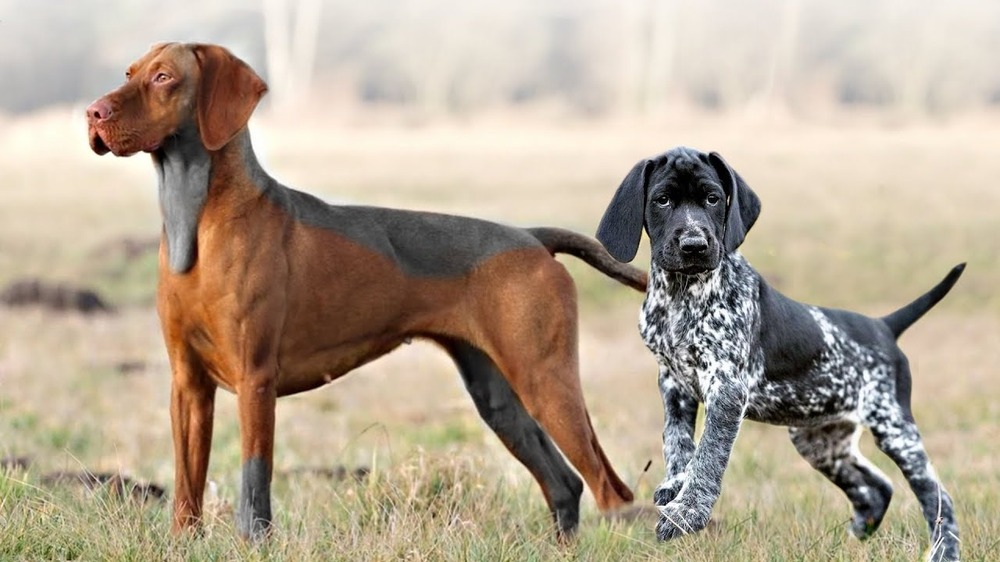
Pointers can look lean even when they are in good condition, and that can tempt people to overfeed. On the other hand, a busy dog can burn through calories quickly, especially during peak activity seasons. The goal is not a specific number on the scales, but a body condition that supports movement and long-term joint health.
Veterinary nutrition guidance commonly recommends using structured assessments such as a body condition score and reviewing diet as part of routine care, rather than relying on internet portion charts or guesswork.4
If your Pointer is doing a lot of running, talk with your vet about diet quality, meal timing, and any digestive sensitivities. Sudden changes in food can upset even robust dogs, so transitions are best done gradually.
Living well with an English Pointer
When an English Pointer struggles in a home, it is often because the match is off, not because the dog is difficult by nature. They thrive when their people enjoy being outdoors, have the patience to teach skills carefully, and can provide a rhythm of activity and rest.
When that balance is in place, you tend to see the breed at its best: a dog who is affectionate without being clingy, athletic without being chaotic, and deeply satisfying to live with if you like a companion who wants to be part of your day.
If you are considering one, try to spend time with adult Pointers, not just puppies. The adult dog is the real promise, and in this breed, that promise is usually a life shared with movement, training, and a steady, attentive presence close by.
References
- Dogs Australia (ANKC): Pointer breed standard
- RSPCA Pet Insurance Australia: How to safely exercise your dog or puppy
- Merck Veterinary Manual (Pet Owner Version): Hip dysplasia
- WSAVA: Global Nutrition Guidelines and Body Condition Score tools
- The Kennel Club (UK): Pointer breed standard
- RSPCA Australia Knowledgebase: Caring for your dog’s teeth
- Australian Veterinary Association: Companion animals and dog behaviour (policy and guidance)
- American College of Veterinary Surgeons: Canine hip dysplasia