

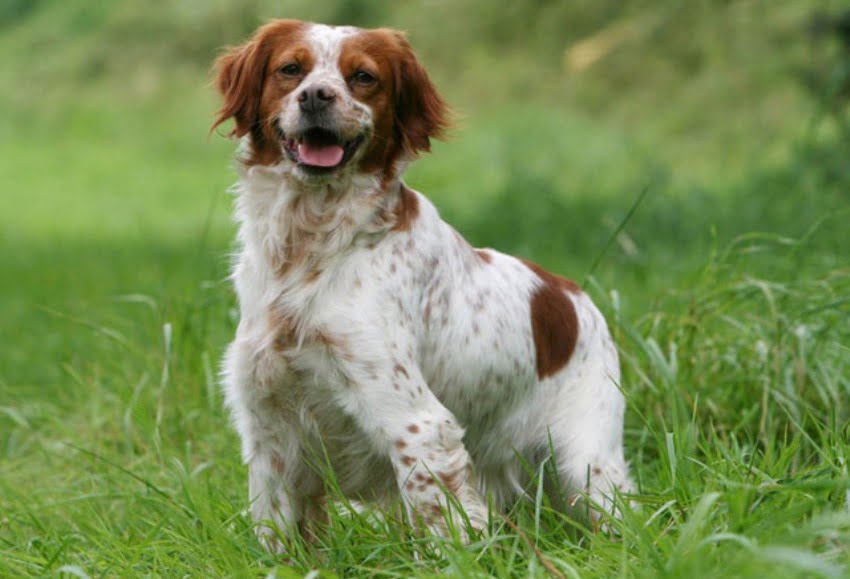
People usually start looking up the Epagneul Breton after noticing a certain kind of dog at the park or on social media, compact, athletic, always “on”, and somehow both soft in the home and all business outdoors. It can be tempting to assume they are simply a smaller spaniel, or that their energy will “settle” if you give them a decent backyard.
In practice, this breed makes more sense when you see it as a purpose-built gundog: bred to move through cover, use its nose, and stay connected to its handler all day. That background is why the Epagneul Breton (often called the Brittany) can be such a satisfying companion for active people, and also why they can struggle in homes that do not offer enough work for body and brain.
Below is a grounded look at what the Epagneul Breton is like to live with, what they were bred to do, and the everyday care choices that tend to make the biggest difference.
- Breed category: Pointing dog (gundog type)
- Country of origin: France (Brittany)
- Typical height: Males 48 to 51 cm, females 47 to 50 cm
- Typical weight: Often around 14 to 18 kg (varies with build and condition)
- Typical life span: Around 12 to 14 years
- Coat: Dense, flat to wavy
- Common colours: Orange and white, liver and white, sometimes tricolour
- Shedding: Moderate
- Grooming: Moderate, regular brushing
- Exercise needs: High, daily, plus mental work
- Temperament (typical): Friendly, bright, energetic
- Apartment living: Possible for some, but not ideal without strong daily routines
- Original purpose: Bird hunting, pointing and retrieving
History and origin

The Epagneul Breton is a French pointing dog, rooted in the Brittany region. Breed standards describe it as one of the smallest pointing breeds, compact and squarely built for active work in the field.1, 2
Modern breed descriptions place its development and refinement in the early 20th century, shaped by outcrosses and careful selection for a dog that could hunt efficiently in varied terrain while staying responsive to the handler.1, 2
One detail that often comes up is the tail. Historically, the breed has been associated with naturally short tails in some lines, and older texts also mention docking. In Australia, cosmetic tail docking has been banned since 2004, so any short-tailed Epagneul Breton you meet locally is most likely naturally bobtailed, or has had a tail procedure for legitimate veterinary reasons.7
What they look like in real life
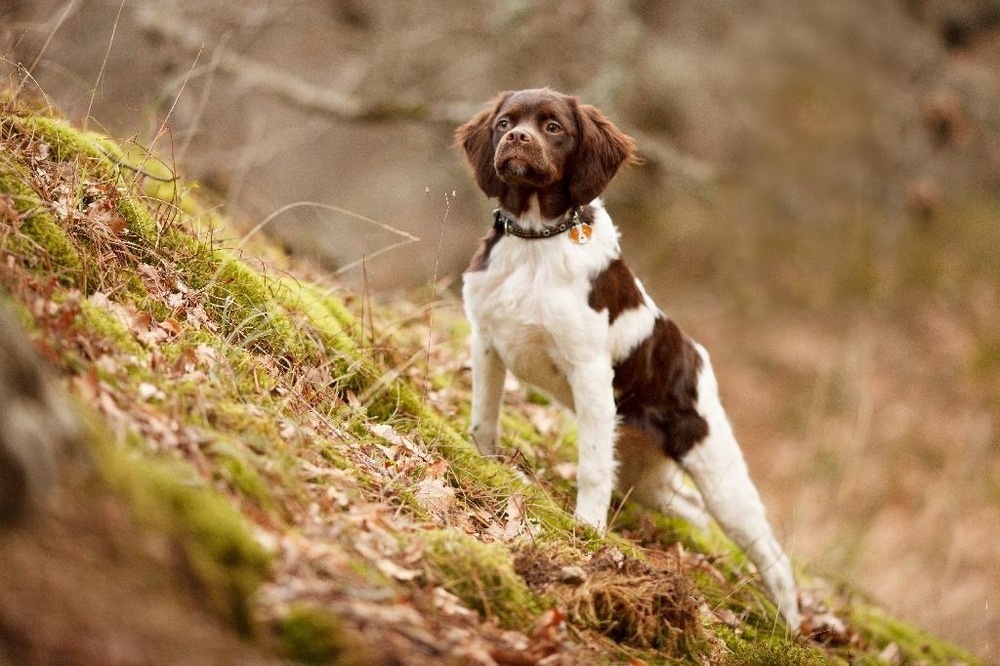
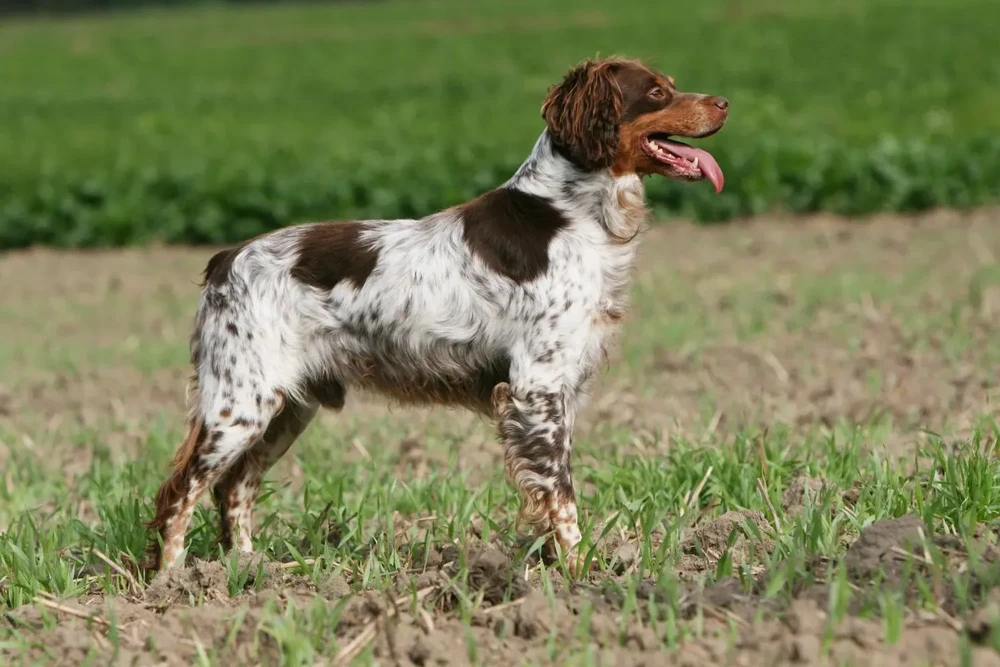
The Epagneul Breton tends to read as “all muscle, no bulk”. They are medium in height but often feel lighter than they look, with a strong, practical frame designed for endurance rather than sheer power.1
The accepted height range is quite specific: males commonly sit around 48 to 51 cm and females around 47 to 50 cm at the withers.1 Weight is not always emphasised in international standards, so you will see some variation, especially between show-bred and field-bred dogs. What matters most is lean condition and sound movement, not chasing a single number on a chart.
The coat is dense and can be flat or lightly wavy, typically in orange and white or liver and white, with some dogs showing ticking or roaning. Ears are set fairly high and sit close to the head, which is part of the classic “alert but not heavy” outline people recognise.
Temperament and behaviour
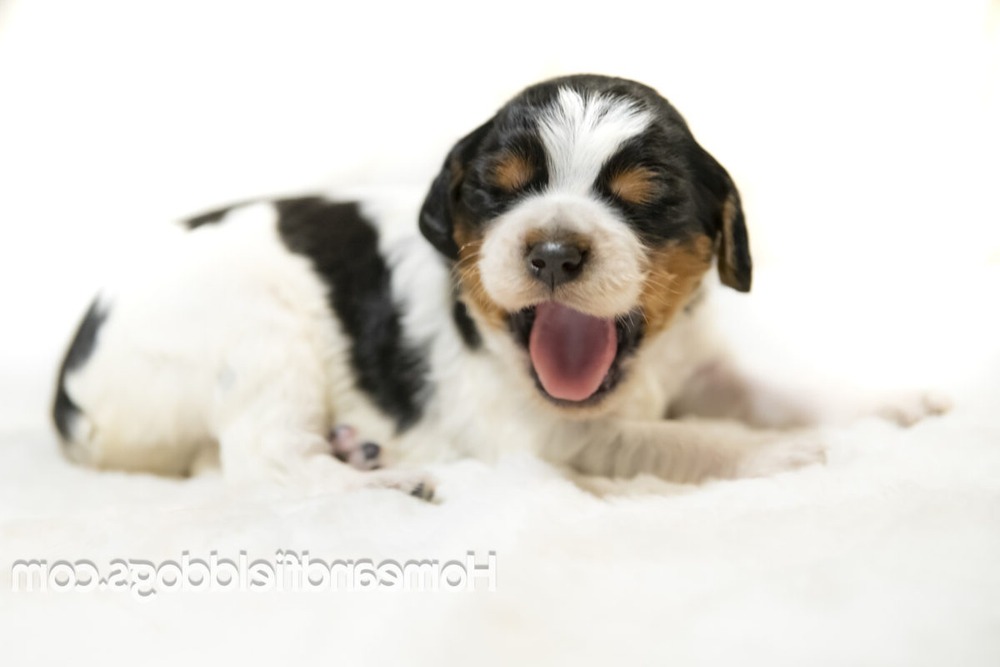
Most Epagneul Bretons are socially oriented dogs that want to be close to their people, not necessarily as lap dogs, but as “shadow you from room to room” companions. Their working heritage shows up as fast patterning and quick learning. They tend to notice details, routines, and body language, which is wonderful in training and sometimes challenging when the household is inconsistent.
Because they are bred for hunting, many have a strong interest in scent and movement. That does not mean they cannot live peacefully with cats or other small pets, but it does mean you should take management and introductions seriously, and avoid assuming friendliness automatically equals low chase drive.
With children, the best outcomes usually come from two things: a dog that has learned calm skills (settle, mat work, gentle greetings), and kids who understand how to give the dog space when it is tired or overstimulated. The breed often loves family life, but it still needs boundaries, rest, and a predictable day.
Training and exercise that actually helps
Epagneul Bretons usually respond best to reward-based training, with clear criteria and plenty of reinforcement for the behaviours you want to see more of. Harsh corrections can create confusion or avoidance in sensitive individuals, and they rarely improve reliability in a dog that is wired to hunt and range.9
Exercise is not just about distance. A long run can still leave a Brittany looking for a job if there is no mental work. Many owners find the real “off switch” emerges when you combine physical activity with structured enrichment.
Good daily outlets often include:
- Sniff walks where the dog can explore on a long line
- Retrieve games with rules (wait, release, bring to hand)
- Food puzzles, scatter feeding, or simple scent games at home
- Training sessions that stay short and upbeat, but happen often
If you hunt, work with an experienced gundog trainer who prioritises steadiness and safety. If you do not hunt, consider dog sports that reward the same skills, such as tracking-style scent work, obedience, or agility.
Health and lifespan
A typical lifespan for the Epagneul Breton is often described as around 12 to 14 years, with individuals varying as they do in any breed. Good breeding, sensible conditioning, and preventative care matter more than any single supplement or trend.
Issues reported in the breed include hip dysplasia and epilepsy, among others, so it is worth discussing family history with breeders and prioritising health testing where available.3, 4 Ear problems can also crop up in floppy-eared dogs, particularly when moisture and debris stay trapped after swims or muddy runs. If your dog is prone to recurrent ear irritation, your vet can help you build a safe cleaning plan and rule out infection or underlying allergy causes.5
For puppies, the most practical “health plan” is often the least glamorous one: keeping them lean, protecting growing joints from repetitive high-impact exercise, and building good handling habits early so grooming and veterinary visits stay low-stress over time.
Grooming and day-to-day care
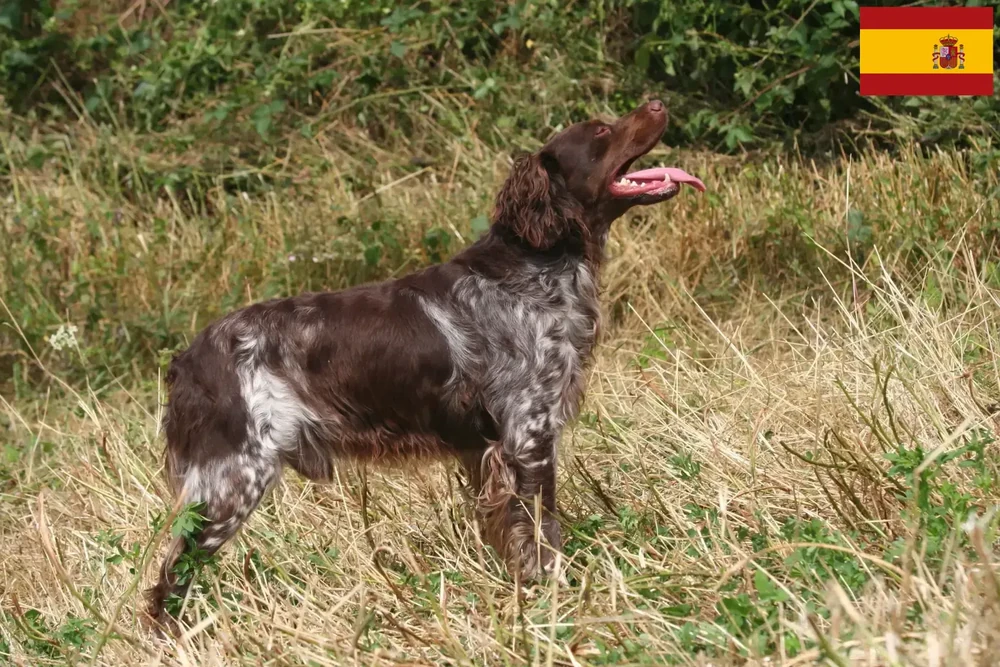
The Epagneul Breton coat is usually straightforward, but it does benefit from routine. A thorough brush once or twice a week helps prevent tangles, lifts dirt, and makes it easier to check skin and ears after outdoor adventures.
Pay attention to feathering on the ears, belly, and legs, as that is where burrs and mats hide. Bathing can be occasional, using a gentle dog shampoo, with extra care to dry ears and coat properly after swimming.
If you are not sure what “normal” looks like for your dog’s ears, ask your vet to show you during a consult. It is a small skill that can prevent a lot of discomfort later.
Feeding, body condition, and the busy dog appetite
Active breeds can look permanently hungry, especially during adolescence and heavy training blocks. Rather than guessing, it helps to feed to body condition: you should be able to feel ribs easily under a light layer, and see a waist from above.
Choose a complete, balanced diet appropriate for your dog’s life stage. If you are feeding commercial food, follow the label as a starting point, then adjust gradually based on condition, not on whether the bowl looks “full enough”. For dogs doing a lot of high-energy work, your vet can help you decide whether a performance-focused diet is appropriate.
Be cautious with add-ons. Many extras are harmless, but some can unbalance the diet or add more kilojoules than you realise. When in doubt, keep it simple and prioritise consistency over novelty.
Living with an Epagneul Breton
This is the sort of dog that thrives when life has rhythm. A predictable morning walk, a training session that asks the brain to work, a chance to sniff and explore, then a genuine rest period, often does more than trying to “wear them out” with endless activity.
The breed can be a joy in the right home: people who enjoy being outside, who like training as an everyday practice, and who value a dog that is responsive and lively. If you want a low-energy companion who is content with occasional pottering, a Brittany can be a mismatch, even if you love the idea of the breed.
If you are choosing a puppy, seek breeders who can talk comfortably about temperament, health testing, and the realities of the breed’s drive. If you are adopting an adult, give the dog time to decompress, keep routines steady, and build reliability slowly before expecting off-lead freedom.
References
- Fédération Cynologique Internationale (FCI), Epagneul Breton (Standard No. 95)
- United Kennel Club (UKC), Epagneul Breton breed standard
- Orthopedic Foundation for Animals (OFA), Brittany health testing and CHIC information
- Cornell University College of Veterinary Medicine, Canine hip dysplasia overview
- MSD Veterinary Manual, Otitis externa in dogs
- World Small Animal Veterinary Association (WSAVA), Global Nutrition Guidelines
- RSPCA Australia Knowledgebase, Legal status of tail docking in Australia
- RSPCA Australia Knowledgebase, Why some dogs still have docked tails
- American Veterinary Society of Animal Behavior (AVSAB), Position statements on training and behaviour