

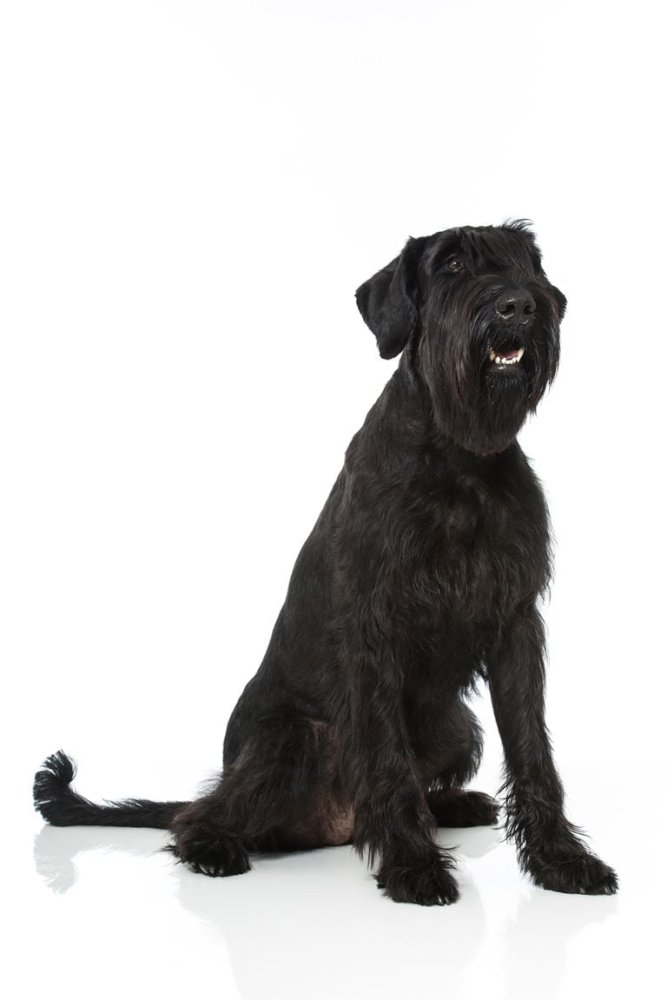
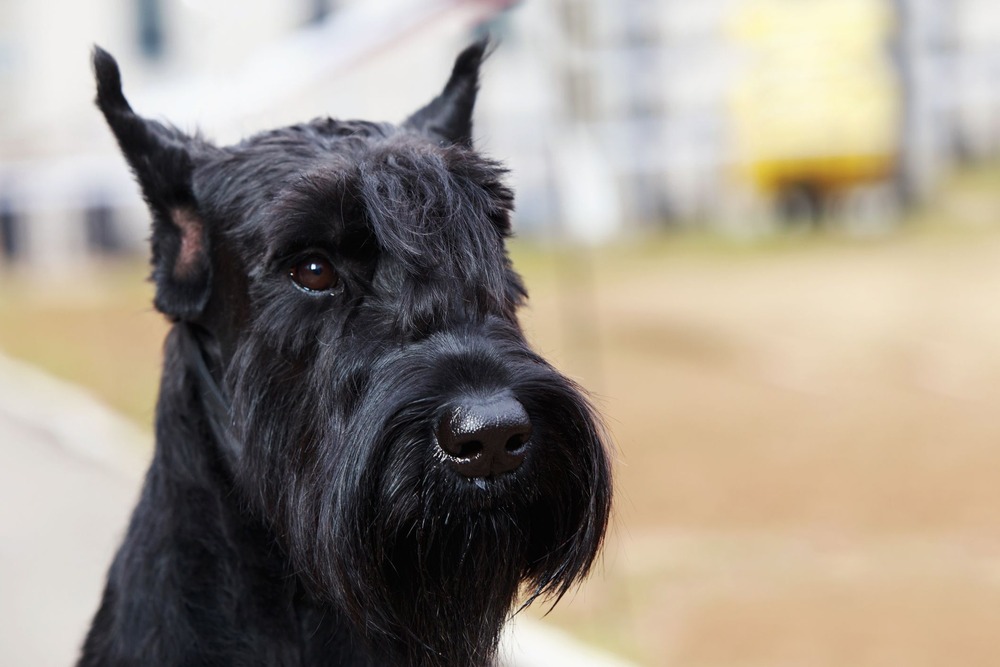
People tend to notice Giant Schnauzers in two moments: when one walks past with that unmistakable beard and eyebrows, or when you live with one and realise how quickly they take charge of a room. They are impressive dogs, but the appeal is not only about size. It is the steadiness, the watchfulness, and the way they seem to be waiting for you to give them something worthwhile to do.
It is also a breed that can be misunderstood. A Giant Schnauzer is often described as “protective”, which is true, but protection is not the same thing as ease. Without early guidance and enough daily outlets, that same alert, capable temperament can turn into overreacting, over-guarding, or simply a dog who makes their own decisions.
For the right household, they are deeply rewarding: a practical working dog in a modern world, still happiest when their exercise, training, and grooming are treated as part of everyday life rather than occasional chores.
Snapshot: what a Giant Schnauzer is like to live with
Breed group and origin: Giant Schnauzers are recognised as a Working breed and originated in Germany, where they were developed as versatile farm and guarding dogs.1, 2
- Size: a large, powerful dog with the stamina for long days of activity.
- Coat: harsh, wiry coat with a distinctive beard and brows, it needs regular coat care rather than “set and forget”.1
- Temperament: typically intelligent, alert, and naturally inclined to guard, best with clear routines and thoughtful socialisation.3
- Best fit: owners who enjoy training, have time for daily exercise, and want a dog that is engaged with the household.
Where they came from, and why it still shows
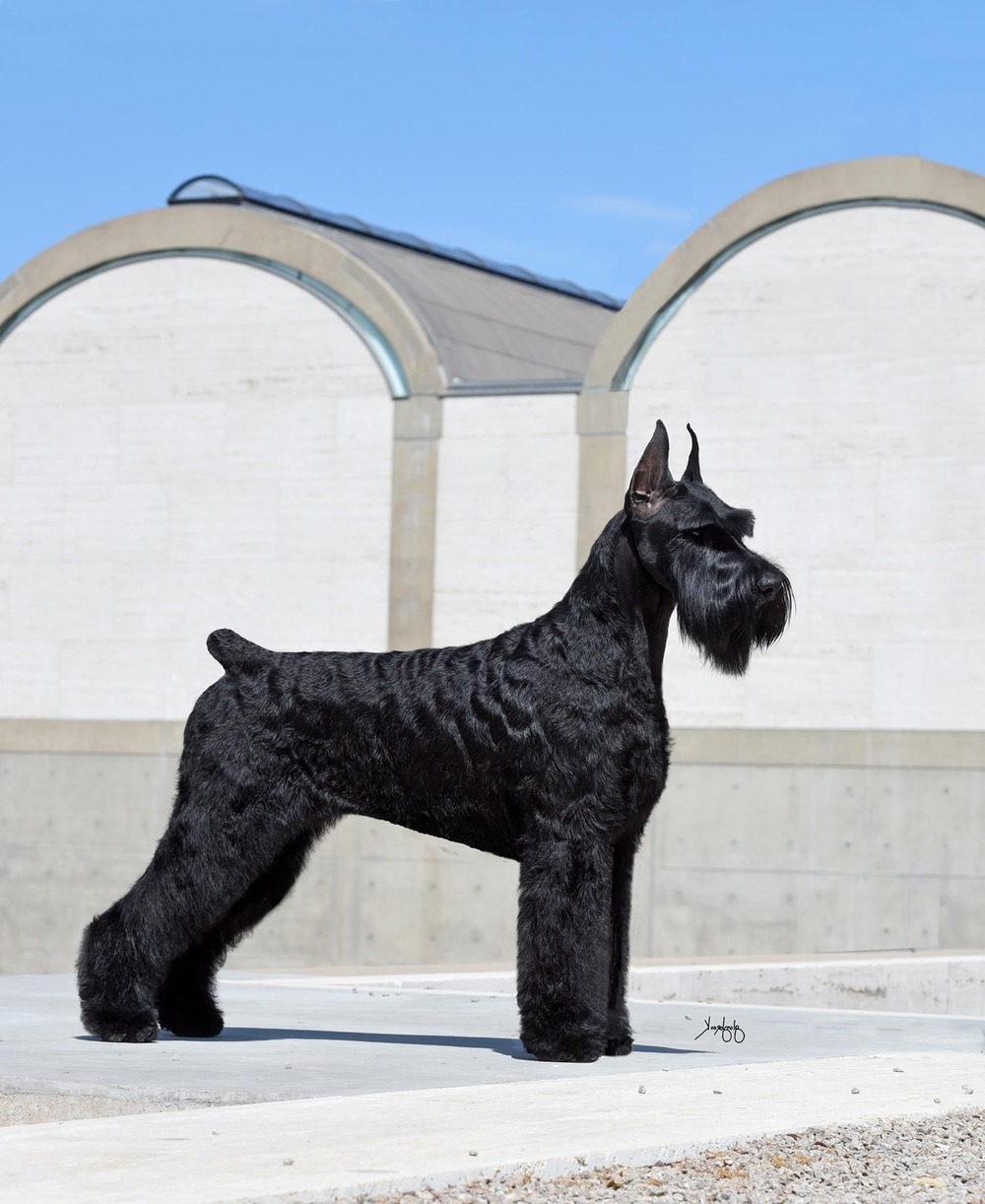
The Giant Schnauzer developed in Bavaria as a drover and guard dog, moving cattle and protecting property and goods. That background matters because it explains the modern dog: a body built for work, and a mind that stays switched on, scanning what is happening around them.2, 4
As the breed became more established, Giant Schnauzers were also taken up for guard and police work. It is a pattern you still see today in the kinds of activities they thrive in, such as obedience, scent work, and protection sports where permitted and responsibly managed.2
One practical detail that often comes up in breed discussions is cropping and docking. These procedures are restricted or regulated in many places, and rules can also affect showing in some systems. If you are viewing dogs online, you may see a mix of natural and altered ears and tails depending on where the dog is from and what is legal there.5
Temperament: loyal, watchful, and not automatically “easy”
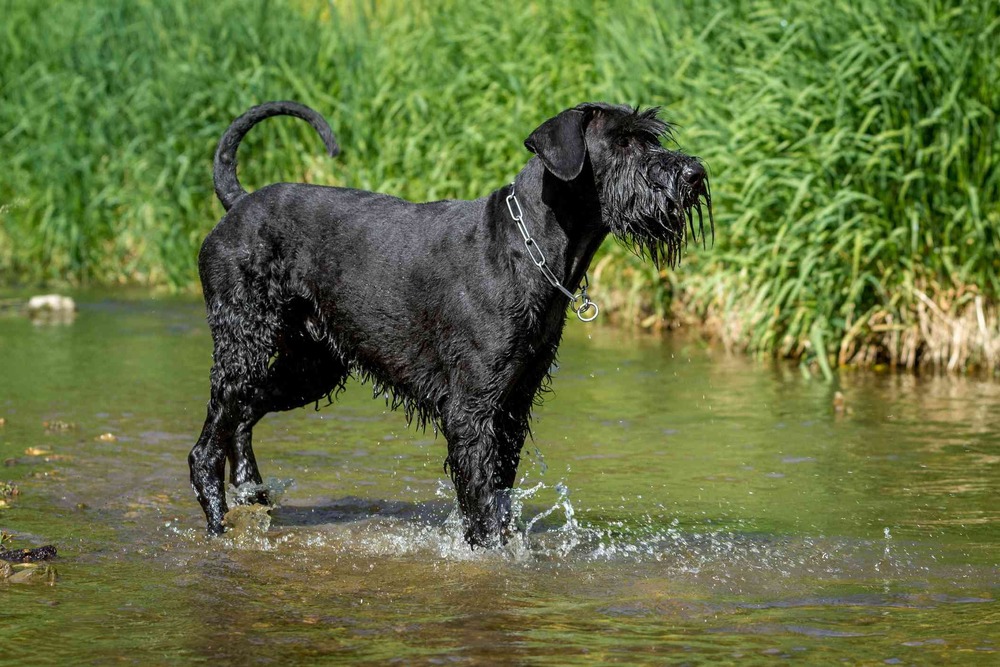
Giant Schnauzers are often described as loyal and protective. In real homes, that can look like a dog who positions themselves to watch entrances, notices visitors early, and takes cues from your reactions. The aim is not to eliminate that instinct, but to shape it into something manageable and socially safe.3
Early, structured socialisation matters more than people sometimes assume. Socialisation is not about letting a puppy meet “everyone”, it is about building calm, positive experiences with everyday life: different surfaces, sounds, visitors, dogs at a distance, grooming, handling, and being left alone for short periods in a way that does not overwhelm them.6
With children and other pets, many Giant Schnauzers do well when the household is consistent and the dog is actively taught how to settle, how to share space, and what behaviour earns attention. Supervision and sensible boundaries are still important, particularly given the breed’s size and enthusiasm.
Training that works for this breed
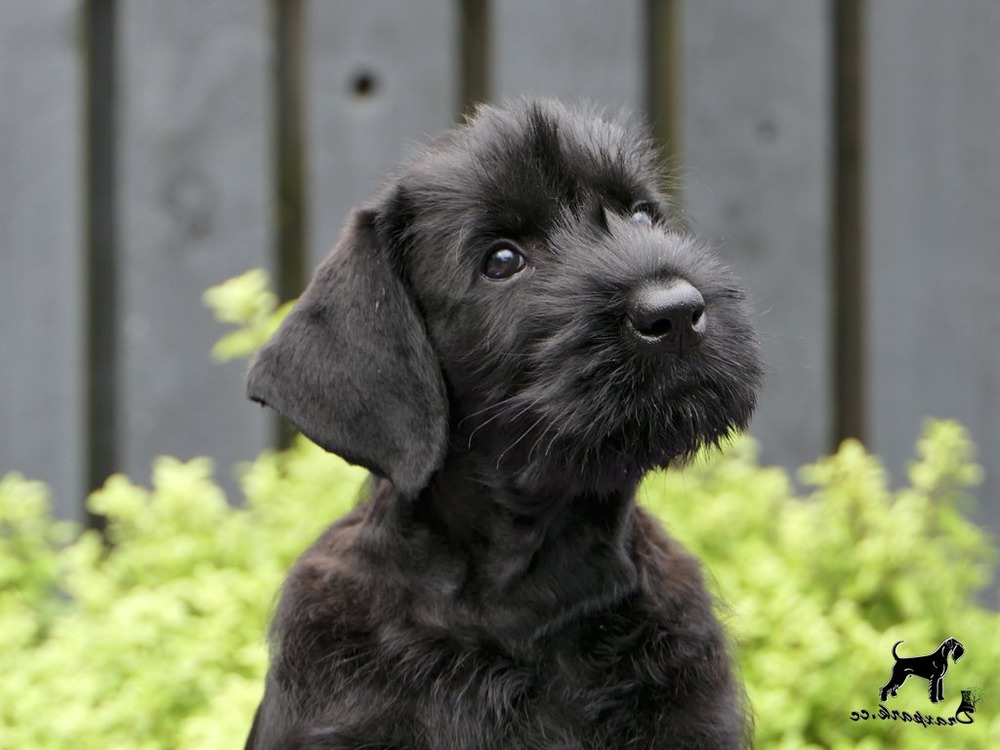
Giant Schnauzers learn quickly. That is a gift, but it also means they pick up habits you did not intend to teach. The most reliable approach is reward-based training with clear rules, where the dog is set up to succeed, reinforced for desirable behaviour, and calmly managed when they make mistakes.7
Many owners find it helpful to focus on a few everyday skills that keep life smooth:
- Recall and check-ins, built gradually with high-value rewards.
- Settle on a mat, so the dog learns an “off switch” in the house.
- Loose-lead walking, because pulling is not trivial in a dog of this size.
- Visitor routines, rehearsed before the doorbell becomes the main event.
If a Giant Schnauzer is practising guarding behaviour that worries you, or escalating around strangers or dogs, it is worth involving a qualified trainer early. With a powerful working breed, small problems can become entrenched simply through repetition.
Exercise and mental work: daily, not optional
This is a high-energy, high-drive breed. A quick potter around the block rarely touches the sides. Many Giant Schnauzers do best with a blend of physical exercise and structured mental work, such as training sessions, scent games, retrieving, or sport foundations.
It also helps to think in terms of rhythm. A dog who gets their needs met most days is more likely to cope on the occasional quiet day. A dog who lives “under-exercised” and then gets a huge weekend blast often stays edgy and hard to settle because the baseline is not steady.
Health: what to watch, and how to stack the odds in your favour
Like many large breeds, Giant Schnauzers can be affected by orthopaedic conditions such as hip dysplasia. Ethical breeders screen and select carefully, but owners can still support good outcomes by keeping a steady, lean body condition and building fitness gradually, especially during adolescence when dogs can be exuberant but still developing.8
Another issue worth understanding in any large, deep-chested dog is gastric dilatation-volvulus (GDV), often called bloat. There is no single guaranteed prevention, but known risk factors and management strategies can help, including avoiding one large meal a day and being cautious about heavy exercise around meal times.9
Coat care: the “low shedding” myth, and what it really means
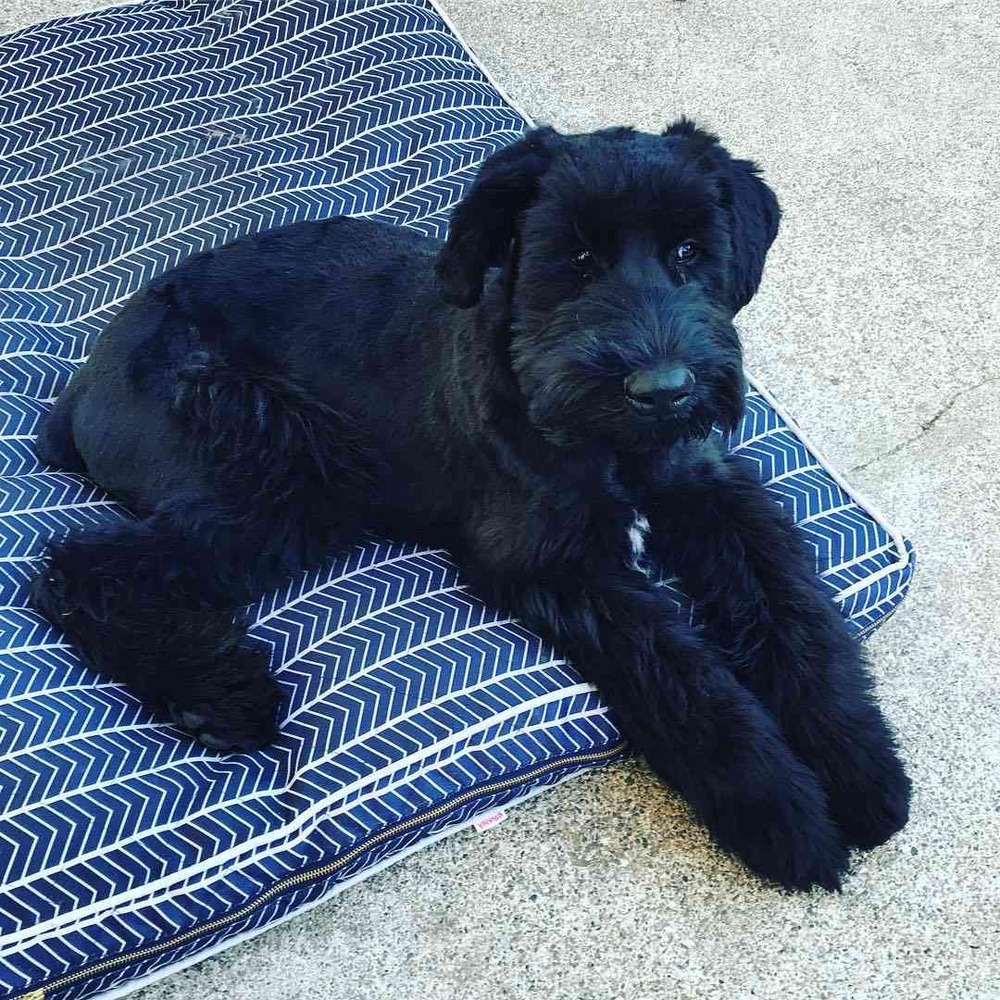
Giant Schnauzers are often described as low shedding. In practice, many households do see less loose hair than with double-coated shedding breeds, but that does not mean low maintenance. A wiry coat can mat at the roots, trap debris in the beard, and look untidy quickly if it is not maintained.
Plan for regular brushing, plus professional grooming or skilled home clipping and hand-stripping depending on the coat type and your preferences. Pay attention to friction points: behind the ears, under the collar, armpits, and the feathering on legs. For many dogs, gentle handling practice from puppyhood makes grooming a normal part of life rather than a wrestling match.
Feeding: focus on the whole diet, not one “magic” ingredient
It is tempting to shop by ingredient list alone, especially for a muscular, active breed. The trouble is that ingredients do not tell you whether a diet is balanced, appropriate for your dog’s life stage, or made with good quality control. A more reliable approach is to choose a complete and balanced diet from a manufacturer that can answer sensible questions about formulation, testing, and expertise, and then monitor your individual dog’s condition over time.10
For large dogs, feeding management matters as much as what is in the bowl. If your dog tends to eat quickly, consider slow-feeding strategies and split meals. If you are concerned about GDV risk, discuss it with your vet so your feeding routine fits your dog’s build, age, and history.9
Final thoughts: a serious dog for people who like living deliberately
At their best, Giant Schnauzers are capable, responsive companions, the sort of dog who wants to be close to their people and useful in the day-to-day. They are not a passive breed, and they rarely thrive when their world is small, repetitive, or under-stimulating.
If you enjoy training, have time for daily movement and engagement, and you appreciate a dog with presence and opinions, the Giant Schnauzer can be a deeply satisfying match. The relationship tends to work best when you treat behaviour, exercise, grooming, and health care as ongoing conversations, not boxes to tick.
References
- Wikipedia: Giant Schnauzer
- Westminster Kennel Club: Giant Schnauzer
- American Kennel Club: Giant Schnauzer history
- Verband für das Deutsche Hundewesen (VDH): Riesenschnauzer
- FCI: Reminder on cropped and docked dogs in conformation events
- RSPCA ACT: Puppy socialisation sessions
- RSPCA ACT: Reward-based dog training
- Australian Veterinary Association: Hip dysplasia
- Cornell University College of Veterinary Medicine: Gastric dilatation-volvulus (GDV)
- WSAVA: Global Nutrition Guidelines and toolkit