

- Breed category: Terrier
- Country of origin: Ireland
- Average height: 32 to 36 cm
- Average weight: 15 to 18 kg
- Typical lifespan: around 10 to 15 years1
- Grooming: Moderate, brush more than once a week
- Exercise: Moderate, often up to about an hour a day
- Coat type: Medium length, harsh texture, double coat
- Coat colours: Blue, brindle, wheaten1, 5
- Shedding: Low for many households, coat care still matters
- Temperament (in brief): Game and spirited when needed, otherwise gentle and docile2
- Barking tendency: Often not a constant barker, but will speak up when it counts
- Apartment friendly: Can be, with daily exercise and good management
- Common health considerations: Hip dysplasia (as with many breeds), eye disease including PRA6, 7
- Original purpose: Vermin control and working terrier duties, including badger work in historical accounts1
- AKC recognition: Entered the AKC Terrier Group in October 20043
People often start looking up the Glen of Imaal Terrier after noticing a dog that does not quite match the usual terrier picture. It is low to the ground, solid through the chest, and watchful without being frantic. If you have lived with sharper, noisier terriers, the Glen can feel like a quieter cousin with the same backbone.
That difference matters in everyday life. A dog can be brave and determined without needing to fill the house with sound, and a working background does not automatically mean a dog is always “on”. The Glen of Imaal Terrier tends to sit in that interesting middle ground: sturdy, independent-minded, and often surprisingly measured at home.
Understanding where this breed came from, and what it was built to do, helps you make sense of the behaviour you might see. It also helps you decide whether a Glen suits your household, your routines, and the kind of relationship you want with a dog.
Origins in County Wicklow
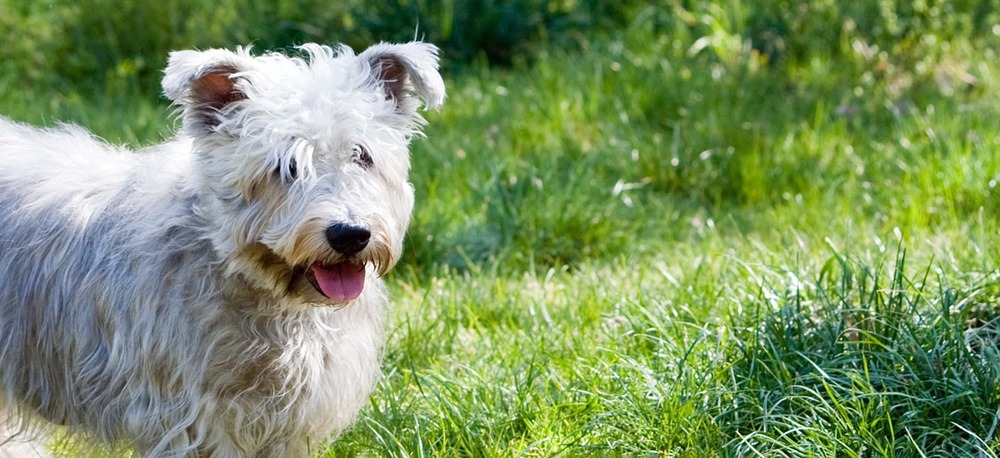
The Glen of Imaal Terrier is one of the native Irish breeds, named for a valley in County Wicklow. Historical sources describe terrier types in that locality from around the 17th century, shaped by practical needs in a rural landscape.1
These were dogs expected to cope with rough ground, work close to the farmer, and get on with the job. That history shows up today in a build that is longer than tall, strong for its size, and designed for work rather than speed or delicacy.2
What they were used for
The Glen’s reputation is closely tied to vermin control and going to ground. Breed organisations commonly describe the Glen as a badger hunter, and also note the old “turnspit” story, where dogs powered a kitchen wheel that turned meat over the hearth. The details of turnspit use can be hard to prove across centuries, but the tale persists because it fits the breed’s shape and stamina, and it is repeatedly cited in breed histories.1, 3
What a Glen looks like in real life
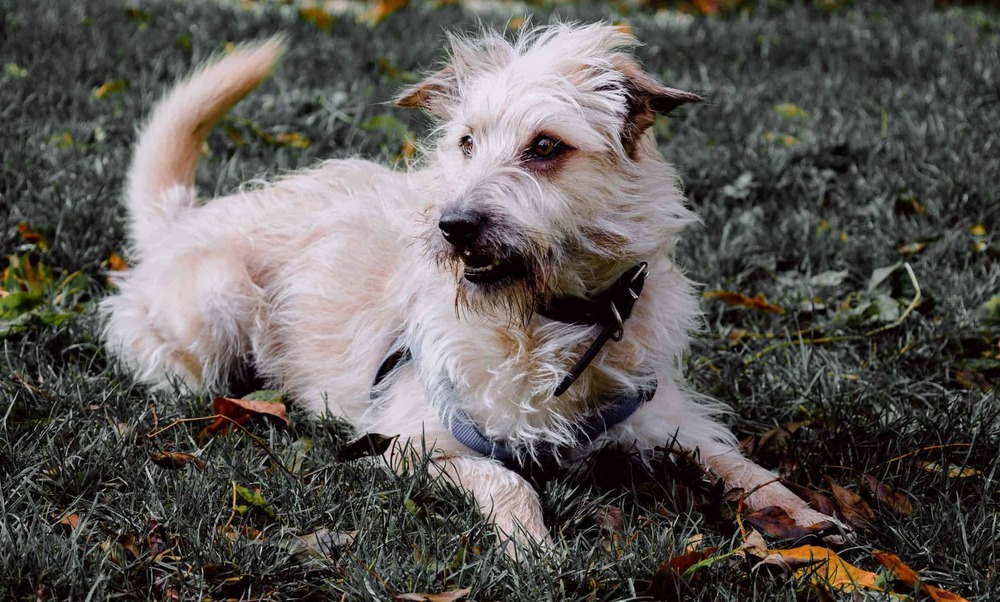
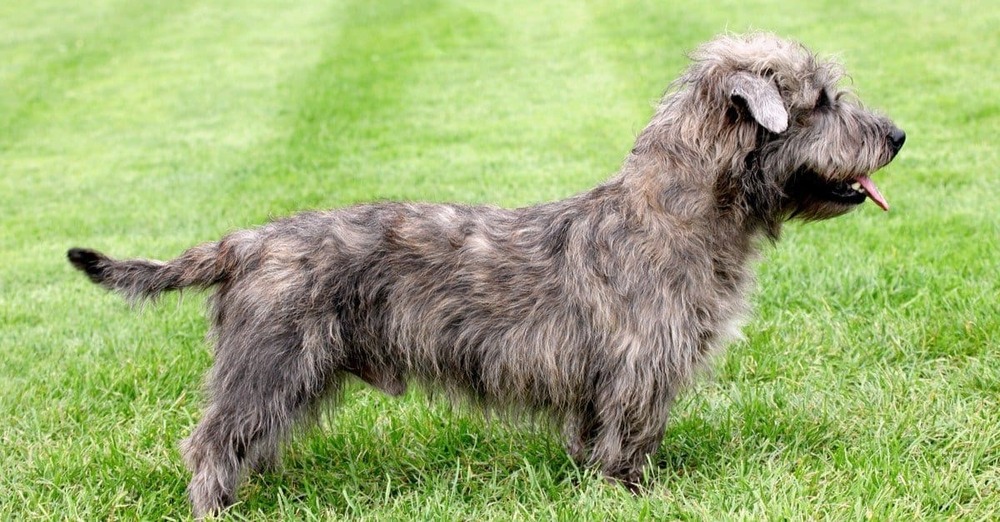
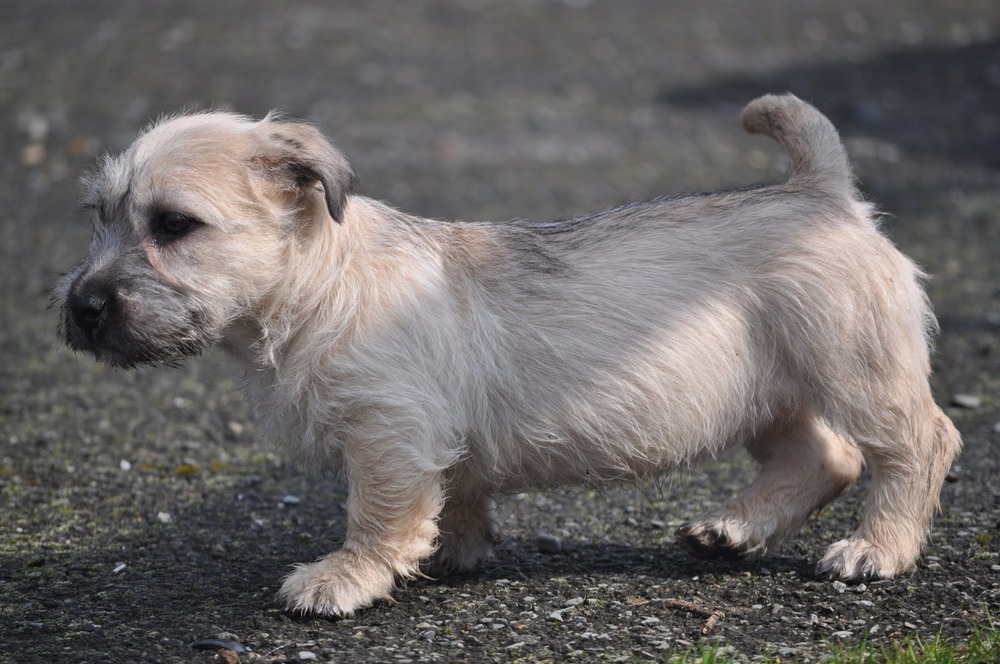
At a glance, a Glen of Imaal Terrier can look like a compact dog that has been “stretched” a little, with a big head, a deep chest, and a body that carries real substance. Breed standards describe maximum substance for size, with a body longer than high, and a coat that should look natural and workmanlike rather than overly sculpted.2, 5
The coat is double, with a harsh outer layer that offers weather resistance. Accepted colours include blue, brindle, and wheaten, with some standards listing blue brindle as well.1, 5
Movement and structure
Because the breed is low and powerful, movement can look different to people used to longer-legged terriers. You are generally looking for a free, ground-covering gait rather than a bouncy, high-stepping action. If you are meeting breeders, it is worth watching adult dogs move, not just puppies, so you can see how that structure settles with maturity.
Temperament, without the stereotypes
The Glen is often described as game and spirited when called upon, otherwise gentle and docile. In practice, that can look like a dog who is calm in the lounge room, then quietly decisive when something triggers its interest outside.2, 5
Many terriers are quick to offer noise as their first tool. The Glen is frequently noted as characteristically silent when working, which can translate to a dog that is alert and observant, but not always vocal about it.5
Children, visitors, and other animals
As with most breeds, the individual dog matters, and so does the way it is raised. Glens can live well with children when adults set clear boundaries on handling, rough play, and access to resting spots. With other dogs, early, steady social experiences help, especially because terriers can be confident enough to overestimate their negotiating power.
Smaller pets can be more complicated. A working terrier background does not guarantee chasing, but it makes it more likely. Management, secure fencing, and calm introductions matter more than hopeful assumptions.
Training and exercise that suits the dog you have
Training a Glen tends to go best when it is consistent, practical, and not overly repetitive. They are often intelligent and quick to learn, but like many terriers, they can decide an exercise is pointless if it is all “because I said so”. The goal is to build habits that make life smoother, not to win a debate.
Short daily sessions, food rewards, and clear routines usually get better results than heavy-handed corrections. If you are working on recalls or reactivity, a qualified trainer who uses reward-based methods can help you avoid the pattern of “the dog practises ignoring you”.
How much activity is enough?
Many breed profiles suggest up to about an hour of exercise per day for adults, plus opportunities to sniff, explore, and engage their brain.1
- Brisk walks with plenty of sniffing time
- Short games of tug or fetch (with rules, so it does not become hectic)
- Food puzzles and simple scent games at home
- Beginner agility or confidence-building obstacle work, if the dog enjoys it
If your Glen has a stocky build, it is worth paying attention to weight. Being a little heavy is easy to miss on a low dog, but it can add up over the years for joints and stamina.
Health considerations and what to ask breeders
No breed is “problem free”, and rarer breeds can be tricky because fewer vets see them often. The aim is not to panic about every possible issue, but to understand what is worth screening for, and what good breeders do to stack the odds in your favour.
Eyes and progressive retinal atrophy (PRA)
PRA is a group of degenerative retinal diseases that can lead to vision loss and is commonly inherited in many breeds.7 If you are buying a puppy, ask what eye screening or DNA testing is used in that breeder’s lines, and what the results mean for mating choices.
Hips and general joint soundness
Hip dysplasia exists across many breeds, not only large dogs. Screening programs and databases are designed to help breeders make more informed decisions, but they are only useful when used consistently and transparently.6 Ask what hip assessments are done, and whether the breeder can show documentation.
A good conversation also includes day-to-day care: appropriate exercise while growing, keeping nails short for traction, and maintaining a steady weight. These practical pieces often matter as much as any single test.
Grooming, coat care, and the “low shedding” idea
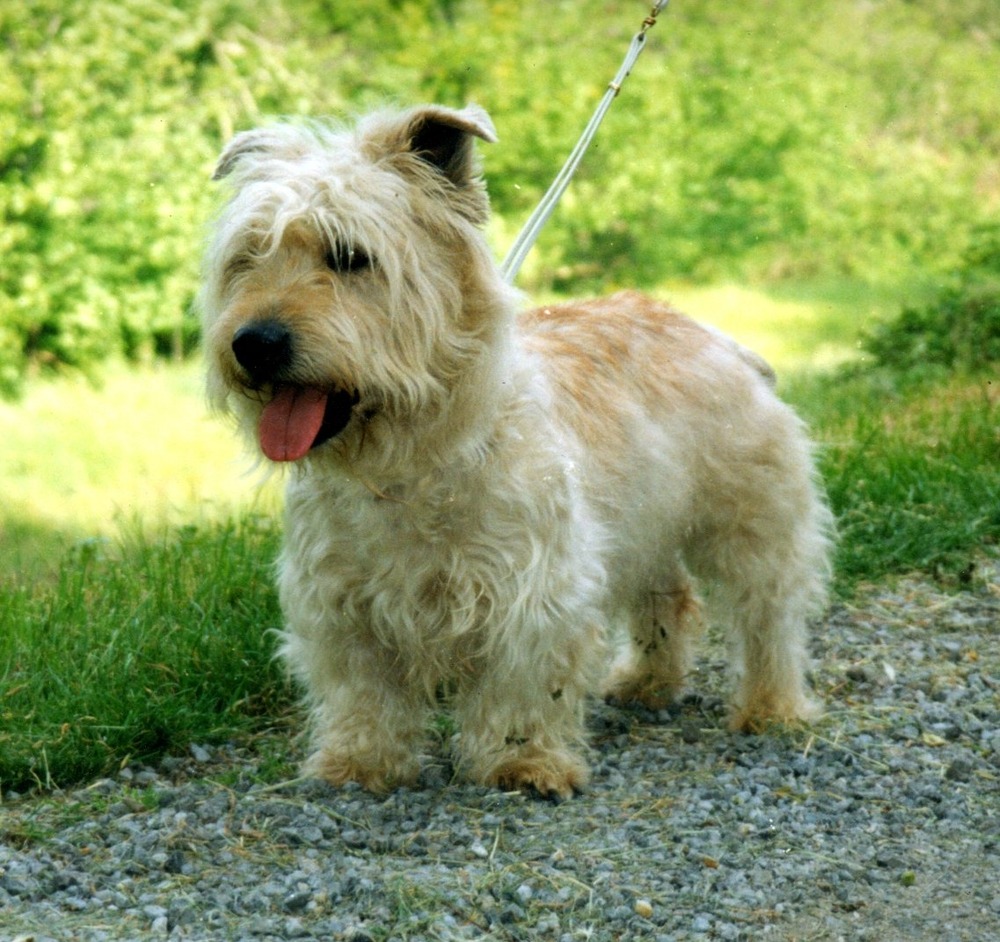
The Glen’s coat is often described as low shedding, but that does not mean no maintenance. A wiry double coat can hold dead hair and dirt close to the body if it is neglected. For most households, brushing more than once a week keeps the coat comfortable and reduces matting, especially around legs, chest, and behind the ears.1
Some owners choose hand-stripping to maintain coat texture, while others keep a tidier, clipped outline. Neither approach is automatically “right” for a pet home. What matters is that the skin stays healthy and the dog stays comfortable.
Simple maintenance that helps
- Brush routinely, then check the skin for irritation or parasites
- Keep nails short enough to avoid splayed feet and slipping
- Clean and dry ears as needed, especially after swimming or wet weather
- Maintain dental care as part of normal grooming, not an occasional add-on
Feeding and weight management
There is no single perfect diet for every Glen. Age, activity, desexing status, and health conditions all change what “enough” looks like. What is consistent across veterinary nutrition guidance is the value of monitoring body condition, adjusting portions gradually, and treating food as part of healthcare, not just fuel.8
If you are unsure where to start, a useful habit is to ask your vet to score your dog’s body condition at each visit, then adjust feeding based on that rather than the back-of-bag guideline alone. It is a calm, practical way to avoid slow weight creep.
Foods to avoid
Some human foods are well known risks. In Australia, official animal welfare guidance lists hazards including chocolate, grapes and raisins, and onions and garlic (and related plants), as well as cooked bones that can splinter.9 If your dog gets into something questionable, it is safer to ring your vet promptly rather than wait for symptoms to “declare themselves”.
Living with a Glen of Imaal Terrier
A well-matched Glen can be a steady companion for people who like a dog with opinions, but not constant commotion. They often do best with owners who appreciate quiet confidence, who can provide daily structure, and who enjoy training as a shared language rather than a dominance contest.
If you are considering the breed, it is worth meeting adult Glens in ordinary settings, not only at shows. Watch how they settle after a walk, how they respond to visitors, and how they manage frustration. Those small moments tell you more than any description ever will.
References
- The Kennel Club (UK): Glen of Imaal Terrier breed information
- The Royal Kennel Club: Glen of Imaal Terrier breed standard
- Glen of Imaal Terrier Club of America: Breed history and AKC recognition
- United Kennel Club (UKC): Glen of Imaal Terrier breed standard
- The Spruce Pets: Glen of Imaal Terrier breed characteristics and care
- Orthopedic Foundation for Animals (OFA): Health testing and breed screening resources
- VCA Animal Hospitals: Progressive retinal atrophy (PRA) in dogs
- WSAVA: Global Nutrition Guidelines
- Agriculture Victoria: Human foods to avoid for cats and dogs