

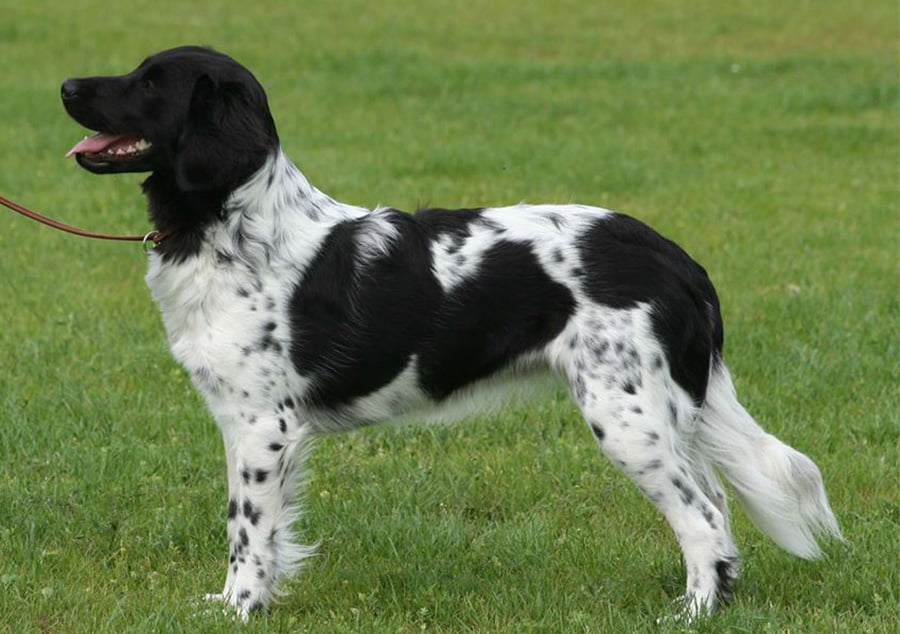
People often first notice the Stabyhoun when they are looking for a capable, outdoorsy family dog, then realise they keep seeing the same few lines repeated: “rare”, “gentle”, “good with kids”, “needs lots of exercise”. That can be hard to translate into real life. What does “rare” mean if you live outside the Netherlands? What does “gentle” look like in a young dog with energy to spare?
The Stabyhoun (also called the Stabijhoun) was shaped by practical work, not fashion. It is a pointing dog from Friesland in the north of the Netherlands, bred to be useful around the farm and steady enough to live closely with people.1, 2 When you understand that background, their mix of sensitivity, stamina, and trainability makes more sense.
Living well with a Stabyhoun is mostly about matching the dog in front of you, not the idea of the breed. If you can offer consistent training, daily movement, and a calm home routine, many Stabyhouns settle into family life beautifully. If you cannot, they can become busy, vocal, or hard to live with, not because they are “naughty”, but because their needs are unmet.
At a glance: what a Stabyhoun is like to live with
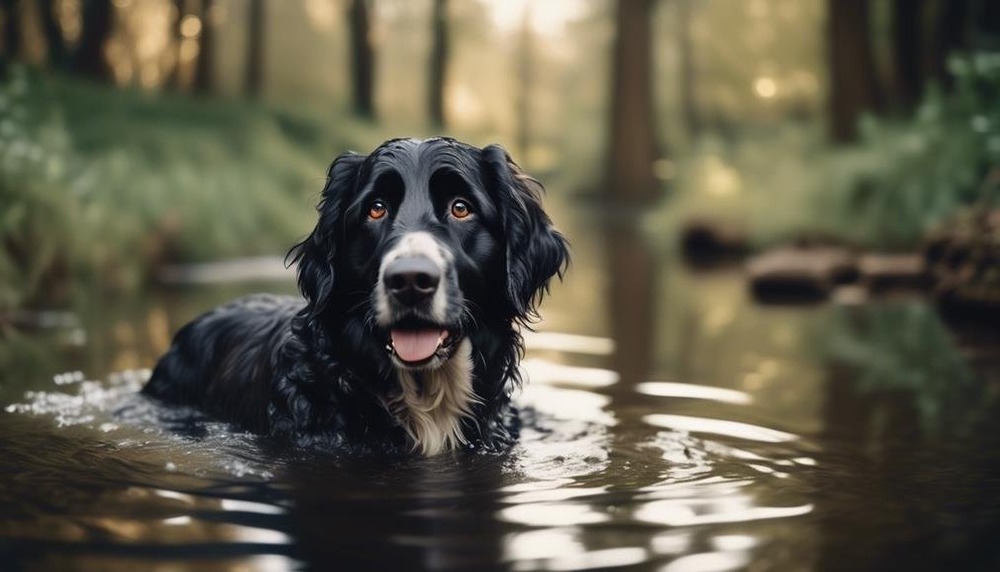
The Stabyhoun is a medium-sized, long-coated pointing dog with a reputation for being biddable and people-oriented. Under the coat and pleasant expression sits a working mind that does best with daily structure and variety.
- Origin: Friesland, the Netherlands.1
- FCI group: Group 7 (Pointing Dogs), continental pointing dogs, spaniel type.2
- Typical height: around 53 cm for males and 50 cm for females (breed standards describe “ideal” heights rather than a single fixed number).2, 3
- Typical lifespan: often cited around 13 to 15 years, with individual variation like any breed.6
- Coat colour: black, brown, or orange with white; ticking or roaning in the white is generally permitted in standards.2, 3
History and origin
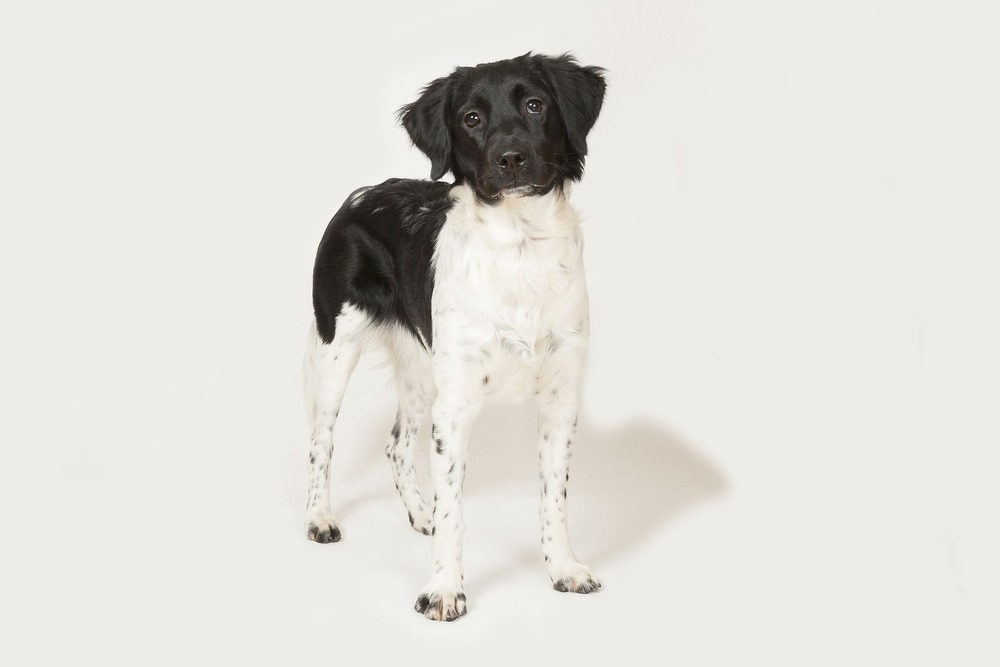
The Stabyhoun comes from Friesland, where dogs were expected to earn their keep. They needed to hunt and retrieve, deal with pests around the farm, and still be steady enough to live closely with the household.1, 3
Even the name points to that role. “Staby” is commonly explained as coming from “sta me bij”, meaning “stand by me”, and “houn” is Frisian for dog.1, 4 It is a useful reminder that the breed’s temperament is not meant to be remote or purely kennel focused, they were bred to work in partnership.
In modern times, international recognition is a little confusing because different organisations use different dates. The FCI lists the breed as recognised on a definitive basis, with standards published and updated over time.2 The United Kennel Club in the US lists recognition from 1 January 1996, not 2013.3 If you are dealing with paperwork, always check which registry your breeder is using and what that means for your country.
Physical characteristics
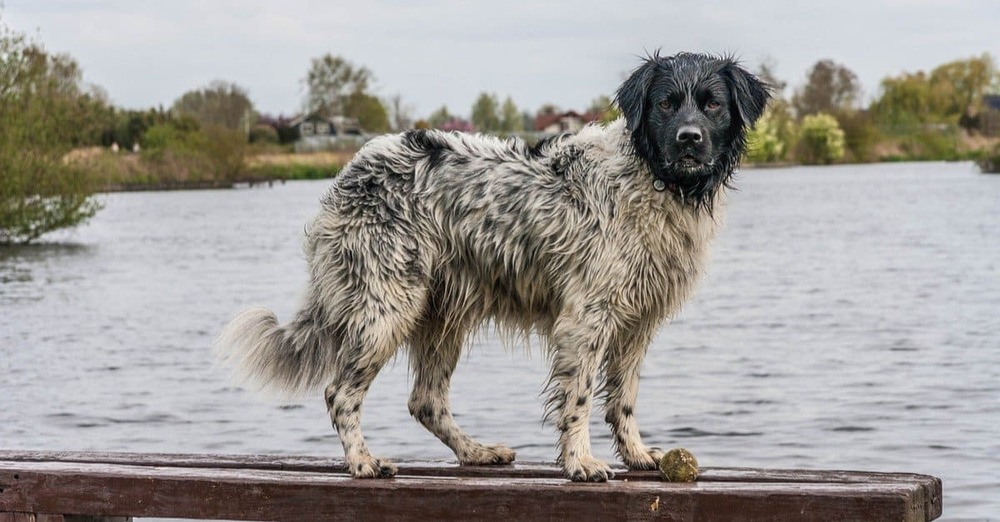
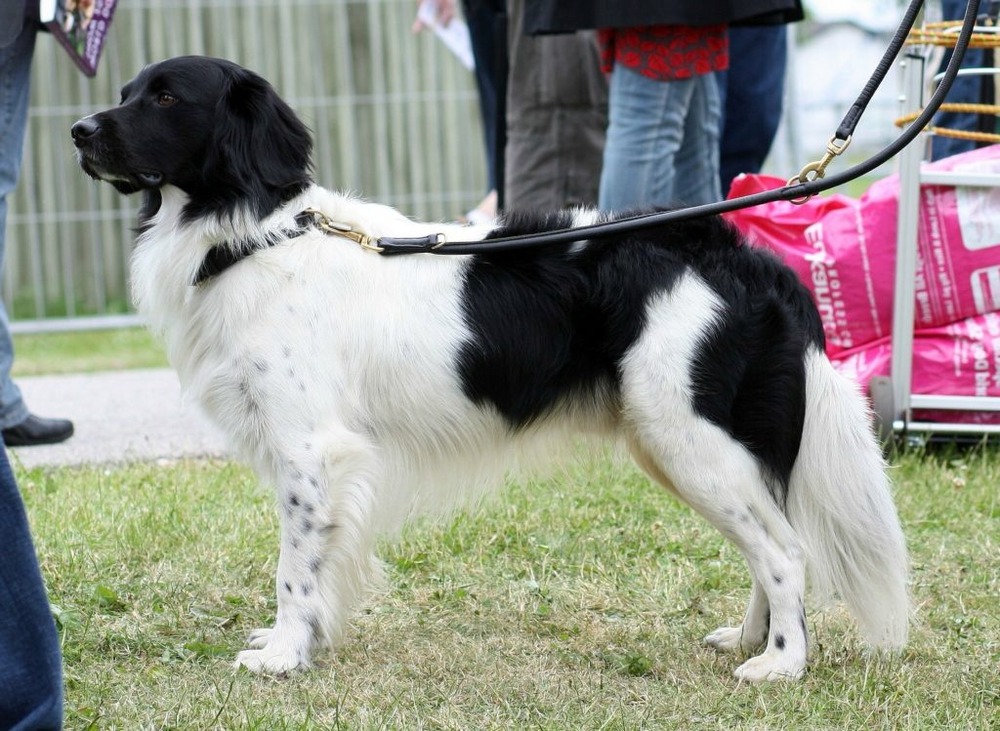
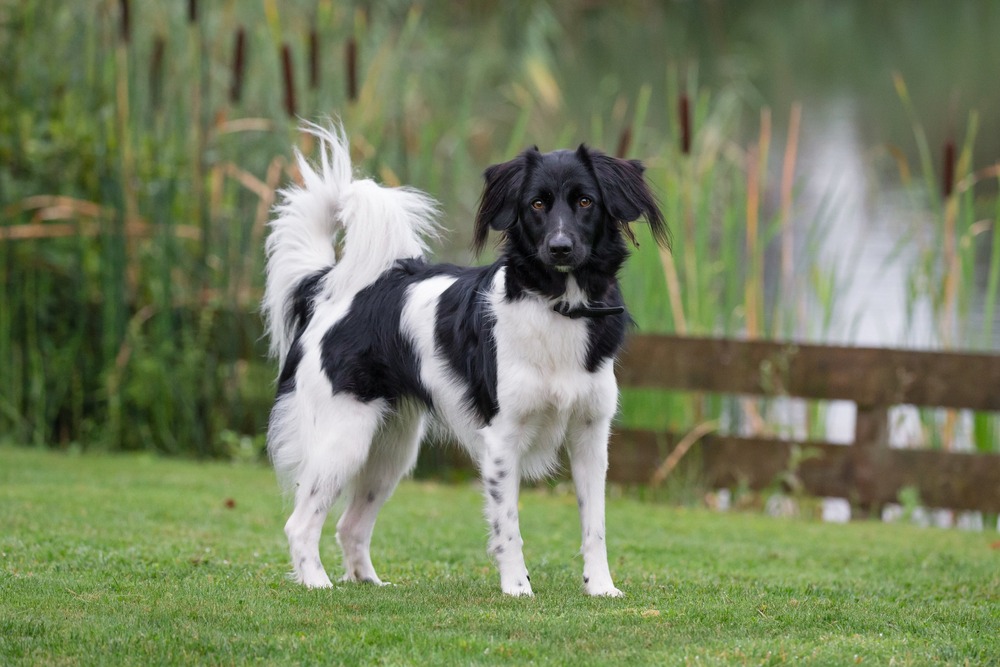
Standards describe a balanced, rectangular dog with a long, smooth coat that may be slightly wavy over the croup, but should not be curly.2, 3 That coat is practical rather than ornamental, offering protection when the dog is moving through scrub and wet ground.
Colours are typically black and white, brown and white, or orange and white. Light speckling (ticking) or roaning in the white is often mentioned as acceptable.2, 3 You will also see familiar “gundog” details: drop ears, a long tail, and a body built for efficient movement rather than bulk.
Some sources mention webbed feet. While many dogs have some degree of skin between the toes, and Stabyhouns can be strong swimmers, the key point is that they are often comfortable working around water and retrieving in wet conditions.6
Temperament and behaviour
Breed standards commonly describe the Stabyhoun as devoted, gentle, intelligent, and easy to train, with the steadiness of a good companion and the alertness of a sensible watchdog.2, 3 In practice, that combination tends to produce a dog that enjoys being involved, notices changes in the environment, and may struggle if left under-stimulated for long periods.
It helps to think in terms of behaviour, not labels. A young Stabyhoun can be exuberant and persistent, especially if they have learned that busy behaviour earns attention. With maturity and routine, many become calmer around the home, particularly when their exercise needs have been met. The useful phrase here is calm is taught, not demanded.
With children and other animals, what matters most is early socialisation and thoughtful supervision. “Good with kids” should never mean “tolerates anything”, especially with a medium-sized, energetic dog that can knock over a small child without meaning to.
Training that suits the breed
Stabyhouns are often described as biddable, and many respond beautifully to reward-based training that is clear, consistent, and low on drama.7, 8 You will usually get better results by showing the dog what to do, paying it well, and rehearsing the right behaviour in easy settings before expecting reliability in busy places.
A few practical focus areas tend to pay off:
- Recall and check-ins: build this early, especially if you plan to hike or allow off-lead time.
- Loose lead walking: many gundog types are naturally forward-moving, so teaching a comfortable lead rhythm matters.
- Settling skills: practise short, calm rests after activity, so the dog learns that “off switch” is part of the day.
- Handling and grooming tolerance: teach feet, ears, and brushing as cooperative routines, not wrestling matches.
Australian RSPCA guidance is consistent on avoiding aversive techniques (like shock devices, prong collars, and harsh corrections), partly because they can create fear and fallout behaviours, and partly because they are unnecessary for most pet dogs when training is well planned.7, 8
Exercise and enrichment
This breed is usually described as active, and most Stabyhouns need more than a quick lap around the block. Think of exercise as a mix of movement and brain work. A long walk is helpful, but so is sniffing, searching, retrieving, and learning tasks that use the dog’s natural style.
Good options often include:
- brisk walking or jogging (building up gradually)
- retrieving games with rules, so the dog practises self-control
- swimming where it is safe and permitted
- nosework style games at home
- obedience, agility, or field style training for handlers who enjoy it
If you are deciding whether the breed suits an apartment, it is less about square metres and more about the rhythm of the day. Without enough exercise and enrichment, an intelligent, energetic dog may invent its own projects, which is where people start reporting nuisance barking, chewing, or restlessness.
Health and lifespan
Overall, Stabyhouns are often regarded as a healthy breed, but no breed is without risk. Hip dysplasia is a concern in many medium and large breeds, and it is influenced by genetics and environment (including growth rate, body condition, and exercise patterns).9
Epilepsy is also mentioned in breed communities. If you are working with a breeder, it is reasonable to ask what health screening is done, what issues are known in the line, and how the breeder makes decisions when a problem appears in the wider family tree. A good breeder should be willing to talk plainly about uncertainty.
Breed clubs and associations often require or strongly encourage formal screening for hips and elbows (or equivalent schemes), alongside other criteria, before dogs are bred.5 For pet owners, the basics still matter: keep your dog lean, maintain regular veterinary care, and take lameness, stiffness, or exercise intolerance seriously.
Grooming and day-to-day care
The Stabyhoun’s coat is long and practical, not high-maintenance in the way some coated breeds can be, but it still benefits from routine. Aim for a thorough brush once or twice a week, then increase frequency during seasonal shedding. A quick daily “check and tidy” can prevent small tangles becoming mats.
Pay extra attention to:
- behind the ears and along the neck, where friction can create knots
- feathering on the legs and underside
- paws after mud, grass seeds, or beach trips
Bathing is usually occasional. Over-washing can strip oils and leave the coat dull or the skin dry. Ears, nails, and teeth deserve a steady routine too, especially for dogs that swim or spend time in damp environments.
Diet and weight management
A Stabyhoun that carries extra weight is at a disadvantage, particularly if they are predisposed to joint issues. The simplest, most practical nutrition advice is often the most effective: feed a complete, balanced diet, measure portions, adjust to activity level, and monitor body condition over time.
If you are unsure whether your dog is a healthy weight, ask your vet to score their body condition. It is a small conversation that can prevent larger problems later. For many active dogs, treats are the hidden calories, so it helps to budget them as part of the day’s intake rather than “extras”.
Finding a Stabyhoun responsibly
Because the breed is relatively rare outside its home region, waitlists and long-distance arrangements are common. That can be a healthy sign if it reflects careful breeding decisions, but rarity also creates opportunities for poor practices. Take your time and look for clarity rather than salesmanship.
Good questions to ask include:
- What health screening is completed (hips, elbows, and anything else relevant), and can you see the results?
- How are puppies raised and socialised in the first weeks?
- How does the breeder match puppies to homes?
- What support is offered after the puppy goes home?
If you want to compare descriptions across registries, the FCI and UKC breed information can help you understand how the breed is formally described, even if you are not showing your dog.2, 3
References
- The Stabyhoun and its origin (Kennel fan’e Sudewyn)
- FCI breeds nomenclature: Stabijhoun (No. 222)
- United Kennel Club (UKC): Stabyhoun breed standard
- Wikipedia: Stabyhoun
- Ameri-Can Stabyhoun Association: Breeding regulations
- Royal Canin: Stabyhoun breed overview
- RSPCA Knowledgebase: Reward-based dog training and why the RSPCA supports it
- RSPCA Knowledgebase: Training recommendations for dogs
- Orthopedic Foundation for Animals (OFA): Hip dysplasia