

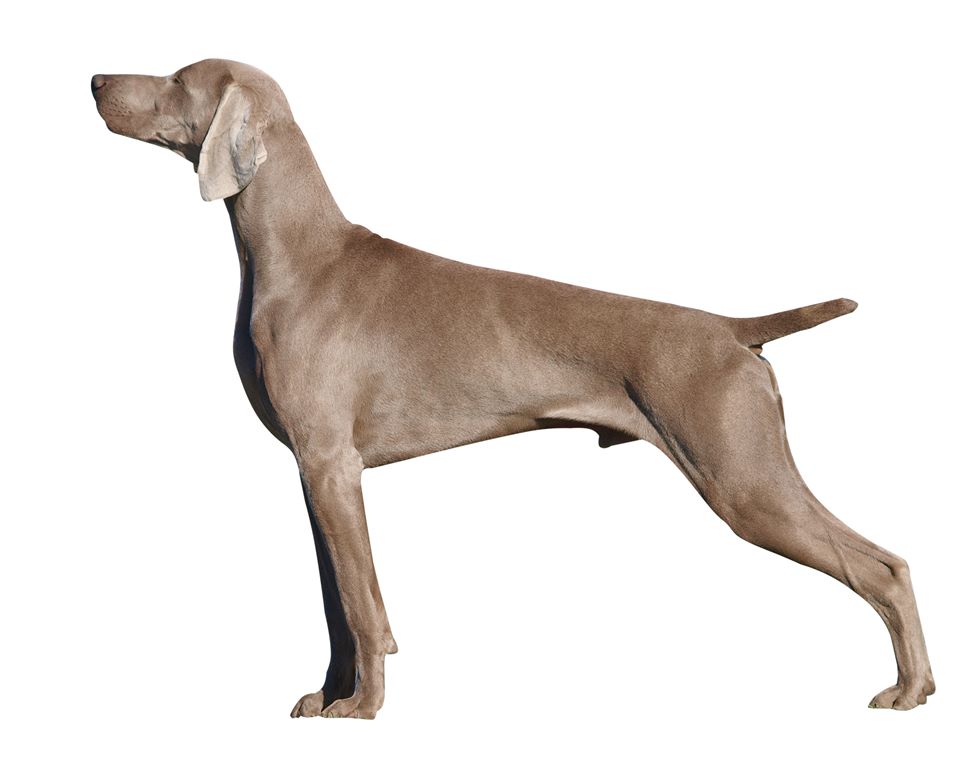
- Breed category: Sporting Group
- Country of origin: Germany
- Average height: Males 64 to 69 cm, females 58 to 64 cm
- Average weight: Males 30 to 40 kg, females 25 to 35 kg
- Average life span: 10 to 13 years
- Grooming requirements: Low, occasional brushing
- Exercise requirements: High, needs daily exercise
- Coat type: Short and smooth
- Coat colour variations: Silver, grey, blue-grey
- Shedding level: Moderate
- Ear type: Long and floppy
- Tail type: Docked or natural (where docking is permitted)
- Temperament: Energetic, friendly, intelligent
- Training ease: Often quick to learn, thrives with consistent practice
- Common health issues: Hip dysplasia, gastric dilatation-volvulus (bloat)
- Best suited for: Active households and people who enjoy training and outdoor time
You usually start thinking about Weimaraners after meeting one, or living near one. You notice the sleek grey coat, the way they move, and the fact they seem to be involved in everything happening around them. It can look like effortless elegance from the outside, until you realise how much daily movement and company they tend to need.
A common assumption is that a short coat equals an easy dog. With Weimaraners, the coat is the simplest part. What shapes day-to-day life is their drive for activity and connection, and how quickly that can tip into restlessness if it is not channelled.
When they fit, they fit beautifully. When they do not, it is rarely because the dog is “naughty”, it is because their needs do not match the household’s rhythms, space, or time.
Where the Weimaraner came from
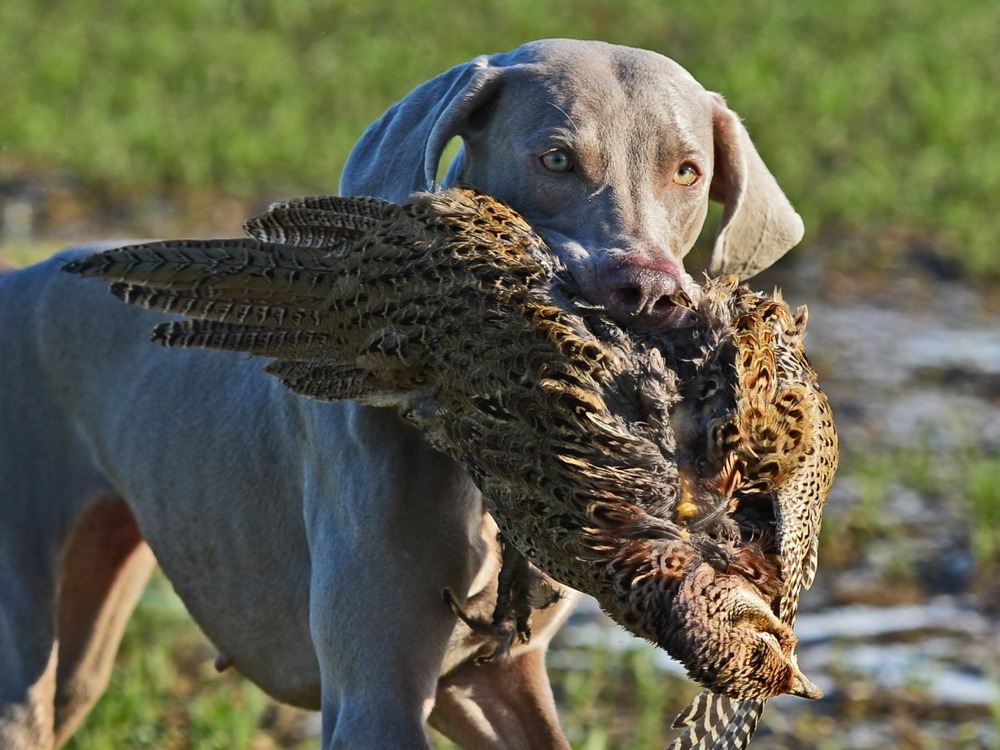
The Weimaraner developed in Germany as a versatile hunting dog, valued for speed, stamina, and a strong nose. Over time, the breed became associated with all-round field work rather than a single task, which helps explain why modern Weimaraners often want both long exercise and something purposeful to do with their people.1
Most breed histories include a few romantic details, but the practical thread is consistent: this is a dog built to cover ground, make decisions, and keep working even when it is tired. That heritage is still visible in their athleticism, their enthusiasm for training, and their tendency to pace the house if their day has been too small.
A note on “recognition” dates
You will see different recognition years depending on the kennel club and country. It is more helpful to focus on what breed standards agree on: a medium-to-large, grey sporting dog with a body designed for endurance and speed, and a temperament that thrives with engagement.2
Appearance and what it usually signals

Weimaraners are medium-to-large dogs with a short, smooth coat that sits close to the body. The classic look is grey in varying shades, with eyes that can appear pale amber to blue-grey (particularly in younger dogs). Their outline tends to be lean and muscular rather than bulky, with long legs and a deep chest suited to running.2, 3
The “striking” part is real, but it can distract from an important point: their build usually goes hand-in-hand with high daily exercise needs. A Weimaraner that looks wired is often simply under-exercised, under-enriched, or both.
Size guide (as a starting point)
Different sources give slightly different ranges, but most place adult males around 63 to 69 cm at the shoulder and females around 58 to 64 cm. Weight commonly sits around 25 to 40 kg, depending on sex, frame, and conditioning. Your vet is the best person to help you judge healthy body condition for an individual dog.2, 3
Temperament, attachment, and household fit
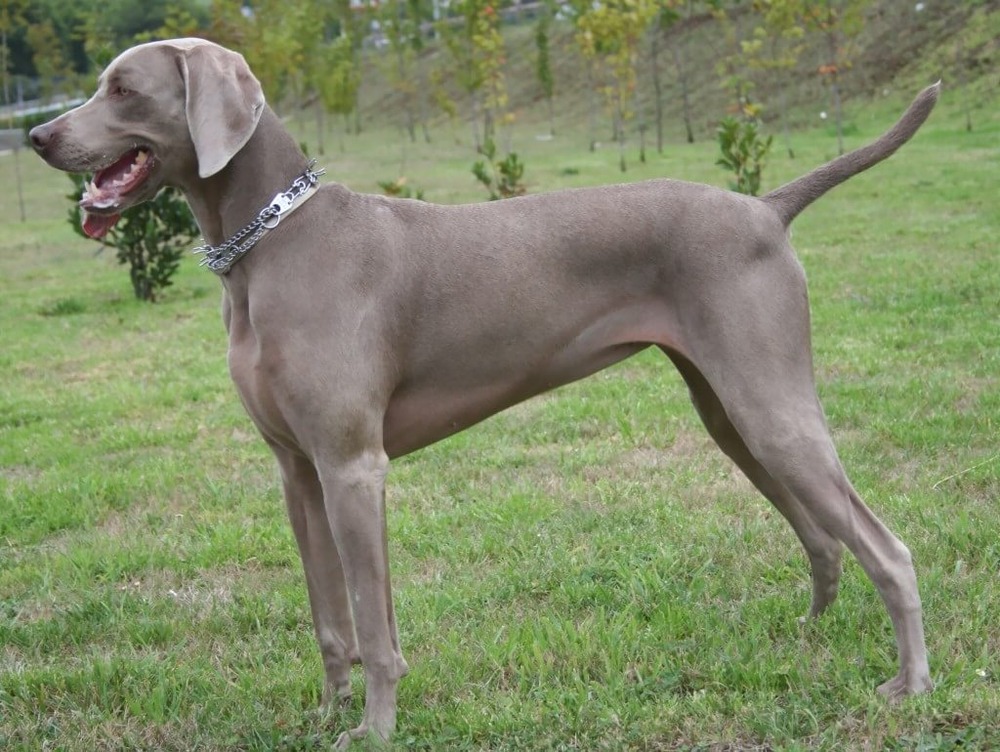
Weimaraners are often described as intelligent, energetic, and people-oriented. In practice, that can look like a dog who follows you from room to room, learns patterns quickly, and expects to be included. Many owners love this. Some find it intense, especially if they hoped for an independent dog who is happy to potter alone.3
It can help to think in terms of proximity-seeking behaviour rather than “clinginess”. A breed developed to work closely with humans will often prefer being near them. Problems tend to arise when that preference meets long workdays, limited exercise, or inconsistent routines.
Children and other animals
With children, Weimaraners are often playful and sociable, but their size and enthusiasm mean adults should supervise, especially around toddlers. With other pets, early socialisation matters, and it is wise to remember their hunting background. Some Weimaraners live peacefully with cats, while others find small animals hard to ignore. Good management and training make a big difference, but there are individual limits.3, 4
Training and exercise that actually works

A Weimaraner usually does best with training that is clear, calm, and consistent. Reward-based methods are widely recommended because they build skills without adding unnecessary stress or conflict, which can backfire in sensitive or easily over-aroused dogs.5
Exercise is not just about physical tiredness. Many Weimaraners need both movement and mental work, otherwise they can find their own projects, like digging, counter-surfing, or deconstructing shoes. It is not personal, it is often just unmet need.
If you are trying to map the breed onto real life, think in terms of a daily baseline, then add variety:
- Daily movement: a decent walk plus something that lifts the pace (a run, off-lead time where legal and safe, or structured games).
- Daily brain work: scent games, short training sessions, food puzzles, or retrieving with rules rather than chaos.
- Weekly novelty: new walking routes, supervised swimming, or a dog sport class if it suits your dog.
Early socialisation, without flooding
With an active, observant breed, it is tempting to do everything at once. A steadier approach tends to hold better: brief exposures, plenty of space, and rewards for calm choices. The goal is not a dog who never reacts, but a dog who can recover and listen.5
Health considerations and sensible prevention
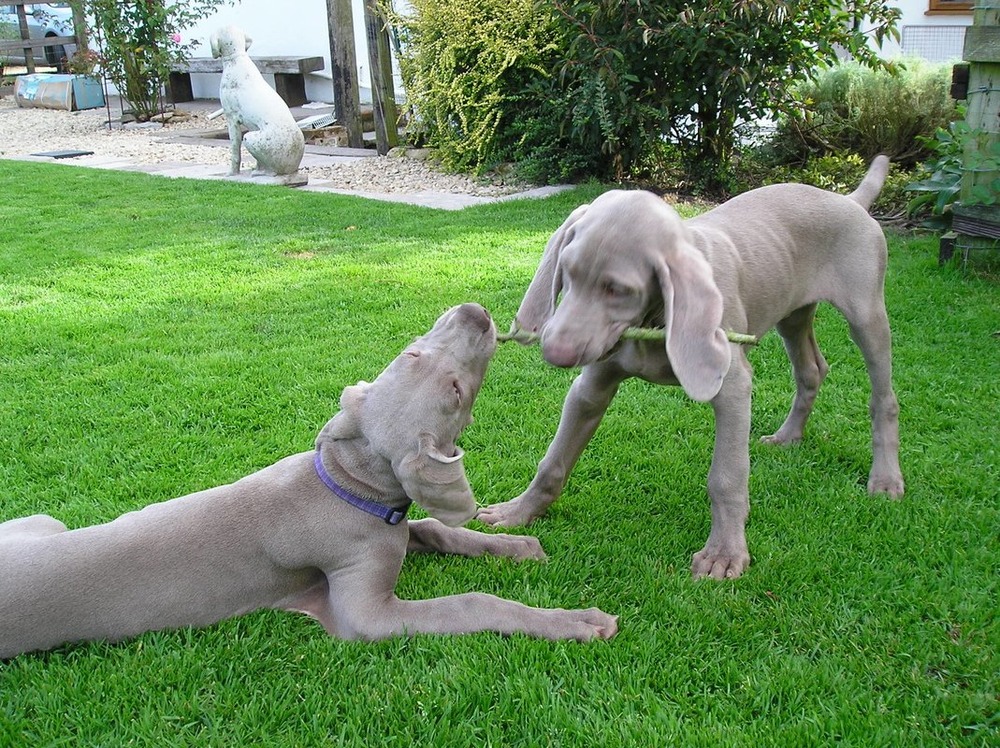
Like all breeds, Weimaraners can be predisposed to certain issues. Hip dysplasia is one. Another, more urgent risk is gastric dilatation-volvulus (GDV), often called bloat. GDV is a medical emergency where the stomach distends and can twist, cutting off normal blood flow and trapping gas. Deep-chested breeds are at higher risk, and Weimaraners are commonly listed among those breeds.6, 7
It is worth knowing the early signs, because timing matters. Seek veterinary help immediately if you see non-productive retching, a rapidly swelling abdomen, excessive drooling, restlessness, or collapse.7
Reducing GDV risk, practically
No method can remove risk entirely, but veterinary sources commonly suggest steps such as feeding multiple smaller meals rather than one large meal, slowing down fast eaters, and avoiding hard exercise right after eating. Some dogs may be candidates for preventive gastropexy, which you can discuss with your vet, particularly if there is family history.6, 7
For everything else, the basics still matter: maintaining a lean body condition, keeping up with dental care, parasite prevention, and regular check-ups so changes are noticed early.
Grooming, coat care, and weather comfort
The short coat is genuinely straightforward. A quick brush once or twice a week usually lifts loose hair and keeps the coat glossy. Ears should be checked routinely, nails kept at a comfortable length, and teeth cared for as part of normal maintenance.
What owners sometimes miss is comfort. With a short coat and low body fat relative to some breeds, many Weimaraners feel the cold. If your dog is shivering, reluctant to settle on cold floors, or stiff after winter outings, a warm coat and a soft bed can be more than just a nice extra.
Food and feeding routines for a high-energy dog

Weimaraners tend to do best on a high-quality, complete diet that suits their age and activity level. Because they are often lean, active dogs, owners sometimes overcorrect and feed too much. It helps to use body condition, not the size of the bowl, as your guide, and to ask your vet if you are unsure.
From a behaviour point of view, feeding can do more than fill a stomach. Using part of a meal for training, scatter-feeding in the yard, or puzzle feeders can turn everyday calories into calm enrichment, which suits many Weimaraners particularly well.
Final thoughts

A Weimaraner is often at their best in a home that enjoys movement, likes training as a normal part of the day, and can offer company rather than long stretches of isolation. Their beauty is real, but the more meaningful trait is how strongly many of them orient to their people.
If you are considering the breed, it can help to plan for the boring parts as much as the fun ones, wet mornings, short winter days, and the need for routine when life gets busy. With the right match, a Weimaraner can be a deeply engaging companion, the kind of dog who makes you notice the weather and the calendar because they expect to be out in it with you.
References
- Dogs Queensland: Weimaraner breed standard (includes FCI history excerpt)
- Weimaraner Club of America: AKC breed standard
- PetMD: Weimaraner breed profile
- PetMD: Notes on Weimaraner behaviour around smaller pets
- RSPCA Australia Knowledgebase: Reward-based training recommendations
- American College of Veterinary Surgeons: GDV and gastropexy
- Cornell University College of Veterinary Medicine: GDV (bloat) overview
- Weimaraner Club of America: Living with a Weimaraner
- RSPCA Australia Knowledgebase: What is reward-based dog training?