

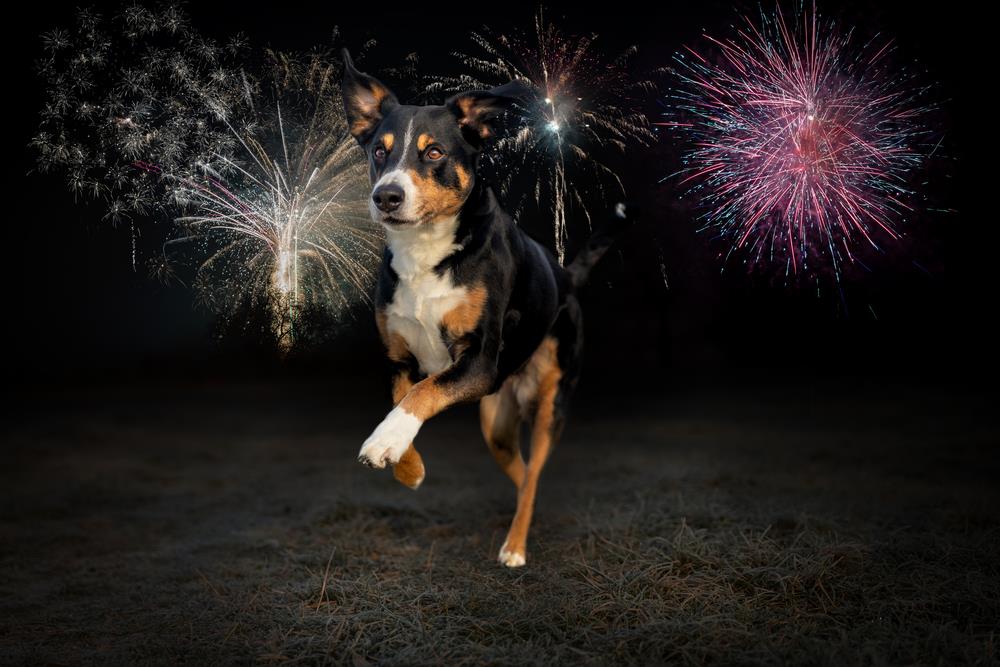
People usually land here because fireworks are scheduled nearby and they want to know one thing: how to stop a dog or cat panicking — and how to keep them from bolting, injuring themselves, or disappearing into the night.
Fireworks are brief for us, but for many pets they are sudden, irregular bursts of sound, vibration and light with no clear source. The safest approach is simple and practical: reduce exposure, give your pet control over where they can hide, and plan ahead for escape risk and severe anxiety.1, 2
Why fireworks unsettle pets
Dogs and cats hear a wider range of frequencies than humans and can be more sensitive to sharp, high-intensity noise. Add bright flashes, smoke smells, and the low thump of vibration through walls and ground, and you get a classic trigger for fear responses — pacing, trembling, hiding, vocalising, toileting indoors, and attempts to escape.1, 3
For some animals, repeated exposure can harden into a learned fear of “bang” sounds (thunder, backfiring cars, fireworks seasons). That is worth taking seriously early, because the pattern can become easier to trigger over time.1
What to do on the day (fast, high-impact steps)
Keep them inside and make the house feel smaller
- Bring pets indoors well before dusk, before the first bangs start.1, 2
- Close windows and draw curtains/blinds to reduce noise and flashes.1, 2
- Put on steady background sound (TV, radio, music, white noise) to soften sudden peaks.1, 2
- Do not leave dogs outside alone during fireworks — escape and injury risk rises sharply when they panic.1
Set up a safe retreat (and let them choose it)
Pick a quiet room or corner away from external walls and windows. Make it dim. Lay down familiar bedding and a couple of safe, well-known items that carry home scent. Then leave the entrance open so your pet can move in and out as they feel the need.1, 2
A cardboard box lined with blankets can work for cats and small dogs. For dogs that already like a crate, a covered crate can be a solid “den” option — as long as the crate has always been a positive place, never a punishment spot.1
How to behave around a frightened pet
- Stay calm and keep your movements ordinary. Pets often take cues from household rhythm.1, 2
- Reward calm behaviour if your pet is able to take food or play, but don’t force interaction if they choose hiding instead.1
- Never punish fear (barking, shaking, hiding, accidents). It can increase anxiety and make future events harder.1
- Do not tether a panicking dog outside. They can injure themselves trying to escape.1
Acclimatising and training (for next time)
When fireworks are weeks away, you have more room to change the pattern. The most evidence-based approach is gradual desensitisation paired with counter-conditioning: controlled exposure at a low intensity, matched with something your pet values (food, play), then slowly increased over sessions without tipping them into panic.4
Key detail: if your pet is already distressed, the volume is too high or the step is too fast. The goal is calm exposure, not “getting used to it” through overwhelm.
If you’re not confident setting up a plan, ask your vet about referral to a qualified behaviour professional (for example, a veterinary behaviourist or an accredited trainer who works under veterinary guidance for fear cases).2
Identification and escape planning (because fireworks make runners)
Even steady pets can bolt when startled. Treat fireworks nights like storm season: double-check exits, gates, and fence lines, and assume a frightened animal can squeeze through gaps you didn’t know existed.
Microchip details: the part people forget
Microchipping only helps if the contact details are current. Keep your phone number and address up to date with the relevant registry, and consider adding a secondary contact. In NSW, microchipping rules and registry guidance are set out by the NSW Office of Local Government through the NSW Pet Registry.5
ID tags and recent photos
Collars and tags can provide immediate “at a glance” contact information if someone finds your pet before a vet or shelter scans a microchip. Keep a clear, recent photo on your phone as well — it speeds up posters, local alerts, and proof of ownership if needed.1
Medication, pheromones, and “natural” remedies
Some pets need more than environmental management. If your dog or cat has a history of extreme distress, talk to your vet early (days to weeks ahead). Many medications work best when given before the fear escalates, and your vet can choose an option suited to your pet’s health and the timing of the event.3
Pheromone products may help some pets as part of a broader plan, especially when started ahead of time in the areas your pet rests.1, 2
Be cautious with “natural remedies”, especially CBD products. Quality, dosing, and safety vary widely, and some products may contain ingredients that are unsafe for pets. Treat it as a veterinary conversation, not a DIY experiment on a night when your pet is already frightened.6
Outdoor pets: birds, rabbits, guinea pigs and others
Small animals can be affected by both noise and light. If possible, move hutches and cages indoors to a quiet room before fireworks start. If they must stay outside, partially cover enclosures with a blanket to create a darker, muffled retreat while still leaving ventilation and a portion uncovered so the animal can orient and you can check them easily.2
Signs the stress is severe (and what to do)
Many pets show mild fear during fireworks, but some spiral into panic. Watch for:
- continuous trembling, panting, drooling, or frantic pacing
- attempts to escape through doors, windows, fences, or crate bars
- self-injury (broken nails, bleeding gums, head rubbing, chewing)
- not settling for hours after the noise stops, or worsening fear across events
If you see these signs, contact your veterinarian for advice. If you suspect your pet has ingested something hazardous during the chaos (firework debris, medications, party food), seek urgent veterinary care and consider calling a specialist poisons advice line for guidance — in Australia, the Australian Animal Poisons Helpline is available 24/7 on 1300 869 738.7
References
- RSPCA Australia Knowledgebase: How should I care for my pets during fireworks displays?
- RSPCA NSW: Tips to help keep pets safe during firework displays
- Merck Veterinary Manual: Anxiety and fear in dogs
- American Veterinary Society of Animal Behavior (AVSAB): Position statements and resources (behaviour modification, desensitisation/counter-conditioning)
- NSW Office of Local Government: NSW Pet Registry — Microchipping
- RSPCA (UK): Advice on cannabis/CBD and pets
- Australian Animal Poisons Helpline: About the service (24/7 contact details)
- RSPCA Pet Insurance Australia: Fireworks anxiety in pets
- NSW Office of Local Government: Get started on the NSW Pet Registry (keeping details current)