

You might notice it on an ordinary walk: your dog’s tail is wagging, but the rest of them looks stiff. Or they yawn just as a visitor leans in for a pat. Moments like these can leave you wondering whether you are overthinking things, or missing something important.
A lot of us grow up with a few simple rules, wagging tail means friendly, growling means “bad”, a dog who rolls over wants a tummy rub. In real life, dogs communicate in blends of signals, and the same behaviour can mean different things depending on what comes before, what comes after, and what the whole body is doing at the same time.1, 2
Learning dog body language is not about turning your home into a training clinic. It is about noticing the quieter messages early, so daily life gets smoother, greetings feel safer, and your dog has less reason to escalate from subtle discomfort into barking, snapping, or retreating.
Common dog body language signals
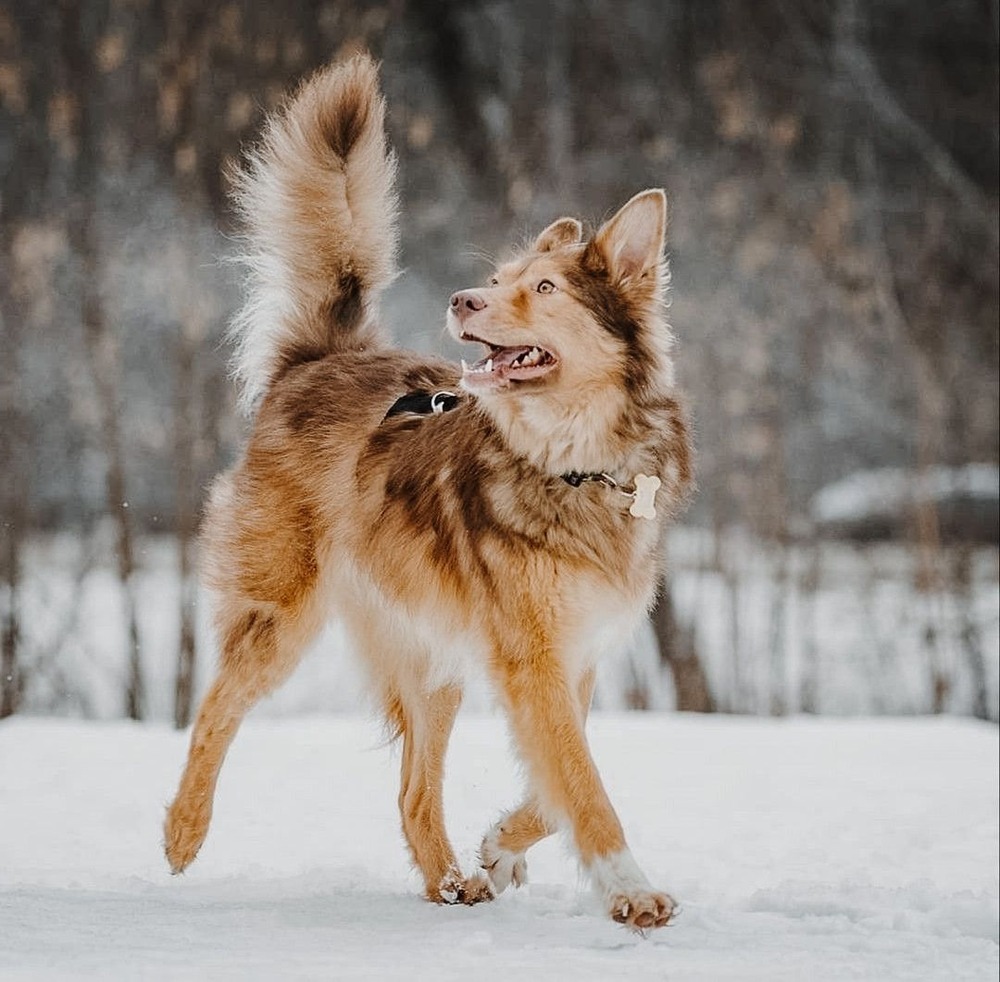
Dogs rarely communicate with one “big” sign on its own. You get the clearest read by watching for patterns across the body, then checking whether the situation supports that interpretation. The goal is not perfection, it is becoming more fluent over time.
It helps to think in terms of loose versus tight. A loose dog tends to move with curved lines, soft muscles, and easy shifts of weight. A tight dog often looks still, squared up, or “packed” through the shoulders and face. Either can appear with a wagging tail, which is why tails are best read as part of the whole picture.1
Face, eyes, and mouth
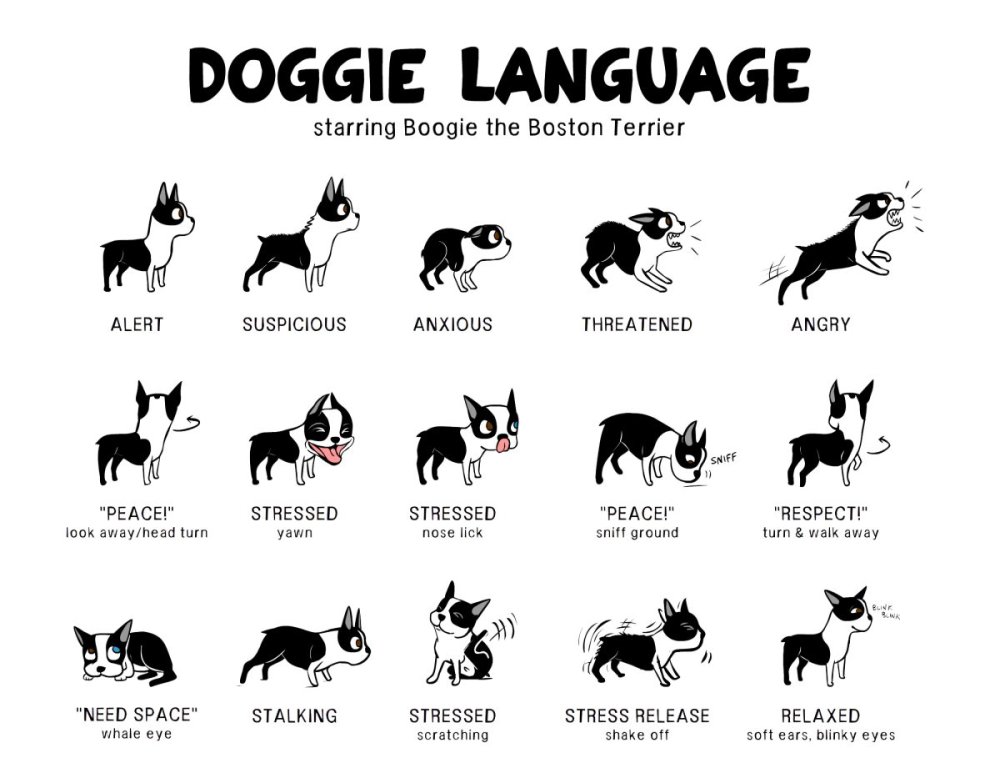
The face often gives you early clues. Soft eyes, normal blinking, and a slightly open mouth can sit with a relaxed, comfortable dog. By contrast, a hard stare, wide eyes (sometimes showing the whites, often called “whale eye”), or a closed, tense mouth can suggest discomfort, uncertainty, or rising arousal.1, 3
Be cautious about reading bared teeth as a single, simple message. Teeth can appear in an overt warning (snarl, growl), but some dogs also pull the lips back in an appeasement display. Context and the rest of the body matter, especially whether the dog looks loose and wiggly, or still and braced.1
Body posture and movement
Posture is where you often see intent and confidence. A play bow (front down, rear up) commonly signals playful intent, particularly if the dog stays bouncy and curved in their movement afterwards.1
On the other end, a dog who freezes, leans forward with weight over the front feet, or holds a stiff, upright stance is worth taking seriously. These moments are not “naughty”, they are information, and they are often the point where giving space is the safest, kindest option.4, 5
How a dog approaches also matters. Many dogs greet politely by curving in rather than marching straight up face-to-face. If your dog repeatedly arcs away, sniffs the ground, or slows down as they approach, it can be a sign they are trying to keep things calm, or that they are not fully comfortable with the interaction.1
Breed and individual differences
Dogs are built differently, and their “neutral” can look different too. A curled tail, a naturally low tail carriage, a flat face, or very fluffy coat can all change what signals look like on the surface. Dogs with docked tails also have fewer ways to signal with tail movement and position, which can make misunderstandings more likely.6
The most useful baseline is your own dog. Notice what they look like when resting at home, when greeting familiar people calmly, and when they are mildly unsure. Those reference points make it easier to spot the small changes that come before bigger reactions.
Vocalisations and what they can (and cannot) tell you
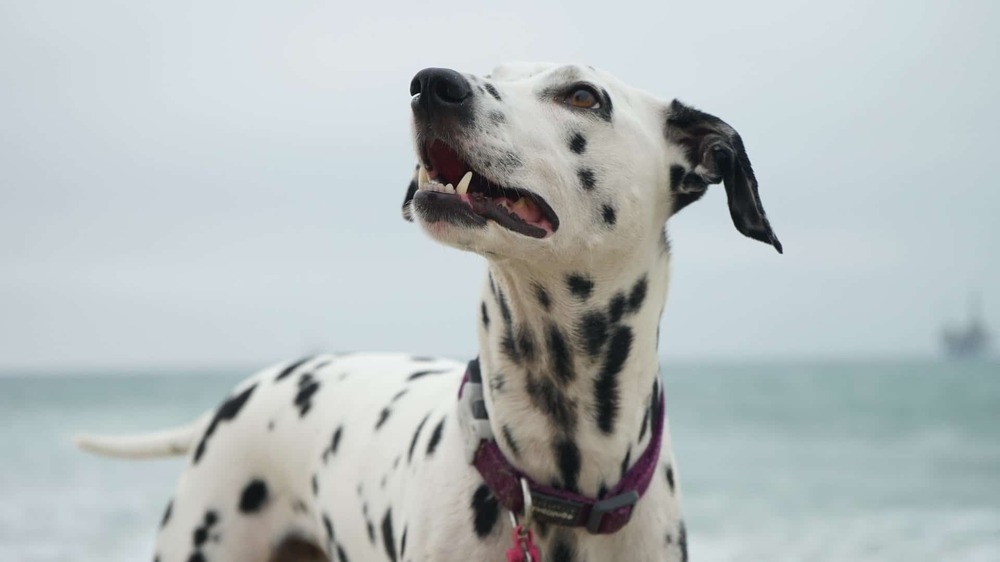
Dogs vocalise for many reasons, and sound alone can mislead. Barking might be excitement, frustration, alarm, or a learned habit. Whining can show need, anticipation, or unease. And growling is often misunderstood as “aggression”, when it is frequently a distance-increasing warning, a dog’s way of saying they are uncomfortable and want the situation to change.5
When you hear a sound, check the body. Is the dog loose and bouncy, or stiff and forward? Are they turning away, licking lips, or showing whale eye? Pairing the sound with posture, facial tension, and the environment gives you a more reliable read than trying to decode the noise on its own.1
If a dog is growling over food, a resting spot, or a valued item, the safest first move is usually to pause and create space, rather than challenging or “testing” them. Where resource guarding is recurring, a vet or qualified behaviour professional can help you build a plan that reduces risk and stress for everyone involved.7
Tail language: more than wagging
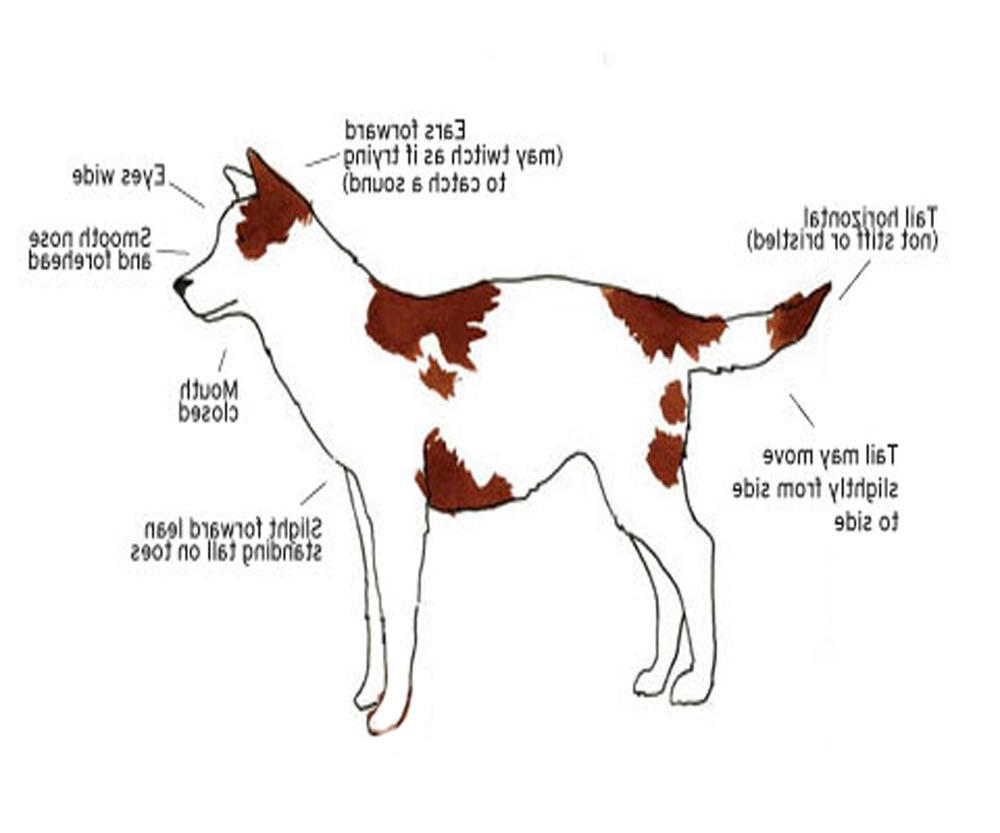
A wagging tail means arousal and willingness to engage, but that engagement is not always friendly. A broad, sweeping wag with a loose body often shows social comfort. A fast, tight wag, especially when the tail is held high and the body is stiff, can show high arousal that may tip into conflict if pressure continues.1
Tail height matters too. A tail tucked tightly under usually signals fear or appeasement. A neutral, mid-level tail often sits with relaxation. A high, still tail can be assertive and tense, particularly when paired with a forward-leaning posture and hard stare.1
If you only remember one thing, let it be this: read the tail with the body. Tail speed, tail height, muscle tension, and what the dog is doing with their feet and face all belong to the same “sentence”.1
Ears and head position
Ears are useful, but they are not a universal code. Forward ears can mean interest, alertness, or intensity. Ears held back can be appeasement, uncertainty, or fear. Some dogs swivel one ear while the other stays neutral, which can simply mean they are tracking more than one thing at once.
What often helps more than ear shape is the whole head and neck: is the head carried loosely, or fixed and high? Is the dog turning their head away (a common de-escalation gesture), or locking in with a still stare? Combining ear position with facial tension and weight shift gives you a clearer read than ears alone.1
Stress and anxiety signals you can easily miss
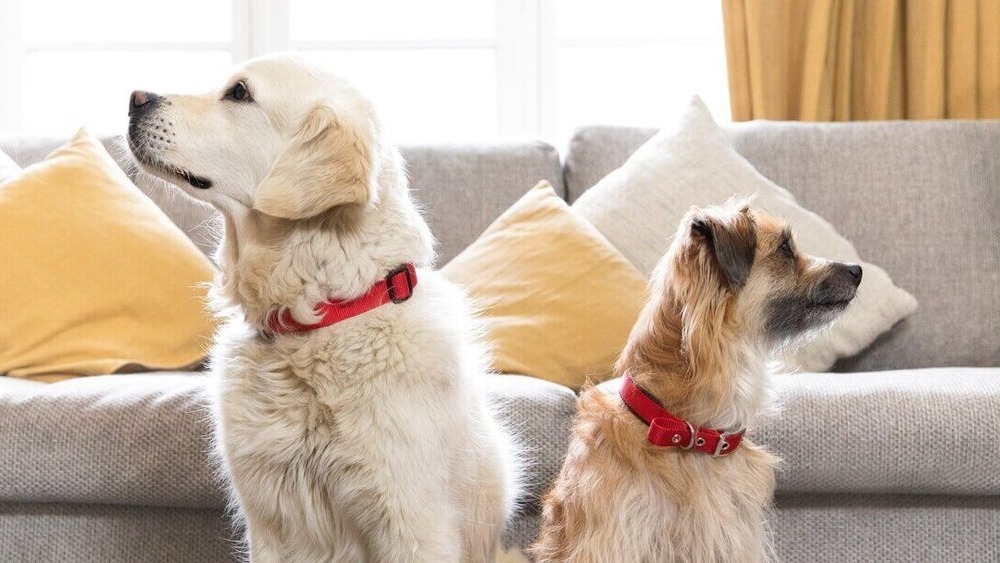
Stress signals are often small, and they can look like everyday behaviours. Panting can be heat, pain, excitement, or anxiety. Yawning can be tiredness, but it can also appear as a calming or conflict signal. Lip licking can be about food, but quick tongue flicks in a tense moment often show discomfort.1, 2
Common signs that a dog may be struggling include:
- Turning the head away or angling the body to the side
- Frequent lip licking or tongue flicks when there is no food involved
- Yawning in situations that look socially or environmentally demanding
- Whale eye (showing the whites of the eye)
- Freezing, going very still, or suddenly becoming stiff
None of these automatically mean a dog will bite, and it is normal for dogs to show some of them in mild situations. What matters is clustering and escalation. If the signals stack up, the practical response is usually to reduce pressure, increase distance, and give the dog a break before things get louder.1, 5
Enhancing communication in daily life
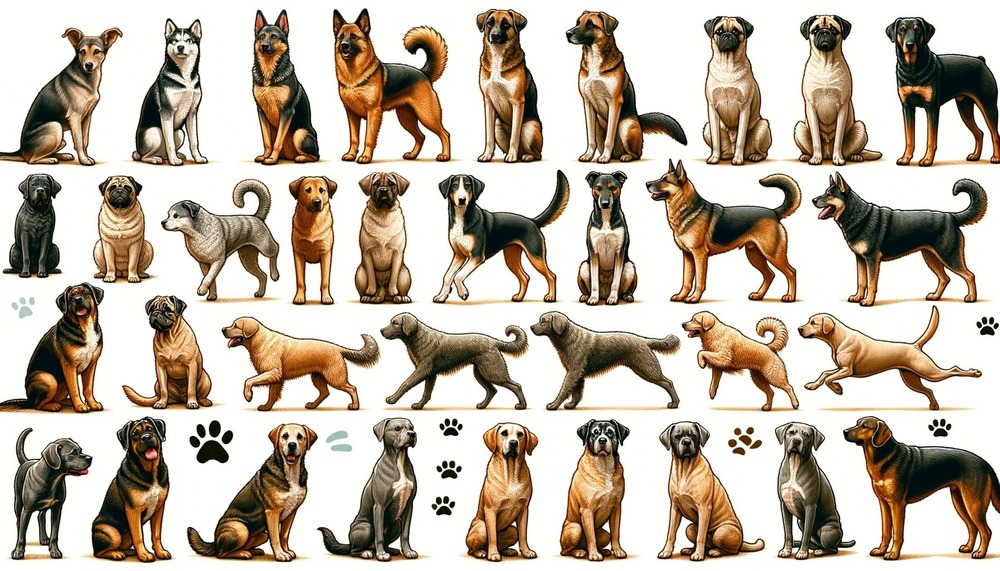
Good communication is mostly about making it easy for your dog to succeed. That can look surprisingly simple: fewer forced greetings, more sniffy walks, clearer routines, and kinder handling when your dog is uncertain.
If your dog is giving subtle stress signals, a helpful next step is to practise create space early. Take one or two steps back, turn side-on, soften your own body, and let the dog choose whether to re-engage. With many dogs, this alone reduces tension quickly because it removes the feeling of being cornered.
Consistency matters, but so does flexibility. Use stable cues and predictable routines, yet be willing to adjust when your dog is telling you the situation is too hard. If your dog repeatedly struggles in common scenarios (visitors, grooming, handling, other dogs), a vet check is a good starting point, then consider a qualified trainer or behaviour professional who uses reward-based methods.7
Final thoughts
Dog body language is not a party trick. It is a practical skill that helps you make better decisions moment by moment: when to pause, when to give space, when to advocate for your dog, and when it is safe to keep going.
Most misunderstandings happen when we focus on one signal in isolation, especially the tail. When you start watching the whole dog, you often notice that they have been communicating for a while. The real change is that you are finally able to hear them.
References
- RSPCA Pet Insurance: How to interpret body language in dogs
- RSPCA WA: How to speak dog
- FOUR PAWS Australia: How dogs communicate
- RSPCA Australia: Keeping safe around other dogs
- ASPCA: Dog Bite Prevention
- FOUR PAWS Australia: Breed differences and limitations in dog signalling (tail communication)
- American Veterinary Society of Animal Behavior (AVSAB): Position statements (humane training and behaviour guidance)
- American Kennel Club: How to read dog body language