

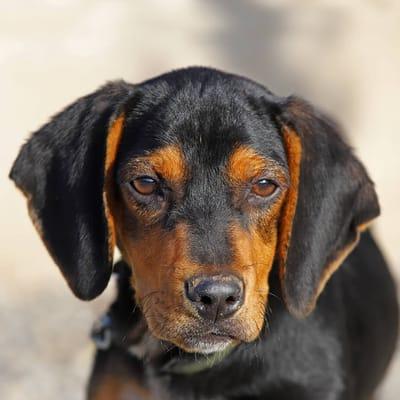
You might come across the Austrian Black and Tan Hound because you have seen a photo of that glossy black coat with tan points, or because someone mentioned a “Brandlbracke” and you were not sure if it was a separate breed. Sometimes it is practical curiosity too, you are weighing up a dog that can keep up on long walks, but you also live in a world of fences, neighbours, and busy routines.
This is a working scenthound from Austria, bred to follow a trail for hours in difficult country. That heritage explains a lot of what people notice day to day: a dog that can seem wonderfully steady at home, then suddenly become single-minded when a scent takes hold. It is not stubbornness so much as a nervous system built for tracking.
When the match is right, these hounds can be deeply rewarding to live with. The trick is to plan for the parts that catch people off guard, like recall around wildlife, the need for meaningful exercise (not just a quick lap of the block), and the basic health upkeep that comes with long ears and an active body.
Breed snapshot
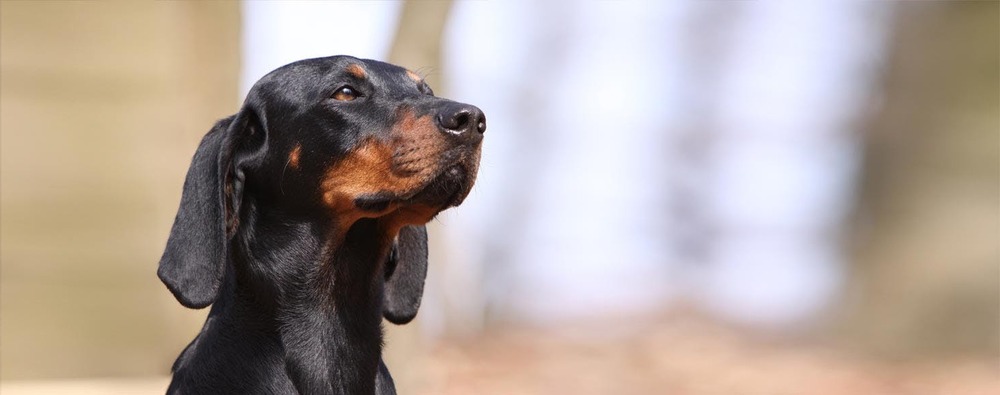
Also known as the Brandlbracke (and sometimes “Vieräugl”, referring to the tan points above the eyes), the Austrian Black and Tan Hound is a medium-sized scenthound in the FCI scent hounds group.1
- Size: about 48 to 56 cm at the shoulder
- Build: athletic and durable rather than heavy
- Coat: short, dense, black with tan markings
- Typical lifespan: often around 12 to 14 years (as with many similar-sized working breeds, this varies with genetics, weight, and overall care)
- Best fit: people who enjoy regular outdoor time and can provide structured outlets for scenting and movement
Origins and working purpose

In Austria, this hound developed as a practical hunting dog, valued for its ability to follow scent over challenging terrain and to work with persistence. Modern breed descriptions still centre on that working identity, rather than on being a purely companion breed.1, 2
FCI recognition for the breed dates back to 1954, which matters mainly because it reflects a long-standing, formalised standard rather than a recent “designer” development.2 If you are looking at breeders, that history can be a prompt to ask the right questions: what do their dogs do day to day, how do they manage drive, and what health screening supports sound working bodies.
Temperament in real homes
Descriptions like “friendly” and “loyal” are often broadly true, but they can be misleading if they make you imagine an easygoing dog that will happily switch off without much input. Many scenthounds are social and people-oriented, yet still highly motivated by smells and movement.
In practice, you might see:
- A strong nose-first approach: sniffing can become the main event, and that is normal for a scenthound.
- Independence outdoors: not disobedience, but a tendency to “work the environment” once they have a trail.
- Calm indoors if their needs are met: long, satisfied naps are common after proper exercise and enrichment.
If you have other pets, early management matters. “Generally good” often means “good with thoughtful introductions and supervision”, particularly around small animals that can trigger chase behaviour.
Training that respects the nose
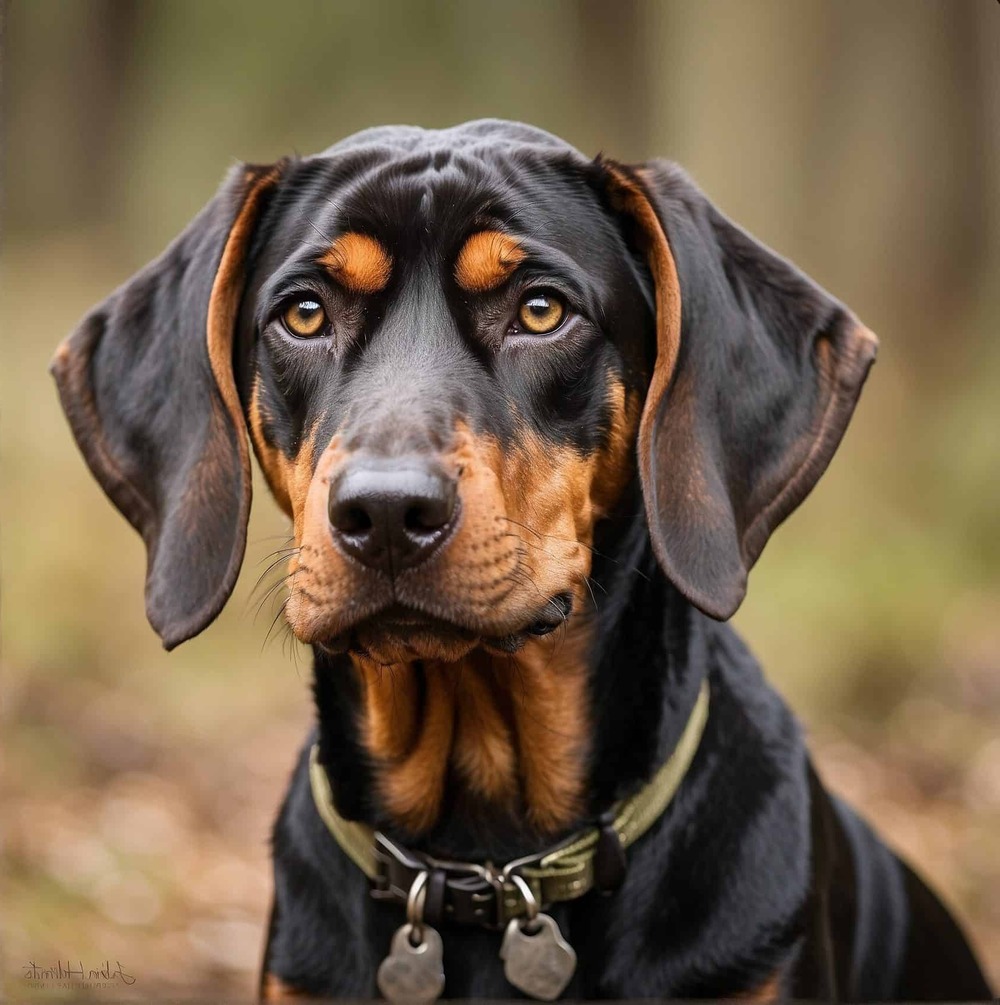
Training tends to go best when it is consistent, reward-based, and built around the dog’s natural motivations. With scenthounds, it helps to think in terms of teaching skills, not “winning” control.
Early socialisation is most effective when it is gentle, positive, and responsive to the puppy’s comfort, rather than forced exposure. Evidence-based behaviour guidelines also emphasise that social experiences should continue beyond early puppyhood, and that pushing a fearful pup can backfire.3
Practical training priorities many owners find useful include:
- Recall with realistic expectations: practise in low-distraction places first, then build difficulty slowly. Use a long line in unfenced areas until it is reliable.
- Loose-lead walking: expect sniff breaks. Teaching “go sniff” as a cue can make walks feel calmer for everyone.
- Settling skills: reinforce quiet behaviours at home, especially after exercise, so rest becomes a learned routine.
Exercise and enrichment
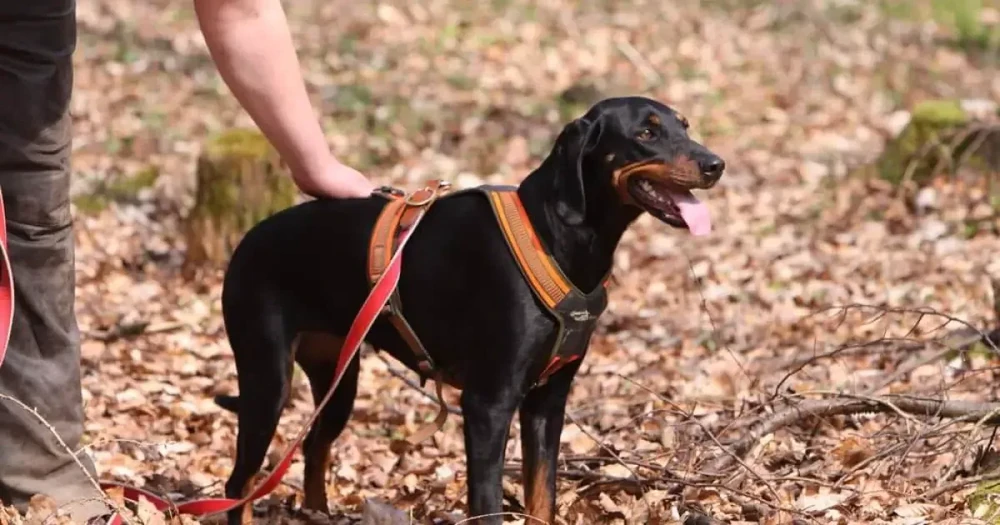
These dogs usually need more than a quick daily stroll. The good news is you do not have to turn every day into a marathon. What matters is offering a mix of movement and purposeful sniffing.
Well-matched activities often include:
- Long walks with time to sniff, not just march
- Hikes in safe, legal areas, ideally on lead or long line
- Scent games at home, such as scatter-feeding in grass or simple “find it” searches
- Structured dog sports (where available), especially scent work style activities
If you live in a smaller space, the bigger issue is usually not the floorplan. It is whether you can reliably provide outlets for a dog that wants to follow scent trails and move every day.
Health considerations to keep in mind
No breed is “problem free”, and individual dogs vary widely. With an active, medium-sized hound, it is sensible to stay aware of joint health and ear health, without assuming problems are inevitable.
Hips and sound movement
Hip dysplasia is a developmental condition influenced by both genetics and environment, and it can range from mild to significant. Weight management and sensible exercise during growth can make a real difference to long-term comfort.4 If you are speaking with breeders, ask what hip screening they do and what the results are.
Ears and recurring infections
Long, hanging ear flaps can reduce airflow, and dogs’ ear canals do not drain easily. That combination can contribute to otitis externa, especially if there is underlying allergy or irritation.5 The most helpful routine is usually simple: check ears regularly, keep them dry after swimming or bathing, and see your vet early if you notice odour, redness, head shaking, or persistent scratching.
Grooming and everyday care
The coat itself is typically low-fuss. A weekly brush is often enough to remove loose hair and keep the coat looking glossy, with more brushing during seasonal shedding. Nails, teeth, and ears tend to matter more than the coat for overall comfort.
- Coat: occasional brushing, bath as needed
- Nails: trim before they get long enough to change gait
- Teeth: regular brushing is ideal, dental care is not just cosmetic
- Ears: routine checks and prompt attention to early signs of inflammation5
Feeding and keeping a healthy weight
For an energetic hound, the aim is steady condition rather than maximum volume of food. Many owners over-rely on ingredient lists when choosing a diet, but veterinary nutrition guidance recommends focusing on the overall suitability of the food for the individual dog, including body condition, life stage, and practical monitoring over time.6
Useful, non-fussy habits include:
- Use body condition scoring with your vet, then adjust portions gradually
- Measure food at least roughly, especially if treats are frequent
- Build enrichment into meals (for example, scatter-feeding or food puzzles) to support natural foraging behaviours
Is this breed a good match?
The Austrian Black and Tan Hound tends to suit people who genuinely enjoy daily outdoor time and who are comfortable training a dog that is motivated by scent. If you value a dog that will trot beside you on a trail, then happily snooze at home after, this can be a lovely fit.
It can be a tougher match if you need off-lead reliability in unfenced areas, or if you want a dog that is content with minimal daily exercise. The breed’s strengths are real, but they come with very predictable needs.
References
- Wikipedia: Austrian Black and Tan Hound (overview and alternate names)
- Federation Cynologique Internationale (FCI): Austrian Black and Tan Hound (Brandlbracke) breed listing
- AAHA: Canine and Feline Behavior Management Guidelines (age and behaviour, socialisation guidance)
- Orthopedic Foundation for Animals (OFA): Hip Dysplasia overview
- American College of Veterinary Surgeons (ACVS): Otitis externa in dogs
- World Small Animal Veterinary Association (WSAVA): Global Nutrition Guidelines