

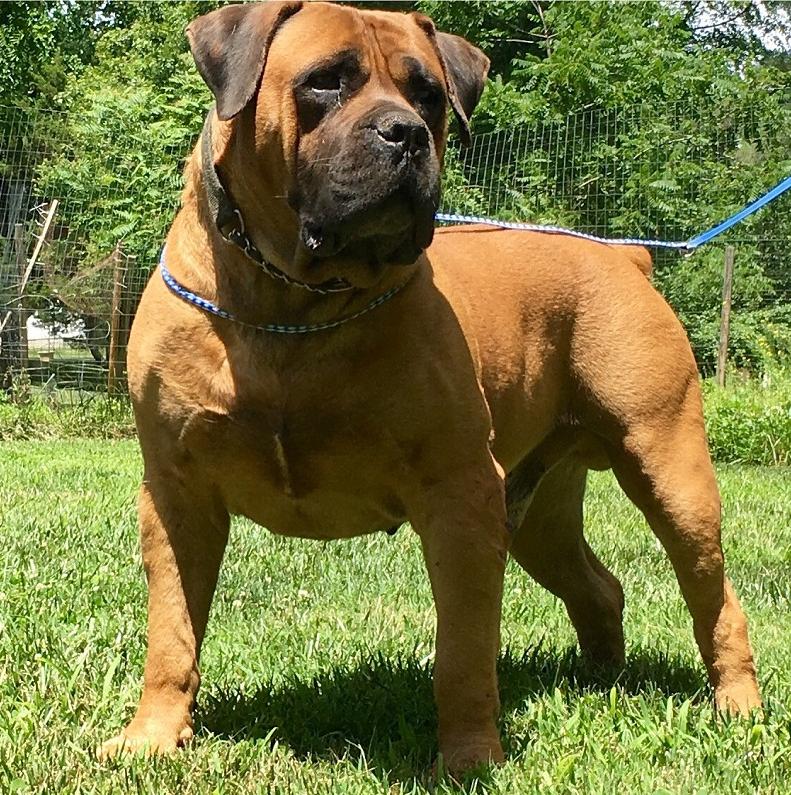
People often first hear about the Boerboel after meeting one in the neighbourhood, or seeing a photo and thinking, “That looks like a mastiff, but somehow more athletic.” Up close, the impression can be even stronger. They are big, solid dogs who tend to watch what is happening, then decide whether they need to get involved.
It is easy to assume that a large, calm dog must be easy-going in every situation. With Boerboels, the calmer moments can be real, but so is the breed’s long history as a property guardian. That combination, size plus guarding instincts, is where most of the practical questions live, especially for families thinking about day-to-day life with visitors, kids, other pets, and fencing.
When Boerboels do well, it is usually because the adults around them have thought ahead. They provide structure, early socialisation, and enough physical and mental work to keep the dog settled. This breed can be a steady companion, but it is not a “set and forget” dog.
- Breed category: Working dog (guardian type)
- Country of origin: South Africa
- Typical height: Males 64 to 70 cm, females 59 to 65 cm
- Typical weight: Males 65 to 90 kg, females 50 to 65 kg
- Typical lifespan: About 9 to 11 years
- Coat: Short, dense
- Shedding: Moderate
- Exercise needs: High, daily
- Grooming needs: Low to moderate
- Common health concerns: Orthopaedic issues (including hip and elbow dysplasia), some heart conditions, bloat (GDV) risk seen in large, deep-chested dogs
The Boerboel’s background, and what it shaped in the breed
Boerboels developed in South Africa as farm and homestead guardians, selected for sound nerves, strength, and usefulness rather than for ornamental traits. Their job was not just to look imposing, but to stay present, cope with uncertainty, and make good decisions around stock, family members, and strangers.
Because their history is tied to protection work, many Boerboels are naturally watchful and reserved when something changes in their environment. That is not the same thing as being “mean”, but it does mean they tend to take notice, and they usually need careful guidance about what is and is not a genuine concern. Breed standards commonly describe the Boerboel as intelligent, manageable, and loyal, with a strong protective instinct that requires early training and consistent handling.1
In the United States, the Boerboel entered full American Kennel Club recognition in 2015, in the Working Group. Recognition does not change a dog, but it does help owners find more consistent information about what the breed was designed to do.2, 3
What they look like in real life
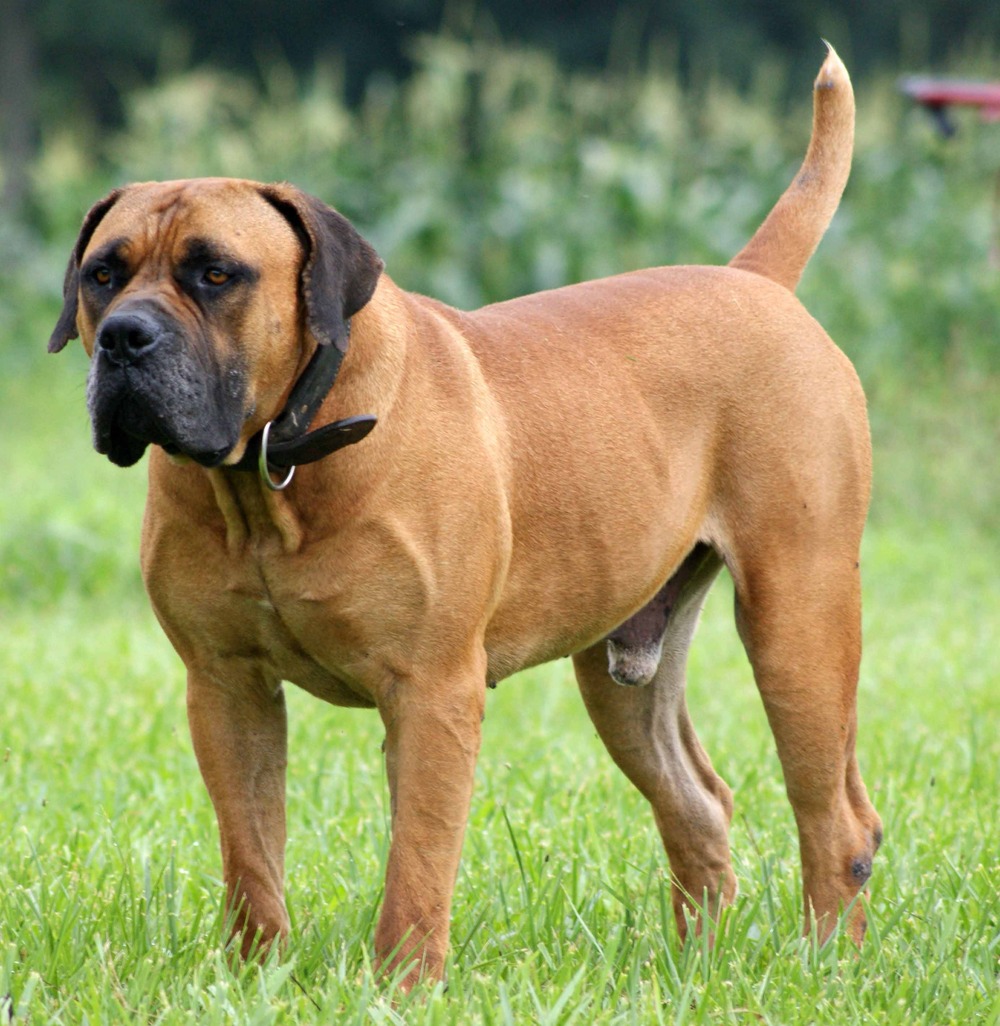
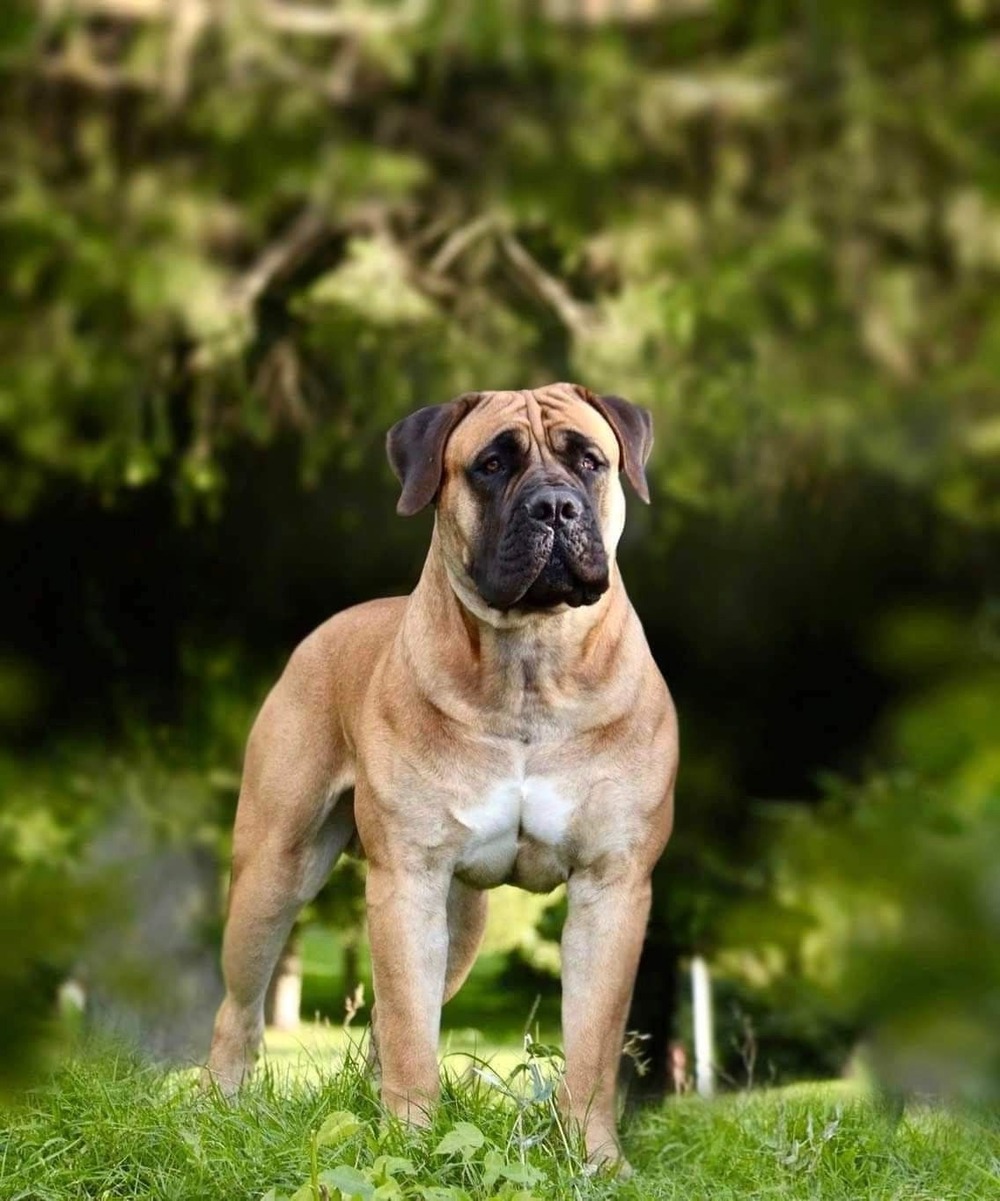
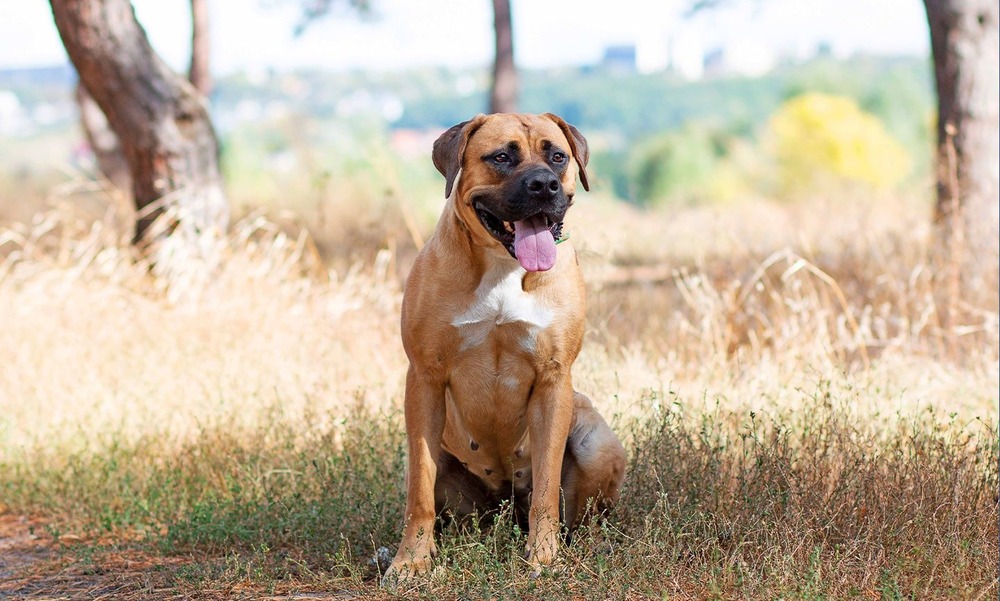
Most Boerboels are large, athletic mastiff-type dogs with a short coat and a broad, powerful build. Movement matters. A well-structured Boerboel is not meant to be lumbering. You should see balance and ease, even in a very heavy dog. Colours vary by standard and registry, but you will commonly see fawn, red, brown, brindle, and sometimes a dark mask.1
Temperament, family life, and the everyday reality of a guarding breed
A Boerboel can be deeply settled at home, and still take responsibility for the boundary of the house. Many owners describe a dog who likes to stay near the family and quietly monitor the environment. The key detail is that this vigilance is not switched off just because the dog is friendly with you.
For family suitability, it helps to think in practical scenarios. How often do people visit? Do kids have friends over after school? Will tradies come through side gates? A Boerboel who is under-socialised, or who has learned that barking makes the world move away, can become difficult to live with. A Boerboel who is guided early can learn a calm pattern: notice, look to the handler, then stand down.
With children, supervision is essential, partly because of the dog’s size and partly because any dog can bite when startled, sore, or pressured. Veterinary bodies consistently advise that children should not be left unsupervised with dogs, including family dogs.4
Other dogs and pets
Compatibility varies. Some Boerboels are social with other dogs, some are selective, and some do best as the only dog. Early exposure helps, but it is not a guarantee. What makes the biggest difference is ongoing management, clear household routines, and preventing situations that encourage guarding or conflict around food, doorways, and fences.
If you have cats or smaller pets, aim for slow introductions and thoughtful boundaries rather than assuming the puppy will “just get used to them”. Many households do make it work, but it is usually because they set the dog up to rehearse calm behaviours from the beginning.
Training that suits the Boerboel, and why early work matters
With Boerboels, training is less about tricks and more about building a predictable way to move through the world. Because they are large and capable, good manners are a safety issue, not a party trick.
Early socialisation should focus on calm exposure, not flooding. You want the puppy to learn that people can appear in odd hats, children can squeal, skateboards roll past, and the dog can stay composed. For a guardian breed, this is how you prevent the dog from deciding that novelty equals threat.
Reward-based training tends to be effective, especially when it is paired with clear boundaries and consistency. The goal is a dog who chooses to check in with you. Harsh methods can create conflict and uncertainty, which is the last thing you want in a powerful dog that is already inclined to watch and evaluate.
Exercise, and what “enough” looks like
Boerboels usually need daily exercise, but it should be sensible for their growth stage and joint health. Long, repetitive pounding exercise for young dogs is rarely the answer. Instead, aim for a mix of:
- steady walks and sniff time
- short training sessions that work the brain
- structured play that can stop and start on cue
- rest as a trained behaviour, not an accident
A well-exercised Boerboel is often easier to live with, but the bigger win is a dog who has learned how to settle when nothing is happening.
Health considerations in a large, heavy breed
Boerboels can be robust dogs, but their size means they are not forgiving of poor structure. Orthopaedic issues like hip and elbow dysplasia are a known concern in many large breeds, and screening programs exist to help identify affected dogs and guide breeding decisions.5
If you are choosing a puppy, it is reasonable to ask what health checks have been done in the lines, and whether results can be verified through recognised schemes (for example, OFA in the US). It is not about expecting perfection. It is about reducing avoidable risk in a dog that may weigh as much as an adult human.
Bloat (GDV), the risk you do not want to learn about the hard way
Gastric dilatation-volvulus (GDV), often called bloat, is a sudden, life-threatening emergency where the stomach distends and can twist. Large, deep-chested dogs are at higher risk, and it requires immediate veterinary attention.6
Risk reduction is not foolproof, but common veterinary advice includes feeding multiple smaller meals rather than one large meal, slowing down fast eaters, and avoiding vigorous exercise right around mealtimes. For some high-risk dogs, vets may also discuss preventative gastropexy.6, 7
Grooming, coat care, and the practical stuff

The Boerboel’s coat is short and generally low-maintenance. A weekly brush is often enough to lift loose hair and keep the coat glossy, with more frequent brushing during heavier shedding periods. Because they are large, it is worth building a calm routine for nail trims, ear checks, and handling from puppyhood.
Drooling varies between individuals, but many Boerboels are moderately drooly, especially after drinking or when excited. Keeping a towel handy is not a bad habit in a Boerboel home.
Feeding and nutrition, without making it complicated
Nutrition is one of those areas where owners can feel pressured to find the “perfect” food. In practice, what matters most is choosing a complete and balanced diet that suits your individual dog, then monitoring body condition over time. Global veterinary nutrition guidelines emphasise routine nutritional assessment as part of regular care, which is a helpful way to keep things grounded.8
For many Boerboels, staying lean is protective for joints and overall comfort. Use your hands as well as your eyes. You should be able to feel ribs under a light layer, and see a waist from above.
Treats can be part of training and enrichment, but they add up fast in a big dog. A common guideline is to keep treats to a small portion of the overall intake, and to adjust meals accordingly if training rewards are heavy that day.8
A note on feeding routines for large dogs
For large, deep-chested dogs, splitting food into two or more meals is often recommended as one of several practical steps that may help reduce GDV risk. If your dog bolts food, consider slow feeders or food puzzles, and aim for calm around meals.6, 7
Final thoughts on living with a Boerboel
A Boerboel can be an impressive, steady companion in the right home. The best matches are usually people who like training, value calm routines, and are comfortable taking responsibility for a dog that may default to guarding if left to make all the decisions.
If you are drawn to the breed, spend time with well-raised adults, talk to reputable breeders and trainers, and be honest about your household. For a Boerboel, good planning is part of good care, and it tends to pay off for years.
References
- Australian Boerboel Society: Breed Standard
- American Kennel Club: Meet AKC’s Four Newly Recognized Breeds (Boerboel recognised for 2015)
- American Kennel Club: Breeds by Year Recognized
- American Veterinary Medical Association: Tips to prevent dog bites (supervision guidance)
- Orthopedic Foundation for Animals (OFA): Hip Dysplasia
- Cornell University College of Veterinary Medicine: Gastric dilatation-volvulus (GDV) or bloat
- American College of Veterinary Surgeons: GDV and gastropexy
- WSAVA: Global Nutrition Guidelines