

You might come across the Carea Leonés after noticing a photo of a striking merle herding dog, or after meeting a sharp, medium sized farm dog in Spain that does not quite match the usual Border Collie or Aussie labels. Often, the first question is simple: what is this breed, and why do people who know them speak about their work so matter of factly?
The Carea Leonés (also called the Perro Leonés de Pastor) is a traditional herding dog from the historical region of León in north west Spain. It is not a fashionable breed in most countries, which is part of the point: it has been shaped by practical work, local conditions, and the everyday needs of shepherds, more than by show trends.1, 2
Understanding a dog like this is less about memorising a checklist, and more about reading how a working mind and body fit together. If you are considering one as a companion, that same working design becomes the main thing to plan for, especially exercise, training, and the kind of household rhythm that suits a high initiative herding dog.
At a glance: what the Carea Leonés is like
- Breed type: Herding dog
- Origin: León (Castilla y León), Spain
- Height: Females about 45 to 52 cm, males about 48 to 55 cm at the withers (varies by standard and source)1, 2
- Weight: Commonly about 15 to 27 kg1
- Coat: Medium length, straight to slightly wavy, with thick undercoat1
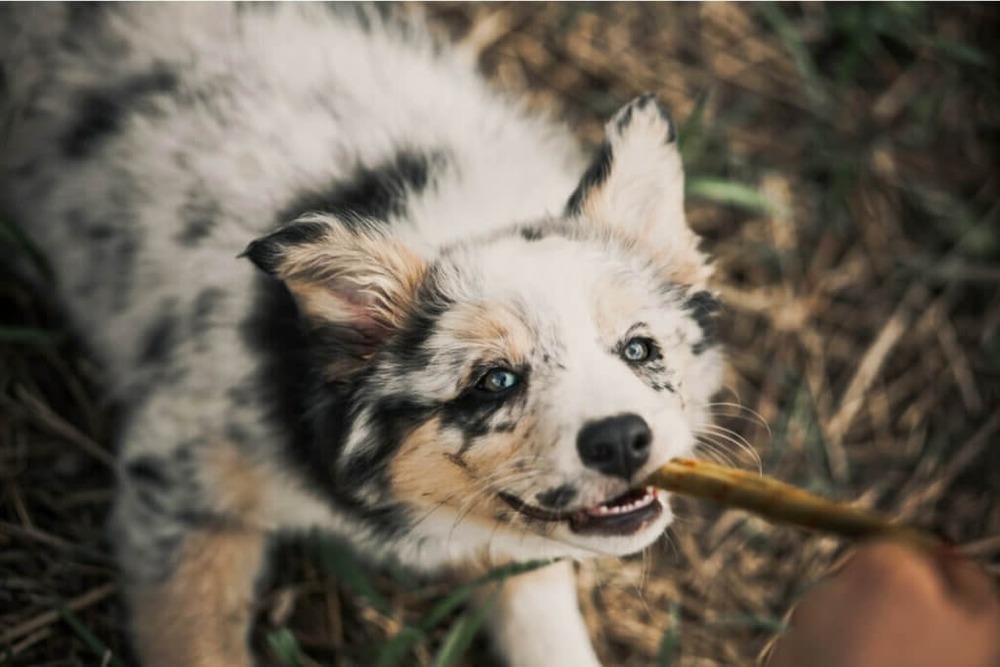
- Colour: Solid black or grey merle, often with optional fawn points and sometimes white markings1, 2
- Life expectancy: Often cited around 12 to 14 years (individual health and lifestyle matter)6
Practical note: because this is still a comparatively local breed, you may see different ranges quoted across registries and breed profiles. The most reliable details come from official publications tied to the breed standard and regional governance.2, 3, 4
History and origin in León
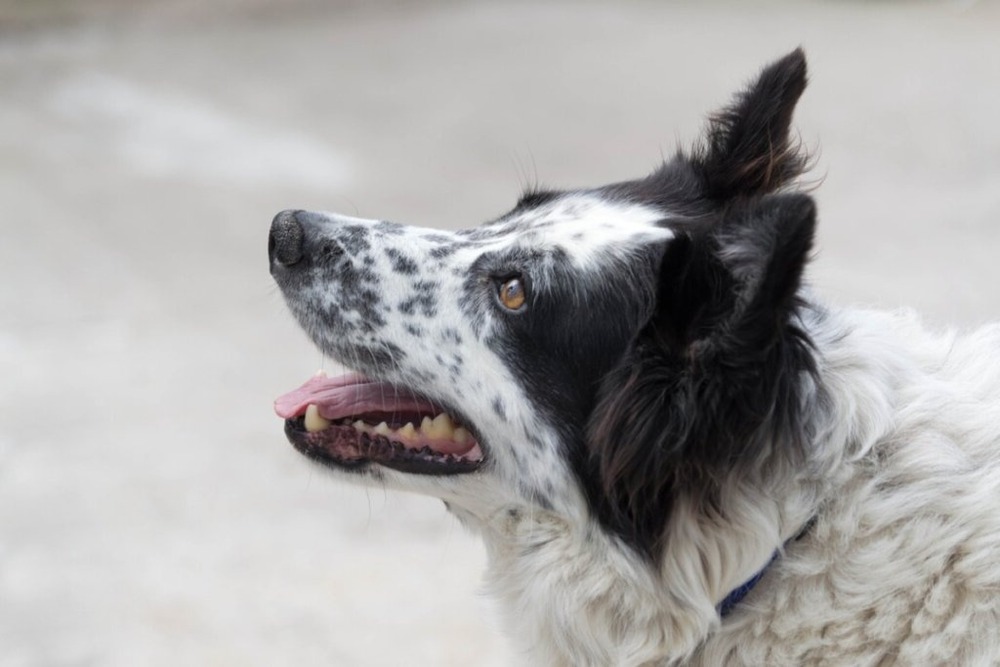
The Carea Leonés is the traditional herding dog of León, a region where livestock work asked for a dog that could move with speed, read stock, and handle long days in open country. It is best understood as a working type that stayed close to its local purpose: moving and controlling flocks in real terrain, for real livelihoods.1
In modern terms, the breed has gained clearer formal recognition within Spain. It was added to Spain’s official catalogue of animal breeds in August 2016, and a regional breed standard for the Perro Leonés de Pastor was published in Castilla y León in November 2018.3, 4
That official attention does not necessarily mean the breed is common. In fact, the Real Sociedad Canina de España has listed it among Spanish breeds considered vulnerable in recent reporting periods, which helps explain why many people outside Spain have never met one in person.1
Physical characteristics that support the work
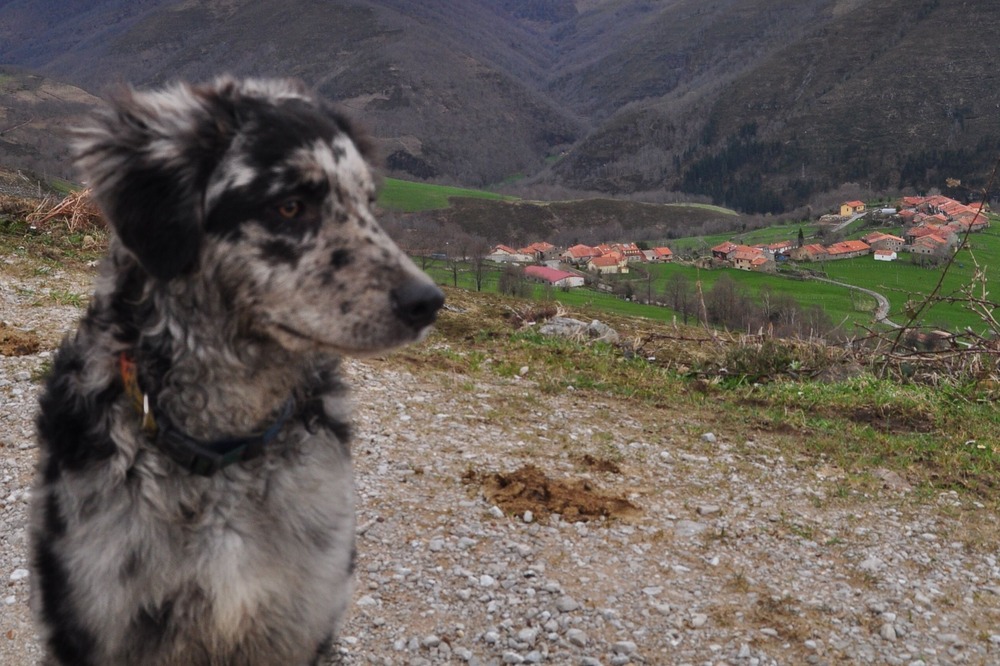
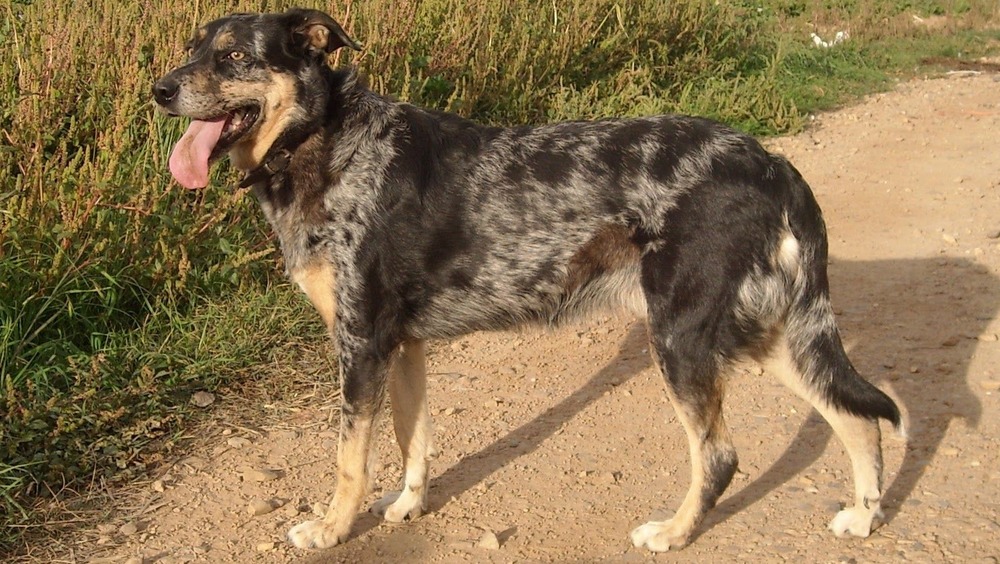
The Carea Leonés is medium sized and built for efficient movement. The body is typically athletic rather than bulky, with a coat designed for weather resilience: a medium outer coat and a thick undercoat that protects in colder, exposed conditions.1
Colour is a standout feature. The breed is commonly described as solid black or grey merle, and fawn points may appear above the eyes, on the face, and on the insides of the legs. In merle dogs, eye colour can be lighter and heterochromia can occur, which can surprise people who expect a consistent “working dog look”.1
It is worth remembering that structure and stamina matter more than cosmetic detail in a working lineage. When you see a Carea Leonés moving well, you are usually looking at a dog designed for hours of purposeful trot, quick turns, and repeated bursts of speed.
Temperament and behaviour in everyday life
People often describe the Carea Leonés as intelligent, loyal, and energetic, which is broadly consistent with what you would expect from a regional herding breed still close to work.6
In a home, that can look like a dog that notices patterns quickly, anticipates routines, and learns fast. It can also look like a dog that struggles when life is vague or under stimulating. Herding breeds are not “busy” for the sake of it. Many are wired to scan, respond, and influence movement, and when there is nothing appropriate to do, they may invent their own jobs.
A common pinch point is interaction with children. Careas can be good family dogs in the right setting, but herding tendencies can show up as circling, body blocking, or nipping at heels during excited play. It is not “naughtiness” so much as an instinctive behaviour that needs clear boundaries and supervision, plus training that gives the dog a safer alternative response.8
Training and exercise needs
With a dog like this, training is less about dominance and more about channelling initiative. Many herding dogs thrive when they understand the rules of the game and can predict what earns reinforcement. In practice, that usually means short, consistent sessions, plenty of rewards, and a plan for what the dog should do when it is uncertain.
Early socialisation matters, but it should be thoughtful rather than overwhelming. The goal is not to expose the puppy to everything at once. It is to build calm, positive experiences with people, animals, surfaces, sounds, handling, car travel, and time alone, so the adult dog can cope with change without tipping into over vigilance.
Exercise needs are typically high. Many individuals will do best with a mix of:
- Steady physical work (long walks, hiking, jogging once mature)
- Skill based outlets (obedience, rally, agility foundations)
- Brain work (scent games, shaping, food puzzles)
One useful way to think about it is this: a long walk may tire the body, but a herding dog often needs some kind of decision making each day to feel settled.
Health considerations and lifespan
Reliable, breed specific health statistics can be hard to find for lesser known working breeds, especially outside their home region. Still, it is sensible to plan as you would for other medium sized, athletic herding dogs, with particular attention to hips and eyes.
Hip dysplasia is a complex condition influenced by both genetics and environment. It can be managed at a population level by breeding decisions and at an individual level by maintaining appropriate body condition, sensible exercise during growth, and early veterinary support if symptoms appear.7, 9
Eye issues are also commonly discussed in herding and merle populations, which is one reason formal eye testing is valued. In Australia, for example, Dogs Australia runs the Australian Canine Eye Scheme (ACES) as a certification system for inherited eye conditions, and this kind of framework can help buyers ask better questions, even if their dog is not within that registry.10
Lifespan is often quoted at around 12 to 14 years, which aligns with many medium sized working breeds, but individual outcomes depend heavily on breeding, diet, workload, injury history, and preventative care.6
Grooming and day to day maintenance
The coat is typically practical rather than high maintenance. A weekly brush is often enough to remove dead hair and debris, and to keep an eye on skin condition. During seasonal shedding, more frequent brushing can help keep the coat breathable and reduce matting in the undercoat.
Because these dogs are often active outdoors, routine checks matter as much as brushing. It is worth building a calm habit of:
- checking ears and paw pads after rough ground
- looking for grass seeds, ticks, and minor cuts
- keeping nails short enough to support efficient movement
Maintenance is mostly preventative, which suits the breed’s practical roots.
Diet and feeding: keeping the athlete lean
For active dogs, diet is not just about calories. It is about steady energy, muscle recovery, joint support, and gut tolerance. If you are choosing a commercial food, it can help to focus on the overall nutritional adequacy and the manufacturer’s quality control, not just the ingredient list, which can be misleading as a measure of quality.5
Portion sizes vary widely depending on age, desexing status, exercise, and climate. A useful, low drama approach is to adjust food to maintain a healthy body condition, and ask your vet team to score it periodically. For many herding types, staying a little lean is kinder on joints over the long term.
If you are considering homemade or raw feeding, do it with professional guidance. The stakes are higher for working dogs, where subtle deficiencies can show up as coat issues, poor recovery, or recurring soft tissue injuries.
Is a Carea Leonés a good fit?
The best match tends to be someone who genuinely enjoys living with a dog that notices everything, learns quickly, and needs a reason to move. Space helps, but it is not the whole story. What matters most is whether you can offer daily structure and outlets, and whether you are comfortable shaping behaviour instead of simply hoping it settles with age.
If your household is busy, social, or full of unpredictable movement, you will likely need to put more effort into training an “off switch” and preventing herding behaviours from becoming rehearsed habits. Done well, that effort often pays back in a dog that is deeply capable, responsive, and satisfying to live with.
References
- Carea Leonés (Wikipedia)
- ORDEN AYG/1170/2018 approving the breed standard for Perro Leonés de Pastor (Boletín Oficial de Castilla y León)
- Orden AAA/1357/2016 (BOE-A-2016-7639) modifying annexes to include dog breed organisations and related measures (Boletín Oficial del Estado)
- Junta de Castilla y León announcement on publication of the breed standard and studbook regulation (5 November 2018)
- WSAVA Global Nutrition Guidelines
- Perro Leonés de Pastor breed profile (Purina España)
- Hip dysplasia overview (Australian Minimum Care Vet)
- Why does my dog bite? (RSPCA Knowledgebase)
- Canine Hip and Elbow Dysplasia Scheme (CHEDS) information (Dogs Australia)
- Australian Canine Eye Scheme (ACES) information (Dogs Australia)