

People usually come across the Grand Anglo-Français Blanc et Noir in one of two ways: they meet a tall, black-and-white hound with a big voice and a bigger nose, or they spot the name in a breed list and wonder what sort of dog could possibly need a title that long.
It is tempting to file them under “just another hound”, but that misses what matters day to day. This is a purpose-bred French pack scenthound, shaped by long hours moving through damp, scrubby country with other dogs, following scent more than sight. When people struggle with one, it is often not because the dog is difficult, but because the household is not set up for a dog whose brain is wired to travel, track, and work in company.
With the right expectations, though, the Grand Anglo-Français Blanc et Noir can be a steady, companionable presence, especially for owners who enjoy structured exercise, training with real-world distractions, and a dog that feels most at ease when it has something to do.
At a glance
Breed type: scenthound, traditionally used for pack hunting in France.1, 2
- Height: commonly around 62 to 72 cm at the withers (standards vary by registry).1, 2, 3
- Coat: short and dense, typically white with black patches, with ticking and some tan permitted by breed standards.2, 3
- Life expectancy: often quoted around 10 to 12 years (individuals vary).1
- Best fit: experienced, active homes with space, excellent fencing, and time for daily exercise and scent-led enrichment.
History and origin
The Grand Anglo-Français Blanc et Noir sits within the group of French “Anglo-French” hounds, developed by crossing French scenthounds with English hounds to produce athletic dogs that could hunt efficiently in packs.1, 2 It is still primarily regarded as a working dog in its country of origin, valued for its nose, stamina, and ability to keep going in challenging terrain.2
One detail that often gets muddled online is “recognition”. The FCI lists the breed as definitively recognised, with standard publication dated 12 January 2009, and notes final recognition dating back decades earlier.2 In other words, 2009 relates to the current standard publication, not the first time the breed was recognised.
Physical characteristics
This is a big, athletic hound with the sort of build you expect from a dog bred to move for hours. Standards describe a strong, robust dog with good bone, a deep chest, and a straightforward, economical gait for covering ground.2, 3
The coat is short and dense, usually a clear white-and-black pattern. Depending on the standard, you may also see ticking or roaning, and pale tan markings can be acceptable, particularly on the head and legs.2, 3 Those long, pendulous ears are part of the classic hound outline, but they also mean you need to be observant about ear health, especially in wet weather or after swimming.
Temperament and behaviour in a home setting
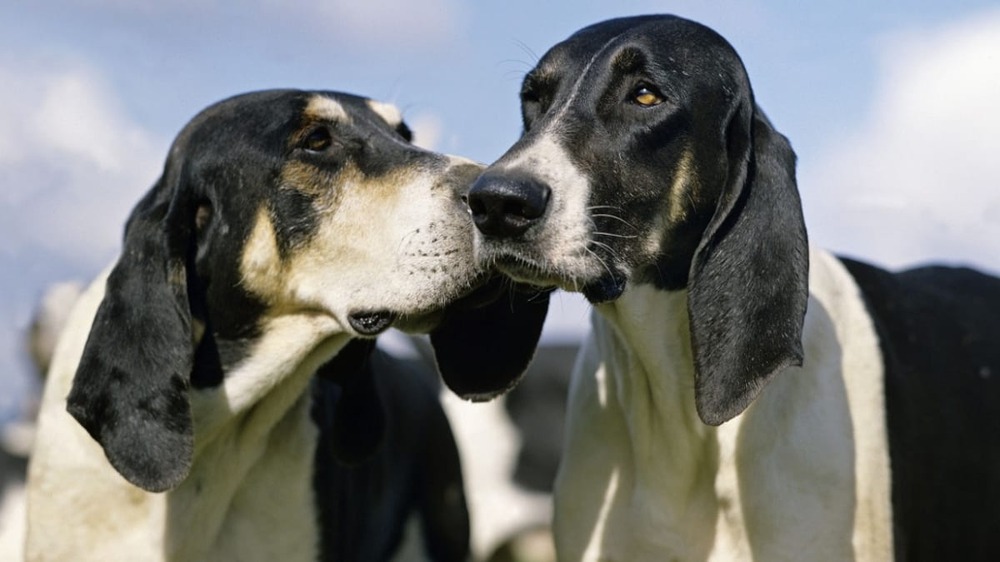
Breed standards commonly describe the Grand Anglo-Français Blanc et Noir as friendly and close to humans, and generally manageable in kennel settings, which makes sense for a dog expected to live and work among people and other hounds.2 In a home, many will be sociable and steady when their basic needs are met.
The point to hold gently, but firmly, is that scenthounds are often motivated by smell over recall. That does not mean they cannot be trained, but it does mean training has to be built around the real distractions that matter to them, including scent trails, wildlife, and the general busyness of the outdoors.
With children, the usual rules apply: supervise, teach kids how to interact appropriately, and give the dog an easy way to move away and rest. With other animals, early socialisation helps, but you should assume there may be chase behaviour around smaller pets unless you have carefully assessed the individual dog and managed introductions and routines appropriately.
Training and exercise needs
These dogs were built to work, so daily exercise is not optional. For many households, the bigger issue is not physical fitness, but mental satisfaction. A bored hound tends to invent its own projects, often involving scent, fences, bins, or loud opinions about what is happening outside.
Training usually goes best when it is consistent, calm, and reward-based. Short sessions add up, especially when you practise in gradually more distracting places. If you enjoy dog sports, scent work-style games are a natural fit because they give the dog permission to use its strongest skill in a structured way.
- On-lead reliability matters. Many owners find a well-fitted harness and long line helpful for safe freedom while training recall.
- Secure fencing is essential. Assume that if something interesting passes by, the dog will try to follow it.
- Rotate enrichment: sniffy walks, food puzzles, simple tracking games in the yard, and calm settling practice indoors.
If you are raising a puppy, socialisation should be thoughtful rather than chaotic. The aim is steady exposure to people, surfaces, noises, and other dogs in a way that builds confidence over time.8
Health, lifespan, and sensible prevention

No breed comes with guarantees, and there is limited breed-specific health research published for rarer working hounds. Still, there are predictable themes that show up in large, athletic dogs: joint wear and tear, injuries from high activity, and the ongoing need to keep an eye on weight and conditioning.
The ears are worth special attention. Ear irritation and otitis externa can be triggered or worsened by moisture, trapped debris, underlying skin disease, or overenthusiastic cleaning. If your dog is shaking their head, scratching, or you notice odour or discharge, it is time to see your vet rather than guessing at home treatment.4 If you do use ear cleaners, ask your vet to show you proper technique, because pushing debris deeper can make things worse, and some products are not appropriate in every situation.4, 5
For many dogs, a realistic goal is steady fitness, not thinness. Your vet can help you track body condition and adjust food and exercise as seasons and activity levels change.8
Grooming and day-to-day maintenance
The short coat is straightforward. A weekly brush usually covers it, with a bit more effort during heavier shedding periods. Grooming is less about cosmetics and more about routine checks: skin, paws, nails, and any small injuries picked up outdoors.
For the ears, think “regular checks” rather than constant cleaning. Many problems start because moisture and debris sit in the canal. Dry ears after swimming, and if you are cleaning routinely, do it gently and with products recommended by your vet.4
Finally, do not overlook teeth. Chewing can help, but it is not a substitute for a broader dental plan. If you are considering dental chews, look for products accepted by the Veterinary Oral Health Council (VOHC).7
Diet and nutrition that suits a working-style hound
Most owners do well with a high-quality commercial diet labelled as complete and balanced, matched to life stage and health status. In Australia, it is sensible to look for foods that meet AS 5812, or an equivalent recognised standard, and to ask your vet for guidance if you are unsure.6
Raw feeding is a common point of curiosity. Some dogs do fine on carefully formulated diets, but the risks are real, including bacterial contamination and nutritional imbalance. If you go down that path, it is worth doing it with professional support rather than relying on recipes and social media advice.6, 9
Whatever the diet style, avoid known toxic foods such as onions and grapes, and be cautious with bones. Cooked bones are particularly dangerous because they can splinter, and even raw bones can cause broken teeth or blockages.6, 9
Living with a Grand Anglo-Francais Blanc et Noir
For the right home, this breed can be deeply rewarding. The right home is not necessarily a farmhouse, but it does need to offer space, structure, and the patience to train around scent. A small yard and a couple of short walks will rarely be enough.
Before you commit, it helps to picture an ordinary week, not an ideal one. If you can provide consistent exercise, secure containment, and a bit of tolerance for hound vocals, you are much closer to success than someone who simply falls in love with the look of the dog.
References
- Wikipedia: Grand Anglo-Français Blanc et Noir
- Fédération Cynologique Internationale (FCI): GRAND ANGLO-FRANÇAIS BLANC ET NOIR (323)
- United Kennel Club (UKC): Great Anglo-Francais White and Black Hound breed standard
- The Kennel Club: Otitis externa (ear infection) in dogs
- University of Melbourne: Australian Veterinary Prescribing Guidelines, ears (otitis)
- RSPCA Australia Knowledgebase: What should I feed my dog?
- Veterinary Oral Health Council (VOHC): Accepted products
- RSPCA Pet Insurance: Essential dog care information (training, feeding and general care)
- RSPCA Pet Insurance: What is the safest diet for my dog?