

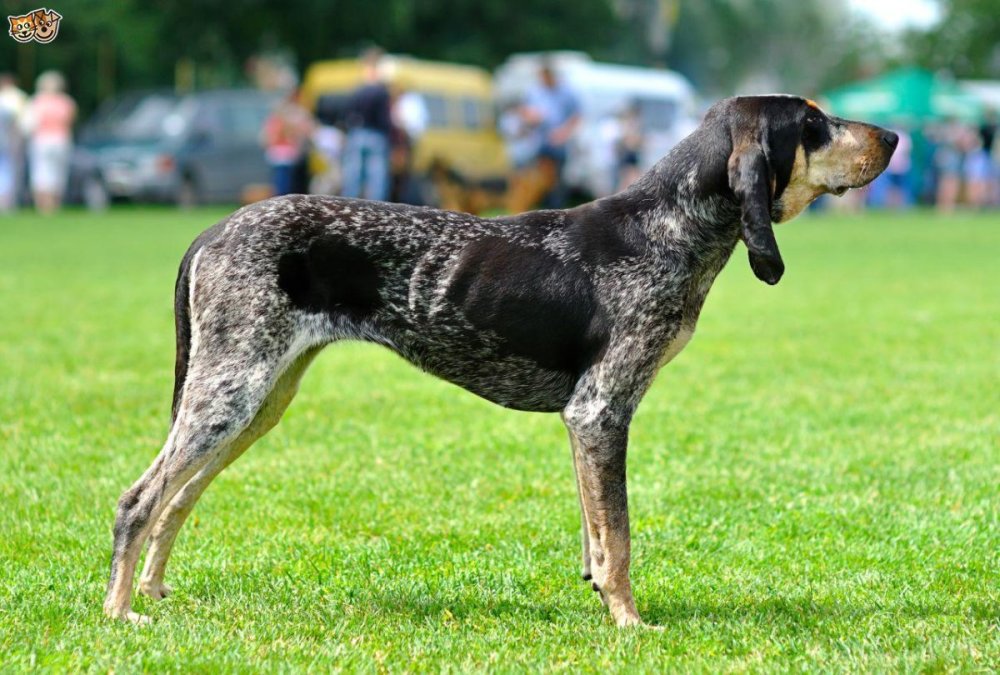
People often meet the Grand Bleu de Gascogne in a photo first: a tall hound with long ears and a coat that looks almost blue from a distance. It can be hard to tell whether you are looking at a rare show dog, a working scent hound, or a potential family companion.
What tends to surprise new owners is that the “grand” part is not just about size. It is about presence, stamina, and a way of moving through the world nose-first. If you expect an easygoing dog who will be satisfied with a quick lap of the block, you can end up with a bored hound who invents their own jobs.
With the right home, though, this breed can be quietly steady and deeply companionable. Understanding what they were bred to do makes day-to-day life easier, from training to exercise planning to simple things like ear care and managing heat.
At a glance: the Grand Bleu de Gascogne
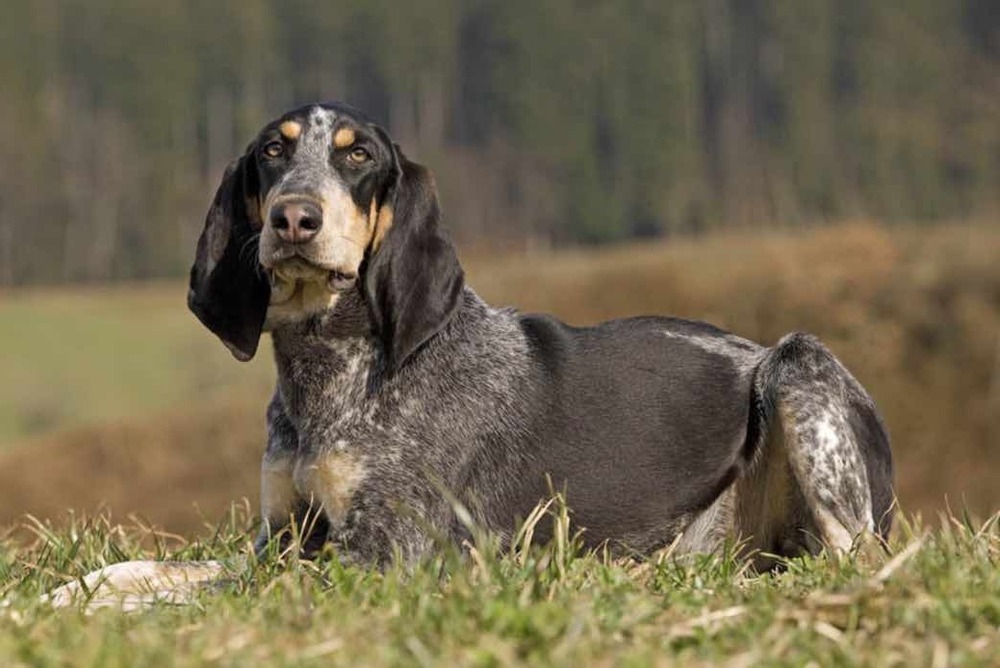
The Grand Bleu de Gascogne is a large French scent hound developed to work in packs on strong game trails. Breed standards describe a dog built for endurance, with a distinctive mottled coat that reads as “blue” from a distance, and a deep, carrying voice that helps handlers track the pack.1, 2
- Breed group: Scent hound (large)
- Origin: France (Gascony)
- Typical height: about 62 to 72 cm at the withers (females generally smaller)1
- Coat: short, dense, mottled black and white that gives a blue effect1
- Temperament (general): often described as gentle and kind, with strong scent drive2
Practical reality: they are usually best suited to homes that can offer space, time outdoors, and daily sniff-heavy activity that uses the brain as much as the legs.
History and what the breed was designed for
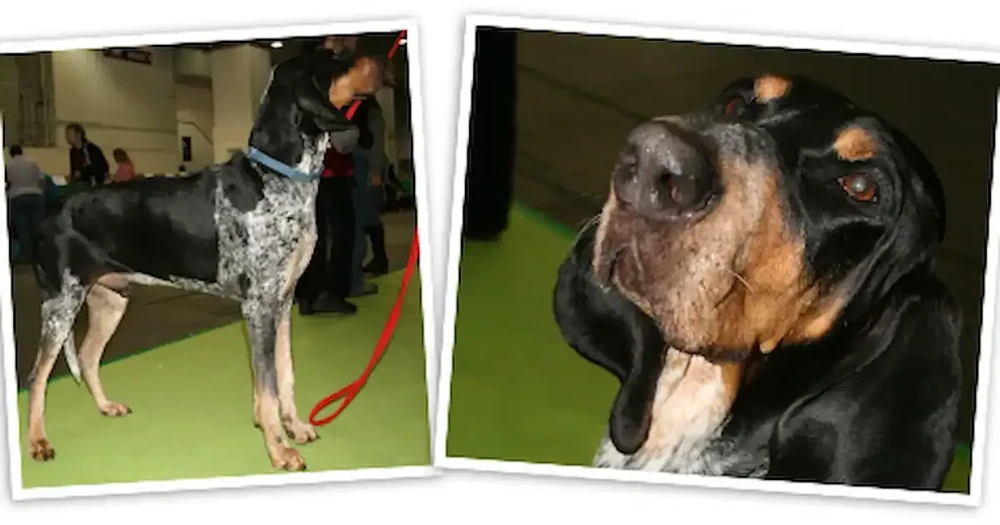
The Grand Bleu de Gascogne sits within an old French tradition of pack hounds. Modern breed descriptions still reflect that working purpose: a dog expected to hold a line on scent, travel for hours, and stay engaged in the group rather than working independently like a pointing breed might.1
It is tempting to pin a breed’s origin on a single person, but history is usually messier than that. Medieval hunting treatises, including Gaston III (Gaston Phoebus) and the later English work based on it, show how seriously scent hounds and pack work were taken, and they help explain why certain “houndy” traits were valued for centuries: stamina, voice, and a nose that keeps going even when the trail is old.3, 4
Why it matters today: when a Grand Bleu follows a smell across the garden with total focus, it is not “being difficult”. It is expressing a set of instincts that were deliberately selected, and the most successful homes plan around that rather than fighting it.
Appearance, voice, and scent drive
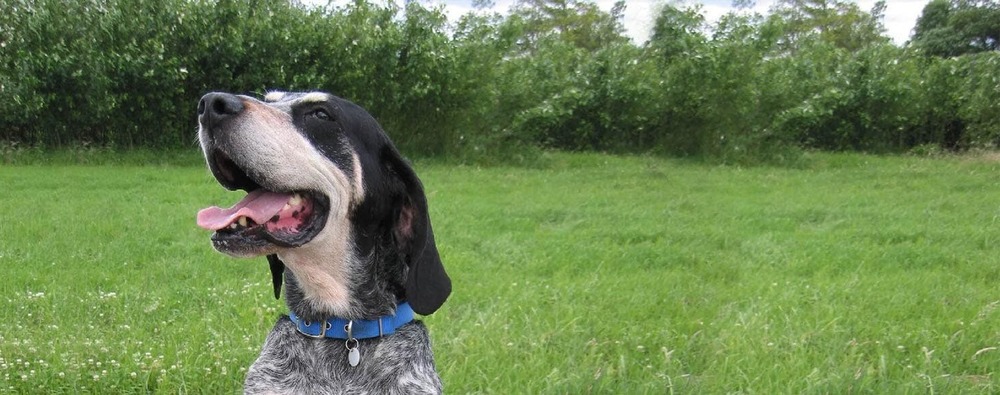
The coat is one of the breed’s signatures: white mottled with black, producing a slate-blue overall effect. The head typically carries dark patches, and the ears are long, low-set, and soft, designed to suit a scent-hound outline rather than a tight, upright profile.1, 2
Many people notice the voice next. Breed standards and kennel club descriptions often mention a deep bay rather than a sharp bark. In working contexts, that sound is functional. In suburban life, it can be an issue if you share walls or have noise-sensitive neighbours.2
Perhaps the biggest day-to-day factor is scent drive. A Grand Bleu can be calm at home and still become intensely absorbed outdoors. This is why secure fencing, long-line skills, and recall training matter so much for this breed type, even when the dog’s temperament is otherwise gentle.
Personality and suitability for family life
Grand Bleus are often described as gentle and kind, and many are sociable with familiar people. That said, a hound’s friendliness does not automatically equal ease. A dog can be sweet-natured and still be persistent, single-minded, and slow to disengage from a scent trail.2
In family homes, the best outcomes usually come from clear routines and thoughtful supervision, particularly around small children who may hug, crowd, or grab at ears. This breed’s long ears and looser facial skin can make them more physically sensitive than they look.
If you already have other pets, early and ongoing management matters. Many Grand Bleus can live well with other animals, but it is wise to remember that they were bred for hunting work. Good socialisation helps, but so does respecting instinct and avoiding avoidable temptation, such as leaving small animals unsupervised in the yard.
Training that works with a hound brain
Hounds tend to learn quickly, but they do not always see the point of repeating something that feels irrelevant. Training is usually smoothest when it is practical, consistent, and rewarding. A positive reinforcement approach is widely recommended for companion dogs because it builds reliable behaviour without relying on fear or force.5
Short sessions help. So do rewards that match the dog in front of you, which might be food, a toy, or a chance to go back to sniffing after they check in with you.
- Prioritise first: loose-lead walking, a strong “wait”, and calm handling for ears, feet, and mouth.
- Use the nose: scatter feeding, “find it” games, and simple scent trails can take the edge off restlessness.
- Plan for distractions: practice recall on a long line before trusting an off-lead area.
Exercise and enrichment, including heat-safe habits
These dogs are built for long, steady work. Many will need more than a brief walk, but the answer is not always “run them harder”. For hounds, sniffing and problem-solving can be as tiring as distance. Aim for a mix of physical exercise and structured scent time.6
Heat management is part of responsible care in Australia, especially for active breeds. Several animal welfare bodies recommend exercising in the cooler parts of the day, checking pavement temperature, and avoiding forced exercise in hot, humid weather. Always provide shade and water, and never leave a dog in a parked car.6, 7
Watch for signs of heat stress such as heavy panting, drooling, vomiting, weakness, or collapse. If you suspect heatstroke, start cooling with tepid or cool water and contact a vet promptly, even if your dog seems to improve.6
Health considerations: hips and ears
Like many large breeds, Grand Bleus can be affected by hip dysplasia. If you are buying a puppy, it is reasonable to ask what hip screening is used in the breeding program and what the results mean. Programs such as PennHIP exist to evaluate hip joint laxity using radiographs, and they are one way breeders and vets work to reduce risk over time.8
The ears are another practical point. Dogs with floppy ears are more prone to ear infections, partly because reduced airflow and trapped moisture can create a good environment for yeast or bacteria. регуляр checks help you catch problems early, especially after swimming, bathing, or long wet grass walks.9
Seek veterinary advice if you notice redness, odour, head shaking, pain, or discharge. Ear infections often have underlying causes (including allergies), so repeated episodes are worth investigating rather than just treating each flare-up in isolation.9
Grooming, feeding, and day-to-day care
The coat is short and generally straightforward: a weekly brush is often enough to remove loose hair and dirt. What tends to matter more is the whole-body routine, nails kept sensible, teeth cared for, and ears checked as a normal part of handling.
For diet, a large, active hound benefits from balanced nutrition matched to life stage and workload. If your dog is doing substantial exercise or sporting work, your vet can help adjust calories and feeding schedule so weight stays steady and joints are not carrying extra load.
Small habit that pays off: weigh your dog regularly. For big breeds, subtle weight gain can be easy to miss under muscle and skin, and it is one of the simplest things you can control to support mobility long term.
Living with a Grand Bleu de Gascogne
A well-managed Grand Bleu often looks calm at home, then switches on outdoors. That contrast can be confusing if you are expecting one consistent “energy level”. It helps to think in terms of context: quiet spaces indoors, and planned opportunities to work the nose and body outside.
If you live in a built-up area, be honest about the breed’s voice and your environment. A deep bay carries. Good enrichment, sensible exercise, and teaching a settle cue can reduce nuisance noise, but they will not turn a pack hound into a silent dog.
In the right setting, this breed can be deeply enjoyable to share life with: observant, steady, and very connected to routine. The secret is not trying to erase what they are, but giving their instincts somewhere safe to land.
References
- Federation Cynologique Internationale (FCI): Grand Bleu de Gascogne (Standard No. 22)
- The Kennel Club (UK): Grand Bleu de Gascogne (Imp) breed standard
- Gaston III, Count of Foix (Gaston Phoebus): overview and historical context
- The Master of Game: medieval hunting treatise based on the Livre de Chasse
- RSPCA Australia Knowledgebase: best ways to train a dog
- RSPCA Australia: keeping your pet safe during heat
- Agriculture Victoria: caring for animals during extreme heat (pets guidance)
- PennHIP (University of Pennsylvania Hip Improvement Program): overview of hip evaluation
- The Animal Medical Center: ear infections in pets (risk factors and causes)