


- Breed category: Sighthound type (not widely recognised by major kennel clubs)1
- Country of origin: India (Maharashtra and parts of Gujarat)1
- Average height: Commonly described around 38 to 46 cm at the shoulder (varies)1
- Average weight: Often around 20 kg (varies)1
- Average life span: Commonly reported around 10 to 14 years (individual variation)
- Grooming requirements: Low, occasional brushing
- Exercise requirements: High, needs daily movement and safe off-lead opportunities
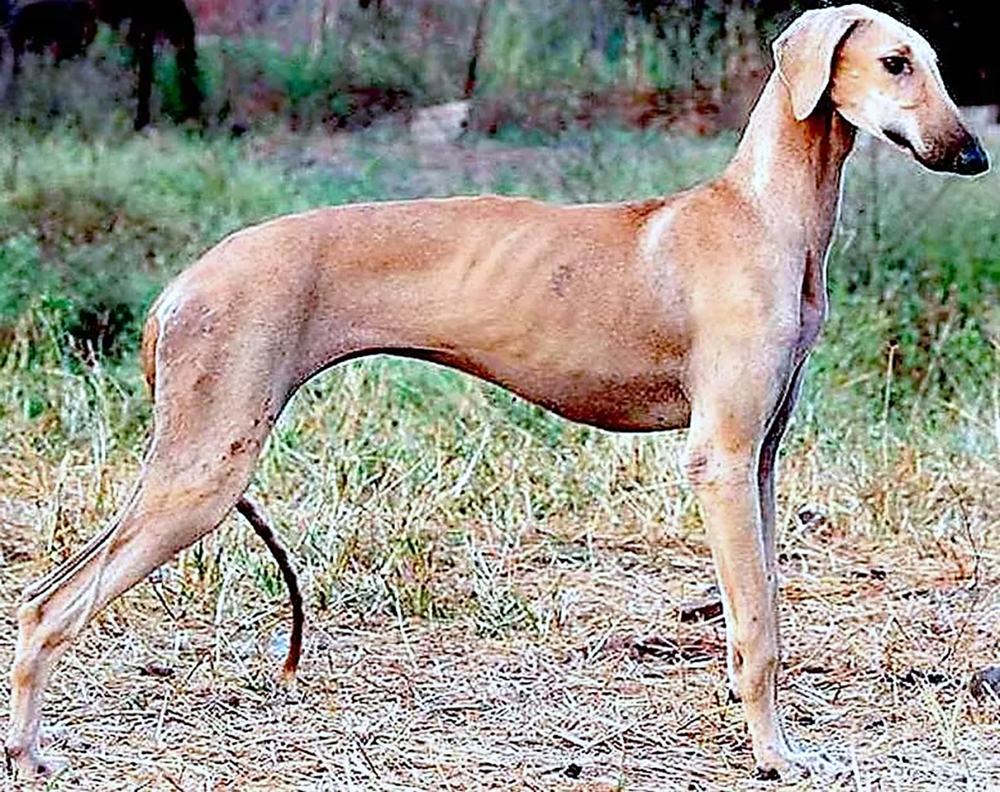
- Coat type: Short and dense
- Coat colours: Commonly white, tan, black, and mixes1
- Shedding level: Moderate
- Ear type: Erect
- Tail type: Long, tapered, often carried curved
- Temperament: Alert, intelligent, reserved with strangers, bonds closely with its people1
- Barking tendency: Moderate
- Compatibility with children: Often good with calm handling and careful supervision2, 6
- Compatibility with other pets: Variable, early introductions help, prey drive can be relevant1
- Training ease: Moderate, responds best to reward-based methods and consistency
- Original purpose: Hunting small game and camp watchdog work1
- Apartment friendly: Possible for some homes, but not ideal without reliable daily exercise and enrichment
- Best suited for: Active households, people who enjoy training and routine, homes that can manage a fast dog safely
You might first hear about the Kaikadi because you have seen a photo of a small, sharp-featured Indian dog with upright ears, or because you have met one that seemed quick on its feet and quietly watchful. People often assume a dog that looks that lean must be fragile, or that a dog with a guarding background will be difficult at home. In practice, the Kaikadi tends to sit somewhere in the middle, athletic and capable, attached to its people, and often cautious with strangers.
It also helps to know what the Kaikadi is, and what it is not. This is not a glossy, globally standardised breed with uniform size and temperament. It is more often described as a local, community-kept sighthound type associated with the Kaikadi people in parts of Maharashtra and Gujarat, shaped by function rather than fashion.1
For a potential owner, that context matters. It influences everything from exercise needs to social confidence, and it explains why two Kaikadis can look and behave a little differently. The goal is not to force the dog into a neat stereotype, but to understand the patterns that tend to show up, then plan a home routine that suits a bright, fast, observant companion.
Where the Kaikadi comes from

The Kaikadi is commonly described as being kept by the Kaikadi people, a nomadic community historically associated with Maharashtra and parts of Gujarat. The dogs were valued for practical work, especially hunting small game and acting as night-time watchdogs around camp.1
That working background is a useful lens. It suggests a dog bred to notice movement, to respond quickly, and to make decisions without constant direction. It also explains why many Kaikadis can be reserved at first with unfamiliar people, then far warmer once they have had time to watch, sniff, and settle.1
If you are looking for a dog that greets every visitor like a long-lost friend, a Kaikadi may not be the obvious choice. If you appreciate a dog that is attentive, a little independent, and tuned in to its home environment, the same trait can feel like a strength.
Looks, movement, and what it means day to day
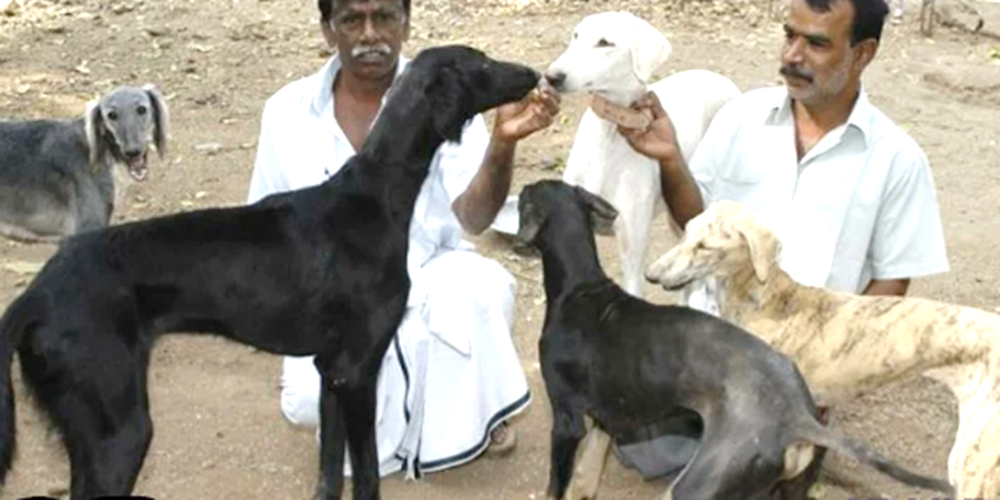
Kaikadis are commonly described as small and fine-boned, with long legs, a narrow head, prominent eyes, and upright ears. Their coat is short, and colours often include white, tan, black, and combinations.1
That light, springy build is not just an aesthetic. It usually comes with a real appetite for movement. Many owners find they need to think beyond a slow neighbourhood walk and provide chances to trot, run, and explore safely.
Because they can be fast, one practical takeaway is secure fencing and recall training. A Kaikadi that locks onto a moving animal can cover ground quickly. Planning for that, and using long lines or enclosed spaces when needed, often prevents the frustrating cycle of “the dog that will not come back”.
Temperament, family life, and other animals
Descriptions of the Kaikadi often mention speed, suspicion of strangers, and watchdog behaviour. Many hunt in groups and have been used to pursue small game, which is worth remembering when you are assessing how they might respond to cats, pocket pets, or urban wildlife.1
With children, the most helpful frame is not “good” or “bad”, but “supported”. Even a well-meaning dog can struggle with sudden grabbing, face-to-face contact, or being disturbed while resting. The safest households tend to use simple rules: calm greetings, no hugging, no approaching the dog when it is eating or sleeping, and active adult supervision during interactions.2, 6
With other dogs, early social exposure usually helps. With smaller pets, management matters: gradual introductions, barriers when you cannot supervise, and enrichment that reduces boredom. If you are unsure, a vet or a qualified trainer can help you read behaviour without jumping to conclusions.
Training and exercise that suits a Kaikadi
Kaikadis are often described as intelligent and alert. In many homes, that translates to a dog that learns quickly, then starts inventing its own activities if life becomes too repetitive.
Reward-based training is a sensible default. Short sessions, clear criteria, and rewards the dog actually values often work better than long drills. If you are dealing with a dog that gets distracted by motion, it can help to treat “looking at the thing, then choosing you” as a skill worth practising, rather than a flaw to punish.
For exercise, aim for a mix of steady movement and problem-solving. Many Kaikadis enjoy:
- brisk walks with time to sniff
- enclosed off-lead runs or a long-line gallop
- simple scent games (find-it in grass, hidden treats in a towel)
- basic agility foundations, done safely and gradually
A common mistake is to rely on physical exercise alone. Mental work is often the difference between a dog that settles and a dog that paces the house looking for something to do. Think daily enrichment, not just “more kilometres”.
Health, preventive care, and what to watch for

There is limited breed-specific health data for the Kaikadi in widely accessible veterinary sources, partly because the breed is not broadly standardised or recognised. In practice, that means you should lean on general dog health fundamentals, then respond to the individual in front of you.
Joint health is a good example. Hip dysplasia is most common in large breeds, but it can occur in smaller dogs too. If you notice stiffness after rest, reluctance to jump, bunny-hopping gait, or soreness after exercise, it is worth discussing with your vet. Early support can make a real difference to comfort over time.3
Parasite prevention also matters, especially for dogs that spend time outdoors and may hunt or scavenge. Intestinal worms can affect dogs and can also be a human health risk, particularly for children. Your vet can advise a routine that fits your region and lifestyle, including worming and flea control.4
Finally, keep an eye on weight. A lean, athletic dog can still gain weight quickly if treats and portion sizes drift upward. Body condition checks at vet visits are a simple, non-judgemental way to stay on track.
Grooming and coat care
The Kaikadi’s short coat is usually straightforward to maintain. Occasional brushing helps lift loose hair and keeps the coat tidy, especially during seasonal changes.
Most of the “grooming” work is really routine care: nails kept at a comfortable length, ears checked, and teeth cared for. If you are unsure where to start, ask your veterinary team to demonstrate what healthy ears and gums look like, and how to handle your dog calmly during care tasks.
Feeding, nutrition, and sensible food choices
Kaikadis are active dogs, but “high energy” does not automatically mean “high protein fixes everything”. The more useful goal is a diet that meets recognised standards, suits the dog’s life stage, and keeps them in a healthy body condition.
The WSAVA Global Nutrition Guidelines are widely used by veterinary teams as a framework for assessing diet and avoiding common traps in pet food marketing. If you are choosing between foods, it can help to look beyond the ingredient list and ask practical questions about formulation, quality control, and whether the company employs qualified nutrition experts.5
If you are considering raw feeding or home-prepared diets, treat it as a conversation with your vet, not a trend to copy. For many households, a consistent, complete commercial diet plus measured training treats is the simplest path. For others, a properly formulated home-prepared plan can work, but it needs professional guidance to avoid deficiencies.
Final thoughts
The Kaikadi tends to suit people who like an observant, athletic companion and who can provide both movement and structure. In the right home, their strengths show up in small, practical ways: they notice what is happening, they learn quickly, and they often take their role in the household seriously.
If you are considering one, it is worth planning for the realities as well as the romance, including safe containment, thoughtful socialisation, and a daily routine that includes training and enrichment. The aim is not to “tire them out”, but to help a bright, fast dog feel steady and secure in your world.
References
- Wikipedia: Kaikadi dog
- RSPCA Australia: Pets and kids
- Merck Veterinary Manual (Pet Owner): Hip Dysplasia
- Agriculture Victoria: Responsible ownership of farm working dogs (worming information)
- WSAVA: Global Nutrition Guidelines
- American Veterinary Medical Association: Simple steps to prevent dog bites
- RSPCA Knowledgebase: Introducing a new dog or puppy to children
- ASPCA: Dog bite prevention