

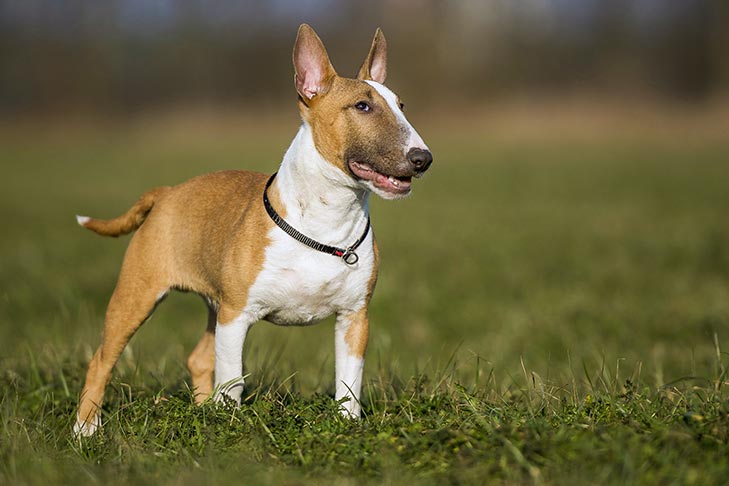
You usually notice a Miniature Bull Terrier before you know what it is. That egg-shaped head, the compact muscle, the bright, busy way they move through a room. People often assume they are simply a smaller Bull Terrier, or that the “mini” version must be easier to live with.
In practice, the size is only part of the story. These dogs can be wonderfully engaging companions, but they do best with people who enjoy training, structure, and daily outlets for energy. When their needs are missed, the problems tend to look like stubbornness, rough play, or a dog who cannot quite switch off.
If you are considering one, or you have met one and felt intrigued, it helps to understand what the breed was built for, how they tend to behave, and what good care looks like over the long term.
Miniature Bull Terrier snapshot
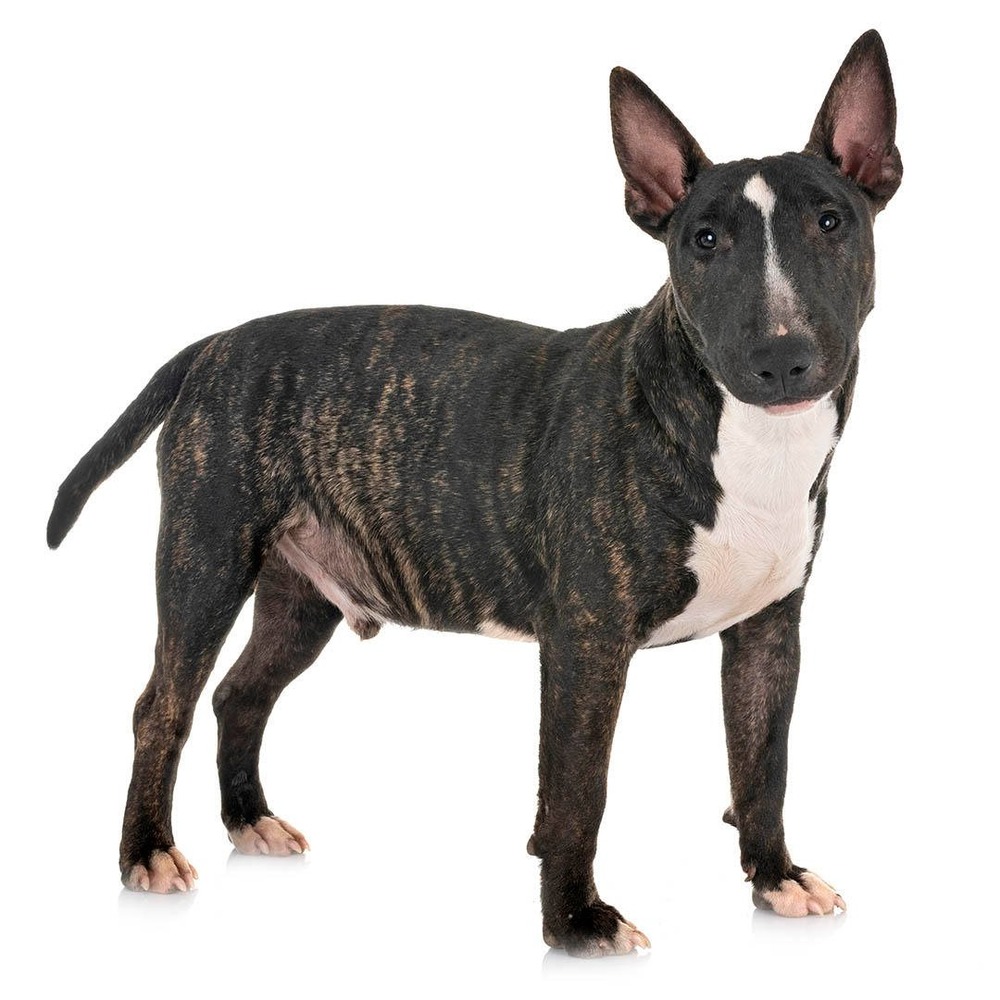
Miniature Bull Terriers are a terrier-type breed developed in England, best known for their distinct head shape and solid, athletic build.1, 2
- Group: Terrier
- Origin: England
- Size: height should not exceed 35.5 cm at the withers (about 14 inches). Breed standards focus on balance and substance rather than a strict weight limit.1, 2
- Life expectancy: commonly around 11 to 14 years (individuals vary).3
- Coat: short, close, smooth
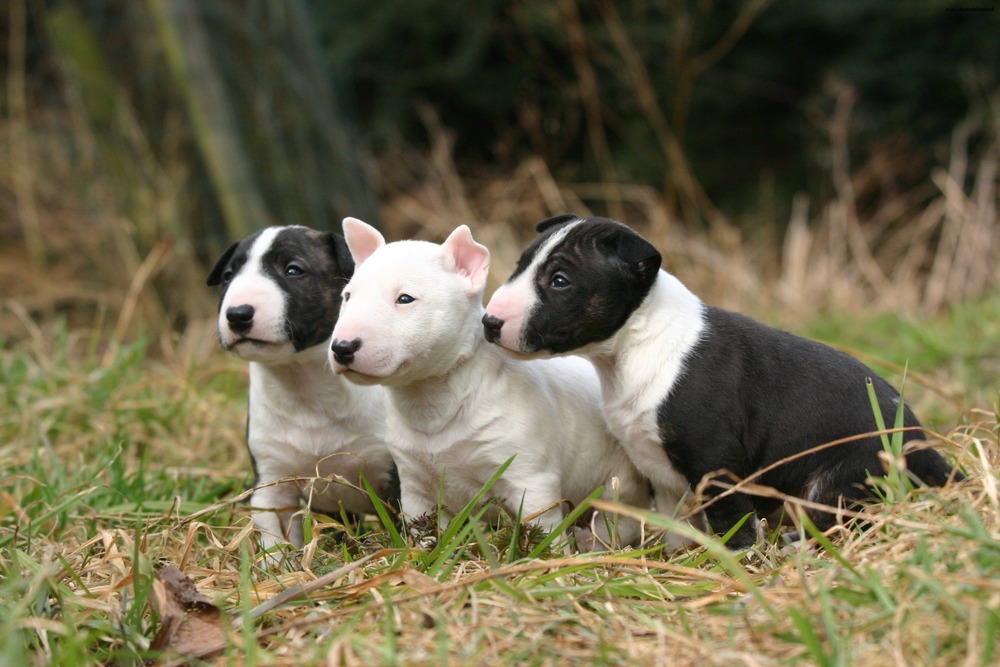
- Common colours: white and coloured varieties (including brindle, red, fawn, tricolour).2
History and origin

The Miniature Bull Terrier sits alongside the Bull Terrier, with a shared background in 19th century England. Early Bull Terrier types drew on bulldog and terrier influences, and then selective breeding shaped a more consistent, recognisable dog over time.3
Like many breeds with a long history, the original “job description” was not gentle family life. Bull-and-terrier dogs were associated with blood sports and vermin control, and while those practices are rightly condemned and were later outlawed, the physical and behavioural traits they favoured can echo forward as drive, tenacity, and enthusiasm for action.3
Today, reputable breed standards place heavy emphasis on soundness and suitability for function. They also remind breeders and judges to avoid features that harm health or welfare, which matters in a breed known for a distinctive head shape and strong body.1
Physical characteristics
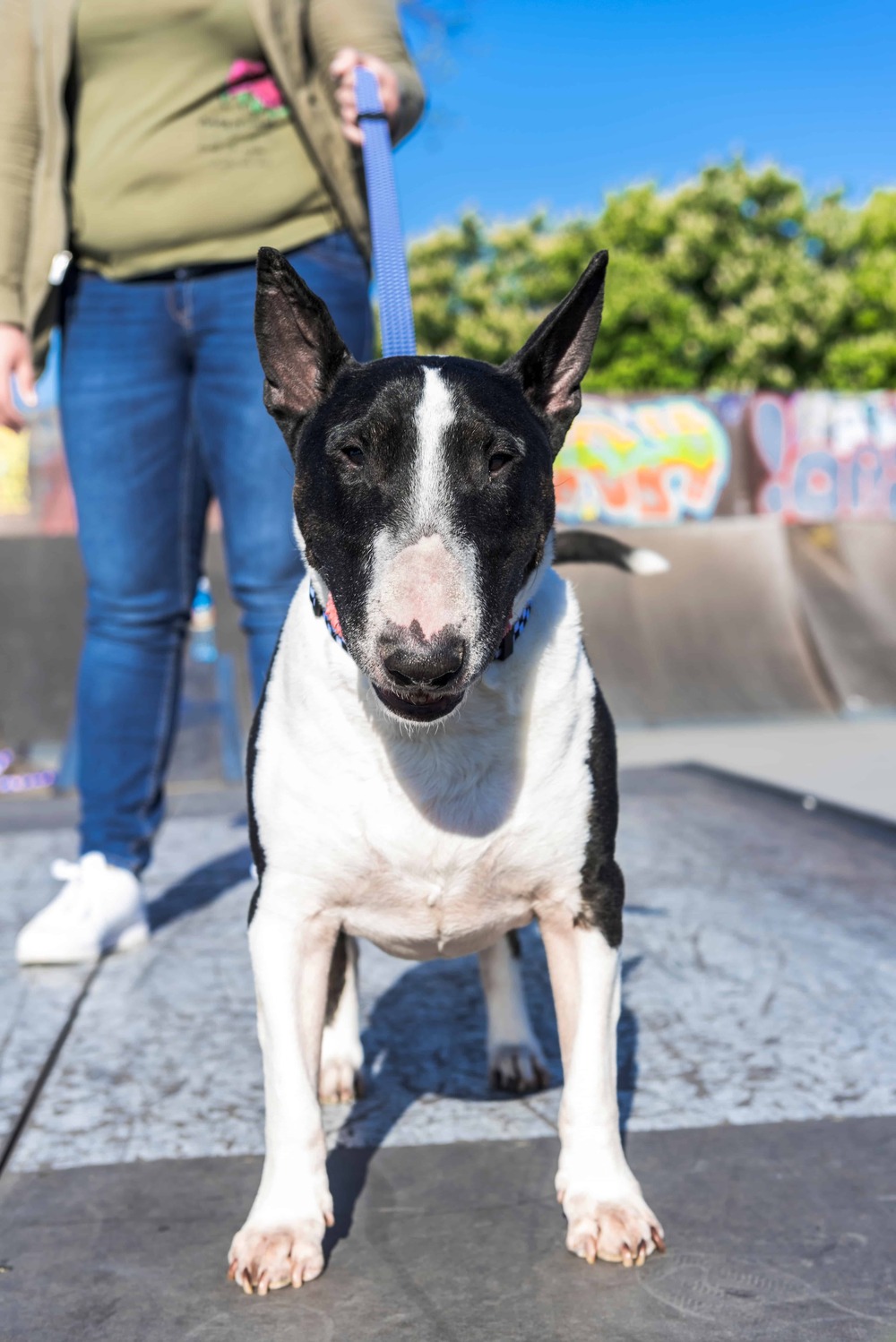
A well-bred Miniature Bull Terrier is compact, powerful and balanced. The hallmark is the long, strong head with an oval outline when viewed from the front, paired with small, triangular eyes and pricked ears that give the breed its unmistakable silhouette.1, 2
The coat is short and low-maintenance in the sense that it does not tangle or matt. That said, short coats can still shed, and skin can be a recurring theme for some individuals, so “easy coat” does not always mean “no coat work”. Regular hands-on checks often pick up early irritation, dryness, or hotspots before they become a bigger issue.
In breed standards, the key size point is straightforward: height should not exceed 35.5 cm. There is no official weight cap in the main standards, because a balanced dog of this type should carry substance appropriate to its frame.1, 2
Temperament and behaviour in everyday life
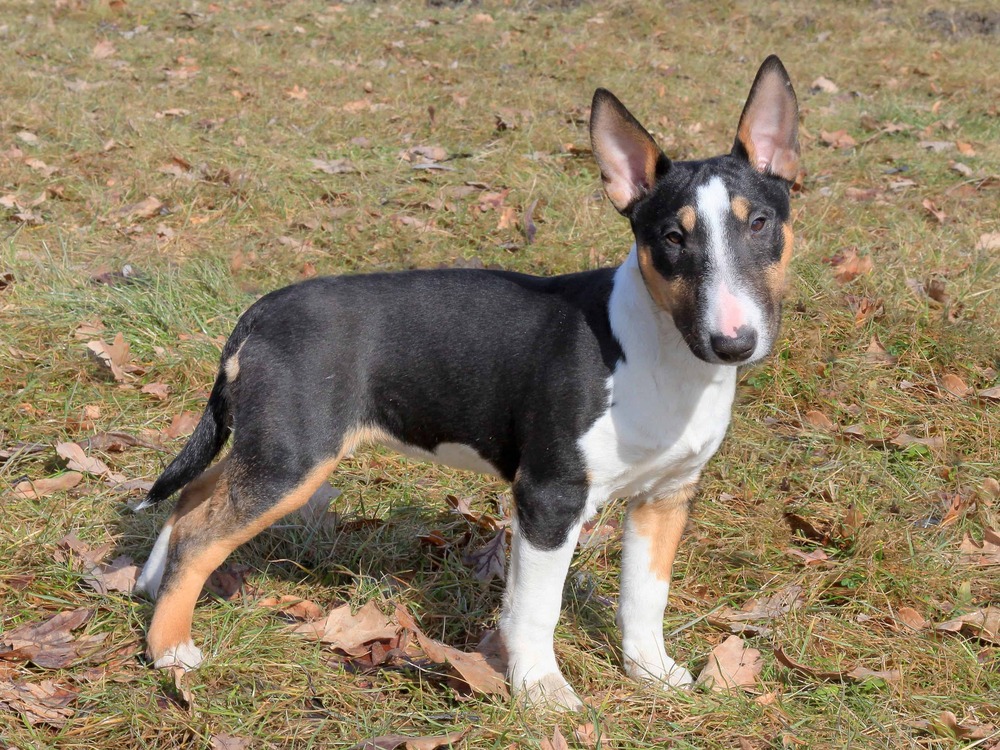
People often describe Miniature Bull Terriers as comical or clownish, and there is truth in that, if you understand it as a style of behaviour rather than a “personality gimmick”. They can be busy, physical, and intensely engaged with their people. They tend to enjoy interaction, especially games with rules and clear feedback.
They can also be persistent. This is where the “stubborn” reputation comes from. It is not that they cannot learn, it is that they may decide the environment is more interesting than you are, especially if training feels repetitive or unclear. For many owners, success comes from keeping sessions short, rewarding, and woven into daily routines.
With children, the best lens is realism rather than labels like “good family dog”. Many Miniature Bull Terriers can do very well in family homes, but their strength and gusto mean supervision matters, and it helps to teach both dog and child how to end games before arousal tips into mouthing or bumping. Calm, structured play is safer than wrestling-style games.
With other pets, outcomes vary. Early, thoughtful socialisation helps, but it does not erase genetics. Some individuals will be fine with other dogs and cats, while others may always need management, especially around small animals that trigger chase behaviour. A good breeder or experienced rescue can help you interpret what you are seeing, rather than guessing.
Training and exercise needs

Exercise is not just about wearing them out. Like many terrier-type dogs, Miniature Bull Terriers often do best with a mix of movement and problem-solving. A brisk walk helps, but they also benefit from training games, scent work, and structured play that gives their brain something to do.
Reward-based training is widely recommended in Australian animal welfare guidance, and it is particularly useful with dogs that are strong, quick, and easily reinforced by their own choices (like grabbing a toy and running off). Using rewards you can deliver fast, food, toys, access to sniffing, makes learning feel worthwhile and reduces conflict.4, 5
If you are building a routine, these usually help:
- Short, frequent training (one to three minutes, several times a day)
- Daily walks plus a second outlet (play, flirt pole, tug with rules, or training)
- Enrichment that slows them down (snuffle mats, scatter feeding, chew time)
- Planned rest, because some dogs need to be taught how to settle
RSPCA guidance also highlights that daily exercise and play support physical health, socialisation opportunities, and behaviour, which aligns well with what most trainers see in this breed: they cope better when their day has shape.4
Health considerations and lifespan
Miniature Bull Terriers can be robust, but they are not a “no issues” breed. One well-known concern is deafness, particularly associated with white coat colour patterns in several breeds. Breed standards and kennel bodies flag deafness as a serious fault, and responsible breeders may use hearing testing (such as BAER testing) as part of health screening.2, 6
Skin problems, including allergic skin disease, are also commonly discussed by vets and owners. Skin issues can be driven by a mix of genetics, parasites, infection, and environmental or food triggers, and they often need a step-by-step veterinary plan rather than constant diet changes at home. See your vet early if you notice recurring itch, redness, ear infections, or paw chewing.
Breed health information is best interpreted as “risk, not destiny”. Tools like the Royal Veterinary College’s VetCompass reports can help put common disorders into a broader context across breeds and populations, and can guide the questions you ask a breeder or your vet.7
Many live into their early teens, and good basics make a difference: appropriate weight, dental care, parasite prevention, and regular check-ups so small problems do not quietly become chronic ones.4
Grooming and day-to-day maintenance
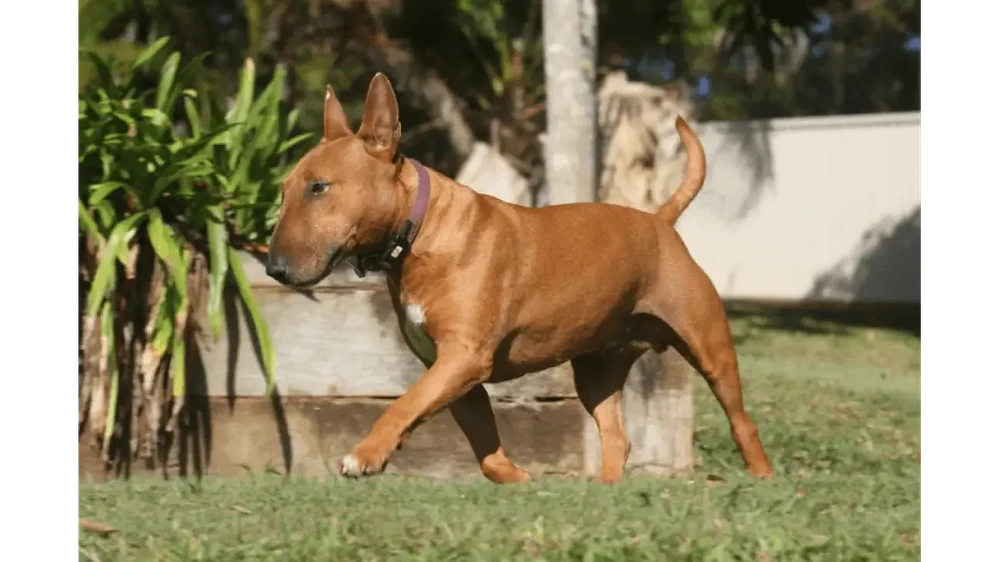
The coat itself is straightforward. A weekly brush with a soft brush or grooming mitt usually keeps shedding under control and helps distribute natural oils. What matters more is the routine of handling: paws, ears, mouth, and a quick look over the skin. Those small, regular moments make veterinary care, nail trims, and bathing far less stressful later.
Bathing can be occasional, but if your dog has sensitive skin, your vet may recommend a specific shampoo or a schedule that supports the skin barrier. Avoid “over-bathing” with harsh products, which can worsen dryness and itch.
For many households, the bigger maintenance issue is not grooming. It is management of energy and impulse. A predictable daily rhythm tends to do more for harmony than any single product or technique.
Diet and nutrition
There is no single perfect diet for every Miniature Bull Terrier, but there are some steady principles. Feed a complete and balanced diet appropriate to life stage, monitor body condition, and adjust portions based on the dog in front of you, not the feeding guide on the bag.
If skin or gut issues show up, it is tempting to keep swapping foods. That can make patterns harder to interpret. When allergy is suspected, veterinary guidance is important, because proper elimination trials have strict rules about ingredients and time frames. Change diets with a plan, ideally with your vet’s input.
For treats, think in percentages. Training treats are useful with this breed, but they add up quickly. Many owners find it easiest to use part of the dog’s daily kibble allowance as rewards, then add higher-value treats only when needed.
Is a Miniature Bull Terrier the right fit?
These dogs often suit people who enjoy an active, hands-on relationship with their dog. They can be affectionate and entertaining, and they tend to thrive when included in daily life rather than parked in the backyard.
They can be a harder fit for households wanting an easy, low-effort pet, or for people who dislike training. Not because the dog is “bad”, but because a clever, muscular terrier-type dog will always find something to do, and not all of those choices will be convenient.
If you are choosing a puppy, look for breeders who can talk plainly about temperament, socialisation, and health testing, not just colour and head shape. If you are adopting, ask the rescue what they have observed around other dogs, cats, and children, and what support they offer after adoption.
References
- Dogs Australia (ANKC): Bull Terrier (Miniature) breed information
- The Kennel Club (UK): Bull Terrier (Miniature) breed standard
- Wikipedia: Miniature Bull Terrier overview and history
- RSPCA Pet Insurance (Australia): Essential dog care information
- RSPCA Pet Insurance (Australia): Positive reinforcement training
- United Kennel Club (UKC): Miniature Bull Terrier breed standard (includes deafness disqualification)
- Royal Veterinary College: VetCompass programme (breed health research)