

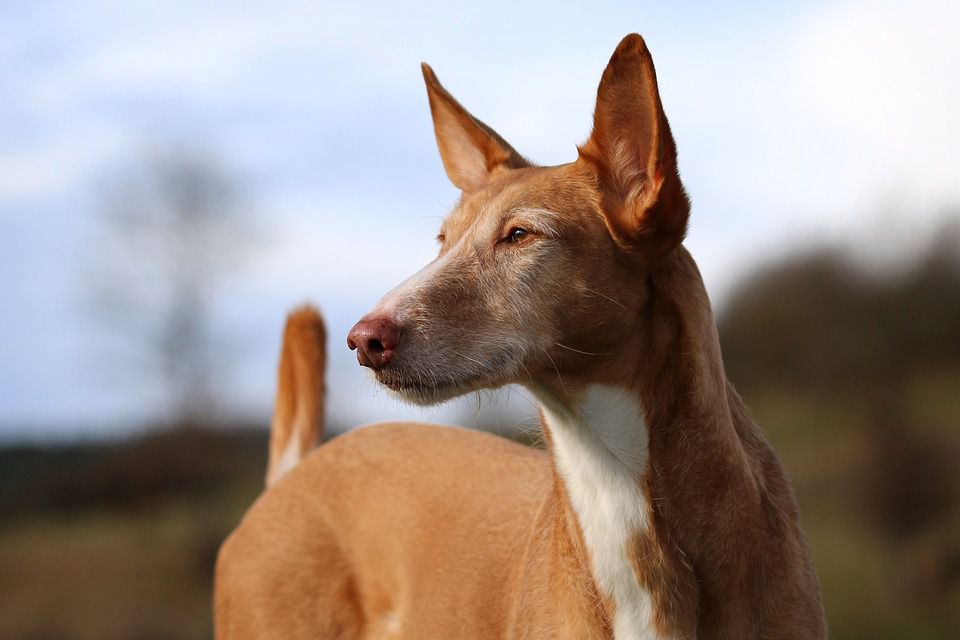
People often notice Podenco Canarios in photos or on a trip and think, “That looks like a sighthound,” then get confused when they hear the word podenco and learn the breed is also a scent worker. Others meet one through rescue and are surprised by the combination of lean, quiet watchfulness indoors and a sudden, powerful hunting drive outdoors.
It is easy to assume a dog with a short coat and low grooming needs will be straightforward. In practice, Podenco Canarios tend to do best with people who enjoy training as an ongoing conversation, not a one-off task. They are bright, quick to pattern-match, and often environment-led, which can look like stubbornness if you are expecting constant compliance.
Understanding what this breed was built for, rabbit hunting across rugged volcanic ground, helps everyday choices make more sense, from fencing and recall to how you meet new dogs, cats, and wildlife. 1, 2
At a glance: Podenco Canario essentials
- Breed type: Mediterranean warren hound (podenco), traditionally used for rabbit hunting 2, 3
- Origin: Canary Islands (Spain) 2
- Height: males 55 to 64 cm, females 53 to 60 cm (breed standard range) 2
- Coat: short, smooth, tight-fitting 2, 4
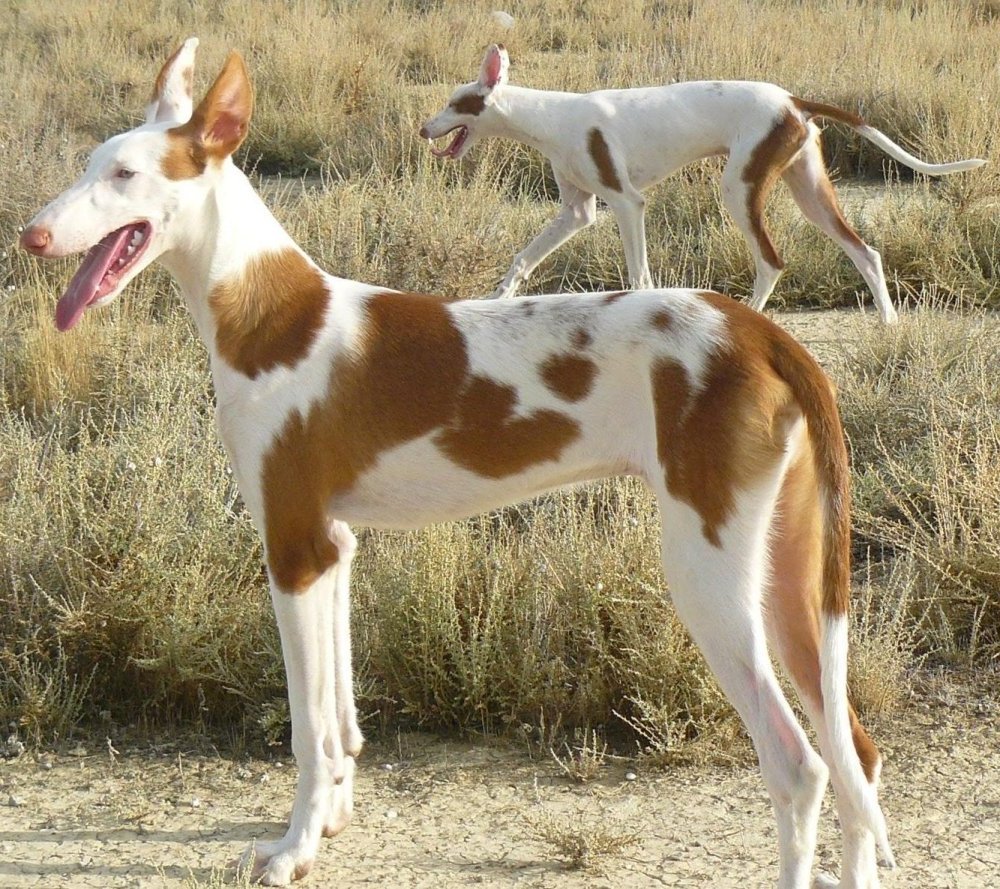
- Typical colours: red and white in combinations, with red ranging from orange to mahogany (standards vary by registry wording) 2, 4
- Energy: high, daily exercise plus sniffing and problem-solving helps 1, 2
History, and what it still influences today
The Podenco Canario is closely tied to the Canary Islands, where it has long been used as a working rabbit dog. Breed standards describe a dog shaped by heat, rough footing, and long hours moving over stone and scrub, using sight, scent, and hearing rather than relying on one sense alone. 2, 3
You will sometimes see claims that the breed descends directly from ancient Egyptian dogs. The official standards describe a “pharaonic” origin as part of the breed’s traditional history, but modern genetic work across Mediterranean hunting dogs suggests a more complex story than a single ancient lineage. It is fair to treat the origin story as cultural context, not a testable family tree. 2, 5
In day-to-day life, that working background tends to show up as alertness, stamina, and a readiness to chase. It also shows up in how many Podenco Canarios learn: they often respond best when training is practical and consistent, and when the environment is set up so the “wrong” choice is hard to practise. 1, 6
Appearance and movement
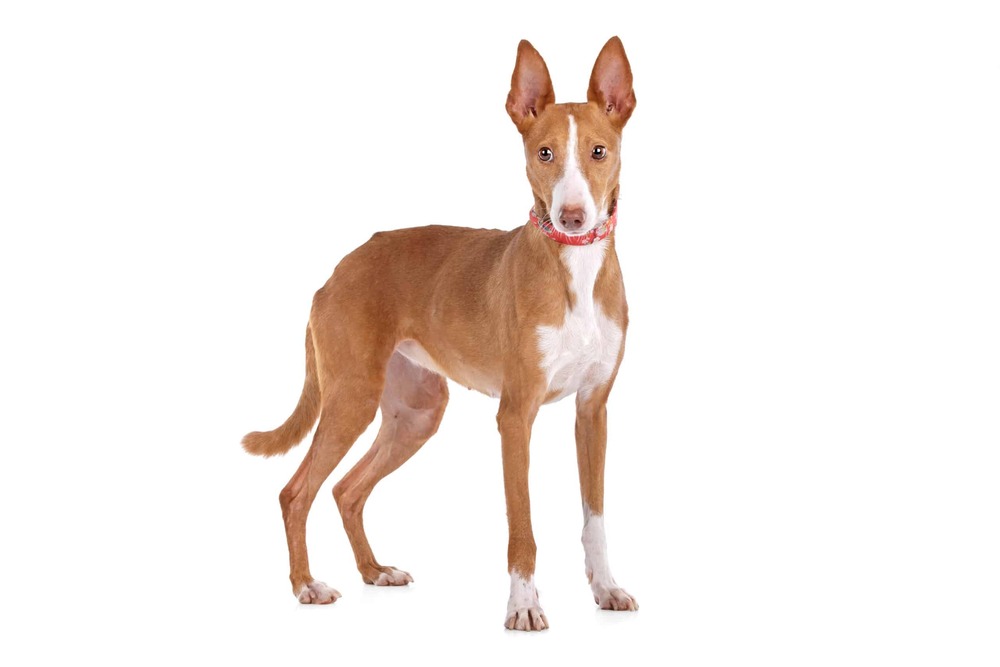
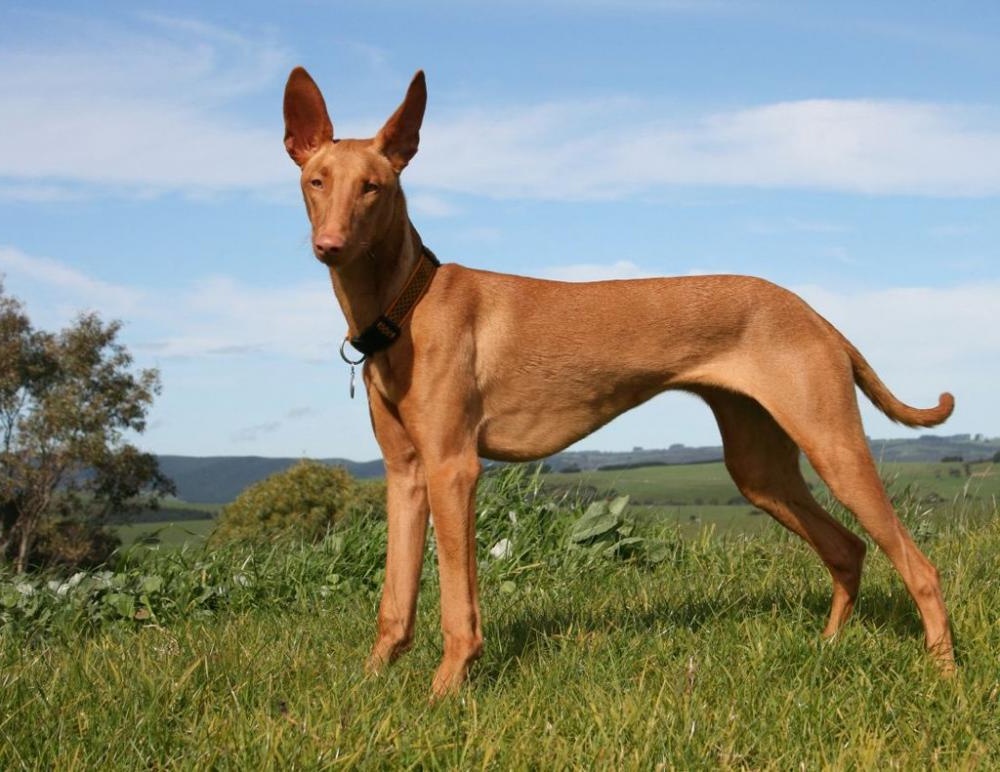
The first impression is usually “lean”. A Podenco Canario is meant to look light, athletic, and free of excess weight, with a well-developed frame and no padding that would slow it down across difficult terrain. In good condition, you may see more definition than people are used to in pet dogs, so it helps to ask your vet what a healthy body condition looks like for your individual dog. 4, 7
Typical features include a longer, wedge-shaped head, large upright ears, and a short, dense coat. The breed is generally described as agile in movement, able to cover ground efficiently and change direction fast. 2, 4
Temperament, and who this breed suits
Podenco Canarios are often described as energetic, enthusiastic and very bonded to their people, while not typically aggressive. In a family setting, that can translate into a dog who enjoys companionship and routine, but who may not automatically generalise good manners from one place to another. 4
They can be good with considerate children when well socialised, although their speed and quick reactions mean supervision and calm boundaries matter. With other pets, many can live peacefully, but it is sensible to assume a strong chase response around small animals unless proven otherwise through careful management and training. 6, 8
Homes that tend to work best are those where someone enjoys daily activity, has secure fencing, and is willing to train recall with patience rather than testing it too early in high-distraction places. If you want an off-lead dog by default, this is the part to think through slowly and honestly. 6, 8
Training and exercise that actually helps
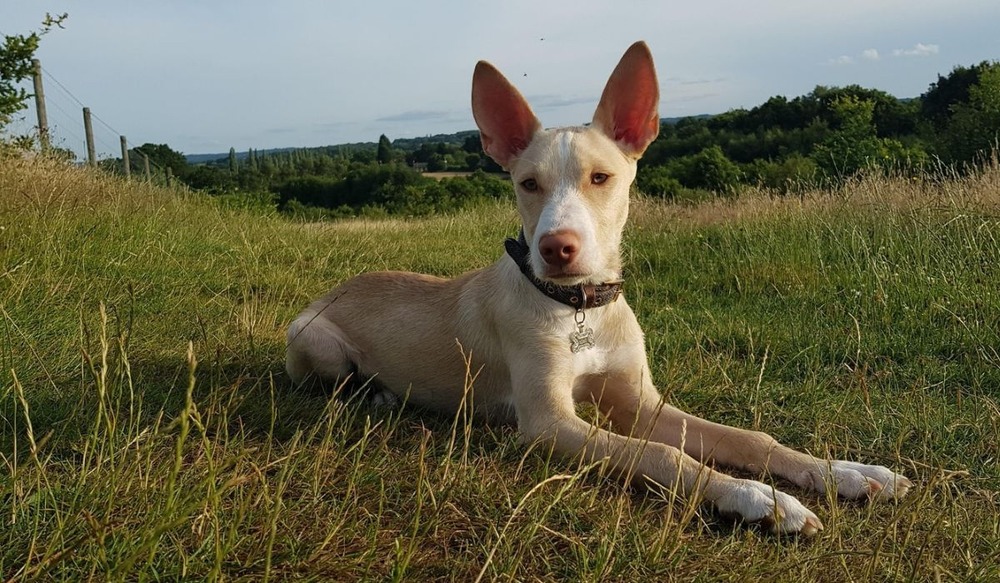
For many Podenco Canarios, the “secret” is not more discipline, it is better structure. They tend to thrive with short sessions, clear cues, and rewards that genuinely compete with the outdoors. Reward-based training methods have strong evidence behind them, and are especially useful for dogs who are quick to opt out when training turns repetitive or confrontational. 6
Daily exercise needs are usually high, but it helps to think in layers:
- Movement: walks, running in safe enclosed areas, hiking, play
- Brain work: scent games, food puzzles, simple shaping tasks
- Real-life skills: calm lead walking, settling on a mat, “check-in” habits
If you are building recall, start where you can succeed, then increase difficulty slowly. Use a long line as a safety tool, not as a way to “prove” the dog will come. This approach protects wildlife, your dog, and your relationship. 8
Health notes and routine care
No breed is completely free of health concerns, and individuals vary. For Podenco Canarios, owners and vets often watch joints, general fitness, and ear health, particularly if a dog spends a lot of time running through scrub or collecting seeds and debris. If you notice head shaking, ear rubbing, or odour, it is worth checking early rather than waiting. 9
Keeping a lean body condition is one of the most practical things you can do for long-term comfort and mobility. Ask your vet to show you how to score body condition at home, and adjust food based on what you see, not just what is printed on the bag. 7
Regular preventive care still applies: vaccination advice tailored to your area, parasite control, dental care, and periodic vet checks to pick up issues before they become limiting. 10
Grooming, weather comfort, and the little daily checks

The coat is short and generally low-maintenance. A weekly brush or grooming mitt is usually enough to lift loose hair and check the skin, and it can be a quiet way to build handling comfort. 2, 4
Because the coat is fine, many Podenco Canarios appreciate a warm layer in cold or wet weather, especially if they are standing still at training or sport. Indoors, a soft bed away from draughts is often enough.
It also pays to normalise simple checks:
- Ears: look for redness, debris, or smell after bush walks
- Paws: check pads and between toes for grass seeds
- Nails: trim little and often so feet stay comfortable
Living with a Podenco Canario: realistic expectations
There is a particular kind of satisfaction in living with a dog who notices everything and learns quickly, provided you accept that their instincts are not a flaw to be trained out. A Podenco Canario is often at its best when you work with the dog in front of you: build safe routines, offer outlets for hunting-style behaviours (especially scenting), and use management when the world is simply too tempting. 1, 2
If you are choosing a dog, meeting adult Podencos where possible, and talking honestly with breeders or rescue groups about prey drive and off-lead expectations, can save a lot of stress later. With the right match, they can be deeply steady companions, athletic, bright, and surprisingly easy to live with at home once their needs are met.
References
- Real Sociedad Canina de España (RSCE): Podenco Canario (FCI standard summary and PDF link)
- Fédération Cynologique Internationale (FCI): Standard No. 329 Podenco Canario (PDF)
- Royal Canin: Podenco Canario (overview based on FCI)
- United Kennel Club (UKC): Podenco Canario breed standard
- Wikipedia: Podenco Canario (summary and links to genetics references)
- American Veterinary Society of Animal Behavior (AVSAB): position statements on humane, reward-based training
- WSAVA: Global Nutrition Guidelines (including body condition scoring)
- RSPCA Australia: Teaching your dog to come when called
- American Animal Hospital Association (AAHA): Ear infections in dogs
- RSPCA Australia: Dog vaccinations guidance