

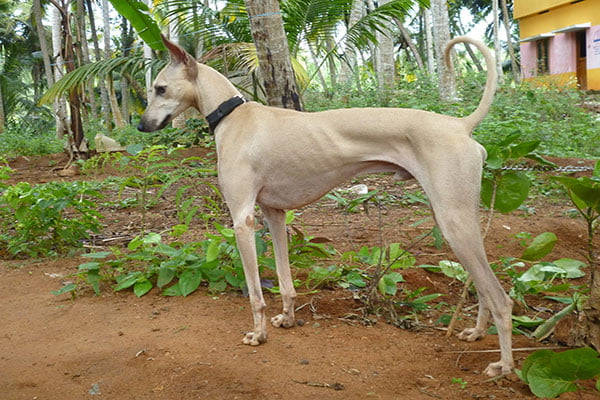
You usually do not go looking for a Rampur Greyhound because you have seen one on every street corner. More often, the breed turns up as a photo that stops you mid-scroll, or a mention in a conversation about sighthounds, hunting dogs, or Indian breeds, and you find yourself wondering what kind of dog could look that athletic, and still live well in a home.
It is easy to assume that a dog built for speed must be hard to live with, or that “hunting dog” automatically means highly strung and noisy. With the Rampur, the picture is more subtle. Like many sighthounds, they can be quite quiet in day-to-day life, but they also have needs that do not disappear just because the dog is well-mannered indoors.
Understanding this breed is mostly about reading the body and the history together: what a deep chest, long legs, and sharp vision were designed to do, and what that means for exercise, safety, and the kind of household where a Rampur can genuinely settle.
- Breed category: Sighthound
- Country of origin: India
- Typical height: Around 61 to 74 cm at the shoulder (varies by sex and lines)
- Typical weight: Often in the mid 20 kg range (varies by sex and condition)
- Coat: Short coat, generally low maintenance
- Exercise needs: High, with a strong preference for sprinting
- Barking tendency: Often low
- Key considerations: Prey drive, safe off-lead options, deep-chested dog health risks
Origins and what the Rampur was bred to do
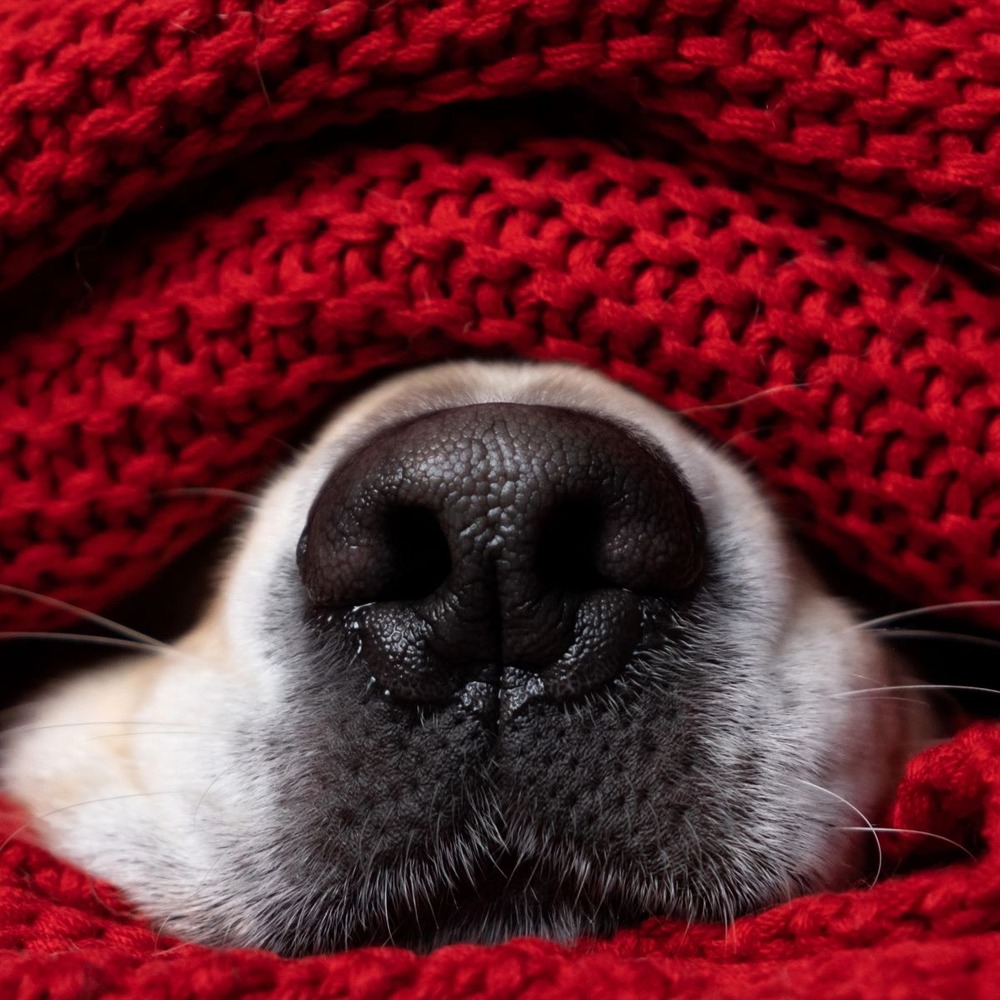
The Rampur Greyhound (also called the Rampur Hound) comes from northern India, associated with the Rampur region. Historical accounts commonly describe the modern type as shaped by crosses with Greyhound-type dogs in the 1800s, with the aim of producing a fast, durable coursing hound suited to local conditions.1
That purpose matters when you meet the breed. A Rampur is typically built for short, explosive speed, then recovery. In practical terms, many will happily relax at home after they have had a real chance to run. The tricky part is that a casual stroll, on its own, often does not satisfy a dog designed to chase at pace.
Descriptions of what they hunted vary by source and era, and it is best to treat the more dramatic claims with caution. What is consistent is their use as a coursing dog, valued for speed, stamina, and the ability to cover ground efficiently in open country.1
Temperament in a home setting
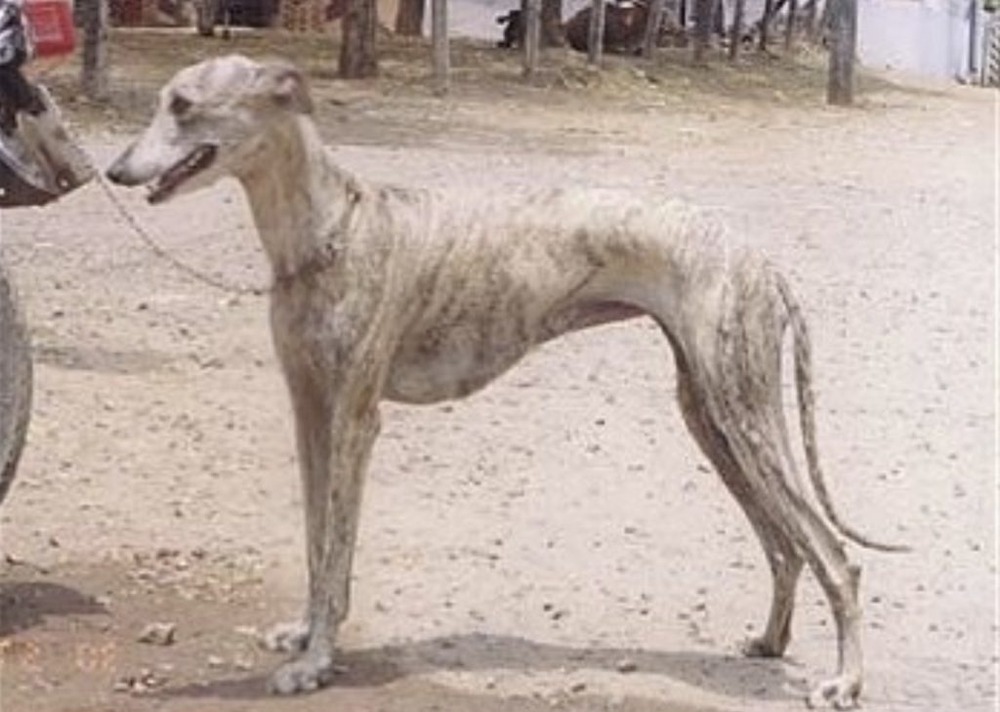
People often expect a sighthound to be “on the go” all day. In reality, many sighthounds show an appealing contrast: they can be calm indoors, and intensely driven outdoors. With the Rampur, you are usually living with a dog that is observant, physically sensitive, and responsive to routine, while still carrying a strong chase instinct.
It helps to frame this as prey drive rather than “bad behaviour”. Chasing is not a moral failing or a training “gap” in the simplistic sense. It is a built-in motor pattern, and it can switch on quickly when a small animal runs. That is why so many experienced sighthound owners prioritise management (secure fencing, long lines, safe spaces to run) alongside training.2
With children, the usual guidance applies: supervision, calm handling, and teaching kids not to grab or startle a dog that may be resting. Many sighthounds prefer predictable touch and quiet spaces, and they do best when they can choose to step away rather than being followed from room to room.
Exercise and enrichment that actually fits the breed
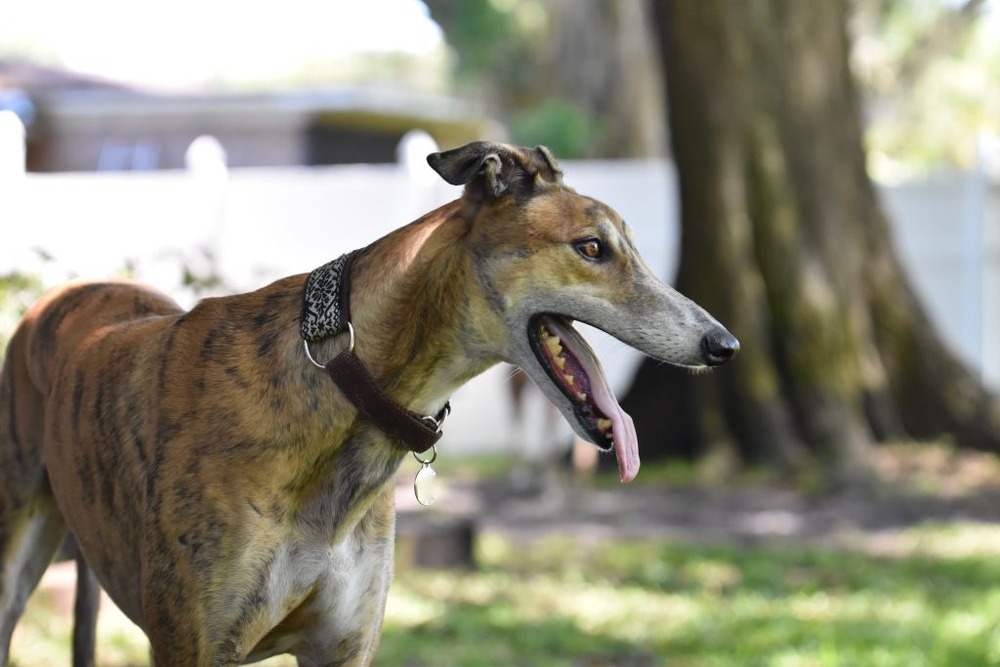
A Rampur Greyhound is rarely satisfied by lead-walking alone. They typically need a mix of steady movement and safe sprint opportunities, ideally in a fully enclosed area. If off-lead is not safe, a long line and structured running in secure spaces can still meet the dog’s needs without gambling on recall.2
In day-to-day life, this often looks like:
- One longer walk for sniffing and decompression, plus short training moments built into the walk.
- Several chances each week to run at speed in a secure area (or a purpose-built sighthound venue, where available).
- Simple at-home enrichment such as food puzzles, scatter feeding, and brief sessions of reward-based training to build focus.
It is also worth remembering that sighthounds can be physically delicate in specific ways. Their bodies are made for speed, not for clumsy collisions. Slippery floors, sharp turns, and rough play in tight spaces can lead to strains and knocks. Thoughtful set-up at home, including rugs for traction, often prevents injuries before they happen.
Training approach, boundaries, and recall reality
Rampurs are often described as intelligent, but intelligence does not always translate to “eager to please”. Many sighthounds are quick learners and also quick to decide whether something is worth doing. Training tends to go best when it is short, consistent, and reward-based, with very clear patterns.
Recall is the classic pressure point. Even well-trained sighthounds can struggle to disengage once the chase circuit has switched on. For many households, the practical solution is not to chase a perfect off-lead recall in open areas, but to build a lifestyle that does not require it: secure exercise, long lines, and calm management around triggers.2
If you share space with smaller pets, plan for separation and safety rather than hoping it “just works out”. Some individuals can live peacefully with cats or small dogs, particularly if raised with them, but it is wise to assume supervision and management will always be part of the picture.
Health topics to take seriously in deep-chested dogs
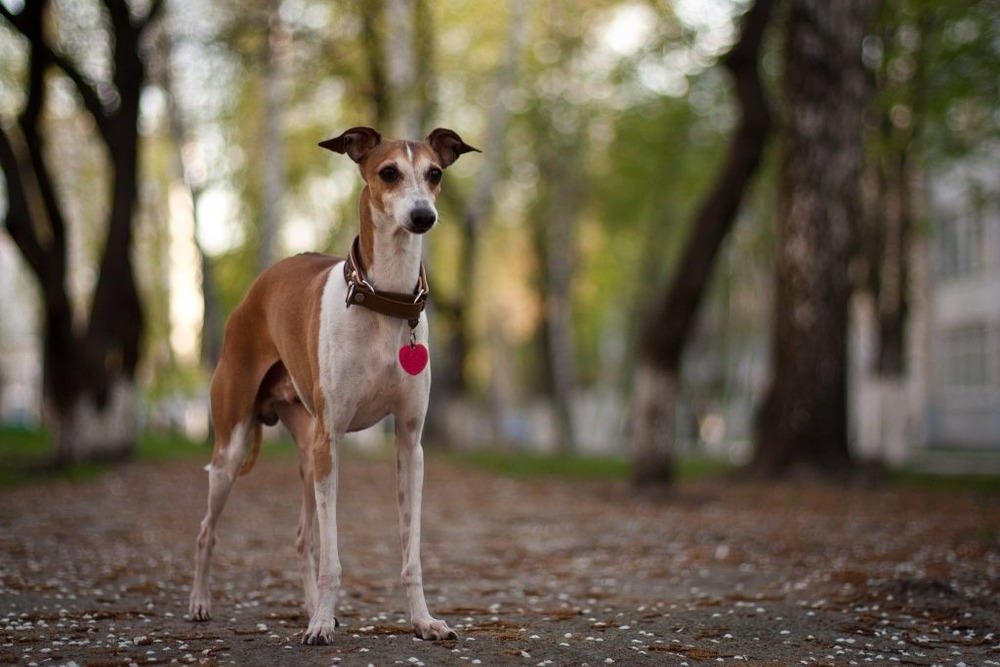
Breed-specific health data for Rampur Greyhounds can be hard to find compared with more globally common breeds. Still, their overall build means some well-known sighthound and large-breed issues are worth understanding upfront.
One of the biggest is gastric dilatation-volvulus (GDV), commonly called bloat. This is an emergency where the stomach dilates and can twist, cutting off blood flow and rapidly leading to shock. Deep-chested dogs are overrepresented in GDV risk discussions, and owners are encouraged to know the early signs (unproductive retching, swollen abdomen, restlessness, sudden weakness) and act immediately.3, 4, 5
Prevention is not perfect because there is no single cause, but many veterinary sources suggest practical risk-reduction habits: feeding multiple smaller meals rather than one large meal, slowing down fast eating, avoiding raised bowls unless medically needed, and limiting vigorous exercise for a period after meals.3, 4, 5
Hip dysplasia is another condition often discussed in larger dogs. It is a developmental problem involving joint laxity and secondary osteoarthritis, and management commonly includes weight control, tailored exercise, pain relief when needed, and sometimes surgery in more severe cases.6
Grooming, coat care, and comfort in colder weather
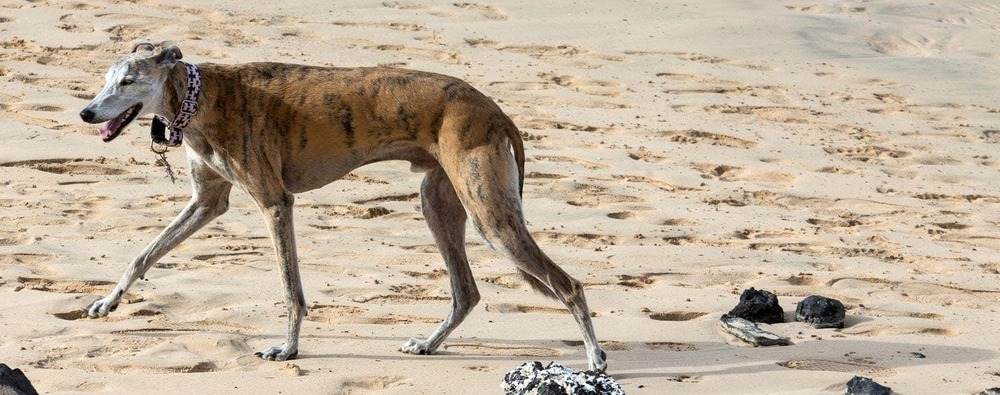
The short coat is one of the easier parts of living with this type of dog. A weekly brush is usually enough to lift dust and loose hair, and an occasional bath suits most households. Nails, teeth, and ears still matter, though, because those basics often make the difference between a dog that looks fine and a dog that feels comfortable.
Many short-coated sighthounds are sensitive to cold, especially in the evenings or in windy weather. In parts of Australia, a warm coat for winter walks is less about fashion and more about keeping muscles warm, particularly for a dog that sprints hard then cools down quickly.
Feeding and day-to-day routines
A Rampur Greyhound generally does best on a balanced, complete diet that suits an athletic build. Rather than chasing a “high protein” label as a rule, it is more useful to watch body condition, energy, stool quality, and how the dog recovers after exercise.
If your dog tends to gulp food, using a slow feeder or puzzle feeder can help. For deep-chested dogs where GDV risk is on your mind, those everyday habits can be part of a sensible routine: smaller meals, slower eating, and calmer post-meal periods.3, 5
If you are changing foods, do it gradually. Sudden changes can upset digestion even in otherwise hardy dogs, and a dog that feels unwell is also less likely to train well or settle comfortably.
Final thoughts
The Rampur Greyhound tends to make sense once you stop trying to fit them into a generic “family dog” mould. They are shaped by speed, open space, and the logic of the chase, and yet many can be remarkably quiet companions when their needs are met.
If you can offer secure exercise, patient training, and a home that respects both their sensitivity and their instincts, the reward is a dog that moves through the world with a kind of clean purpose, then comes home and becomes, quite contentedly, part of the furniture.
References
- Rampur Greyhound (Wikipedia)
- Behaviour & Training, recall and prey drive (The Savvy Sighthound)
- Gastric dilatation volvulus (GDV) or “bloat” (Cornell University College of Veterinary Medicine)
- GDV (gastric dilatation volvulus) in dogs (PDSA)
- Understanding canine bloat (GDV): a medical emergency (AAHA)
- Hip dysplasia in dogs (Merck Veterinary Manual)
- Gastric dilatation-volvulus (GDV) in dogs (PetMD)
- Rampur State, note on Rampur Hound cross-breeding (Wikipedia)
- Rampur, Uttar Pradesh, note on Rampur Greyhound (Wikipedia)