

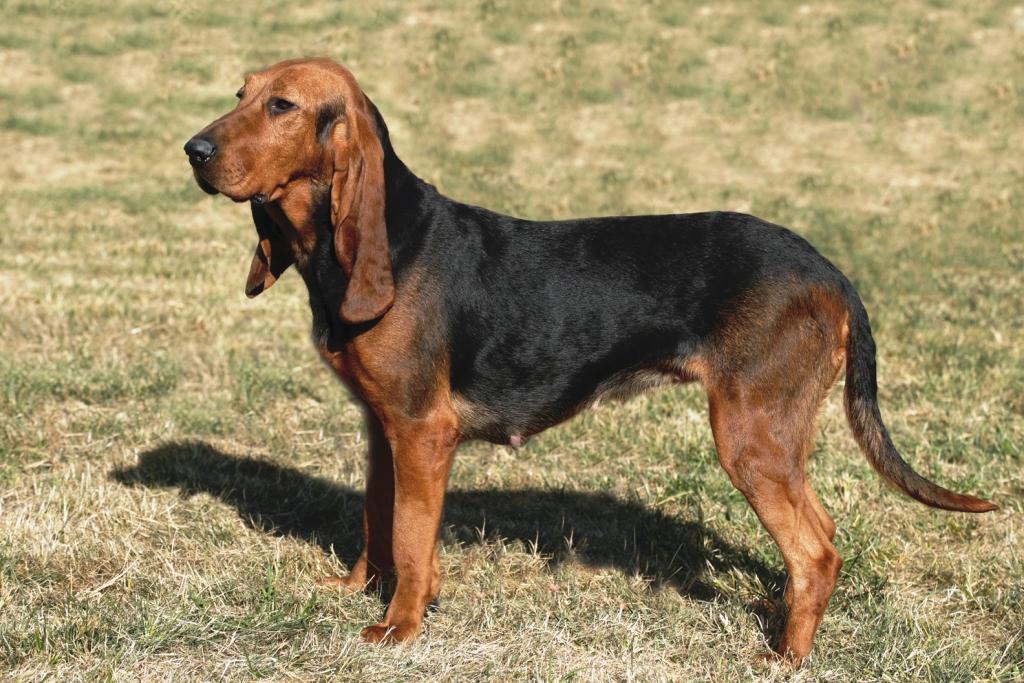
You might come across the name “Saint Hubert Jura Hound” while searching for a scent hound that can really follow a trail, or after meeting a lean, long-eared hound with a surprisingly serious nose. Often, what people are noticing is not a single, neatly defined pet breed, but a working hound “type” that sits inside a web of closely related European scenthounds.
That matters, because expectations change depending on what you actually have in front of you. A dog bred to hunt by scent can be gentle at home, but still be pulled powerfully towards smells outdoors, and can make different choices to a dog bred to look to humans for direction. Understanding the background helps you plan for training, exercise, and the kind of daily life that keeps a hound settled.
In practice, the term “Saint Hubert Jura Hound” is often used informally to describe Jura-region Swiss hounds that resemble the older Saint Hubert hound tradition. Today, the most clearly defined modern framework is the Swiss Hound group recognised by the FCI, which includes the Jura Hound as one of the varieties.1
Breed identity and where the name fits
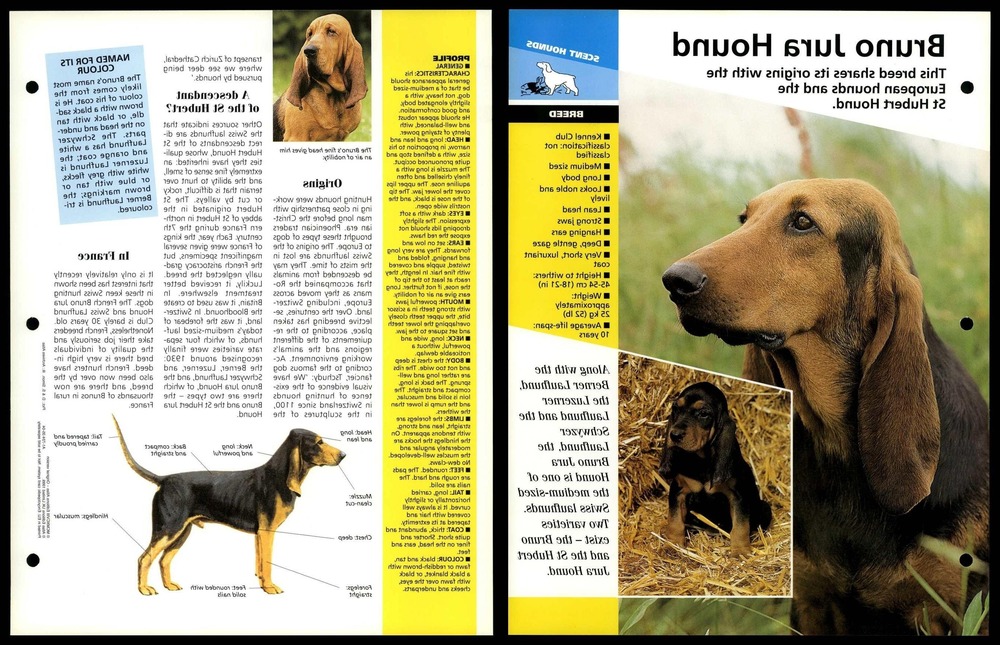
In Switzerland, the FCI-recognised “Swiss Hound” (Schweizer Laufhund) is a group of related medium-sized scenthounds, with several varieties, including the Jura Hound.1 Outside breed club contexts, you may see names used more loosely, especially in English, where “Saint Hubert” gets attached to hounds that look and work like traditional monastic scent hounds.
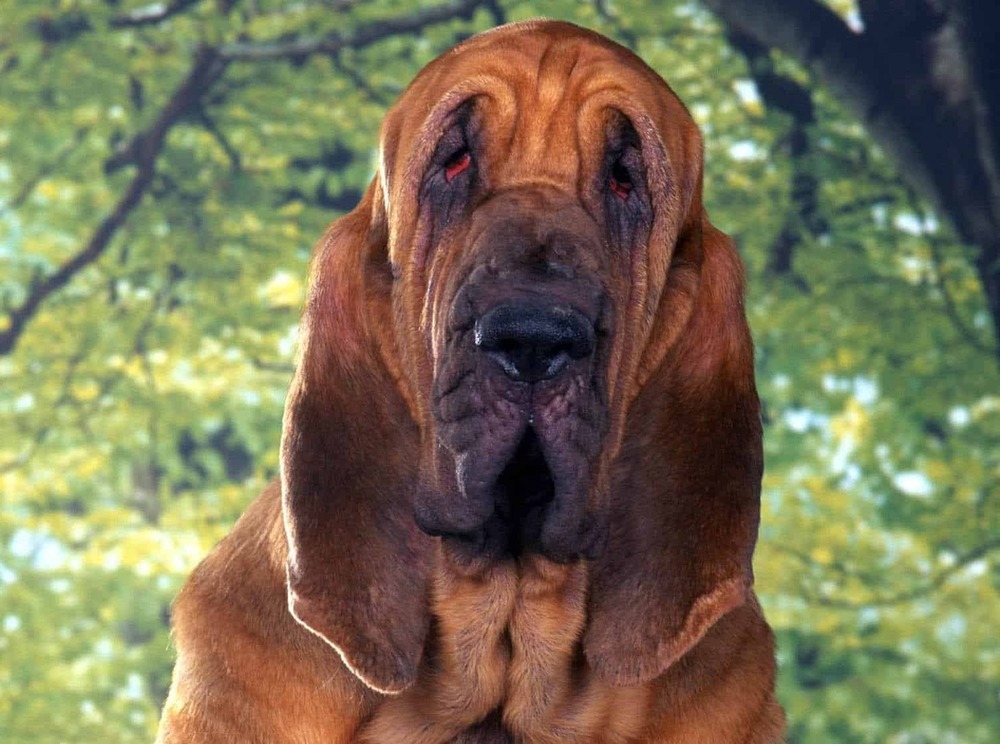
It is worth holding two ideas at once. First, there is a real historical tradition of Saint Hubert hounds associated with monastic breeding in what is now Belgium, and the Bloodhound is strongly linked to that lineage in modern writing.4, 5 Second, the further back you go, the less tidy the records become, and even detailed histories acknowledge uncertainty around exactly how uniform those early hounds were, and how directly they map onto modern breeds.4
If you are considering one of these dogs, ask breeders or rescue groups what standard they are working to, whether the dog is from hunting lines, and what the dog’s day-to-day behaviour is like. With scenthounds, what they were bred to do usually shows up in real life.
Early development and historical threads
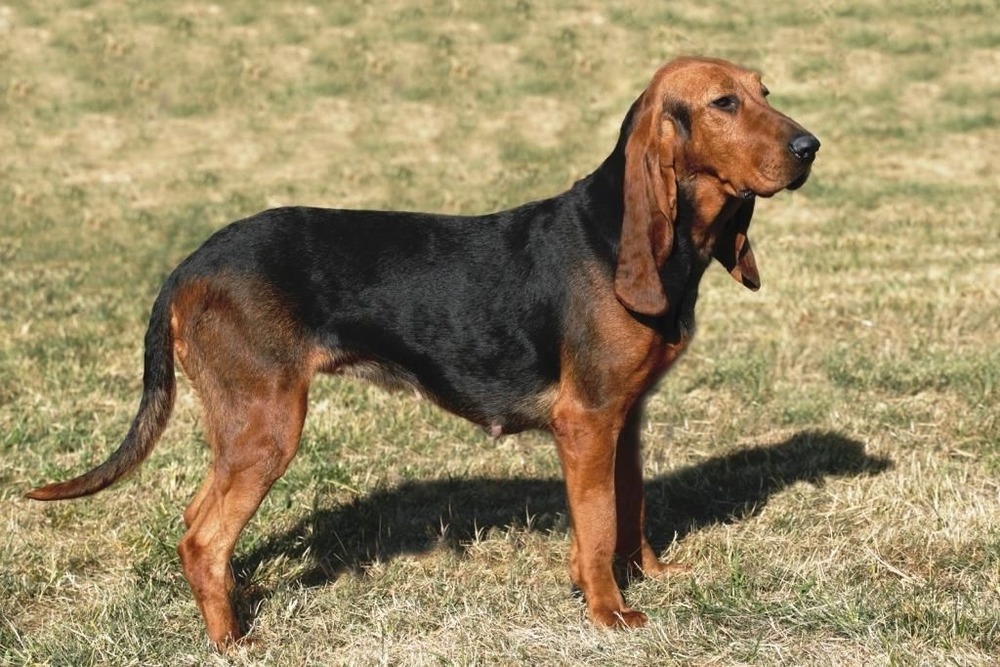
Scent hounds in Switzerland have a long working history. The Swiss Hound group is described as originating in Switzerland, and historical accounts commonly note that Swiss hounds existed early and were valued for hare hunting across the region over centuries.2 The Jura landscape itself, steep, wooded, and scent-rich, naturally favours a dog that can keep working when the trail is faint and the terrain is tiring.
The “Saint Hubert” name belongs to a different but related thread: medieval and early modern hunting culture around Saint Hubert, patron saint of hunters, and the abbey associated with hound breeding. Modern sources frequently connect these hounds to the development of the Bloodhound, while also acknowledging that parts of the origin story are debated and not fully provable in a modern genetic sense.4, 5
For owners, the practical takeaway is simple: these dogs come from traditions where the nose leads and stamina matters. That is why the day-to-day experience often includes slow, methodical sniffing, persistence on a scent, and a preference for interesting ground over tidy obedience.
Physical traits you tend to see in Jura-type scenthounds
Most Jura-type scenthounds are medium-sized, athletic, and built for steady movement rather than explosive sprinting. In the Swiss Hound group, the dogs are classified as medium-sized scent hounds, and the Jura variety is one of the recognised types within that structure.1
Common features owners notice include:
- Long, pendulous ears, which can trap moisture and debris if the dog is often in long grass or water.
- A short, dense coat that is usually straightforward to maintain with regular brushing.
- A frame that looks lean when fit, because endurance dogs tend to carry less extra weight.
Colour and markings vary by lines and local tradition. If you are trying to identify a dog precisely, it can help to compare the dog to the official Swiss Hound varieties, rather than relying on English nickname labels alone.1
Temperament and suitability in everyday homes
Well-socialised scenthounds are often steady companions, but they tend to be environmentally focused. Many owners interpret this as stubbornness, when it is often a dog doing exactly what it was selected for: filtering the world through scent first, and everything else second.
They can suit families, including those with children, when routines are predictable and adults are realistic about management. The key is not to expect constant handler check-ins the way you might with some herding or gundog breeds. Instead, plan for secure fencing, lead skills, and enrichment that meets a scent hound’s brain.
With other pets, early, thoughtful introductions matter. Many scenthounds can live well with other dogs, and sometimes with cats, but prey drive varies between individuals. A calm home set-up helps, and if you have small animals, it is wise to assume you will need ongoing management.
Training that works with the nose, not against it
Reward-based training is a good fit for many hounds, especially when you treat sniffing as information rather than misbehaviour. The RSPCA recommends reward-based dog training built around positive reinforcement, which aligns well with breeds that do not respond to heavy-handed handling.6
Keep sessions short, and practise in gradually harder environments. For scent-driven dogs, the jump from the lounge room to an oval full of smells is enormous. It is not defiance, it is competing motivations.
Helpful focus areas include:
- Loose-lead walking with structured sniff breaks, so the dog gets what it needs without dragging you from scent to scent.
- A reliable recall built slowly, often with long lines for safety.
- Scent games (find-it, trail lines, simple tracking), which give the dog a job and reduce frustration.
Exercise and mental enrichment

These dogs usually need daily movement, but the shape of that exercise matters. A long sniffy walk can be more tiring than a shorter, brisk loop, because scent work loads the brain as well as the body. The RSPCA notes that dogs need regular daily exercise, at least once a day, and that training also provides valuable mental stimulation.6
Where possible, choose safe spaces that allow the dog to move at its own pace, and consider rotating routes so the dog has fresh scent information. If you are working on recall, use a long line until the behaviour is reliable. For many hounds, freedom comes after skills, not before.
Health considerations to take seriously
No single article can predict an individual dog’s health, especially when “Saint Hubert Jura Hound” is used loosely. Still, there are a few issues that come up often in medium to large, active dogs and in long-eared breeds.
Hip dysplasia and weight management
Hip dysplasia is a developmental condition involving joint laxity and can lead to progressive joint changes and arthritis over time.7 Genetics are a major risk factor, and growth and weight management can influence how it plays out in a young dog.7
One of the most practical things you can do is keep your dog lean. Using a body condition scoring approach can help you and your vet talk about weight clearly, rather than guessing by the number on the scales.8
Ear health in floppy-eared dogs
Long, floppy ears can create a warm, less ventilated environment that suits inflammation and infection, especially if the dog swims, gets bathed often, or has allergies. Guidance from veterinary sources emphasises learning correct ear-cleaning technique, avoiding cotton swabs that push debris deeper, and adjusting cleaning frequency to the dog’s needs rather than cleaning aggressively “just because”.9, 10
If you notice odour, redness, discharge, head shaking, or sensitivity, it is safer to book a veterinary check than to keep cleaning at home. With ears, early help prevents long sagas.
Grooming, coat care, and day-to-day maintenance
A short, dense coat is usually low fuss. A weekly brush is often enough to lift dirt and loose hair, and it gives you a chance to check for grass seeds, small cuts, and ticks after bush walks. Nails, teeth, and ears tend to be the ongoing “maintenance trio” for active hounds, because they spend so much time moving through the world head-first.
Bathing is best kept occasional, unless the dog regularly rolls in something fragrant, which is not unheard of with scenthounds. If you do bathe, dry the ears well, and keep an eye out for any irritation in the days after.
Feeding and keeping a working body condition
Many hounds love food, and a dog that is a little too heavy can look “normal” to owners, especially under a smooth coat. Using a structured nutrition conversation with your vet, including body condition scoring and a realistic look at treats, can make feeding feel less like guesswork.8
As a general approach:
- Choose a complete, balanced diet suitable for your dog’s life stage.
- Measure meals for a week or two, rather than free-pouring, to learn what your dog actually eats.
- Use part of the daily ration for training, so rewards do not silently double the calorie intake.
If you are unsure whether your dog is at a healthy weight, your vet can help you set a target and adjust portions gradually. Slow change is kinder on joints and easier to maintain.
Living well with a Jura-type hound
People often fall for these dogs because they are striking, capable, and feel quietly present. The part that takes adjustment is accepting that a scent hound is not “distracted” when it is following smells. It is engaged, and it is doing something meaningful to it.
When you meet that need, with daily exercise, safe freedom, reward-based training, and the occasional chance to do real scent work, you usually end up with a dog that settles more easily at home. The goal is not to remove the nose from the dog. It is to build a life where the nose has somewhere to go.
References
- Fédération Cynologique Internationale (FCI): Swiss Hound (Schweizer Laufhund, Chien courant suisse) standard and varieties
- Schweizer Laufhund (Swiss Hound) overview and history
- Bruno Jura Hound overview
- Bloodhound history and the Chien de Saint-Hubert tradition (overview)
- Abbey of Saint-Hubert background and association with hound breeding
- RSPCA Pet Insurance: Essential dog care information (exercise and reward-based training)
- American College of Veterinary Surgeons (ACVS): Canine hip dysplasia overview
- World Small Animal Veterinary Association (WSAVA): Global Nutrition Guidelines and body condition scoring tools
- Cornell University College of Veterinary Medicine: How to clean your dog’s ears
- Merck Veterinary Manual: Otitis externa in animals (maintenance care and prevention)