

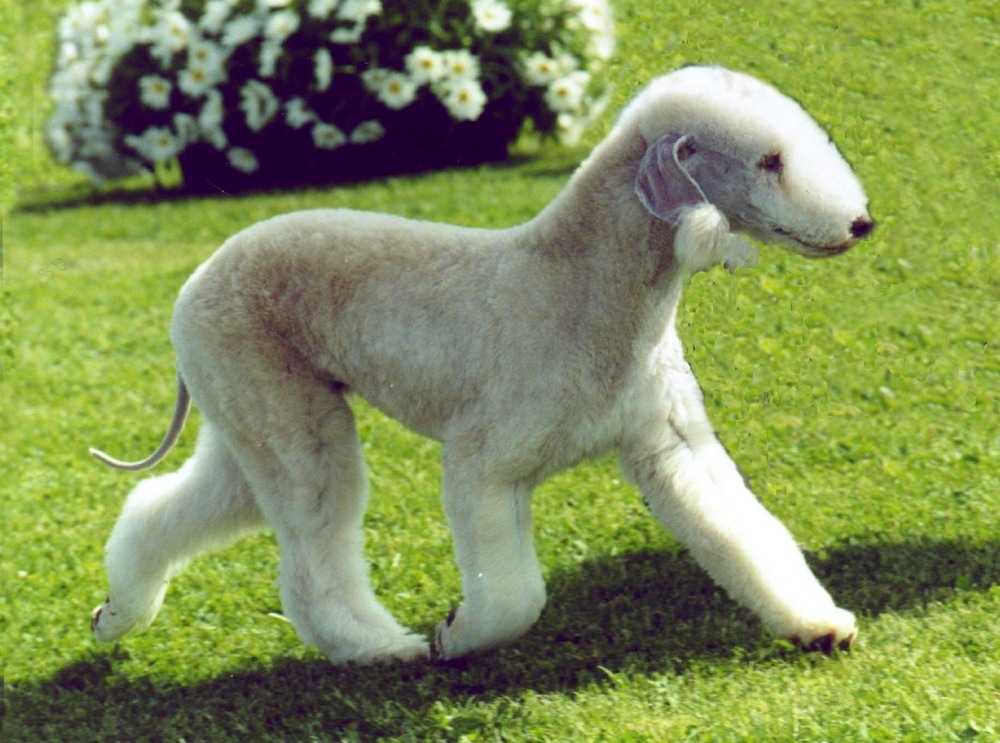
You usually notice a Bedlington Terrier in the same way you notice a strange little cloud moving through the park: a curly, lamb-like silhouette, a light, springy trot, and then, when you get closer, a very real terrier underneath it all. People often assume they must be delicate or ornamental. In practice, Bedlingtons can be robust, athletic dogs with a proper working history, and they still carry that quickness in their bodies and their minds.
It is also a breed that tends to attract thoughtful owners, the kind who like a dog with a bit of nuance. Bedlington Terriers can be affectionate and very companionable at home, but they are not a “set and forget” dog. Their coat needs structured care, their brains need something to do, and their health screening matters more than you might expect for a breed that looks so soft around the edges.
If you are considering the breed, or you already share your home with one, it helps to understand what is simply “Bedlington shape and style”, and what is the sort of behaviour or health risk you can influence with the right routines.
- Breed group: Terrier
- Origin: Northumberland, England
- Typical size: Around 41 cm at the withers, 8 to 10 kg (breed standard guide)
- Coat: Curly, linty, low-shedding, requires clipping
- Common colours: Blue, liver, sandy (some standards also describe tan points)
- Life expectancy: Often around 12 to 14 years
- Exercise needs: Moderate daily activity plus mental work
- Key health watch-outs: Copper-associated liver disease, some eye conditions
Where the Bedlington Terrier came from
The Bedlington Terrier developed in Northumberland in the north of England, and it makes more sense when you picture a practical dog rather than a show dog. These were terriers used for vermin control and hunting, valued for speed, stamina, and the willingness to work in rough conditions. Over time, the “Bedlington” name became attached to the type, with Joseph Ainsley often noted in breed histories because a dog called Young Piper is associated with the early use of the name Bedlington Terrier.2
The look we recognise today, that arched back, the narrow head with a topknot, the clipped outline, came along with more formal breeding and the rise of dog shows. It is worth remembering, though, that the soft outline does not mean a soft constitution. Even as companions, many Bedlingtons still move like athletes and think like terriers.
Practical takeaway: if you bring one home expecting a purely decorative “hypoallergenic lap dog”, you can end up under-exercising a dog that actually needs a decent daily outlet.
That lamb-like coat and the body underneath
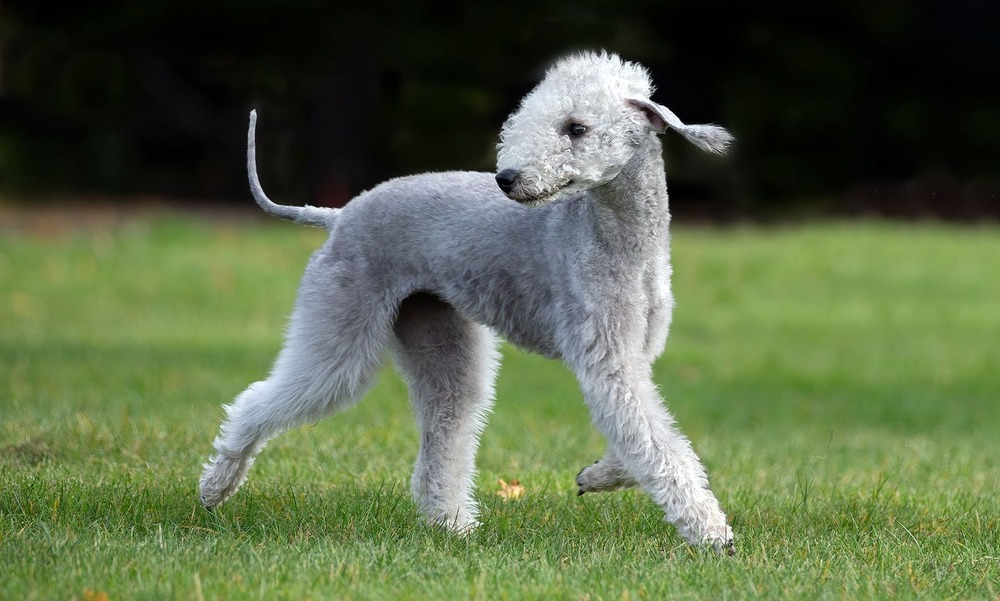
Bedlington Terriers have a very distinctive coat texture: thick and linty, with a tendency to twist. Breed standards commonly describe blue, liver, and sandy as accepted colours, and the typical size sits around 41 cm at the withers with a weight range of roughly 8 to 10 kg (as a guide, not a promise).1
Because the coat is low-shedding, some people assume grooming will be easy. In reality, low-shedding coats often ask for more human effort, not less. Hair that does not fall out readily is more likely to tangle and felt if it is not brushed, and the Bedlington outline usually relies on regular trimming.
What matters most day-to-day: comfortable skin and a coat that is not matting at the roots. “Pretty” comes second to that.
Temperament in real homes
Well-bred, well-socialised Bedlingtons are often lively, affectionate, and smart. Many owners describe a dog that can switch between playful energy outside and a calmer, cuddly presence indoors. They are still terriers, though, which can show up as quick responses, strong interest in movement (cats, wildlife, running children), and a tendency to investigate everything.
This is where expectations help. Bedlingtons often do best with households that enjoy training as an ongoing conversation rather than a box to tick. Consistency and calm repetition usually beat heavy-handed corrections, especially for sensitive or clever dogs that notice patterns fast.
With children, the usual rules apply: teach kids how to handle and give space, supervise play, and ensure the dog has a quiet retreat. With other dogs, many Bedlingtons do well, particularly when introduced thoughtfully and given plenty of early positive experiences.
Training and socialisation that actually sticks

Socialisation is not just about meeting lots of dogs. It is about building positive, manageable experiences that teach a puppy (and later, an adolescent) how to cope with normal life. Australian RSPCA guidance describes a critical socialisation period roughly spanning early puppyhood, and emphasises reward-based training to help puppies form calm associations with people, dogs, sounds, surfaces, and handling.6, 7
For Bedlington Terriers, early work is especially helpful because the breed can be quick, alert, and occasionally a bit too confident about their own opinions. Aim for a balance: confidence without pushiness, curiosity without chaos.
- Keep sessions short, especially with young pups.
- Reward the behaviour you want to see again (calm greetings, loose lead walking, choosing you over distractions).
- Practise gentle handling (ears, feet, mouth) so grooming and vet visits are easier later on.6
Exercise and enrichment, avoiding the “busy terrier” problem
Most Bedlingtons do not need hours of running every day, but they do need regular movement and something to think about. A daily walk is a baseline, not the whole story. Many enjoy games that use their nose, short training sessions, and activities like agility or trick training.
If a Bedlington is under-stimulated, the signs often look like “naughtiness”, which is a bit unfair. You might see restlessness, barking at movement outside, pestering the household, or inventing their own entertainment. Enrichment prevents problems more reliably than trying to punish them after the fact.
Health considerations, especially copper-associated liver disease

Bedlington Terriers are often described as generally healthy, but there are some breed-linked risks worth treating seriously. The big one is copper-associated liver disease (often referred to as copper toxicosis in the breed). This is not a “maybe” concern. It is well-established in Bedlingtons, and the sensible approach is to ask breeders and vets about screening, monitoring, and family history, rather than hoping your dog is an exception.
Genetics here can be a bit more complex than older summaries suggest. Copper issues in Bedlingtons have historically been associated with a COMMD1 deletion, and more recent work has identified other variants (including ATP7B variants) that may be relevant in some affected dogs, with important nuance around what a DNA result can and cannot predict.9
What to do in practice: work with your veterinarian on an appropriate plan for your dog, which may include screening tests and, where indicated, genetic testing through reputable laboratories, especially if you are buying a puppy or considering breeding.9
Grooming that supports skin health, not just the haircut
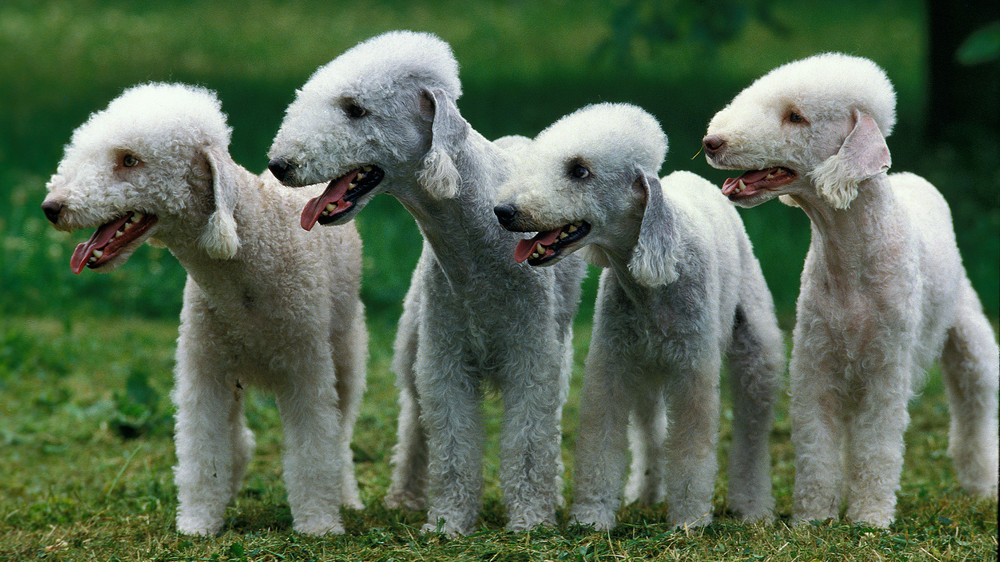
The Bedlington coat is part of the breed’s appeal, but it is also a routine. Expect regular brushing to prevent matting, and professional clipping often enough to keep the coat comfortable and manageable. Many owners find it easier to book grooming on a schedule rather than waiting until the coat is “too much”, because tight mats can be uncomfortable and can hide skin irritation.
Do not overlook the small maintenance pieces that influence comfort: ear checks, nail trims, and dental care. Those are less glamorous than the topknot, but they matter more to the dog.
Feeding, weight, and keeping things simple
Bedlingtons can be keen eaters, and the compact, athletic frame can carry extra weight before it is obvious under the coat. If you are not sure where your dog sits, ask your vet to help you assess body condition and muscle condition. The World Small Animal Veterinary Association (WSAVA) provides practical resources that veterinary teams use for nutritional assessment and body condition scoring.8
Useful habits: measure meals, keep treats honest, and adjust food to match life stage and activity rather than sticking to the same scoop forever.
If your Bedlington has known or suspected liver issues, do not self-prescribe supplements or specialised diets based on online advice. That is one area where vet guidance is essential, because “healthy” ingredients are not always appropriate for a particular medical condition.
A small piece of Bedlington fame
Bedlington Terriers have had their moments in the spotlight. One of the most famous is Ch. Rock Ridge Night Rocket, a Bedlington who won Best in Show at the Westminster Kennel Club Dog Show in 1948. Breed historians and kennel club features still reference that win because it was such a visible moment for a relatively uncommon breed.10
Living with a Bedlington Terrier, the honest summary
The Bedlington Terrier suits people who like a dog with shape and spark: a companion that can be gentle at home, lively outside, and genuinely engaged with training. They can do well in smaller homes if their daily needs are met, but they are not low-effort. Plan for grooming, build training into normal life, and take health screening seriously, particularly around copper-associated liver disease.
When those pieces are in place, many Bedlingtons settle into family life beautifully, not as a novelty, but as a capable little terrier with a surprisingly elegant coat wrapped around a practical, curious dog.
References
- The Kennel Club: Bedlington Terrier breed standard
- Wikipedia: Bedlington Terrier (history overview)
- Bedlington Terrier Club of America: Breed standard
- United Kennel Club: Bedlington Terrier breed standard
- Hill’s Pet Nutrition: Bedlington Terrier breed profile
- RSPCA Knowledgebase: Is socialising my puppy important?
- RSPCA Australia: Socialising your puppy
- WSAVA: Global Nutrition Guidelines
- UC Davis Veterinary Genetics Laboratory: Copper toxicosis (genetic background and testing notes)
- American Kennel Club: Ch. Rock Ridge Night Rocket and Westminster 1948