

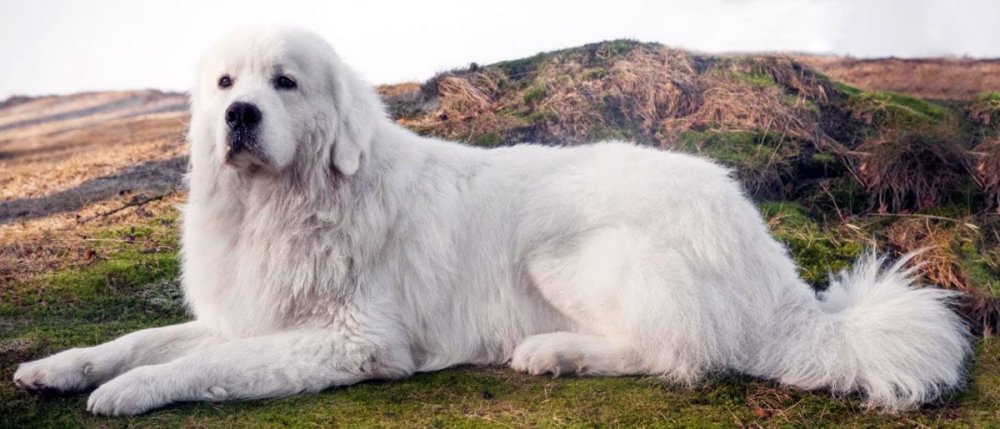
People often notice a Tatra Mountain Sheepdog because they look like the kind of dog you cannot ignore: big, white, calm in posture, and somehow already on watch. Sometimes it is a photo from a farm stay, sometimes it is one at a dog sport event, or a neighbour’s new pup that is already growing into a serious-looking adolescent.
It is easy to assume that a dog like this will either be naturally “easy” because they seem steady, or naturally “hard” because they were bred to guard. In practice, Tatras tend to be neither. They are shaped by purpose, they were developed to make decisions at a distance, and they often do best with people who like thoughtful training, clear routines, and enough space for a large dog to settle properly.
When a Tatra fits, they can be quietly impressive. When the fit is off, the same traits that make them a capable livestock guardian can show up as noise sensitivity, fence running, wariness around visitors, or a tendency to manage the household on their own terms.
- Breed category: Livestock guardian, classified by the FCI in Group 1 (Sheepdogs and Cattledogs)
- Country of origin: Poland
- Typical height: Males 65 to 70 cm, females 60 to 65 cm1
- Coat: Thick double coat, profuse undercoat, white preferred1
- Shedding: Moderate to heavy, especially seasonally
- Energy: Moderate to high, needs daily movement and time outdoors
- Temperament: Typically calm, alert, and protective, often reserved with strangers1
- Common health conversations: Joint disease (including hip dysplasia risk in large breeds), plus bloat risk awareness in deep-chested dogs
- Life expectancy: Commonly around 10 to 12 years (varies with genetics, size, and overall management)
Where the Tatra comes from, and what that means at home
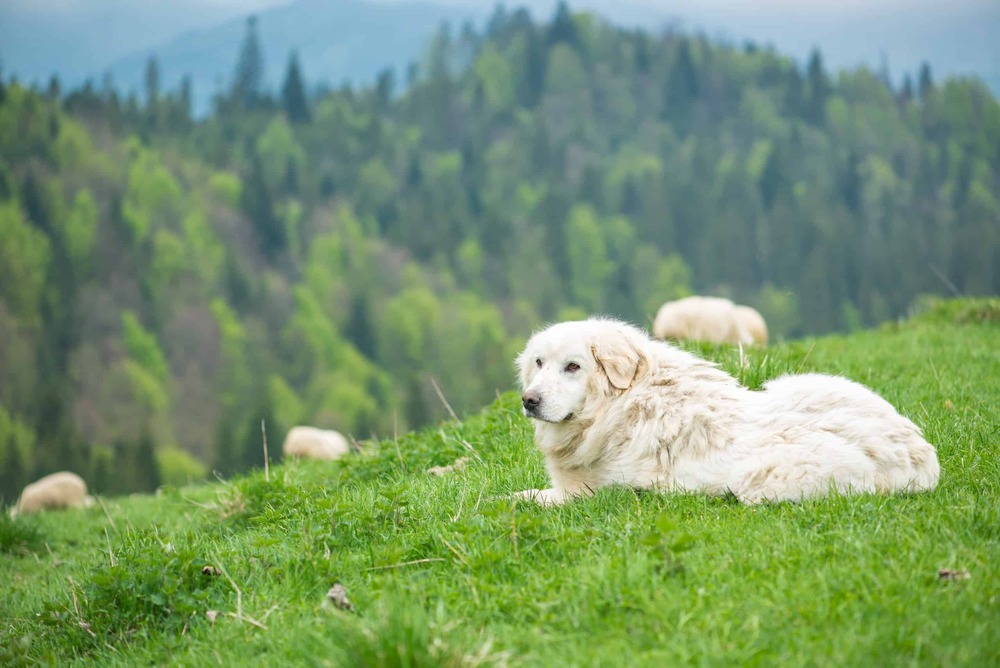
The Polish Tatra Sheepdog (Polski Owczarek Podhalański) developed in the mountainous Podhale region, where dogs were expected to stay with stock, notice change quickly, and respond without waiting for a person to step in.2
That background matters because it helps explain a few everyday patterns. Many Tatras are independent problem-solvers. They often watch first, then act. They may not show the “busy” friendliness people expect from more socially-driven breeds, but they can be deeply attached to their household and highly consistent once they understand what is normal and what is not.
In suburban life, this can look like a dog that chooses a vantage point, tracks the street, and takes responsibility for who approaches the boundary. It is not “bad behaviour” so much as a job description that needs careful shaping.
Guarding instincts, without romanticising them
Guarding breeds are sometimes described as if they are either perfectly safe and gentle, or inherently risky. The reality is more practical: genetics set the theme, and environment sets the volume. A well-bred, well-raised Tatra is often steady and tolerant, but they still need ongoing socialisation, clear house rules, and thoughtful introductions to visitors, tradies, and unfamiliar dogs.
Appearance, coat, and the “white dog problem”
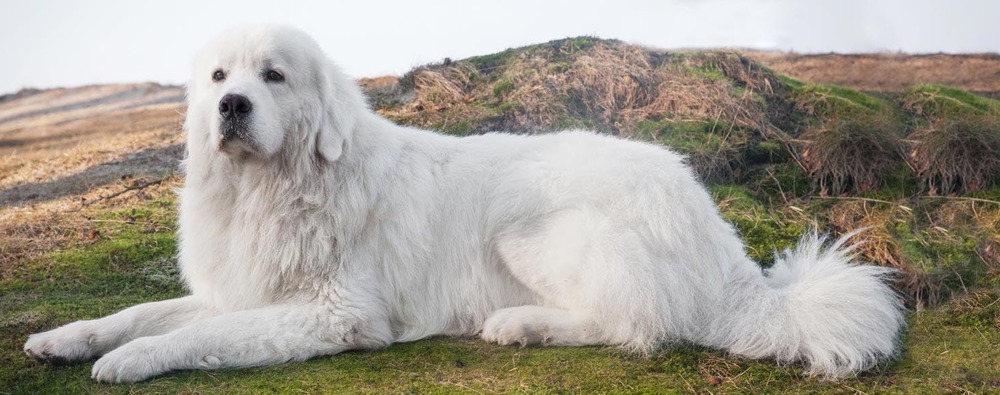
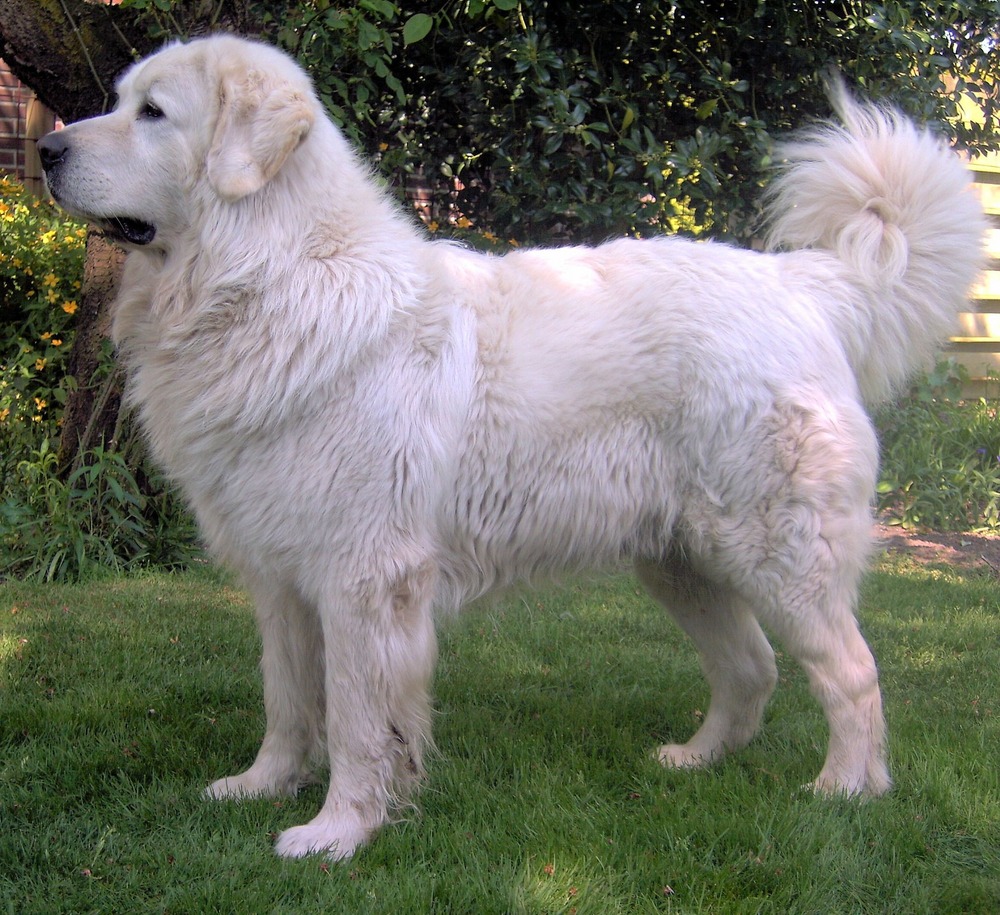
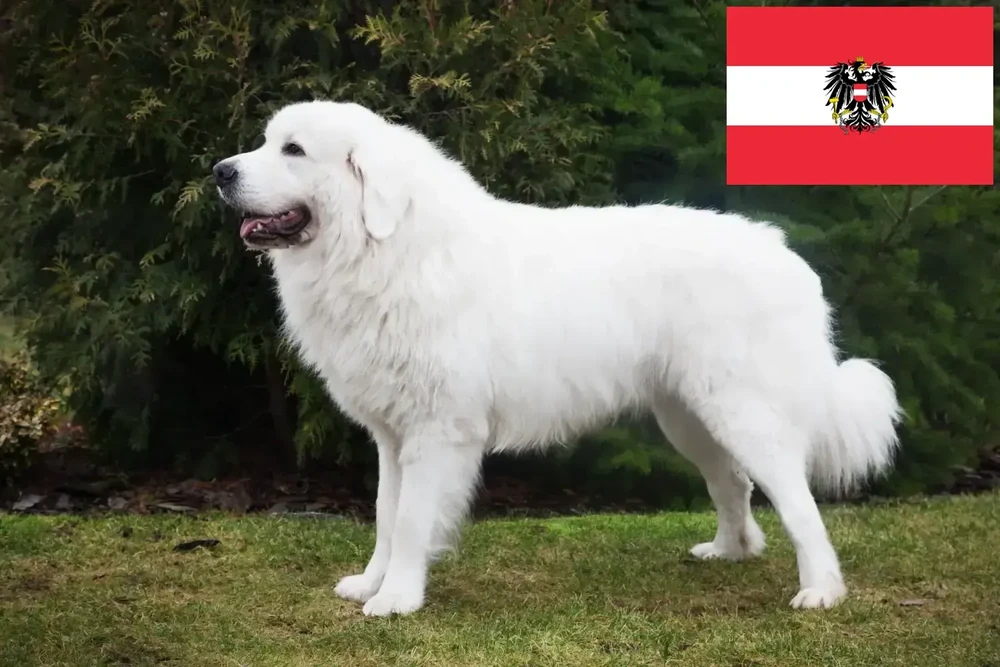
On paper, the Tatra is straightforward: a large, strong dog with a weather-resistant coat, a substantial undercoat, and a white colour preference (cream patches are generally considered undesirable in the FCI standard).1
In day-to-day life, the coat is where many first-time owners get surprised. White coats show everything. Burrs and grass seeds can hide in feathering. Mud dries into tidy-looking dust that still ends up on the couch. If you like a home that stays pristine without effort, this may not be your breed.
What helps is seeing grooming as maintenance, not makeover. Regular brushing supports skin health, reduces matting, and gives you a routine moment to check ears, paws, and the areas where tangles build up.
Practical grooming rhythm
- Brush through properly once or twice a week, more during seasonal coat drop.
- Focus on friction areas: behind ears, ruff, armpits, breeches, and tail.
- Keep nails, paw fur, and foot pads tidy, especially if your dog spends time on wet grass.
- Bath only when needed, then dry thoroughly so the undercoat does not stay damp.
Temperament, kids, and other pets
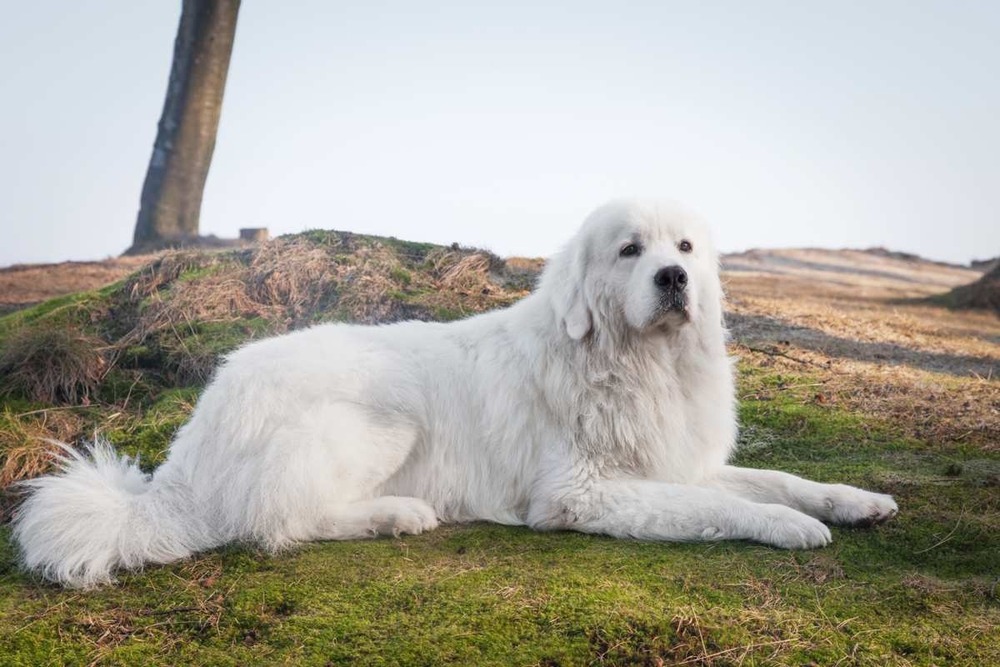
Tatras are often described as loyal, calm, and protective. Those words can be true, but they can also hide the more useful detail: many Tatras are selectively social. They may be affectionate with their own people and neutral or reserved with others. That is normal for a guardian type, and it is something to plan for rather than fight.
With children, the goal is not to chase a mythical “perfect family dog”. The goal is a safe relationship built on predictable routines and supervision. Teach kids to give the dog space around food, rest, and favourite spots, and help them learn the quieter signs of discomfort that can be missed if you only watch for growling.3, 4
Introducing a Tatra to kids
Keep early meetings calm and brief. Let the dog approach. Avoid crowding, squealing, hugging, or grabbing. If either the dog or the child is getting wound up, separate and try again later.4
Living with other dogs and pets
Many Tatras can live well with other animals, especially if raised with them. With adult introductions, the set-up matters: neutral ground, distance at first, and controlled, short interactions. Slow is not “overcautious” with guardian breeds, it is often what helps them feel safe enough to be sensible.5
Training: clear, fair, and built for an independent mind
If you have trained a dog that lives to work for your praise, the Tatra can feel different. Many are not looking for constant direction. They want to understand the pattern and then carry it out.
Training tends to go best when it is calm and consistent, with reinforcement that matters to the dog and boundaries that stay the same from day to day. A Tatra that is nagged, over-corrected, or flooded with chaotic social situations may become more suspicious, not more compliant.
What helps most in the first year
- Structured social exposure, with distance and choice, not forced handling.
- Household routines that build predictability: where to rest, how guests arrive, where feeding happens.
- Boundary work early, including fence management, leash skills, and calm watching instead of rehearsed barking.
- Short training sessions that end with success, rather than drilling.
Exercise and enrichment: not just “more”, but “right”
Tatras are working dogs, but that does not always mean they need endless high-speed exercise. Many do better with a steady daily rhythm: walks, time outdoors to sniff and observe, and a sense of territory that is managed rather than constantly challenged.
For a young dog, joint-friendly movement matters. Avoid repetitive impact while they are growing, and build fitness gradually. A lot of “energy problems” with this breed are really under-stimulation paired with too much unsupervised boundary time, where barking and patrolling become self-rewarding hobbies.
Enrichment ideas that suit the breed
- Long-line sniff walks where the dog can explore safely.
- Scatter feeding and simple scent games in the yard.
- Settle training, so the dog learns to switch off indoors.
- Low-pressure obedience and handling practice, so grooming and vet visits stay manageable.
Health considerations to discuss with your vet
No article can predict an individual dog’s health, but large breeds tend to share a few recurring themes. For Tatras, it is sensible to keep joint health, weight management, and gastrointestinal emergencies on your radar.
Joint disease and screening
Hip dysplasia is a known concern across many large breeds. If you are buying a puppy, ask what health screening is done on breeding dogs, and what the results mean. Organisations such as the Orthopedic Foundation for Animals explain how screening programs and databases are used to reduce inherited disease risk over time.6
Bloat (GDV): know the signs, reduce the risk
Gastric dilatation-volvulus (GDV), often called bloat, is a life-threatening emergency most often seen in large, deep-chested breeds. Risk reduction commonly includes feeding multiple smaller meals, avoiding vigorous exercise around meals, and watching for gulping and stress around food.7, 8
Some owners of at-risk breeds also discuss prophylactic gastropexy with their vet, particularly if the dog is already having surgery for another reason. It is not a guarantee against all stomach issues, but it can reduce the risk of the stomach twisting, which is the most dangerous part of GDV.8
Feeding a Tatra: enough quality, not too much quantity
Tatras can look “built” even when they are carrying extra weight, especially once the coat fills out. Keeping your dog lean is one of the most practical health choices you can make for joints and long-term comfort.
A good starting point is choosing a diet from a company that can answer basic questions about formulation, quality control, and nutritional adequacy. The World Small Animal Veterinary Association (WSAVA) has guidance on what to ask, which is especially helpful if you are comparing brands and feeling overwhelmed by marketing claims.9
Everyday feeding habits that often help
- Measure meals rather than free-pouring.
- Use part of the daily ration for training and enrichment.
- Adjust portions with seasons, age, and activity, not just what is printed on a bag.
- If you are worried about growth rate in a puppy, ask your vet about a plan that supports steady development.
Final thoughts
The Tatra Mountain Sheepdog is not a “giant white pet” in the casual sense. They are a purpose-built guardian with the size, coat, and watchfulness that comes with that history. For the right home, that can be a quietly satisfying kind of companionship, the dog that lies near you, notices everything, and takes routine seriously.
If you are considering one, the best questions are practical. Can you offer space, boundaries, and daily structure? Are you comfortable with a dog who may not greet strangers like a social butterfly? If the answer is yes, a Tatra can be a steady presence, and a remarkably capable dog to live alongside.
References
- Fédération Cynologique Internationale (FCI): Polish Tatra Shepherd (No. 252)
- Wikipedia: Tatra Shepherd Dog (overview and history)
- RSPCA Australia: Pets and kids (safe interactions)
- RSPCA Knowledgebase: Introducing a new dog or puppy to children
- RSPCA Knowledgebase: Introducing a new dog to an existing dog
- Orthopedic Foundation for Animals (OFA): Health testing and databases
- Cornell University College of Veterinary Medicine: Gastric dilatation-volvulus (GDV) in dogs
- American College of Veterinary Surgeons (ACVS): GDV and gastropexy
- WSAVA: Global Nutrition Guidelines