

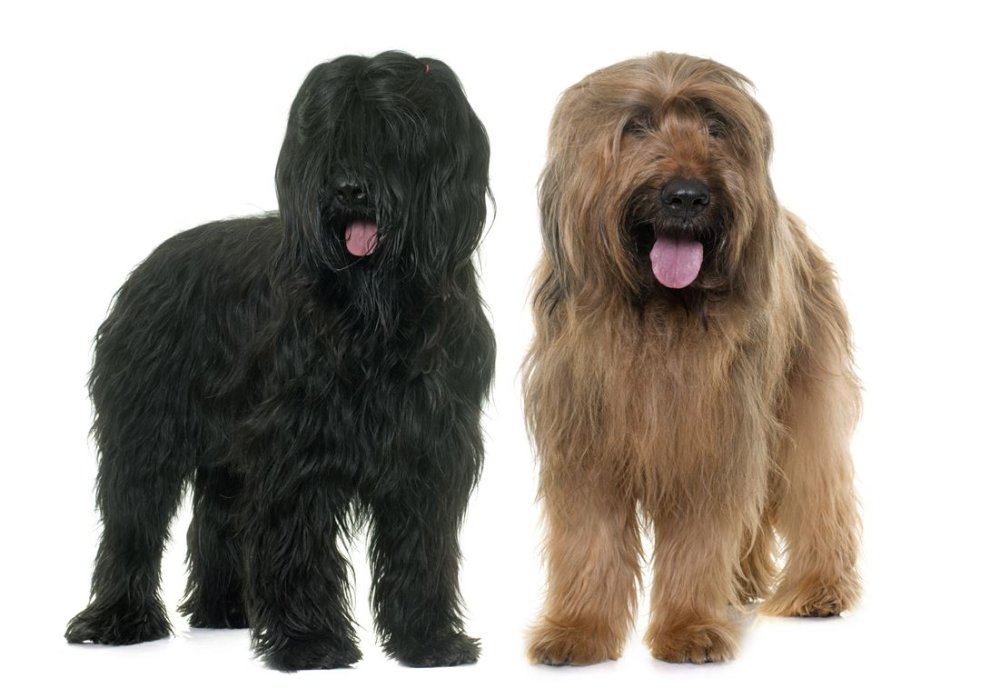
You might first notice a Briard in the most ordinary way: a big, shaggy dog at the park with hair falling over its eyes, moving with surprising purpose. People often assume that a coat like that is just “fluffy”, or that a herding breed will naturally slot into family life if it gets a decent walk.
With Briards, the reality is a little more layered. They are clever, physical dogs with a working past, and that shows up in how they watch movement, how they use their bodies, and how much they notice in the home. When things go well, they can be calm, steady companions. When their needs are missed, the same qualities can tip into restlessness, over-guarding, or a coat that quietly turns into a daily problem.
Knowing what a Briard was built to do, and what life asks of them now, helps you make sense of the breed in practice. It is less about “is this a good dog?” and more about whether this particular dog and this particular household can meet in the middle.
Briard basics at a glance
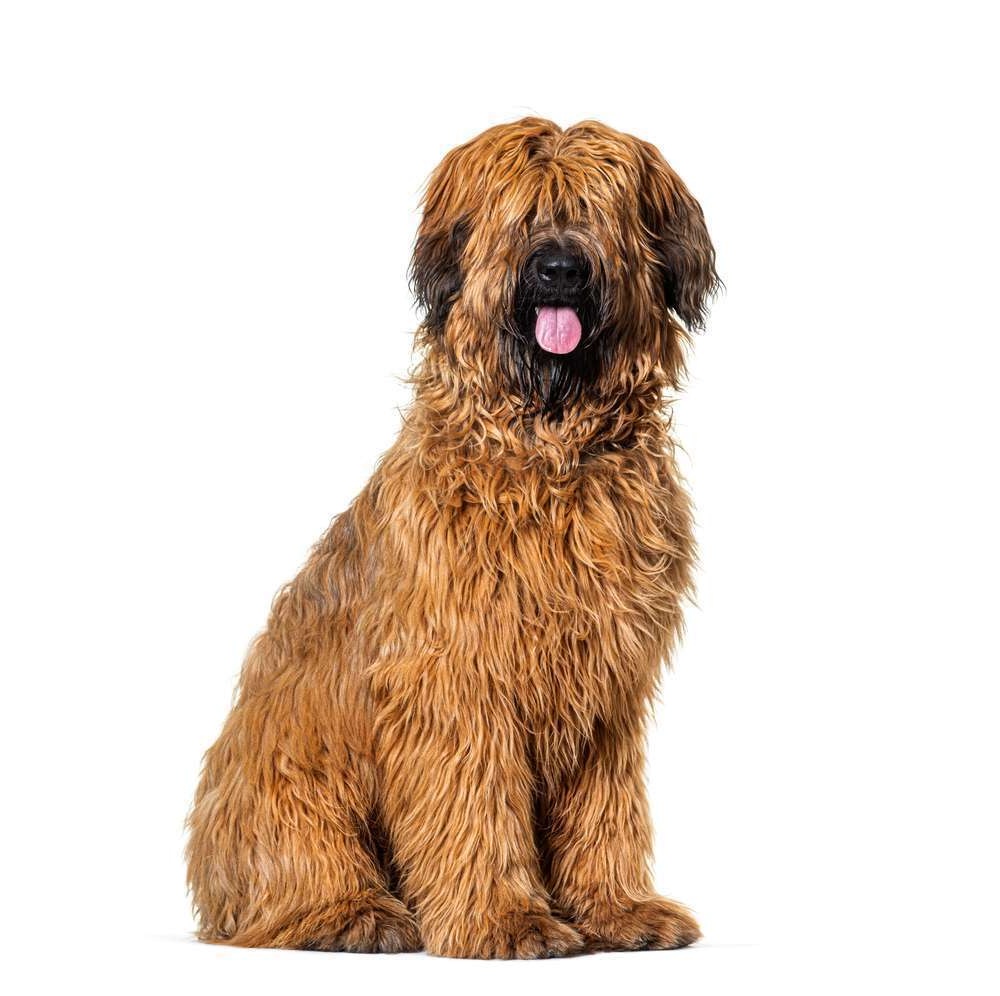
Breed category: Herding, shepherd type (France).1, 2
- Size: Large, athletic, usually around 58 to 69 cm at the shoulder.
- Coat: Long, coarse, slightly wavy, with a softer undercoat.1, 3
- Typical colours: Black, fawn, grey (and some variations by standard).1, 2
- Life expectancy: Commonly around 10 to 12 years (individuals vary).3
- Stand-out feature: Double dewclaws on the hind legs are a hallmark in the breed standard.2
One quick note on ears: you will see Briards with natural drop ears, and in some places you may still see cropped ears. Ear cropping is not part of everyday pet care in Australia and is restricted or prohibited in many jurisdictions, so most local dogs will be natural.
Where the Briard came from, and why it still matters

The Briard is also known as the Berger de Brie, a French shepherd dog traditionally used to herd sheep and defend them. That combination, movement control plus guardian behaviour, is written into the breed’s history and still influences how many Briards respond to the world now.1, 2
In practical terms, it often shows up as a dog that tracks what is happening in its environment, notices strangers early, and can be quite responsive to routine. The upside is a dog that can be deeply engaged with its people. The challenge is that “engaged” can become over-involved if a young dog has not been helped to settle, share space politely, and feel safe with visitors.
Temperament and everyday behaviour in the home
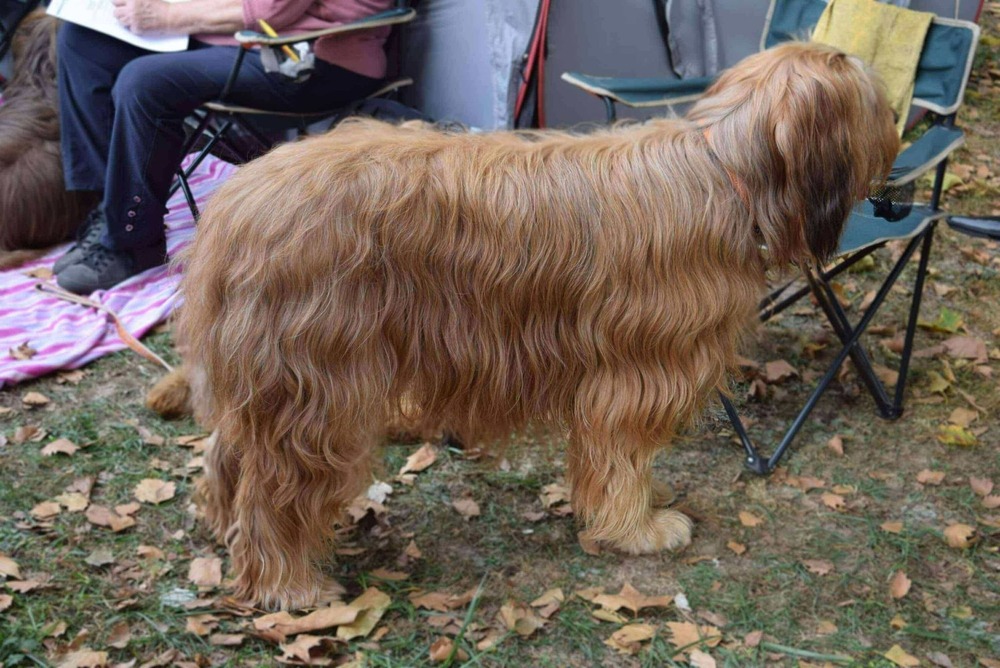
Briards are commonly described as loyal, intelligent, and protective, and those words can be true without capturing the whole picture. Many are attentive dogs that prefer to be near their people. They often do best when there is a clear rhythm to the day and when they have a job, even if that “job” is training, structured play, or learning calm behaviours around the house.
If your Briard seems to “collect” family members in one room, circles kids who are running, or tries to control movement on walks, that can be an echo of herding heritage rather than “bad behaviour”. The most useful approach is usually to reward the behaviour you want, set up the environment so the dog can succeed, and keep arousal from running away on everyone.
Protective behaviour needs shaping, not cheering on. A Briard that practises rushing fences or barking at every passer-by is rehearsing a habit. Calm, consistent training and good management often make a bigger difference than trying to “tire them out”.
Children, visitors, and other pets
Briards can live well with children and other animals, especially if they are thoughtfully socialised early and the household has sensible boundaries. Because they are large and physical, supervision matters around small children, not because the dog is “mean”, but because enthusiasm and momentum can knock little bodies over.
For multi-pet homes, early introductions, separate feeding spaces, and calm reinforcement of polite behaviour tends to set the tone. With visiting dogs, remember that sociability is individual. Even friendly Briards can be selective, particularly in tight spaces.
Training and exercise that suits a Briard
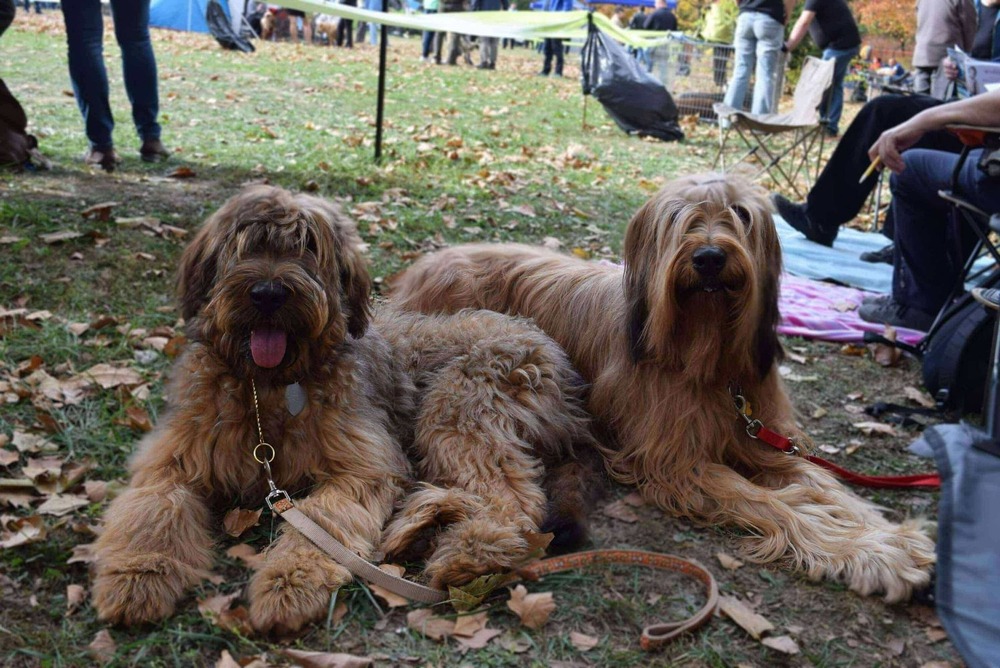
Briards are typically quick to learn, but that does not always mean “easy”. A clever dog can also be inventive, sensitive to inconsistency, and likely to notice patterns you did not mean to teach. Short, regular sessions usually beat occasional long drills.
Positive reinforcement training (food, toys, access to sniffing, praise) tends to suit the breed well. If you are dealing with guarding, reactivity, or persistent herding of children, it is often worth working with a qualified trainer who understands working breeds and can coach you through safe, practical steps.
How much exercise is enough?
Most Briards need daily physical exercise plus time to use their brains. The right amount depends on age, fitness, and temperament, but many do well with a mix of:
- steady walks with sniffing time
- training games (recall, loose lead, tricks, scent work)
- structured play that does not turn into frantic chasing every day
- dog sports, if you enjoy them (obedience, rally, tracking, agility)
In warm weather, plan exercise for cooler parts of the day and watch closely for overheating. Dogs with thick coats, higher body weight, and high drive can push past their comfort level, so it helps to make cooling and rest part of the routine, not a last-minute decision.7
Health considerations to discuss with your vet
No breed is “healthy” or “unhealthy” in a simple way. What matters is understanding the issues that show up more often in a population, then using that knowledge to guide breeder conversations, screening, and everyday care.
Briards are commonly associated with:
- Hip dysplasia, a developmental condition of the hip joint seen across many large breeds.
- Inherited eye disease, including progressive retinal atrophy (PRA) in some lines.
When you are choosing a puppy or young dog, ask what health testing is done in that line and whether results are available through recognised schemes or registries. It is also worth discussing body condition with your vet. Keeping a large dog lean is one of the most practical, evidence-aligned ways to support joint comfort over the long term.
A quick, calm word on bloat (GDV)
Like many large, deep-chested dogs, Briards may be at risk of gastric dilatation-volvulus (GDV), often called bloat. It is an emergency. If you ever see a suddenly distended abdomen, repeated retching without bringing anything up, restlessness, or collapse, treat it as urgent and contact an emergency vet immediately.6
Coat care and grooming that stays manageable
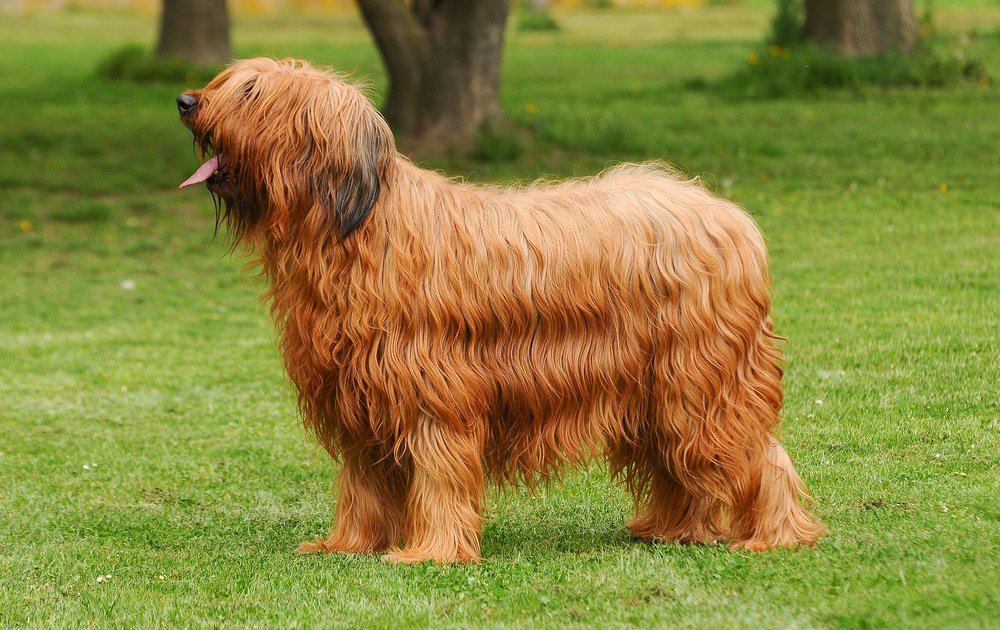
The Briard coat is beautiful, and it is also a commitment. It is designed to protect a working dog in rough conditions, and it tends to mat if it is not maintained. Many owners find that the coat is easiest when grooming is treated as a normal part of life, not a crisis response.
A useful baseline is brushing every couple of days, with more attention during coat change or if your dog swims, rolls, or spends time in bushland. The specific tools matter less than technique and consistency, but line-brushing and checking down to the skin are common recommendations to prevent hidden mats.4, 5
Pay special attention to friction areas such as behind the ears, under the collar, armpits, and the inside of the hind legs. These spots can felt up quickly, and once a mat is tight to the skin it can become uncomfortable and hard to remove without clipping.
Heat, coat length, and comfort
A thick coat can add to heat load in warm, humid weather. Rather than assuming a haircut is the answer, focus first on shade, airflow, cool water, and adjusting exercise times. If you are concerned your dog struggles in the heat, talk with your groomer and vet about practical options that do not compromise coat health. Watch for signs of heat stress such as heavy panting, drooling, weakness, vomiting, or collapse, and seek veterinary help if you suspect heatstroke.7
Feeding a Briard, without getting lost in food marketing

Briards tend to do well on a complete, balanced diet that suits their life stage and activity level. The tricky part is that pet food labels can be noisy and persuasive, and ingredient lists are not a reliable shortcut to quality.
A practical starting point is to choose a diet that meets recognised nutritional standards, then adjust portions to keep your dog at a healthy body condition. If you are unsure, your vet can help you assess weight, muscle, and daily energy needs. The WSAVA Global Nutrition Guidelines are a helpful reference for how veterinary teams think about nutrition, including how to evaluate pet foods more sensibly than marketing allows.8
Be careful with toxic foods in the home. Chocolate, grapes and raisins, onions, and some artificial sweeteners can be dangerous for dogs. If you suspect your dog has eaten something risky, contact your vet or an animal poison helpline promptly.
Is a Briard a good fit for your life?
The best homes for Briards are usually the ones that enjoy training, do not mind ongoing coat care, and can provide daily activity without turning the dog into a full-time endurance athlete. Space helps, but it is not just about a big yard. It is about giving the dog a structured life and enough enrichment to feel settled.
A Briard may suit you if you are comfortable with:
- regular grooming as part of the routine
- daily exercise plus mental work
- training that supports calm behaviour around visitors
- a dog that notices everything, for better and for worse
If you want a low-maintenance coat, or a dog that is naturally indifferent to the world, another breed may fit more comfortably. There is nothing wrong with that. It is simply matching the dog to the life you actually live.
Interesting breed details that are actually useful
Double hind dewclaws are one of the clearest physical identifiers for the breed and are part of the written standard for the Berger de Brie.2
The coat is often described as “goat-like” in texture. That is not just poetry. It reflects the dry, coarse feel that helps the coat shed dirt and water more readily than a soft, silky coat would, provided it is kept brushed and free of mats.3
References
- Wikipedia: Briard (overview and history, with links to official standards)
- Fédération Cynologique Internationale (FCI): Berger de Brie (Briard) standard listing
- Burke’s Backyard: Briard breed profile (coat, temperament, double dewclaws)
- Four Paws Groom School: Briard grooming overview
- Briard.com: Grooming the Briard (line brushing technique)
- American College of Veterinary Surgeons (ACVS): Gastric Dilatation-Volvulus (GDV) information
- RSPCA Australia: Protect pets from heatstroke (risk factors and signs)
- World Small Animal Veterinary Association (WSAVA): Global Nutrition Guidelines