

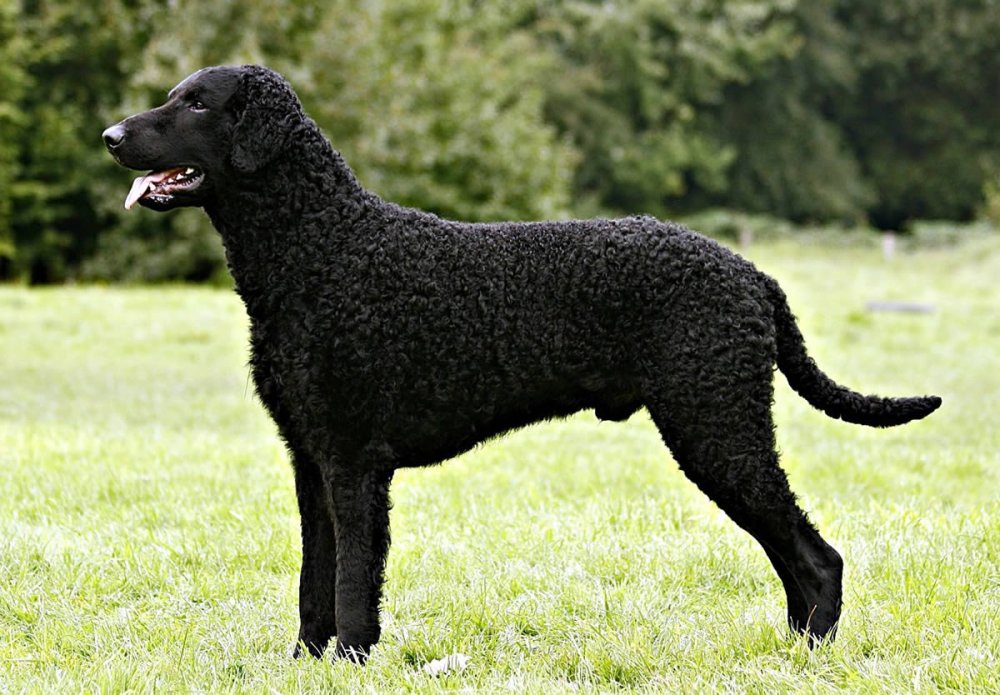
People often notice a Curly-Coated Retriever for the first time because the coat looks so unusual in the park, at the beach, or in old gundog photos. Tight curls on a big, athletic dog can read as “poodle mix” at a glance, and it is easy to assume the coat is mostly cosmetic.
In reality, the Curly is a purpose-built retriever with a weather-resistant jacket and a steady, independent way of moving through the world. They can be devoted to their people, but not always in the constantly-demonstrative style some families expect from a retriever, which is where confusion can creep in when someone brings a Curly home.
If you are weighing up whether the breed suits your household, the useful questions are practical ones: how much daily movement you can genuinely offer, what “trainable” looks like when a dog thinks for itself, and how comfortable you are living with a coat that is low-fuss in one way and surprisingly particular in another.
Curly-Coated Retriever snapshot
Group: Gundog. Origin: United Kingdom. Colour: black or liver. Coat: dense, tight curls on the body with smoother hair on face and some limb areas.1, 2
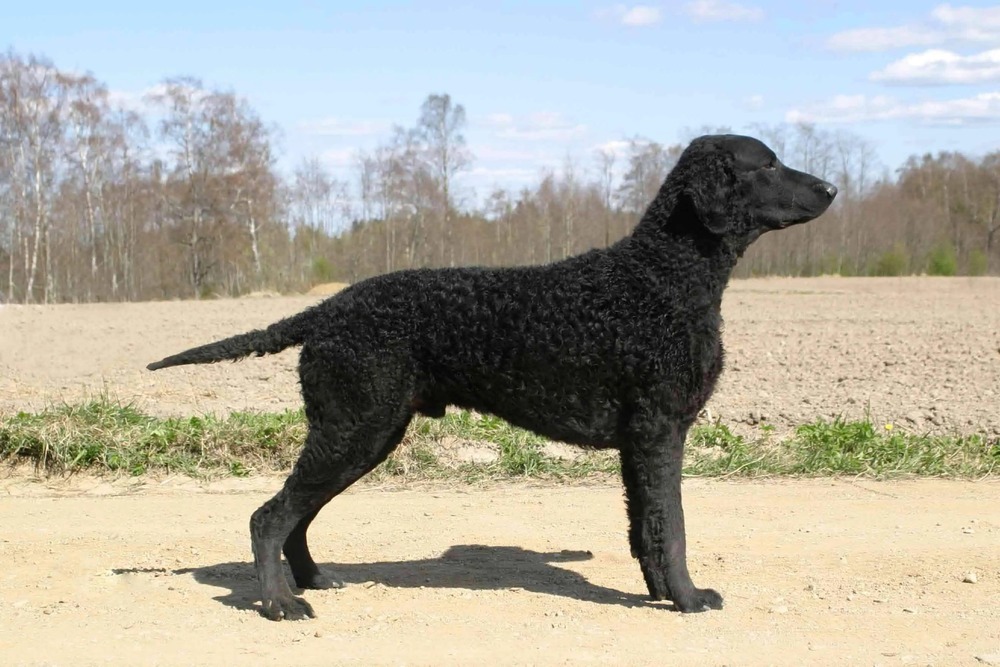
- Height (ideal at withers): dogs 69 cm, bitches 64 cm.1
- Temperament: bold, friendly, self-confident and independent, sometimes appearing a little aloof.2
- Typical lifespan: often around 10 to 12 years, noting that individuals vary and health screening matters.5
History and original work
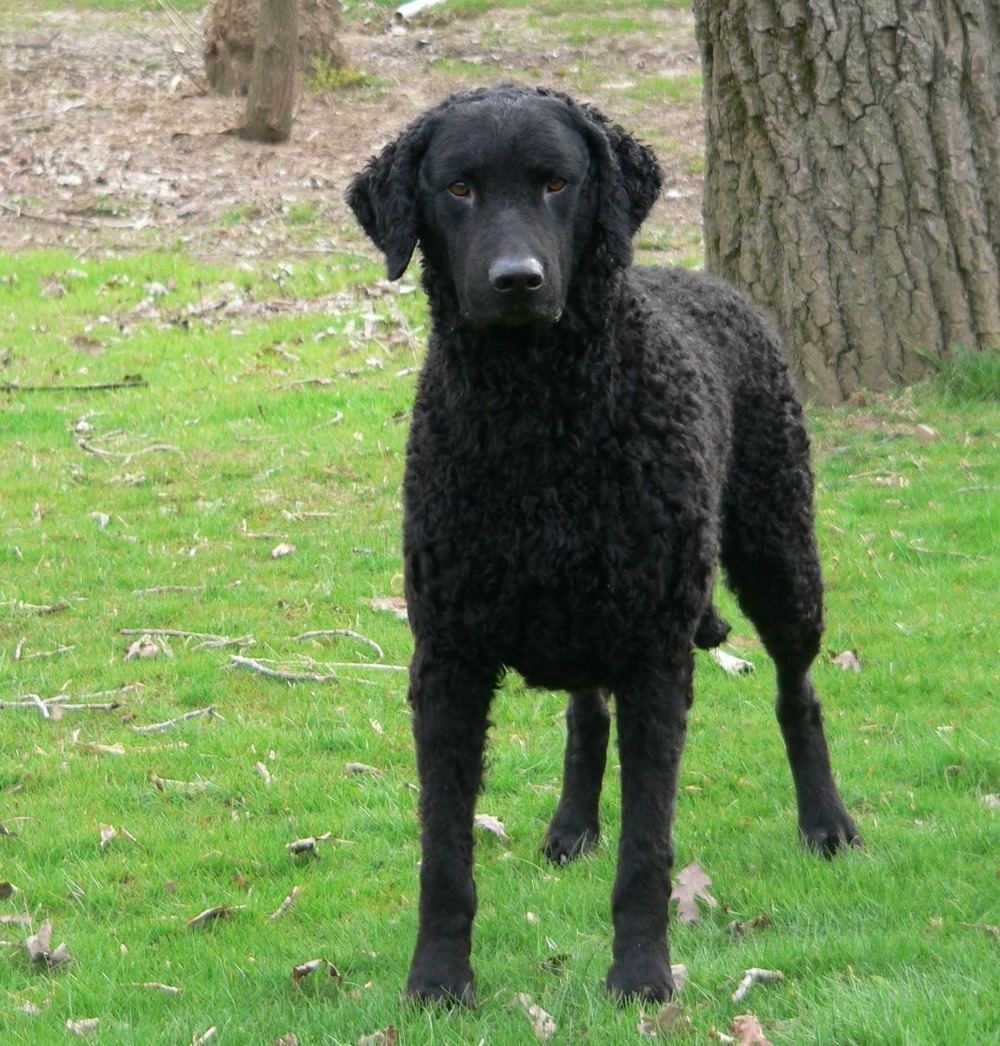
The Curly-Coated Retriever is widely regarded as one of the older retriever types, developed in the UK for demanding retrieving work across land and water. Their overall outline and coat reflect that job, not a fashion statement. Breed clubs and kennel organisations have long described them as an active, intelligent gundog with stamina for field conditions.6, 7
When you watch a Curly work, the defining feature is not speed alone but persistence. They were expected to keep going in cold water, push through cover, and bring game back reliably. That heritage is why many Curlies still thrive when their days include structured activity, retrieval games, and chances to use their nose, not just a quick walk around the block.7
Practical takeaway: if you want the “retriever” part without much exercise, this may not be your breed. Their best selves tend to show up when they have a job, even if that job is simply training and play with a clear purpose.
Physical characteristics that matter day to day
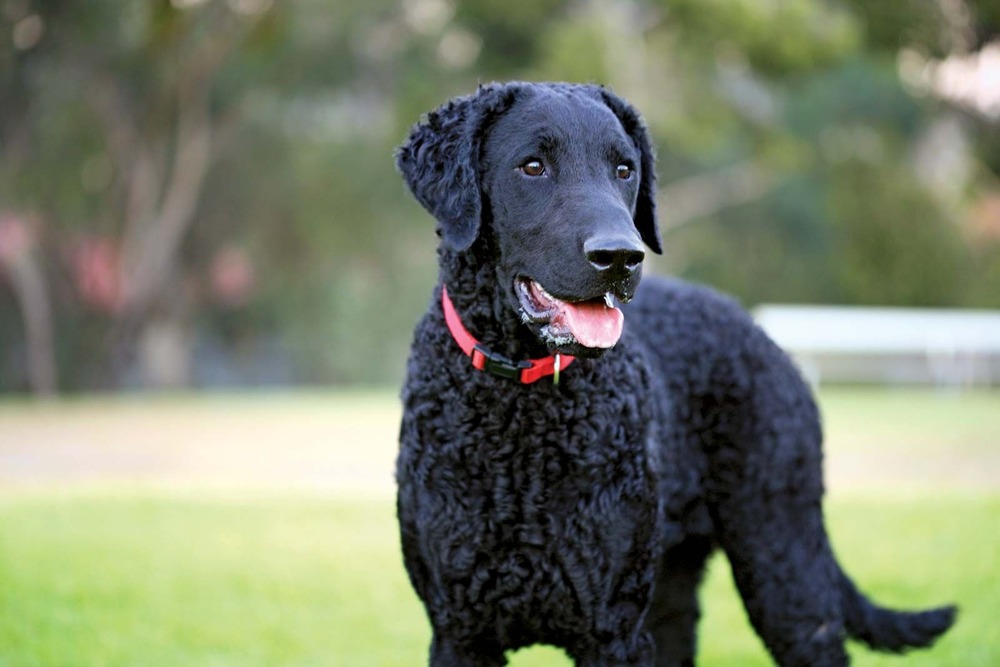
The Curly is a tall, upstanding retriever with a distinctive coat described in breed standards as a dense mass of small, tight, crisp curls over the body and tail. Colour is solid black or liver. The face is naturally smoother, which can make the coat look even more dramatic by contrast.1
Those curls are not just “hair that needs grooming”. The texture is part of how the coat protects the dog in weather and cover, and it changes how you should maintain it. Over-brushing can pull the curls apart and make the coat look frizzy or feel dry, which is why many breed care guides recommend a lighter hand than you might use on a double-coated shedding breed.5
Don’t assume “low shedding” equals “no coat care”. Curlies are often lower shedding than some retrievers, but coat maintenance is more about preserving curl structure and checking skin and ears, especially in dogs that swim regularly.5
Temperament and behaviour in a family home
Curly-Coated Retrievers are commonly described as self-confident and independent. They can be warm with their own people, but they are not always as openly social with strangers as some other retrievers, and they may come across as reserved in new situations.2
That independence is not a flaw, but it does change the feel of day-to-day life. A Curly might pause before responding, watch the environment carefully, or decide they would rather investigate a scent than repeat a drill. Many owners find this side of the breed appealing, provided they are not expecting constant people-pleasing.
With children, the usual rules apply: supervision, teaching children appropriate handling, and giving the dog a quiet retreat. A Curly that is tired, under-exercised, or overwhelmed by rough play is more likely to disengage, avoid, or become pushy. None of that is “bad temperament”, it is information about what the dog needs from the household.
Best match: people who like a thinking dog, can be consistent, and enjoy training that feels more like a conversation than a script.
Training and exercise needs
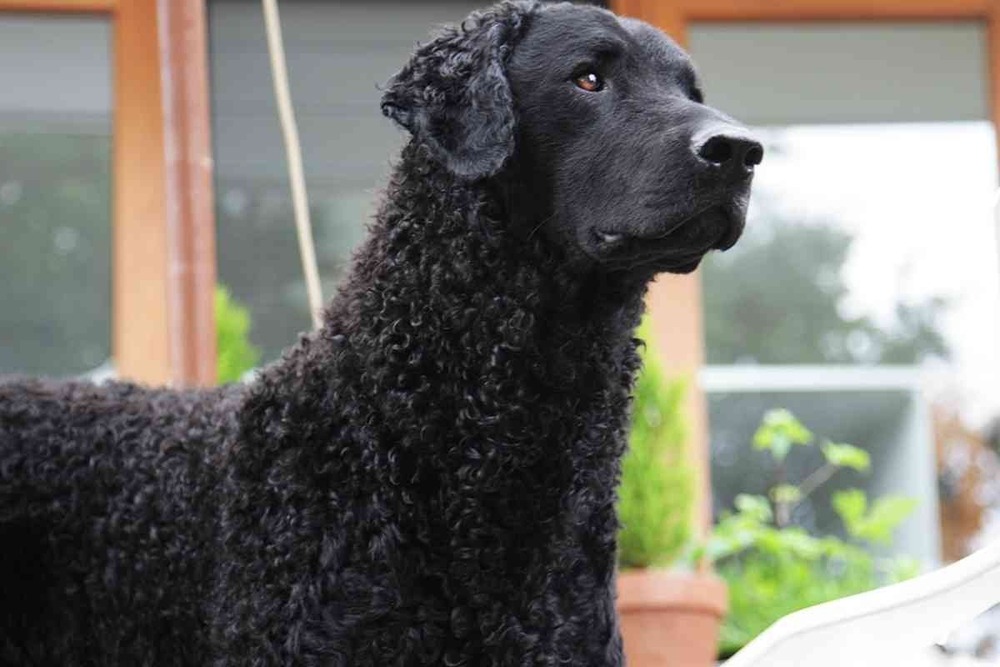
Training tends to go well when it is calm, consistent, and reward-based. Because many Curlies have a naturally independent streak, the goal is not to “out-stubborn” the dog, but to make the right choices easy and worthwhile. Short sessions, clear criteria, and plenty of reinforcement usually beat long repetitions.
Exercise needs are typically high. Alongside daily walking, Curlies often do best with activities that include retrieval, swimming (where safe), scent games, and training that works their brain as well as their body. Enrichment matters because a bored, under-stimulated dog will still find something to do, and you might not enjoy the choice they make.4
- Movement: varied daily exercise plus opportunities to run safely.
- Mental work: scent games, obedience skills, retrieving drills, puzzle feeding used thoughtfully.
- Socialisation: steady exposure to places, people, and dogs, without flooding or forcing interactions.
Health and lifespan: what to watch for
Like many medium to large breeds, Curlies can be affected by orthopaedic and eye conditions. Hip dysplasia is a known concern across many breeds, and regular veterinary oversight, appropriate growth and conditioning, and breeder screening all play a role in reducing risk. Eye conditions are also noted in breed care references, which is why routine checks and prompt attention to changes (redness, squinting, discharge, bumping into things) are important.5
One simple, often-overlooked health task is ear care. Floppy ears combined with swimming can increase the risk of ear infections, so drying ears after water play and following your vet’s advice on cleaning can prevent a lot of discomfort.5
Helpful mindset: aim for steady fitness, not “weekend athlete” bursts. Dogs built for endurance cope better when their activity is consistent across the week.
Grooming and maintenance without overdoing it
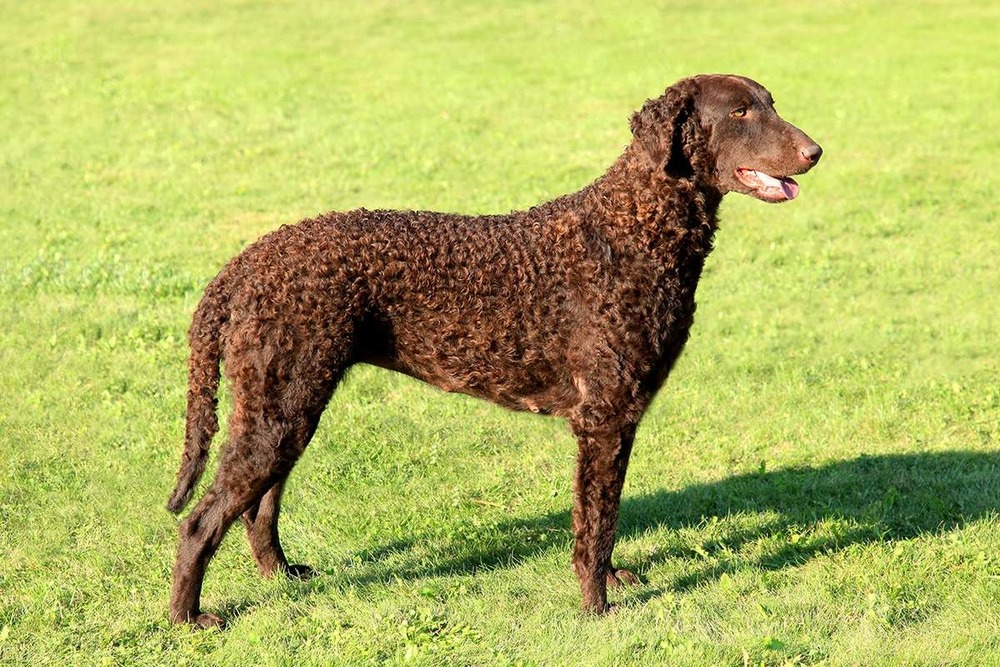
The coat can be relatively straightforward once you understand what it needs. The curls are meant to sit close and spring back. Heavy brushing can break up the curl pattern, so many veterinary and breed resources recommend keeping brushing minimal and focusing more on checking the coat and skin, managing debris after outings, and bathing only when necessary.5
Pay attention to practical touchpoints: behind the ears, under the collar, and anywhere friction happens. If you notice matting, address it early while it is small. If you are unsure how to handle coat changes, ask a groomer who has experience with Curlies or with tight, natural curl coats.
Quick routine that suits many Curlies: regular hands-on checks, occasional gentle combing where needed, rinse after salt or muddy water, and ear care after swims.5
Diet and nutrition: steady, sensible, and monitored
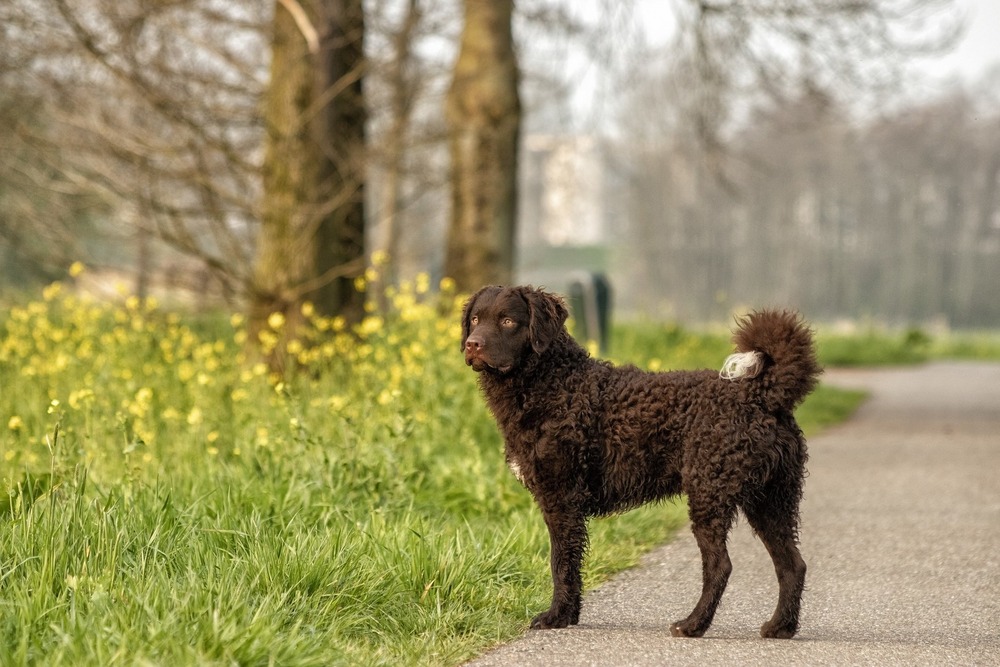
For an athletic retriever, nutrition is less about a “perfect” brand and more about meeting the dog in front of you. A good diet supports lean muscle, stable energy, and a healthy coat, and it should be adjusted across life stages and activity levels.
Most problems show up not as dramatic reactions, but as slow drift: weight creeping up, stools becoming inconsistent, coat looking dull, or enthusiasm for exercise dropping. Regular weigh-ins and body condition checks help you catch those changes early. If you are changing diets, do it gradually, and if you are unsure, your vet is the best place for individual advice.
Dental care is part of nutrition too. Brushing with dog-safe toothpaste is widely considered one of the most effective at-home steps for dental health, and it is easier to build the habit when the dog is young.8
Is a Curly-Coated Retriever right for you?
The Curly-Coated Retriever suits people who want an active companion with a bit of independence and dignity. They tend to do best in homes that enjoy training, outdoor time, and a routine that includes both movement and calm, rather than constant stimulation.
A good fit often looks like: consistent daily exercise, thoughtful socialisation, reward-based training, and a household that understands that “aloof” can simply mean reserved, not unfriendly.2
References
- Dogs Australia (ANKC): Curly-Coated Retriever breed standard
- The Kennel Club (UK): Retriever (Curly Coated) breed standard
- United Kennel Club (UKC): Curly-Coated Retriever breed standard
- RSPCA Australia: The importance of enrichment for dogs
- PetMD: Curly-Coated Retriever health and care
- Curly Coated Retriever Club (UK): History of the Curly Coated Retriever
- Westminster Kennel Club: Curly-Coated Retriever overview
- American Kennel Club (AKC): Curly-Coated Retriever traits and background
- Dogs NSW: Curly-Coated Retriever breed standard (Australia)