

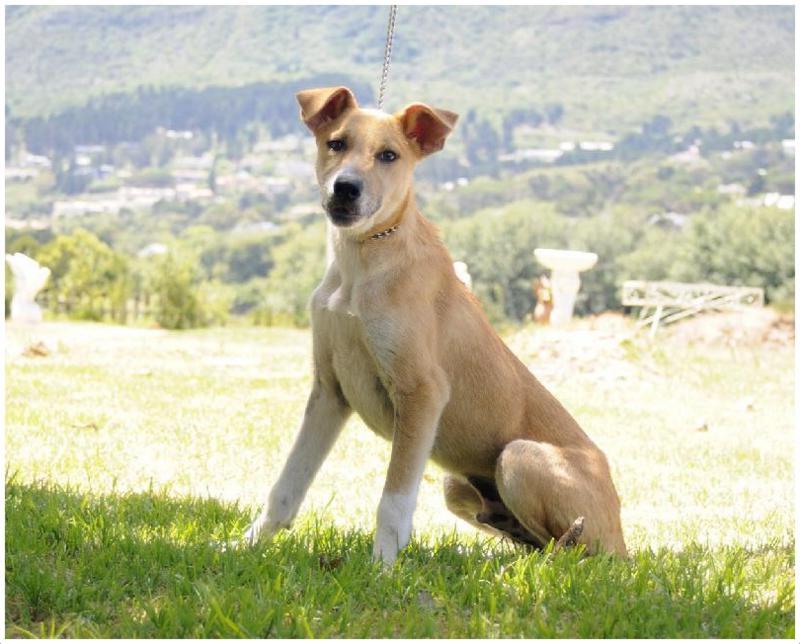
People often come across the word “Africanis” in a rescue listing, a travel story from southern Africa, or a conversation about “village dogs”, and then realise they are not quite sure what it means. Is it a recognised breed, a type, or simply a local term for a mixed-breed dog?
Part of the confusion is that the Africanis is best understood as a landrace dog: a population shaped over time by its environment and everyday work, rather than by modern kennel club standards. That difference matters in practice, because it influences what you can reasonably expect in looks, temperament, and even health from one dog to the next.2
If you are considering an Africanis, or you already live with a dog described as one, it helps to think less in terms of a fixed template and more in terms of a consistent “type”: athletic, adaptable, and usually uncomplicated to live with, provided their needs for movement, enrichment, and calm training are met.
- Type: Landrace (sometimes described as a “pariah” type)
- Region of origin: Southern Africa
- Typical height: Around 50 to 60 cm at the shoulder (varies)
- Typical weight: Around 25 to 45 kg (varies)
- Typical lifespan: Often around 10 to 14 years (varies)
- Coat: Usually short and dense
- Grooming: Low, occasional brushing
- Exercise needs: High, benefits from daily activity
- Best suited to: Active homes with space and routine
Origins, development, and why “landrace” matters
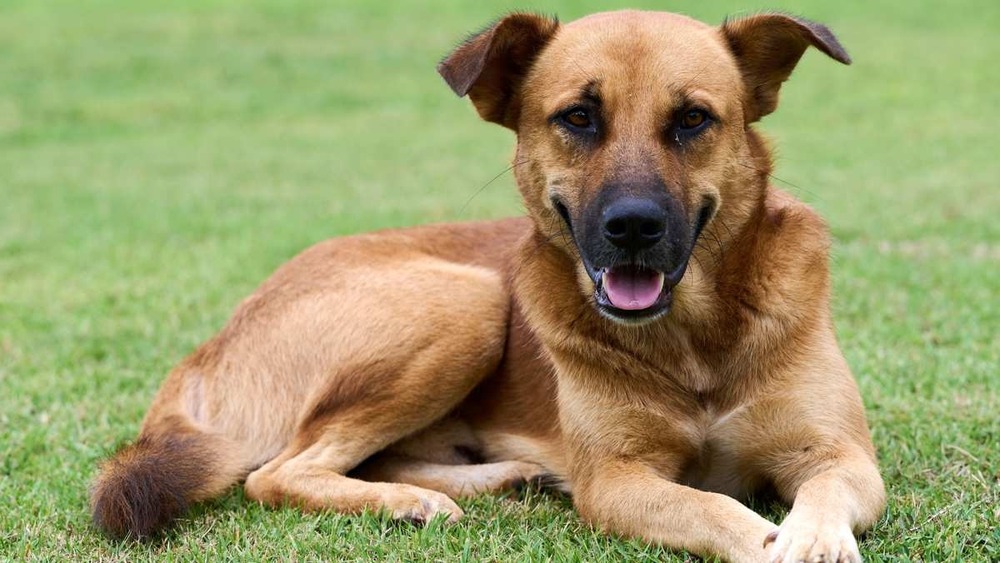
The Africanis is commonly described as a dog landrace of southern Africa. In plain terms, that means the “breed” has not been created by tightly controlled selective breeding for a show standard. Instead, dogs that could cope with local conditions, find food, avoid danger, and work alongside people were more likely to survive and reproduce, shaping a recognisable type over many generations.2
This is also why Africanis dogs can show real variation. Two dogs may both be called Africanis and still differ in size, markings, and finer points of build. The consistency tends to show up in the bigger picture: a functional frame, efficient movement, and a general hardiness that comes from being selected by lived reality rather than fashion.
You may also see the Africanis described as a “pariah dog”. That label can be misleading if it is taken to mean “ownerless” or “wild”. Many Africanis dogs have historically lived in close relationship with people, even when that relationship looks different from modern Western pet keeping.2
Physical characteristics you are likely to notice
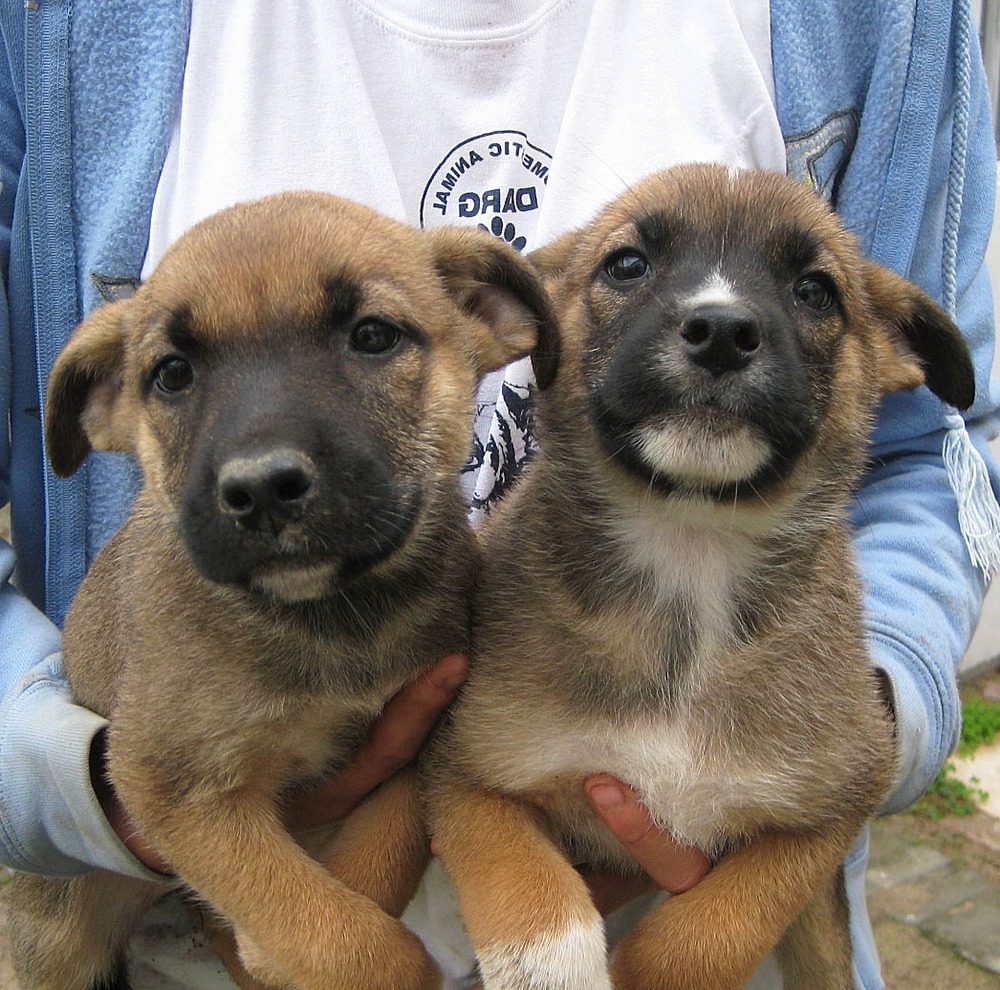
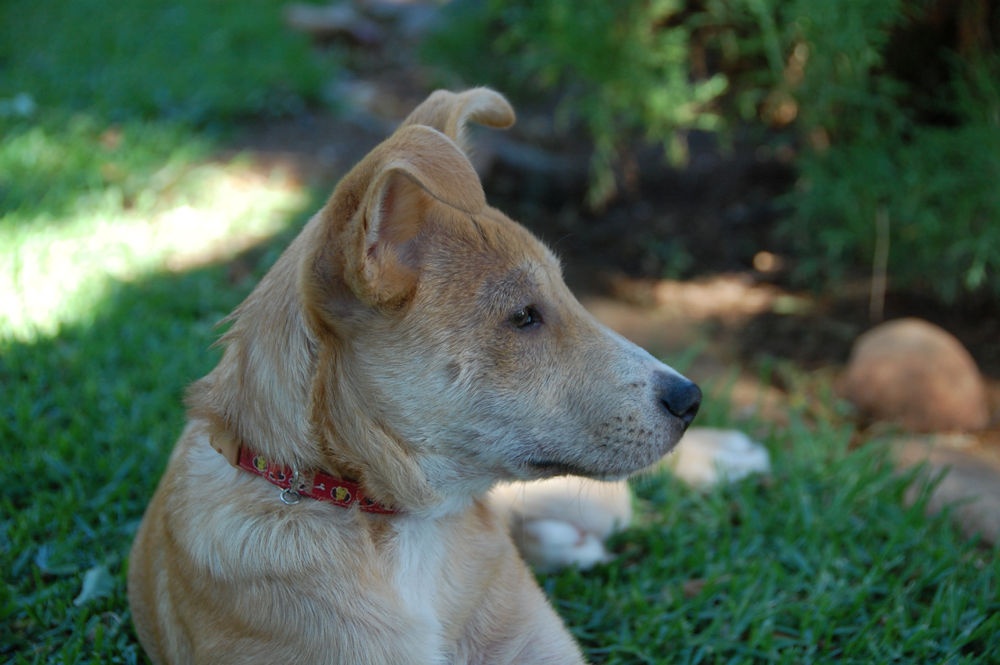
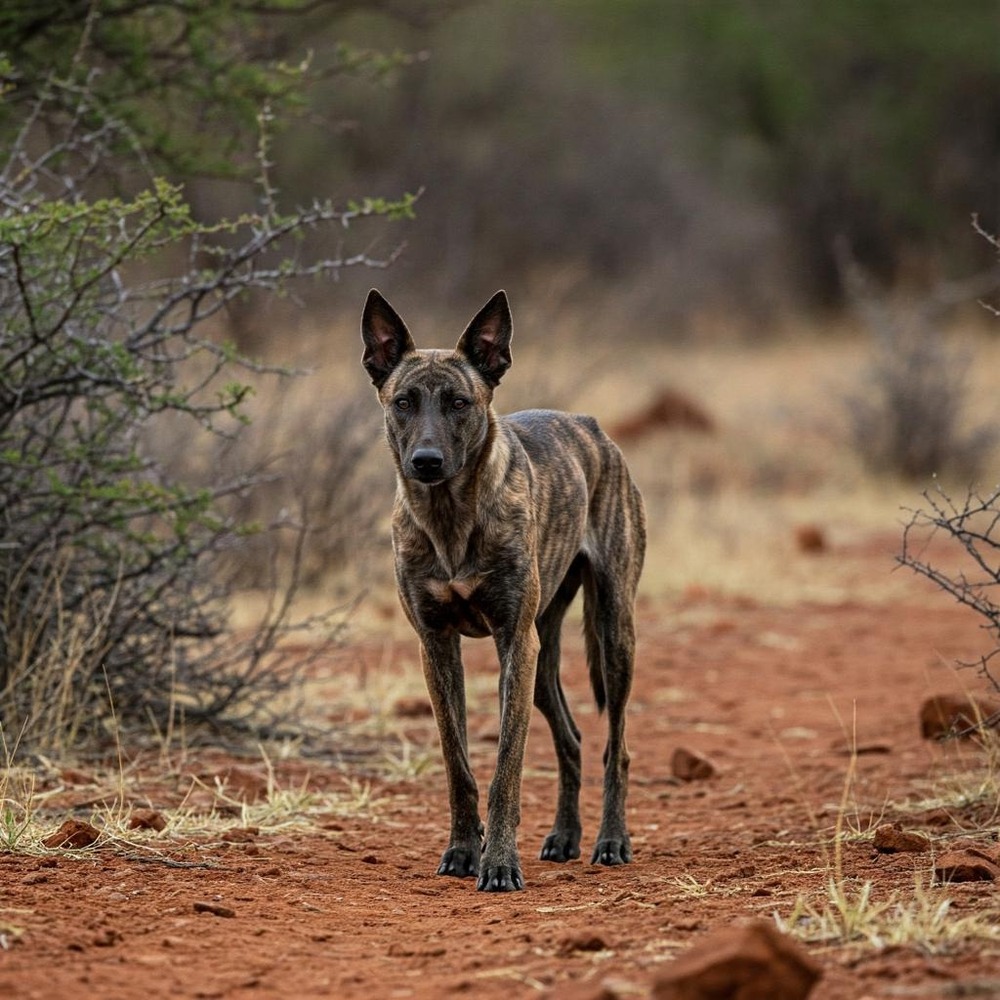
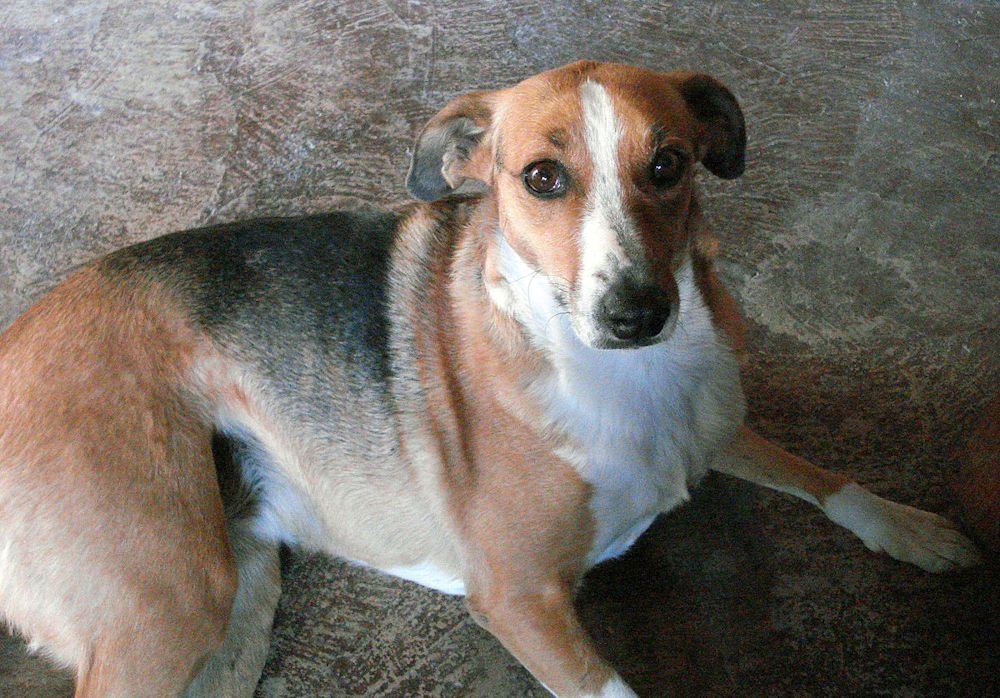
Most Africanis dogs present as medium to medium-large, lightly built but muscular, with a short coat and an alert expression. Coats can appear in many colours and combinations, often in earthy tones, brindle, black, and patterns with white markings.2
Because they are functional dogs, you will often see a body made for covering ground: efficient stride, good endurance, and agility on uneven surfaces. Ears may be erect or semi-erect, and tails vary, commonly carried in a curve.
It is worth holding the description lightly. A landrace is not meant to look identical from dog to dog, and that is part of its story.
Temperament and family life, what tends to be true
In many homes, the Africanis is appreciated for being switched on and observant without necessarily being noisy. A common pattern is a dog that watches first, then decides how to respond, particularly around strangers or unfamiliar situations.
With their own people, many settle into steady companionship. Some can be naturally more independent than highly people-focused breeds, which is not a flaw, but it does shape training and expectations. They often do best with clear routines, calm consistency, and enough meaningful activity that they do not have to invent their own entertainment.
With children and other pets, outcomes usually come down to the individual dog, early experiences, and management. If you are bringing an adult Africanis into a household, assume nothing, go slowly, and let relationships build through predictable, low-pressure interactions.
Training and socialisation, the practical approach
Africanis dogs are often described as intelligent, but intelligence does not automatically mean “easy”. Many learn quickly, and they also notice patterns quickly, including which behaviours reliably get results.
The most reliable foundation is reward-based training: set the dog up to succeed, reward what you want repeated, and avoid approaches that rely on intimidation, pain, or “dominance” ideas.5, 6
Socialisation is less about flooding a puppy with experiences, and more about gently building safe, positive associations with the world. Most behaviour professionals emphasise a sensitive socialisation window in early puppyhood, often described as roughly 3 to 14 weeks, while noting that learning continues across adolescence and adulthood.7
- Keep exposures positive, pair new sights and sounds with food, play, or distance.
- Practise calm skills, like settling on a mat and checking in on walks.
- Use management early, such as a long line in open spaces, rather than relying on correction.
Exercise and enrichment, meeting a working body’s needs
Many Africanis dogs thrive with daily exercise that is more than a quick lap of the block. Think in terms of both physical movement and mental work.
Some options that tend to suit this type include brisk walks with training mixed in, jogging for suitable adults, scent games, and structured play in a secure area. If you have acreage, “free time outside” still benefits from some interaction and purpose, such as supervised exploration, recall games, or a simple scatter feed in grass.
When an active dog looks “naughty”, it is often an unmet needs problem rather than a personality problem. Increasing stimulation thoughtfully usually improves behaviour more than tightening rules.
Health and longevity, what is known and what to watch for
Landrace populations are often described as robust, partly because they have not been shaped by closed gene pools and extreme conformation trends. Still, “generally healthy” does not mean “never needs a vet”. Regular check-ups, vaccination appropriate to your region, parasite prevention, and dental care remain the basics of responsible care.8
As with any medium to large dog, it is sensible to watch body condition and joint comfort over time. Keeping your dog lean is one of the simplest ways to support long-term mobility. If you are adopting, ask what is known about the dog’s past diet, injuries, and activity tolerance, then build fitness gradually.
Coat care, grooming, and day-to-day maintenance
The Africanis coat is usually short and practical. Most owners find that an occasional brush, plus bathing only when needed, is enough to keep the coat in good condition. Routine tasks still matter: nails, ears, and teeth are the quiet foundations that prevent bigger problems later.
If shedding increases seasonally, a little more brushing can help. Skin issues can occur in any dog, so if you notice persistent itching, redness, or recurrent ear problems, it is worth getting proper veterinary guidance rather than cycling through shampoos and supplements.
Choosing an Africanis, and setting expectations kindly
If you are looking for an Africanis outside southern Africa, availability may be limited, and “Africanis” may sometimes be used loosely to describe a general village-dog look. A careful approach is to focus on the dog in front of you: temperament, sociability, recovery after stress, and how they respond to gentle handling.
It can also help to remember that labels are tools, not guarantees. The Africanis story is about dogs shaped by function and context. When you meet their needs with structure, movement, and fair training, many repay that with steady companionship and a quiet competence that is easy to live with.
References
- RSPCA Knowledgebase: What is reward-based dog training and why does the RSPCA support it?
- Wikipedia: Africanis
- Wikipedia: African village dog
- Purdue University, Center for Canine Welfare Science: Socialization and Early Exposure
- RSPCA Australia: The do’s and don’ts of training your dog
- RSPCA Knowledgebase: Is it important to train my dog, what sort of training would you recommend?
- American Veterinary Medical Association (AVMA): Puppy socialization
- Australian Veterinary Association (AVA): Companion animals health (policy and guidance)