

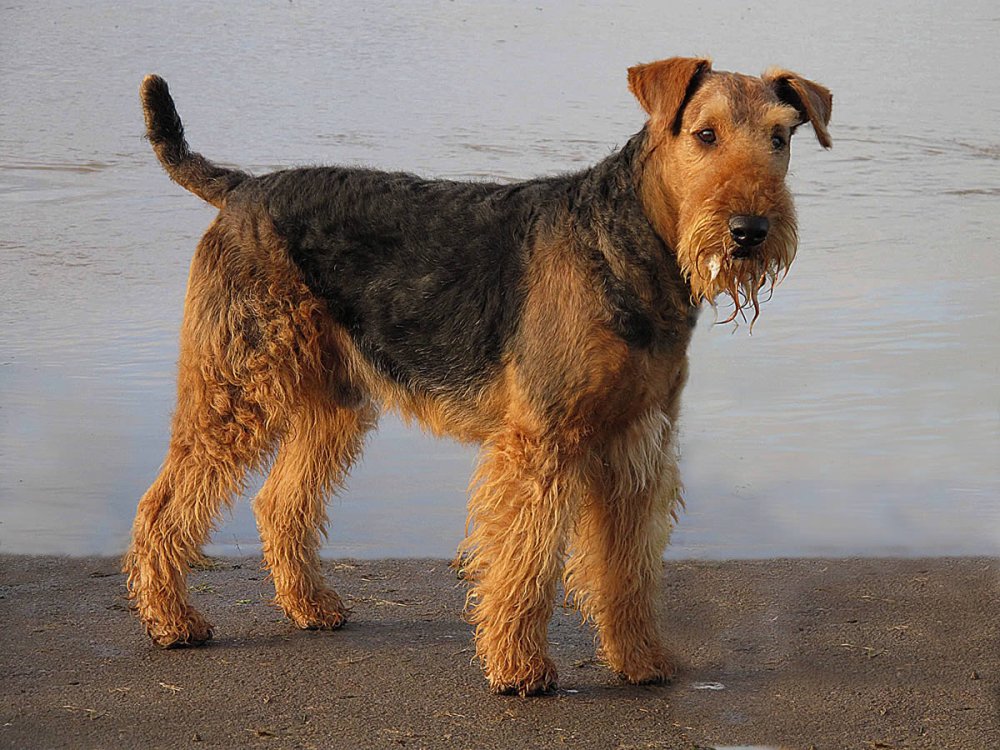
- Breed category: Terrier
- Country of origin: United Kingdom
- Height: Dogs approx. 58 to 61 cm, bitches approx. 56 to 59 cm1
- Typical weight: Commonly around 18 to 29 kg, depending on sex, build, and lines
- Average lifespan: Often 10 to 13 years
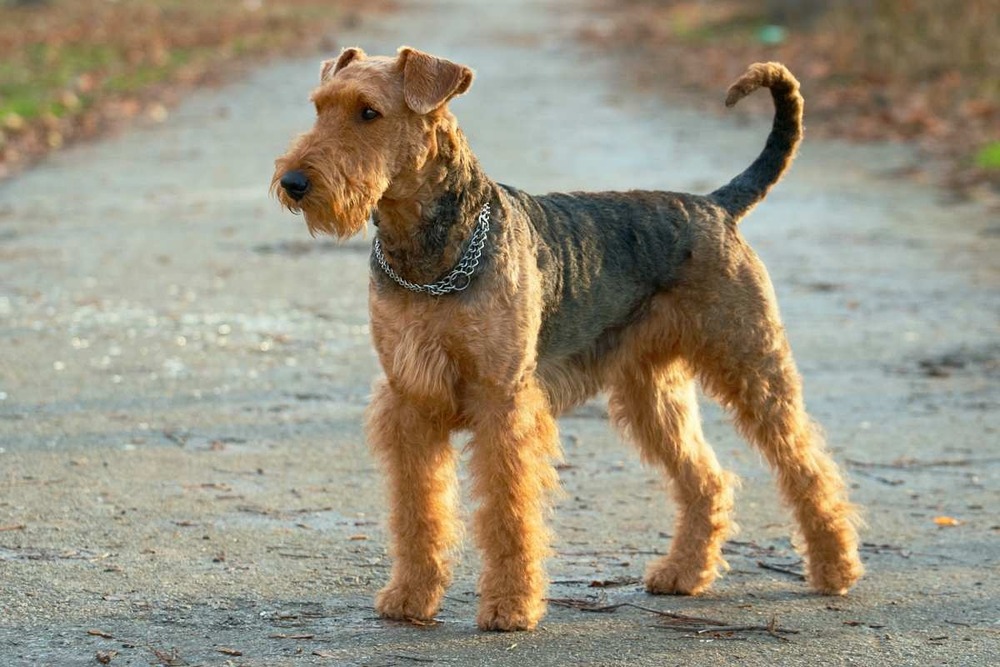
- Coat: Hard, dense, wiry outer coat with a softer undercoat1, 2
- Colour: Black (or grizzle) saddle with tan elsewhere1, 2
- Shedding: Often described as low, but not “non-shedding”
- Energy level: High, needs daily exercise and engagement
- Temperament: Bright, bold, people-oriented with an independent streak
You might meet an Airedale Terrier at the park and do a double take. They have that unmistakable terrier look, but in a taller, more athletic frame, with a face that seems to be taking everything in. People often notice the coat first, the crisp wiry texture and the classic black-and-tan pattern, then the way the dog moves, purposeful and a bit business-like.
It is easy to assume that if you have known one terrier, you have known them all. Airedales can surprise you. They tend to be more versatile than most people expect, and they often need more structure than their cheerful, friendly reputation suggests. In the right home, they are deeply rewarding, but they do best when their days have some shape to them.
If you are considering the breed, or you already live with one and are trying to make sense of the energy, the chasing, or the “I heard you, but…” moments, it helps to look at what the Airedale was built for, both physically and behaviourally.
History and origin
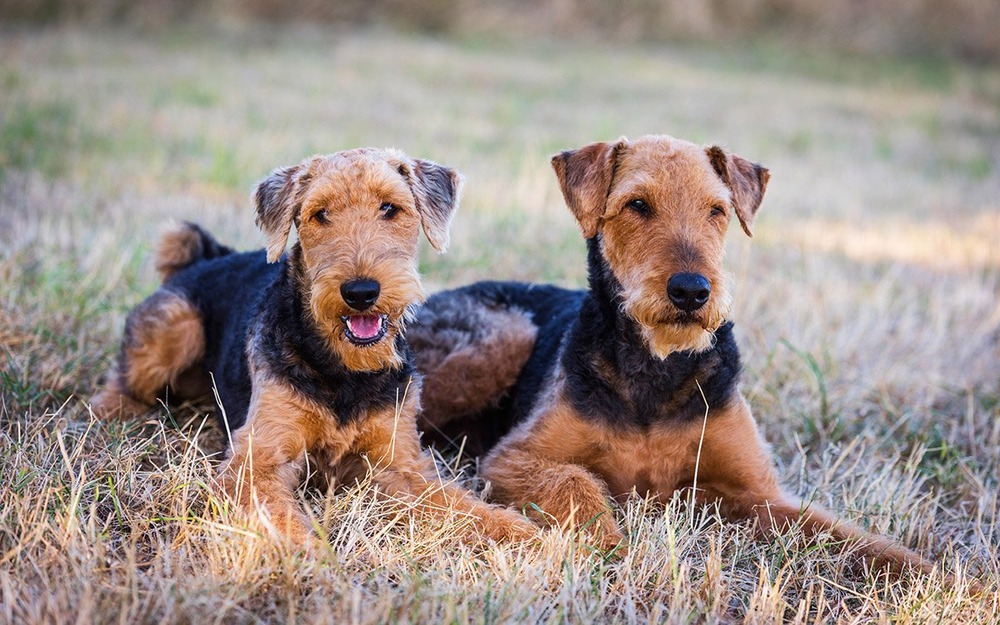
The Airedale Terrier originated in Yorkshire, in the valley of the River Aire. In the mid-1800s, working people wanted a dog that could turn its paw to a bit of everything, including hunting along riverbanks and handling pests around home and farm. That practical brief helped shape a dog with stamina, problem-solving ability, and a coat designed to cope with rough conditions.
Early Airedales were associated with hunting and working tasks, particularly around water. Accounts of their development commonly mention crosses involving the Otterhound and rough-coated terrier types, which helps explain their combination of scenting ability, hard coat, and confidence in wet conditions.
The breed became established and was formally recognised by The Kennel Club (UK) in 1886.3 Over time, Airedales also became known for service work, including wartime messenger roles in World War I, which relied on their steadiness under pressure and willingness to keep moving with a job to do.3
Physical characteristics
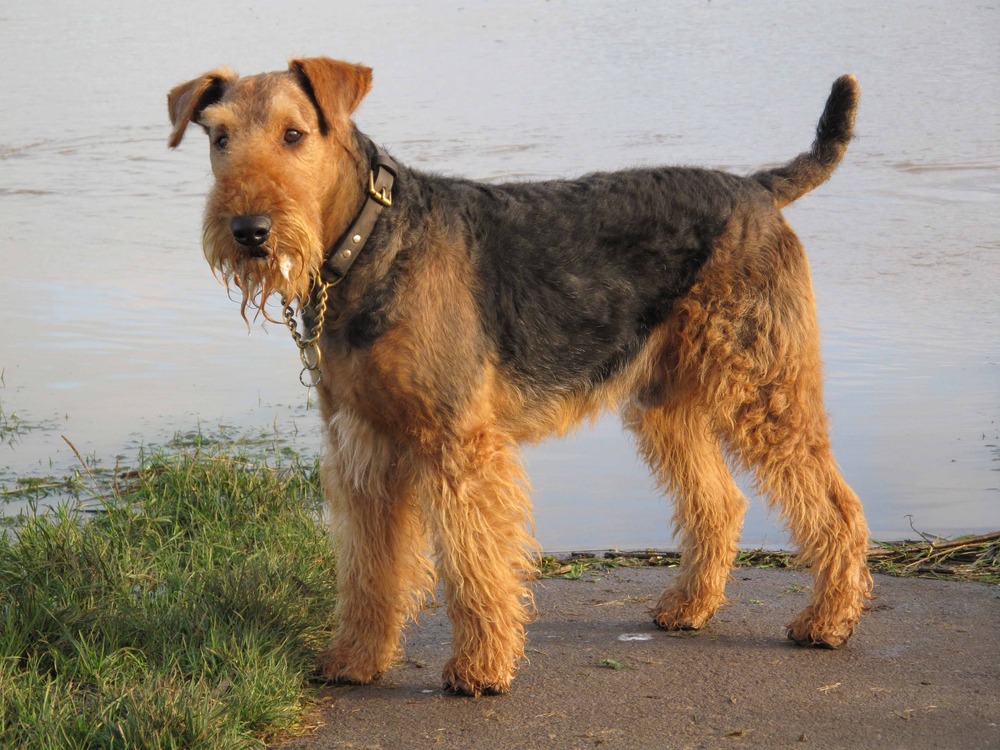
Airedales are often described as the largest of the terriers, and that size is part of what changes the feel of living with one. Breed standards describe an adult height of about 58 to 61 cm for dogs and 56 to 59 cm for bitches.1 They look square and capable, with enough leg to cover ground and enough bone to hold their own in active play.
The coat is a defining feature. In the standard, it is hard, dense and wiry, lying straight and close over the body, with a softer undercoat beneath.1, 2 Colour is typically a black (or grizzle) saddle with tan on the head, legs, and underparts.1, 2
You will also hear Airedales discussed as “low shedding”. Many do shed less than some double-coated breeds, but the more useful way to think about it is coat maintenance replaces coat fallout. Airedales still need regular grooming to avoid tangles and to keep the coat comfortable against the skin.
Temperament and everyday behaviour
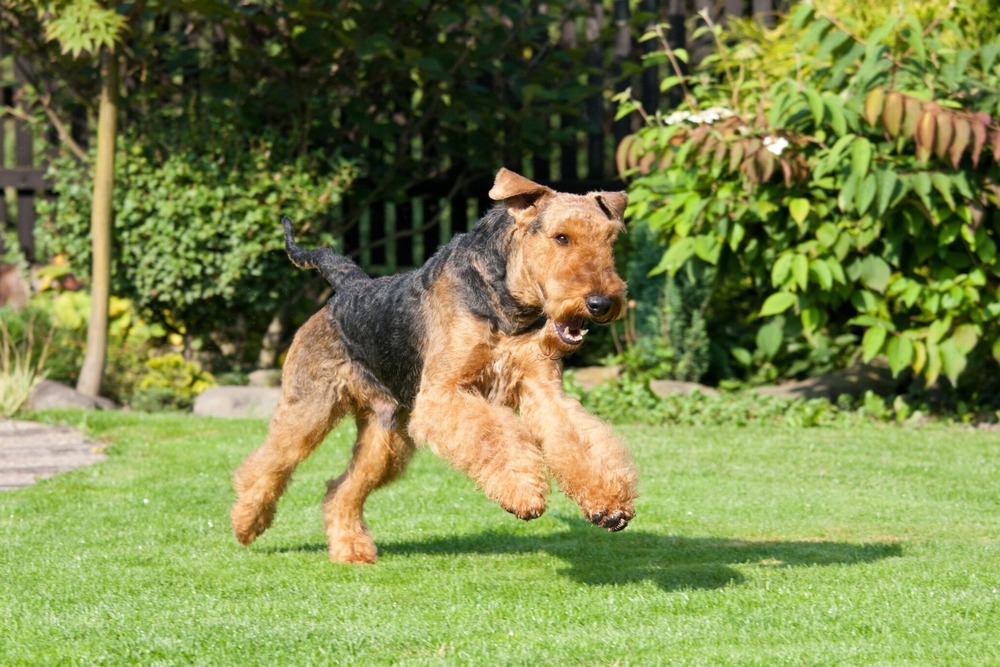
Airedales are often bright, social dogs, but they are not typically “set and forget” companions. Many have a quick mind and a strong preference for doing things that make sense to them. That can look like confidence, independence, or selective hearing, depending on the day.
In family life, they can be affectionate and fun, and they often enjoy being part of whatever is happening. The flip side is that an under-stimulated Airedale can create their own entertainment, which may include digging, dismantling toys, or finding reasons to patrol the fence line. A common misconception is that a long walk fixes everything. For many Airedales, mental work matters as much as exercise.
With children, the match is usually best when adults set clear boundaries for both dog and child. Supervision matters, not because Airedales are inherently unsafe, but because their size and enthusiasm can overwhelm little kids, and rough play can easily escalate.
With other pets, especially small animals, it helps to remember their terrier heritage. Some Airedales live peacefully with cats and smaller pets, particularly if raised together, but many still have a strong chasing impulse. Good management and early, careful introductions make a real difference.
Training and exercise needs

Training an Airedale is rarely about drilling obedience. It is more often about building habits, rewarding the behaviours you want, and making the “right” choice easy to repeat. Positive reinforcement tends to suit the breed well, especially when sessions are short, varied, and carried out with a sense of purpose.
Early socialisation helps, but it is worth thinking beyond meeting lots of people. The most useful socialisation is calm exposure to everyday life, including traffic, veterinary handling, grooming tools, visitors at home, and other dogs at a sensible distance.
Most Airedales need daily activity that includes both movement and thinking time. Depending on the dog, that might look like:
- Brisk walks plus sniffing time
- Fetch or tug with clear “start” and “finish” cues
- Food puzzles, scatter feeding, or basic scent games
- Structured training for recall, loose-lead walking, and settle on a mat
They are often capable athletes, but consistency matters more than intensity. Airedales that only get big exercise on weekends sometimes struggle to settle during the week, simply because their routine is unpredictable.
Health and lifespan
Airedales commonly live around 10 to 13 years, although individuals vary. Like many medium to large dogs, they can be affected by orthopaedic issues such as hip dysplasia, and it is one reason reputable breeders will discuss screening and family history openly.4
Hip dysplasia is multifactorial, with genetics playing a major role, but growth rate, body condition, and overall management can influence how it shows up over time. The condition involves joint laxity and can lead to progressive arthritis, which is why maintaining a lean body condition is a practical, everyday protective step.4
Some sources also flag risks seen in larger, deep-chested dogs, including gastric dilatation-volvulus (GDV, commonly called bloat), which is a medical emergency. It is sensible to ask your vet about risk reduction in your individual dog, including feeding habits and exercise timing around meals.5
When you are choosing a puppy, the most useful health conversation is not about guarantees. It is about what has been tested, what tends to occur in the lines, and what support the breeder offers if problems arise later.
Grooming and maintenance
Airedale coats are designed to be practical, but they still need regular care. At home, weekly brushing and combing helps prevent knots, especially around the legs, beard, and under the collar area. Many owners also book professional grooming every six to eight weeks, depending on whether the coat is clipped or hand-stripped.
If you are new to wire coats, it is worth asking a groomer to show you what “finished” should feel like. A coat can look tidy on top while hiding tangles underneath. Regular grooming is also your chance to spot skin irritation early, which can be important if your dog is prone to itch or allergies.
Dental care is often overlooked in otherwise well-cared-for dogs. For many pets, tooth brushing is the gold standard, even if you only manage a few times a week at first. Aim to build tolerance gradually, keep it gentle, and use toothpaste formulated for dogs.6
Diet and nutrition
Airedales tend to do best on a diet that is complete and balanced for their life stage, with portions adjusted to keep them lean. Many Australian animal welfare organisations recommend basing the diet on a quality commercial food appropriate to the dog’s age and health status, and being cautious with home-prepared feeding unless it is properly formulated.7
Treats are useful for training, but they add up quickly in an energetic, food-motivated dog. A practical approach is to reserve part of the daily ration for training, or use low-calorie options like small pieces of carrot.
It also helps to have a clear list of foods that are unsafe. The RSPCA advises that common items such as chocolate, grapes and raisins, onions and garlic, and alcohol are toxic to dogs, and cooked bones can be dangerous as well.7
Fun facts and cultural notes
The nickname “King of Terriers” has stuck for a reason. Airedales have been used in roles that call for courage and steadiness, including wartime messenger work in World War I, a part of the breed’s history that still colours how many people think about them today.3
They have also appeared in public life. One of the best-known examples is Laddie Boy, an Airedale owned by US President Warren G. Harding, who became a minor celebrity during Harding’s time in office.8
Final thoughts
An Airedale Terrier can be a wonderful companion for people who enjoy being involved, not just in exercise, but in training, grooming, and everyday routines. They tend to thrive when they have enough space to move, enough guidance to settle, and enough meaningful interaction to keep that busy mind from spilling into mischief.
If you are choosing the breed, look for a breeder and veterinary team who will talk through realistic needs, not just best-case traits. If you already share your home with an Airedale, small changes, like more sniffing time, calmer training sessions, or a grooming routine that stays ahead of tangles, often make the biggest difference in day-to-day life.
References
- Dogs Australia (ANKC): Airedale Terrier breed standard
- The Kennel Club (UK): Airedale Terrier breed standard
- Wikipedia: Airedale Terrier (history and general background)
- American College of Veterinary Surgeons: Canine hip dysplasia
- PetMD: Airedale Terrier health and care overview
- Vets Love Pets (Australia): Dog dental care guide
- RSPCA Australia Knowledgebase: What should I feed my dog?
- Wikipedia: Laddie Boy (Warren G. Harding’s Airedale Terrier)