

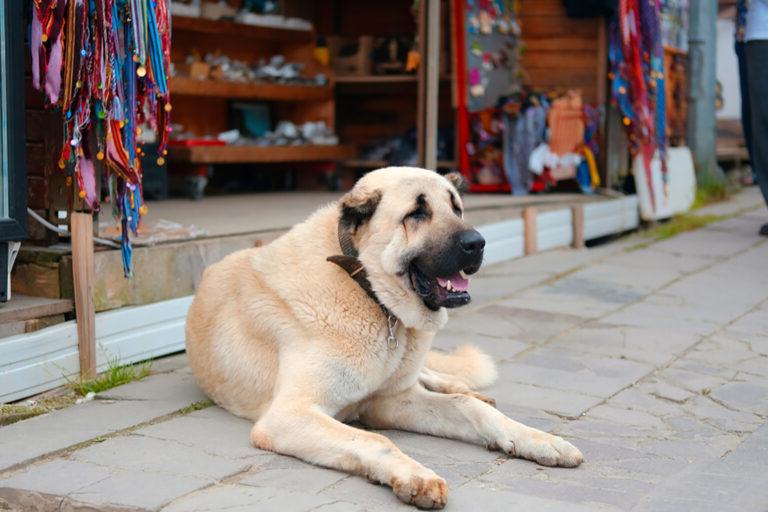
- Breed category: Working dog (livestock guardian)
- Country of origin: Turkey
- Typical height: Large to giant (commonly reported around 70 cm and up at the withers)
- Typical weight: Giant (often reported around 60 kg and up)
- Coat type: Short, dense
- Common colours: Grey, brindle, pinto patterns, often with a dark mask
- Shedding level: Moderate
- Temperament: Calm at home, watchful, strongly protective with strangers
- Barking tendency: Often low, but will vocalise when needed
- Training ease: Moderate, best with experienced handlers
- Exercise needs: Moderate to high, steady daily movement over intense running
- Common health concerns: Orthopaedic issues (including hip dysplasia), bloat (GDV) risk in large dogs
- Apartment friendly: Usually not ideal
- Best suited for: Rural or semi-rural homes with space, clear boundaries, and confident management
You usually come across the Aksaray Malaklisi the same way many people meet rare working breeds: a photo of a massive dog beside a handler, a short clip of a calm guardian standing still while everything else moves around it, or a conversation that starts with, “Is that a Kangal?”
That uncertainty is part of the story. In Turkey, there are several livestock guardian dogs with overlapping histories and similar jobs, and outside the region they can be easily bundled together under loose labels like “Turkish mastiff”. The Aksaray Malaklisi is often discussed as a distinct type from the Aksaray Province in Central Anatolia, valued for size, steadiness, and strong guarding instincts.1
What matters in practice is not the label, but what the dog was built to do. A guardian breed that has spent generations making decisions out on open country will not automatically fit into a suburban rhythm. When people do well with Malaklisi, they usually start by respecting the breed’s purpose and shaping daily life around it, rather than trying to train it out of them.
The Aksaray Malaklisi in Turkey’s livestock guardian tradition
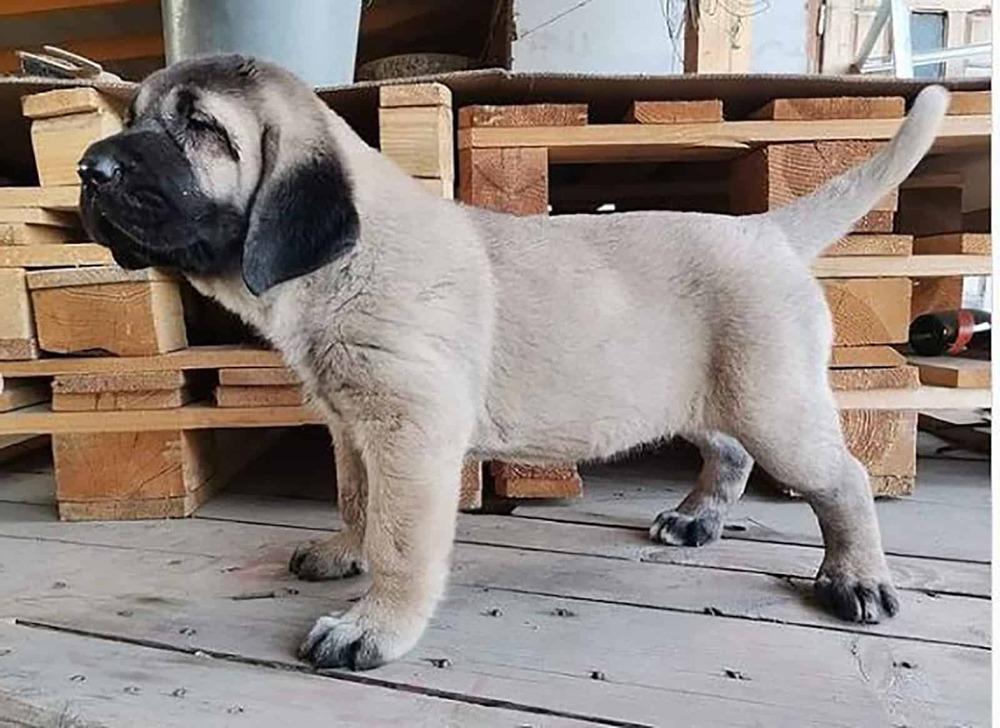
The Aksaray Malaklisi is widely described as a large flock guardian dog from the Aksaray Province in Central Anatolia. It is also referred to by alternate names including Malakli Karabas, Turkish Mastiff, and Anatolian Lion.1
Livestock guardian dogs are not herding dogs. They are expected to live with stock, notice what is normal in a particular landscape, and respond to threats with posture, presence, and, when needed, confrontation. That background helps explain why Malaklisi can appear quiet for long stretches, then become suddenly decisive when boundaries feel crossed.
In traditional use, they are kept as protectors of sheep and other livestock, particularly against predators such as wolves. Outside Turkey, they may be kept as property guardians, but their behavioural wiring is still anchored in that original role.1
Size, coat, and the features people notice first
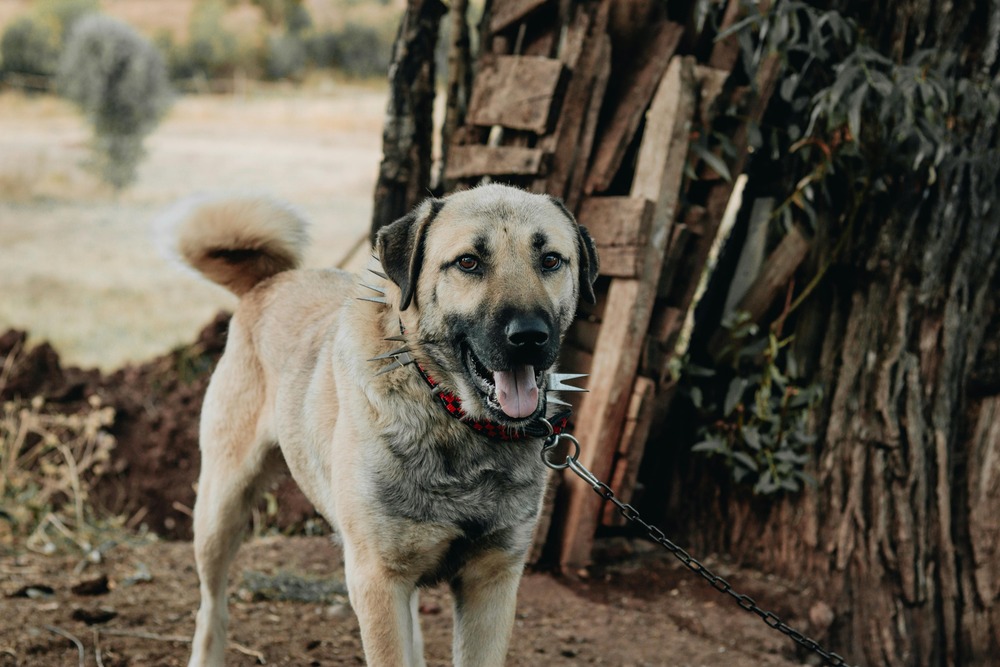
The Malaklisi is typically described as a very large dog with a short coat, substantial head, and heavy jowls. The name “malakli” is commonly linked to those pendulous lips.1
Coat colour descriptions vary by source, but commonly include grey, brindle, and pinto patterns, often paired with a dark facial mask. The short coat is practical for an outdoor working dog, but it does not mean “no grooming”. Expect seasonal shedding and a dog that tracks in the outside world unless you plan for it.
When you live with a giant guardian, the practical considerations become very real: transport, fencing, visitors, and even the space needed for a dog to turn around comfortably indoors. Big dogs do not live small, even when they are calm.
Temperament: calm presence, strong boundaries
Well-bred, well-managed livestock guardians often read as composed. They conserve energy, watch quietly, and prefer to decide whether something matters before responding. With the Malaklisi, that steadiness can be a genuine strength in the right home.
It also comes with a particular social shape. Many guardians are naturally wary of unfamiliar people entering their space, and may not enjoy being handled by strangers. Some descriptions of the breed note that obedience can be highly selective, with strong preference for taking direction from their primary handler.1
If you are considering this breed as a family dog, it helps to think in terms of management plus training. Training builds skills, but management sets the dog up to succeed, for example, introducing visitors thoughtfully, using gates, and avoiding situations where the dog feels responsible for making the call.
Living with children and other pets
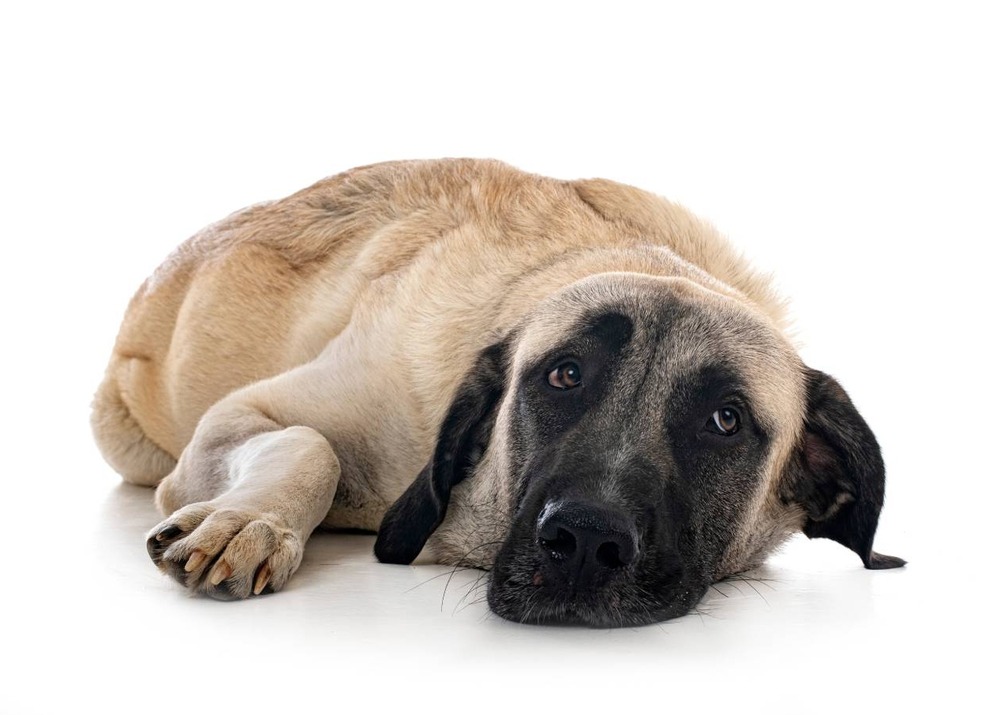
Many guardian breeds can live peacefully with children when the household is predictable and adults actively supervise. The key is not assuming “gentle giant” equals effortless. Size alone changes the risk profile. A calm dog can still knock over a toddler by turning too quickly, and a protective dog can misread high-energy play as something to interrupt.
With other pets, early exposure and careful introductions matter, but so does realism. Livestock guardians are often bred to tolerate their own group, yet may be less flexible with unfamiliar dogs, particularly in the home territory. Some breed summaries note potential intolerance of same-sex dogs in working contexts.1
- Supervise first interactions with any new animal, even if your dog seems relaxed.
- Build calm routines around doors, fences, and feeding areas.
- Assume that “fine at the park” does not automatically translate to “fine in my backyard”.
Training that suits a guardian mind
With a guardian breed, training is less about drilling commands and more about building cooperation. These dogs tend to respond best when the handler is consistent, predictable, and fair, and when the dog understands what is expected in a specific context.
In Australian animal welfare guidance, reward-based training is strongly recommended, and aversive tools and punishment-based methods are discouraged due to welfare risks and the potential for fallout in behaviour.4
Socialisation is not about forcing friendliness. It is about giving a puppy controlled, positive experiences so novelty becomes manageable. RSPCA guidance describes a critical socialisation period in early puppyhood, and emphasises positive experiences and appropriate exposure to people, environments, and handling.2, 3
For an adult Malaklisi, good training goals often look like this:
- Calm visitor routines (go to mat, behind a gate, settle).
- Loose lead walking with reliable stops and turns.
- Being comfortable with handling (ears, paws, mouth) for vet care and grooming.
- Recalls that work within realistic limits and safe containment.
Exercise and enrichment: steady work over endless running
These are capable, athletic dogs, but they are not built for frantic, repetitive exercise. The aim is usually steady daily movement paired with purpose: walking boundaries, sniffing, problem-solving, and time in the yard with structured calm.
If you have space, you can make life easier by giving the dog safe “jobs” that suit their instincts, such as carrying a pack on walks (once mature and vet-cleared), searching for scattered food in grass, or practising settle-and-watch routines while you garden.
For growing puppies, avoid heavy impact exercise and uncontrolled jumping. Large breeds mature slowly, and joints benefit from sensible pacing and good body condition, not intensity.
Health considerations in a giant breed
Large and giant dogs come with predictable themes: orthopaedic wear and tear, higher costs for medications and surgery, and the need to keep weight under control. Hip dysplasia is one of the better-known conditions in large breeds, with both genetic and environmental influences, and is typically assessed via veterinary imaging and scoring schemes.5
Another concern often raised with deep-chested, large dogs is gastric dilatation-volvulus (GDV), commonly called bloat. It is a medical emergency, and risk is influenced by factors such as size, feeding patterns, speed of eating, and exercise around meals.6, 7, 8
If you are living with a high-risk dog, it is worth discussing prevention strategies with your vet, including whether prophylactic gastropexy is appropriate. Cornell notes that gastropexy can reduce recurrence risk substantially in dogs that have had GDV, and is sometimes considered prophylactically for at-risk dogs.6
Practical GDV risk reduction
- Feed two to three smaller meals, rather than one large meal.7, 8
- Slow down fast eaters with puzzle feeders or slow-feed bowls.8
- Avoid hard exercise for at least an hour before meals and around two hours after meals.6, 8
- Be cautious with raised feeders in dogs at risk, since some evidence links them with increased GDV risk.6, 7
Grooming and daily care
The short coat is generally straightforward. A weekly brush usually keeps shedding manageable and gives you a chance to check skin, paws, and coat condition. In seasonal shed periods, more frequent brushing helps.
Because Malaklisi is often described as having heavy jowls, some dogs will drool more than owners expect, particularly after drinking or in warm weather. It is not a behavioural issue, just a housekeeping reality. Have towels where you need them, and keep skin folds clean and dry if your dog has them.
Routine care still matters: nails, ears, teeth, parasite prevention, and regular veterinary check-ups. With large dogs, small issues can become big problems if they are missed early.
Final thoughts on choosing this breed
The Aksaray Malaklisi makes the most sense when people choose it for what it is, a large guardian shaped by work, territory, and responsibility. In the right setting, that can look like an unusually steady companion with a quiet, watchful presence.
In the wrong setting, the same traits can become hard on everyone, including the dog. If you are drawn to the breed, plan for space, clear boundaries, reward-based training, and a relationship built on consistency. Respect the job in the genetics, and you give the dog the best chance to settle into a modern home.
References
- Wikipedia: Aksaray Malaklisi
- RSPCA Australia: Here’s how to care for your puppy
- RSPCA Australia: Socialising your puppy
- RSPCA Knowledgebase: Is it important to train my dog? What sort of training would you recommend?
- Orthopedic Foundation for Animals (OFA): Hip Dysplasia
- Cornell University College of Veterinary Medicine: Gastric dilatation volvulus (GDV) or “bloat”
- American College of Veterinary Surgeons (ACVS): Gastropexy (GDV prevention)
- American Animal Hospital Association (AAHA): Understanding canine bloat (GDV): A medical emergency
- Purina Institute: Canine Gastric Dilatation-Volvulus (GDV)