

- Breed category: Working dog
- Country of origin: Spain
- Average height: Males 58 to 63 cm, females 55 to 60 cm
- Average weight: Males 30 to 40 kg, females 25 to 35 kg
- Average life span: 11 to 14 years
- Grooming requirements: Low, occasional brushing
- Exercise requirements: High, needs daily exercise
- Coat type: Short and dense
- Coat colour variations: Brindle, fawn, black (including black brindle)
- Shedding level: Moderate
- Ear type: High-set, typically dropped or semi-prick depending on carriage
- Tail type: Long and tapering
- Temperament: Steady, loyal, naturally protective
- Intelligence level: High
- Barking tendency: Often low, varies by individual
- Compatibility with children: Can be good with thoughtful management and socialisation
- Compatibility with other pets: Varies, early socialisation matters
- Training ease: Moderate, best with experienced, reward-based handling
- Common health issues: Hip dysplasia, allergic skin disease (among other issues seen in many medium to large dogs)
- Dietary needs: High-quality, balanced diet matched to life stage and activity
- Energy level: High
- Drooling tendency: Usually low
- Sensitivity to weather: Short coat, may need support in extremes
- Overall maintenance level: Moderate
- Original purpose: Catch dog for big game, cattle handling, guarding
- Apartment friendly: Not ideal for most homes, needs space and routine exercise
- Best suited for: Active households, rural or semi-rural settings, people who enjoy training
- Cost of ownership: Moderate to high
- Unique traits: Athletic molossoid build, notable grip strength, stamina
- Cultural significance: Historic Spanish working breed
People often come across the Alano Español the same way they discover a lot of working breeds, through a photo, a rescue listing, or a conversation with someone who has one. The dog looks solid and athletic, but not exaggerated. That combination can be confusing if your only reference points are modern mastiffs on one end and lean sighthounds on the other.
It is tempting to reduce the Alano to a simple label, like “guard dog” or “big game hunter”. In practice, what matters more is how the breed tends to move through the world: observant, physically capable, and often calm when its needs are being met. When those needs are not met, the same dog can become difficult to live with, not out of malice, but because working bodies and working brains do not do well with boredom.
If you are considering an Alano Español, or you have recently met one and felt intrigued, it helps to look at the breed through two lenses at once: its history, and the day-to-day realities of training, exercise, and health care.
Where the Alano Español comes from
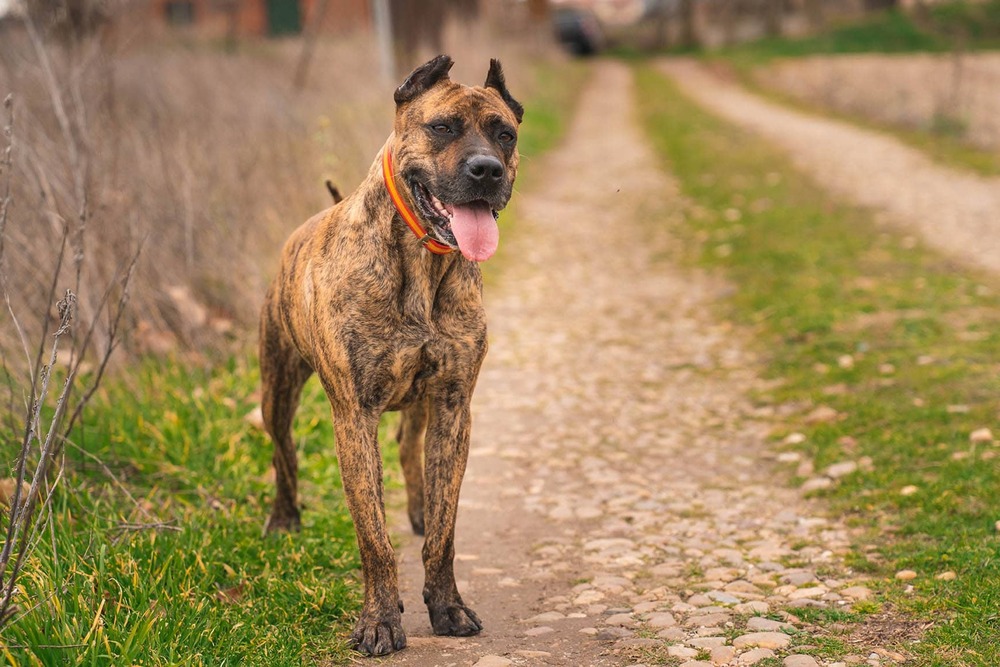
The Alano Español is a Spanish working dog with a long, complicated history. You will sometimes hear a neat origin story about the breed being brought to the Iberian Peninsula by the Alans, a nomadic people. The truth is that the historical record is not tidy, and many modern summaries blend fragments of history with breed lore.
What is better supported is the breed’s traditional functional role in Spain as a powerful, athletic catch dog used in cattle work and big-game hunting, and its presence in older cultural practices that involved gripping and holding stock. That background helps explain the Alano’s physical style: built to move, then commit, then hold. 1
In modern times the breed became scarce, then underwent a recovery effort. The Real Sociedad Canina de España (Spain’s national kennel club) recognises the Alano Español and maintains a breed standard that describes the dog’s general type and proportions. 1, 2
Appearance and what those features mean in daily life
An Alano Español is typically medium-large, muscular, and athletic, with a short, dense coat. Colours commonly include brindle and fawn, and you will also see black and black brindle described in breed materials. 1
It is worth pausing on the head and mouth. People sometimes focus on “strong jaws” as a talking point, but for owners, the practical implication is simpler: this is a dog that benefits from safe chewing outlets, thoughtful handling, and training that teaches calm, clean behaviours around toys, food, and contact.
The coat is usually easy care, but not maintenance-free. Short coats still shed, and they can still trap dust and pollen close to the skin, which matters if your dog is one of the individuals prone to itchiness.
Temperament, social behaviour, and suitability
Many Alano Españols present as steady dogs, especially once they are mature and have a predictable routine. They often notice changes in the environment and can be naturally wary with unfamiliar people or situations, which is not the same thing as being “aggressive”, but it does mean the breed is rarely a good fit for people who want an instantly social, everyone-is-a-friend type of dog.
With families, a common pattern is a dog that settles well at home and stays close to its people, while still needing boundaries. If you have children, aim for calm, structured interactions. That means supervision, teaching kids how to give the dog space, and avoiding rough play that accidentally rehearses grabbing, chasing, or body slamming.
With other pets, outcomes vary. Early, well-managed exposure helps, but genetics and prior learning matter too. If you are bringing an adult Alano into a multi-pet home, it is sensible to involve a qualified trainer early, and to set up the house so everyone can be separated safely if needed.
Training and exercise that actually suits this breed
The Alano Español is typically not a dog you train once and then forget. It tends to do best with ongoing practice of everyday skills, such as loose-lead walking, calm greetings, recall, and settling on a mat. The aim is not perfection. It is reliability.
Most reputable welfare and training organisations recommend reward-based training, which uses positive reinforcement and avoids coercive tools and punishment-based approaches that can increase risk and fallout. 7, 8, 9
Exercise needs are often described as “high”, but it helps to break that into two parts: physical activity and mental work. A daily walk is rarely enough on its own. Many dogs do well with a mix of:
- Steady aerobic movement (long walks, hiking, jogging if your vet agrees)
- Training games that build impulse control (waits, stays, recall practice)
- Enrichment (chews, scatter feeding, scent games)
RSPCA guidance on dog care also emphasises that dogs need daily exercise, play, and appropriate mental stimulation, and that training supports welfare as well as livability. 6, 10
Health, lifespan, and the issues to watch for
A commonly cited lifespan range for the breed is around 11 to 14 years, although any individual dog’s longevity is shaped by genetics, weight management, exercise style, and access to veterinary care.
Because the Alano Español is a solid, athletic, medium-large dog, it is sensible to be alert to orthopaedic issues seen across many larger breeds, including hip dysplasia. Hip dysplasia is influenced by both genetics and environmental factors, including growth rate and body condition. If you are buying a puppy, ask what screening is done in that breeding line, and talk to your vet about what is meaningful where you live. 3, 4
Skin disease is another area where owners can get caught out, especially if they assume a short coat equals “no skin problems”. Allergic skin disease (including atopic dermatitis) is common in dogs generally, can start in young adulthood, and often shows up as itching, recurrent ear issues, paw licking, and secondary infections. If your dog is itchy, it is worth addressing early rather than cycling through home remedies. 5
Grooming, feeding, and everyday care
Grooming is usually straightforward: an occasional bath, a weekly brush, nail trims, and regular ear checks. The main thing to watch is not the coat length, but the dog’s skin and paws, particularly if you notice seasonal itch or redness.
Feeding is less about finding a trendy ingredient list and more about meeting the dog in front of you. A good starting point is a complete and balanced diet appropriate to life stage, with portions adjusted to keep your dog lean and well-muscled. Your vet can help you interpret body condition and make practical changes over time. WSAVA resources are widely used by veterinary teams to support nutrition assessment and guidance. 6, 7
If you are raising a puppy, be cautious about rapid weight gain. For many larger dogs, slow, steady growth and sensible exercise habits can support developing joints.
Final thoughts on living with an Alano Español
The Alano Español can be an impressive companion for the right household, not because it is “easy”, but because it often thrives when life is consistent: daily movement, clear training, and calm routines. If you like working with dogs and you enjoy the quiet satisfaction of building skills over time, the breed can make a lot of sense.
If you want a dog that fits around a busy schedule with minimal exercise, or you need a naturally social dog who copes with constant novelty, it is kinder to keep looking. With the Alano, the best outcomes tend to come when people choose the breed with clear eyes and a willingness to meet its needs.
References
- Real Sociedad Canina de España (RSCE): Alano Español breed standard (English PDF)
- Wikipedia: Alano Español overview and history summary
- The Kennel Club (UK): Hip dysplasia in dogs
- The Kennel Club (UK): BVA/KC Hip Dysplasia Screening Scheme
- Merck Veterinary Manual: Canine atopic dermatitis
- RSPCA Pet Insurance (Australia): Essential dog care information
- WSAVA: Global Nutrition Guidelines
- RSPCA Knowledgebase: Reward-based dog training and why the RSPCA supports it
- Association of Pet Dog Trainers Australia (APDT): Position statements on dog-friendly training
- RSPCA Pet Insurance (Australia): Considerations when choosing a dog