


You might notice one at the dog park and think, “That’s a coonhound, right?” Then the moment it catches a scent, everything changes. The head drops, the body leans forward, and suddenly you are looking at a dog built for distance, focus, and a very particular kind of work.
The American English Coonhound often surprises people because it can look like other hounds at a glance, yet it behaves like a specialist. In the right setting, it is sociable and warm with people and other dogs. In the wrong setting, it can feel restless, noisy, and hard to redirect. That contrast is not bad temperament, it is a working design showing through.
Understanding the breed is mostly about understanding what “scent hound” really means in daily life: a dog that processes the world through smell first, and asks questions later. If you live with one, you will likely spend more time thinking about fencing, recall, enrichment, and ear care than you expected.
- Breed category: Hound
- Country of origin: United States
- Height: Males 56 to 66 cm, females 58 to 64 cm (varies by standard)
- Weight: Often 20 to 34 kg (varies by build and conditioning)
- Typical life span: Around 11 to 12 years
- Coat: Short to medium, hard and protective
- Shedding: Moderate
- Exercise needs: High, needs daily physical activity and scent work
- Known for: Stamina, speed, and an excellent nose
What sets the American English Coonhound apart
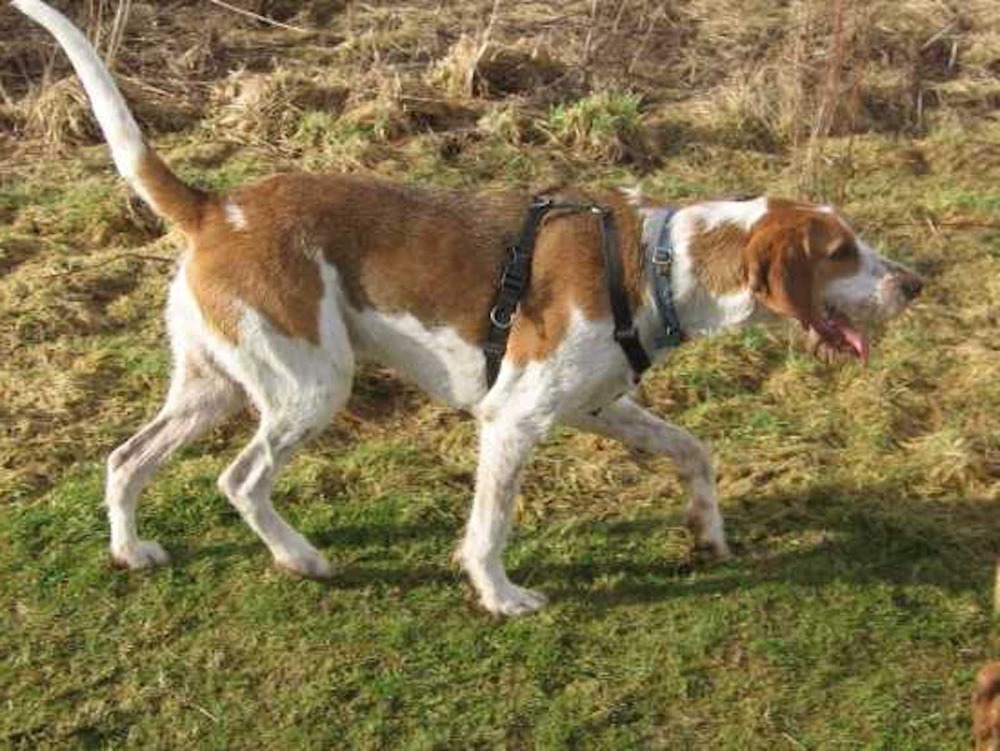
People often describe this breed as athletic and friendly, and both can be true at once. The detail that matters is that an American English Coonhound is typically a wide-ranging scent worker, bred to cover ground and keep going. That tends to show up as pace, stamina, and a strong desire to follow odours with real commitment.1, 2
The breed is commonly linked to the “Virginia hounds”, descended from English foxhounds brought to the American colonies, then shaped over time to suit local terrain and hunting styles.1, 3
Coat patterns are part of the appeal. You will see ticking in red and white, blue and white, and tri-colour with ticking, alongside other recognised combinations depending on the standard being used.2, 3
And then there is the voice. A coonhound’s baying is not random noise in the working context. It is a functional signal, which is why many owners notice that this breed can be more vocal than expected, particularly when excited or following scent.2, 3
Temperament in real homes
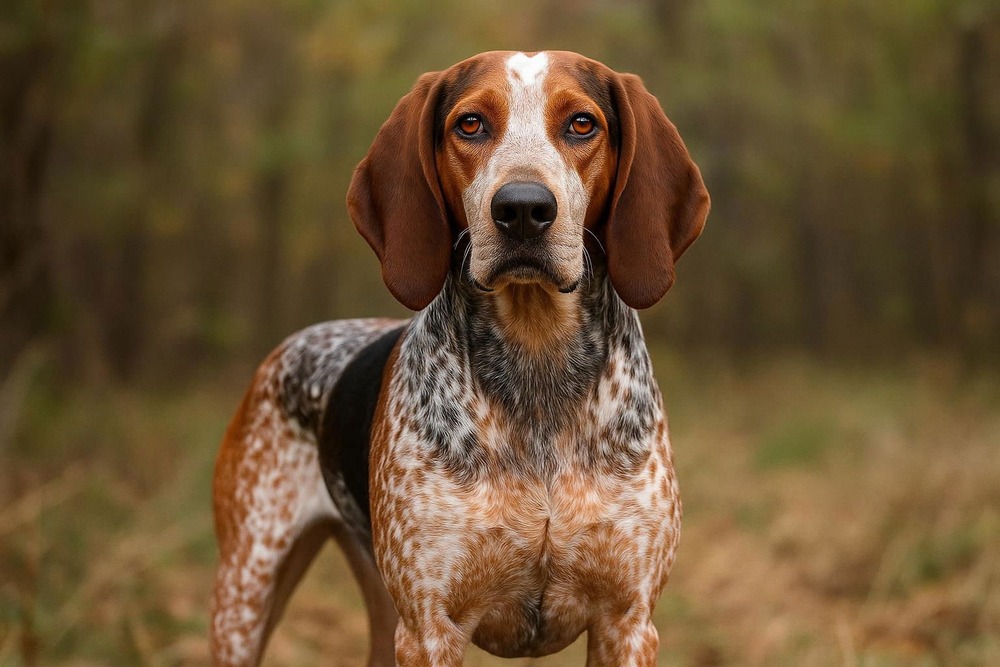
In everyday family life, many American English Coonhounds are sociable with people and generally comfortable around other dogs, especially when they have been well socialised and are getting enough to do.2, 4
The challenge is that “enough to do” can be a bigger number than people predict. Without regular outlets, some hounds drift into their own projects: scent surfing on walks, fence running, and finding creative ways to entertain themselves. This is where common advice about “more exercise” can be incomplete. They often need both movement and scent work, because the brain is attached to the nose.4, 6
Prey drive varies by individual and upbringing, but it is sensible to assume that a coonhound may chase smaller animals outdoors. That does not make them unsafe, it simply changes management: long lines, secure yards, and careful introductions to smaller pets where relevant.4, 6
Training that respects the nose
A lot of people try to train a scent hound as if it were a retriever. When that does not work, they label the dog stubborn. What is often happening is that the dog is highly motivated, just not by the same things in the same order.
The most practical approach is to assume that sniffing is not a distraction, it is the main event. Training tends to go better when you pay for attention (food, play, access to sniffing), keep sessions short, and practise in lower-distraction environments before asking for the same skills near wildlife or busy parks.7
Useful foundations for many American English Coonhounds include:
- Recall with management: practise on a long line, reward heavily, and do not test it too early in high-scent areas.
- Loose-lead walking: teach checking in, then use structured “sniff breaks” so the dog gets what it needs without dragging you the whole walk.
- Settle skills: reward calm behaviour at home, because an athletic dog still needs an off switch.
Exercise and enrichment that actually helps
Daily exercise matters, but variety matters too. A coonhound that only gets repetitive lap walking can be fit and still frustrated. Many owners have better results when they deliberately include scent-led activities alongside physical work.2, 6
Options that suit the breed’s wiring often include:
- Long, steady walks with permission to sniff and explore safely.
- Scatter feeding in grass, snuffle mats, and simple “find it” games at home.
- Hiking, jogging, or canicross for suitable adults, built up gradually.
- Dog sports that use the nose, where available and appropriate.
Because this breed can travel when motivated, secure fencing and sensible lead choices are part of exercise planning, not an afterthought.6
Health patterns to watch for
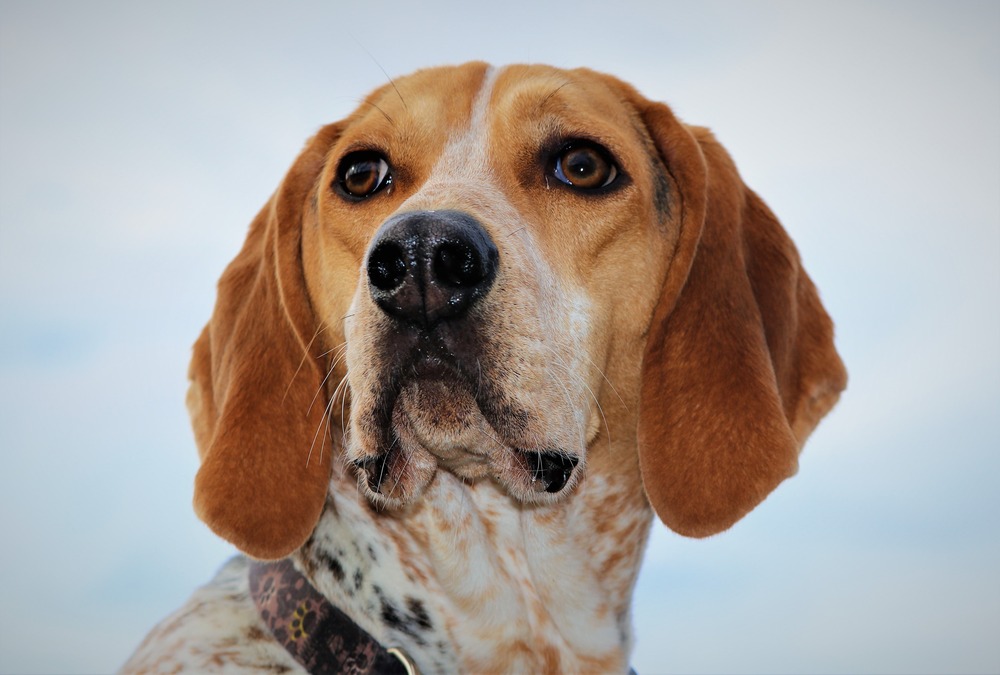
No breed is guaranteed “healthy” or “unhealthy”, but there are patterns owners and vets see often enough to plan around. For American English Coonhounds, ear care comes up frequently because long, floppy ears can trap moisture and debris, which may increase the risk of ear infections.4, 8
Orthopaedic issues such as hip dysplasia are also discussed across many medium to large breeds. If you are choosing a breeder, ask what screening is done and what support is offered if problems arise later. If you are adopting, notice how the dog moves and consider a vet check that includes an orthopaedic assessment if you have concerns.9
Another practical point for deep-chested, athletic dogs is bloat (GDV). It is not something to panic about, but it is worth knowing the signs and discussing risk reduction and preventative gastropexy with your vet if your dog is at higher risk.10
Grooming and day-to-day care

The coat is generally straightforward. A weekly brush helps lift loose hair and dirt, and it is a good moment to check skin, paws, and any new lumps or irritations. Most of the “maintenance” with this breed is not fancy grooming, it is routine checks and prevention.4
Pay particular attention to:
- Ears: check regularly, clean only as advised by your vet, and book in early if you notice odour, redness, head shaking, or soreness.4
- Nails: active dogs still sometimes need trimming, especially if they mostly exercise on softer ground.
- Teeth: home dental care supports long-term comfort and can reduce veterinary dental needs over time.
Food, weight, and long-term soundness
Because American English Coonhounds are active, it is easy to assume they will always “burn it off”. In practice, appetite, age, desexing status, and lifestyle all matter. The goal is not a particular number on a chart, it is a dog that stays lean enough to move freely and recover well after activity.
Choose a complete and balanced diet that suits your dog’s life stage and workload, measure meals rather than guessing, and adjust based on body condition rather than the label alone. If you are unsure, your vet can help you aim for a healthy body condition score and a realistic feeding plan.5
Treats are useful for training, especially with scent hounds, but they add up quickly. Many owners do well by reserving higher-value treats for recall and focus work, then using part of the daily ration for everything else.
Final thoughts
The American English Coonhound can be a brilliant companion for people who enjoy being outdoors and do not mind a dog with opinions, stamina, and a powerful nose. They are often at their best when their natural skills are given a place to go, rather than constantly being asked not to be what they are.
If you are drawn to the breed because you like the look, the friendliness, or the history, it is worth pausing to picture the everyday: secure fencing, long walks with real sniff time, ongoing training, and steady health routines. For the right household, that is not a burden. It is simply the shape of life with a hound.
References
- Wikipedia: American English Coonhound
- American Kennel Club: Meet Coonhound Breeds (includes American English Coonhound)
- Westminster Kennel Club: American English Coonhound
- PetMD: American English Coonhound Health and Care
- WSAVA: Global Nutrition Guidelines
- RSPCA: Dog care and welfare advice
- American Veterinary Society of Animal Behavior: Position Statements (training and behaviour)
- Cornell University College of Veterinary Medicine: Ear infections (otitis externa) in dogs
- Orthopedic Foundation for Animals: Hip dysplasia
- Cornell University College of Veterinary Medicine: Bloat (GDV) in dogs