

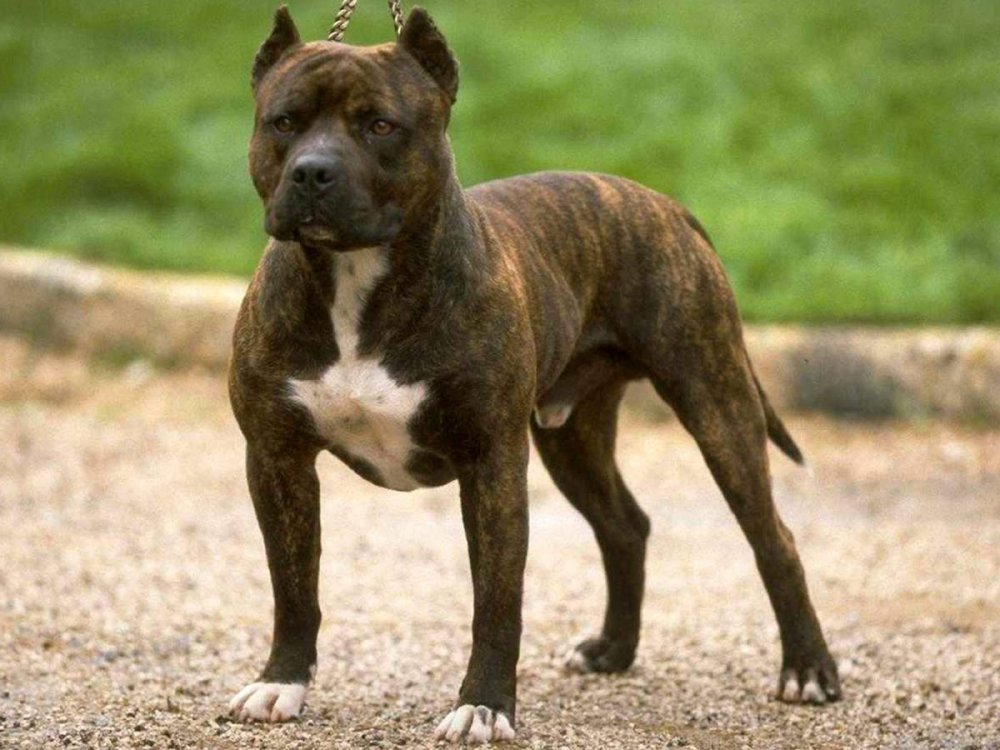
- Breed category: Terrier
- Country of origin: United States
- Typical height: About 46 to 48 cm (males), 43 to 46 cm (females)
- Typical weight: Often around 22 to 30 kg, proportion matters more than a single number
- Average lifespan: Commonly around 12 to 16 years
- Coat: Short, smooth coat
- Grooming needs: Low to moderate, regular brushing helps
- Exercise needs: High, daily movement and mental work
- Shedding: Moderate
- Temperament (in general): Confident, people-focused, often very trainable with the right handling
People often start looking up the American Staffordshire Terrier after noticing one at the park, meeting a friend’s dog who is surprisingly calm, or wondering why two dogs that look similar can behave so differently. Sometimes it begins with a more practical question: “Is this the sort of dog that suits our household, or will we be out of our depth?”
AmStaffs have a look that invites assumptions. A broad head and strong body can read as “tough”, yet many owners describe a dog that is deeply interested in people and happiest when included in everyday life. The more useful lens is not appearance, but the combination of socialisation, training, genetics, and management that shapes any individual dog.
This matters because the American Staffordshire Terrier is not a passive pet. When they are well guided, they can be steady companions and enthusiastic sport dogs. When their needs are overlooked, their strength and drive can make ordinary problems, like over-excitement on lead, feel much bigger in real life.
History and origin
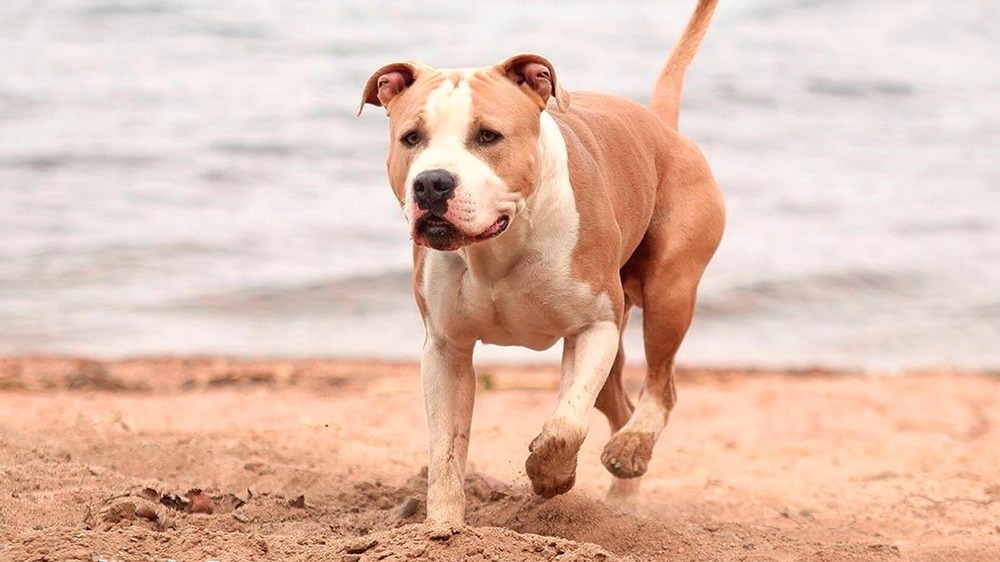
The American Staffordshire Terrier developed from bull-and-terrier type dogs in the 19th century, with the “American” line shaped further after dogs were brought to the United States. Over time, breeders selected for a more consistent type and temperament suited to companionship and performance work, rather than the rough uses these dogs were once associated with.
In kennel club terms, the American Kennel Club approved the breed standard on 10 June 1936, which is why you will often see 1936 cited as a key date in the breed’s formal recognition.1, 2
In Australia, you will also see the AKC standard reproduced through state canine bodies, which can be helpful when you want to check details like preferred height ranges and the general “impression” the breed is meant to give.2
Physical characteristics and what they mean day to day
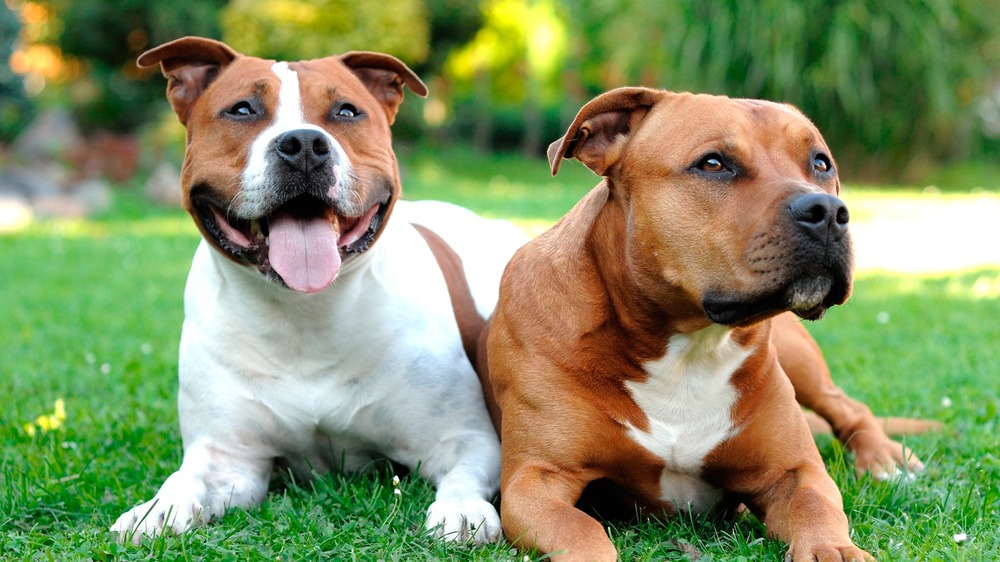
AmStaffs are medium-sized, muscular dogs with a short coat and an athletic outline. Breed standards emphasise balance: strong for size, but not clumsy, with movement that stays agile and coordinated.1, 2
Heights are often given as about 46 to 48 cm for males and 43 to 46 cm for females, with weight expected to be in proportion to height and overall build rather than pinned to a single “correct” number.1, 2
The short coat is easy to live with, but it also means these dogs can feel the cold, especially in damp winter weather. A warm coat for early morning walks is not overcaring. It is practical comfort for a short-coated dog.
Temperament and behaviour, beyond the stereotypes
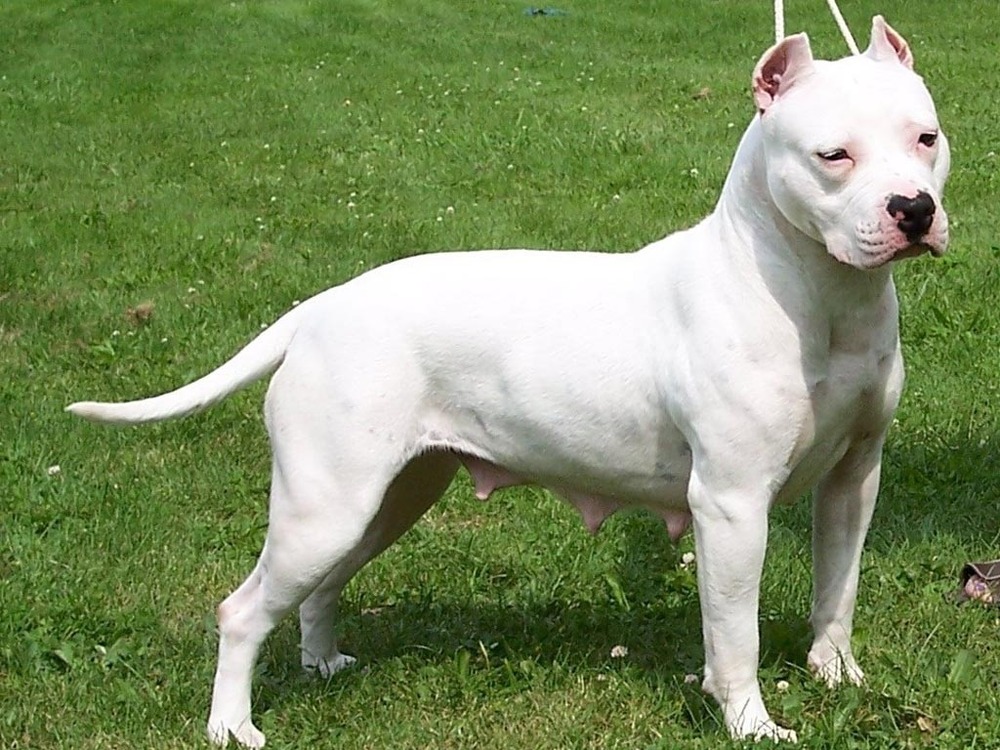
Well-bred, well-raised AmStaffs are typically confident and people-focused. Many are naturally enthusiastic, which can look like “too much” in adolescence: leaning in, pulling towards greetings, struggling to settle if the day has been understimulating.
It helps to think in terms of arousal and impulse control rather than “good” or “bad” behaviour. This breed often benefits from clear routines, a job to do, and calm repetition. When training is consistent, their intelligence becomes easy to live with. When it is inconsistent, they can become creative in ways that frustrate owners.
With children, the headline is supervision and teaching both sides. Even a friendly, tolerant dog can knock a child over by accident, and even a gentle child can misread a dog who is trying to disengage. The practical goal is safe, boring predictability in daily interactions.
With other dogs and pets, outcomes vary. Early, thoughtful socialisation matters, but so do genetics and individual experiences. Some AmStaffs happily share a home with other animals. Others do best with careful management, slow introductions, and a clear plan for separation when excitement runs high.
Training and exercise needs
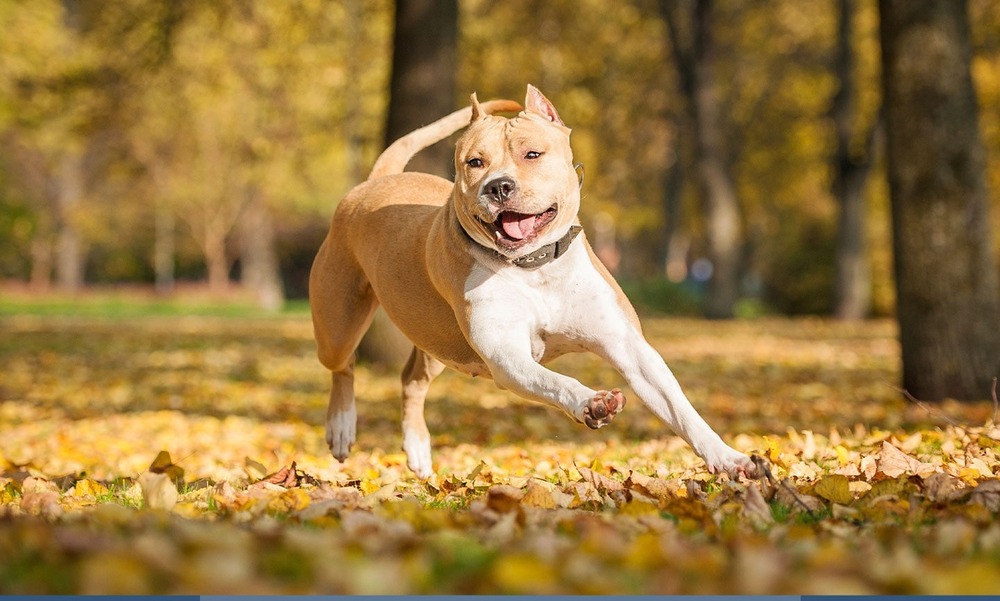
AmStaffs tend to do best when training starts early and stays steady. Not intense, not harsh, just regular practice that makes life understandable: how to walk on lead, how to settle on a mat, how to wait at doors, how to cope when visitors arrive.
Reward-based training is widely recommended by welfare organisations because it is both humane and effective. It also tends to produce the kind of reliable behaviour you want in a strong dog: calm responses that have been practised, not compliance achieved through fear or intimidation.3
Daily exercise needs are usually high, but “exercise” should not mean endless rough play that winds the dog up. A better mix often looks like this:
- Brisk walks with sniff time and a few short training stops
- Food enrichment at home (scatter feeds, stuffed toys, simple scent games)
- Strength and body awareness work (controlled stairs, platform targets, balance work where appropriate)
- A sport or structured outlet if it suits your dog (obedience, agility foundations, tracking-style games)
The aim is a dog who is pleasantly tired and able to rest, not a dog who has learned they only feel normal after an hour of high-adrenaline play.
Health and lifespan
Many American Staffordshire Terriers live into their early to mid teens, with lifespan influenced by genetics, body condition, and the usual life factors like dental care and preventative veterinary support. Some sources report an average around the low teens, which lines up with what many vets and owners observe in practice.4
Like many medium-to-large, athletic breeds, joint issues such as hip dysplasia can occur, and skin problems are also commonly discussed by breed communities. The most useful step for a prospective owner is not guessing, but asking a breeder or rescue exactly what health screening and history is available, then planning a sensible relationship with your vet.
If you are buying a puppy, seek evidence-based health testing and avoid anyone who waves away health questions. In the UK, kennel club guidance around health screening and the idea of verifying testing is clearly laid out, even if the exact recommended tests can differ by country and registry.5
Grooming and maintenance
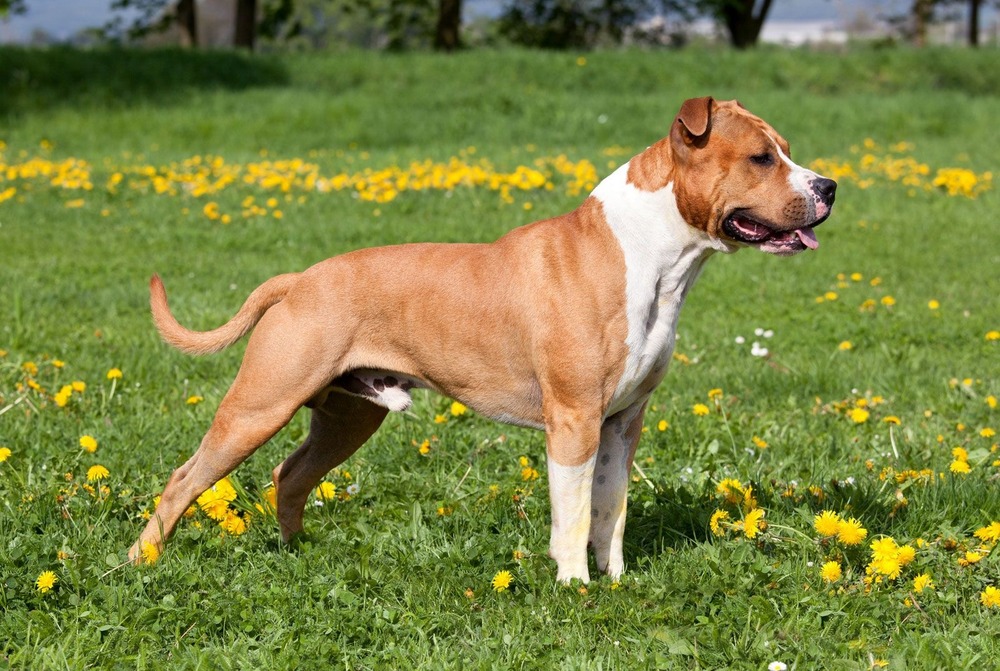
The short coat is straightforward: a weekly brush is usually enough, and bathing can be occasional unless your dog has rolled in something memorable. Regular grooming is less about “beauty” and more about noticing small changes early, like dry skin, new lumps, sore ears, or a change in coat gloss.
Keep nails short enough that your dog moves comfortably, and take dental care seriously. For many dogs, a simple routine of tooth brushing and appropriate chew options saves pain and cost later.
Diet and nutrition, without the noise
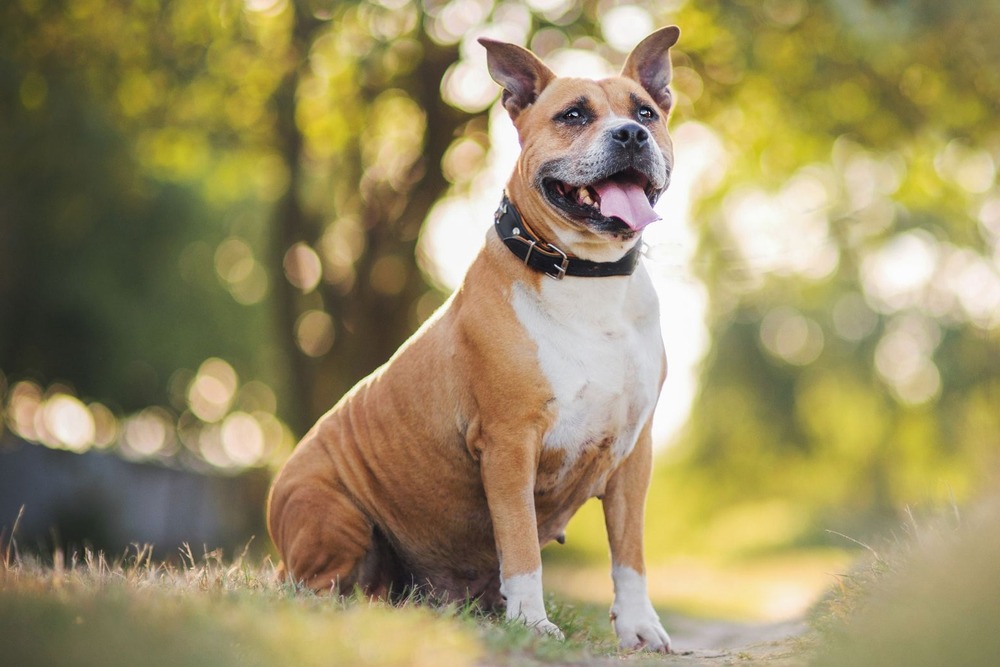
Nutrition advice can get strangely ideological. A calmer and more useful approach is to feed a complete and balanced diet, then adjust based on your individual dog’s body condition, energy needs, and any diagnosed sensitivities.
The World Small Animal Veterinary Association’s guidance emphasises that nutrition should be assessed for every pet and tailored to the animal, not chosen on hype or the most persuasive marketing. They also note that ingredient lists can be misleading if you treat them as a shortcut for quality.6
For AmStaffs in particular, weight management matters. Extra kilos put unnecessary load on joints, and a muscular dog can hide fat gain until it is already affecting movement and stamina. If you are unsure, ask your vet or a qualified veterinary nurse to show you how to use a body condition score and set a realistic feeding plan.
Living well with an AmStaff in Australia
In an Australian context, it is worth being aware that public discussion about “bully type” dogs can be heated, and breed identification is not always reliable in reporting and records. Professional bodies such as the AVMA caution against predicting aggression based solely on breed, and encourage a focus on behaviour, environment, and responsible management instead.7
Whatever your views on breed debates, the everyday reality is simple: owners of strong dogs need practical habits that reduce risk. That includes secure fencing, a well-fitted collar or harness, training for calm greetings, and avoiding situations your dog is not ready for.
Desexing is often part of responsible ownership, but the right timing is individual. Australian guidance notes that desexing decisions should be made with your veterinarian, taking into account factors like size, breed, health, and your circumstances. It is also relevant that requirements vary across states and councils, so it is sensible to check local rules if you have recently moved or are adopting interstate.8
Final thoughts
The American Staffordshire Terrier can be a brilliant companion for the right home: people who enjoy training, can provide daily structure, and are comfortable managing a dog whose body is stronger than their patience on a bad day.
If you are considering one, focus less on the label and more on the individual in front of you. Look for steady temperament, transparent health history, and a support network that includes a good vet and a trainer who works with reward-based methods. When those pieces are in place, an AmStaff is often simply a keen, sturdy dog who wants to be part of your life.
References
- American Kennel Club: American Staffordshire Terrier (breed information)
- Dogs NSW: American Staffordshire Terrier breed standard
- RSPCA ACT: Reward-based dog training
- The Kennel Club (UK): American Staffordshire Terrier (breed information)
- The Kennel Club (UK): Getting started with health testing and screening
- WSAVA: Global Nutrition Guidelines
- American Veterinary Medical Association: Dog bite prevention (policy and guidance)
- RSPCA Pet Insurance Australia: When should a dog be desexed?