

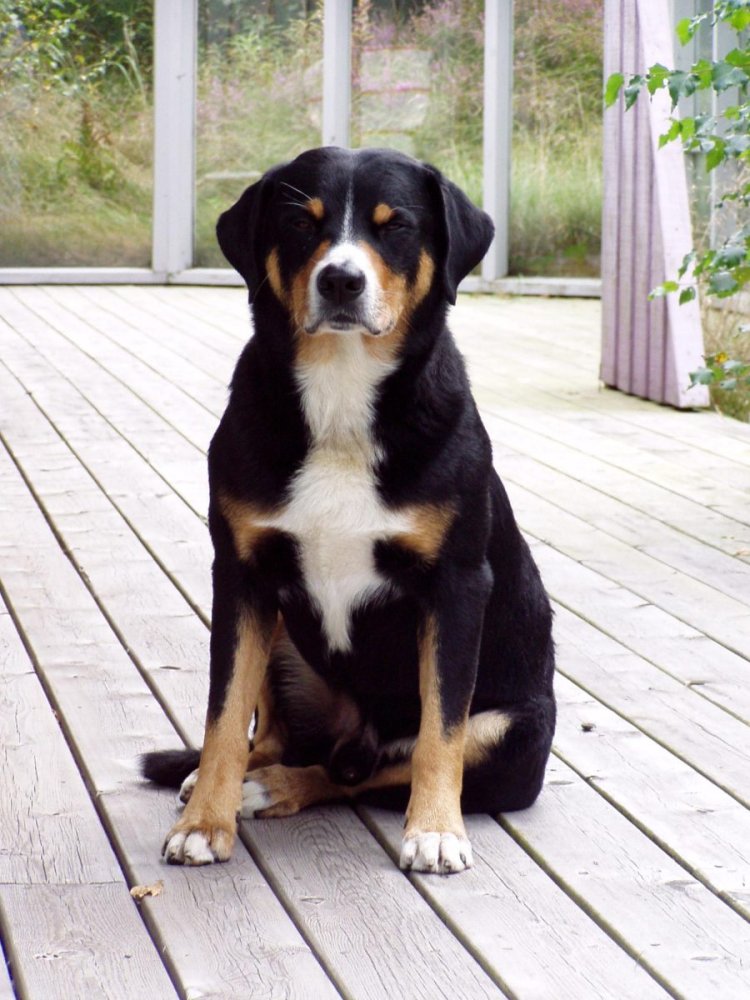
You tend to notice an Appenzeller Sennenhund in the same way you notice a really capable farm ute. Not because it is flashy, but because it looks built to do something. People often meet the breed through a photo of that crisp tri-colour coat and curled tail, or by hearing that it is clever and “good with families”, then they start wondering if that translates to everyday life.
With Appenzellers, the practical questions matter more than the brochure ones. They are not simply energetic in the way many medium dogs are energetic. They were developed to work all day in close partnership with people, making decisions on the move, and using their voice when it counts. That history still shows up in modern homes, especially if exercise and training are treated as optional.
If you are considering one, or you already live with an Appenzeller and are trying to make sense of the alertness, the movement, and the “always on” brain, it helps to see the breed as a working dog first, and a companion second. That does not make them unsuitable for family life. It just changes what “a good home” looks like.
At a glance: the Appenzeller Sennenhund
Breed group: Working and herding type (one of the Swiss mountain dogs).1, 2
- Origin: Appenzell region, Switzerland.1
- Size: Medium, athletic, near-square build.2
- Typical height: About 52 to 56 cm (males), 50 to 54 cm (females).2
- Typical weight: Often around 22 to 32 kg (varies by line and condition).1
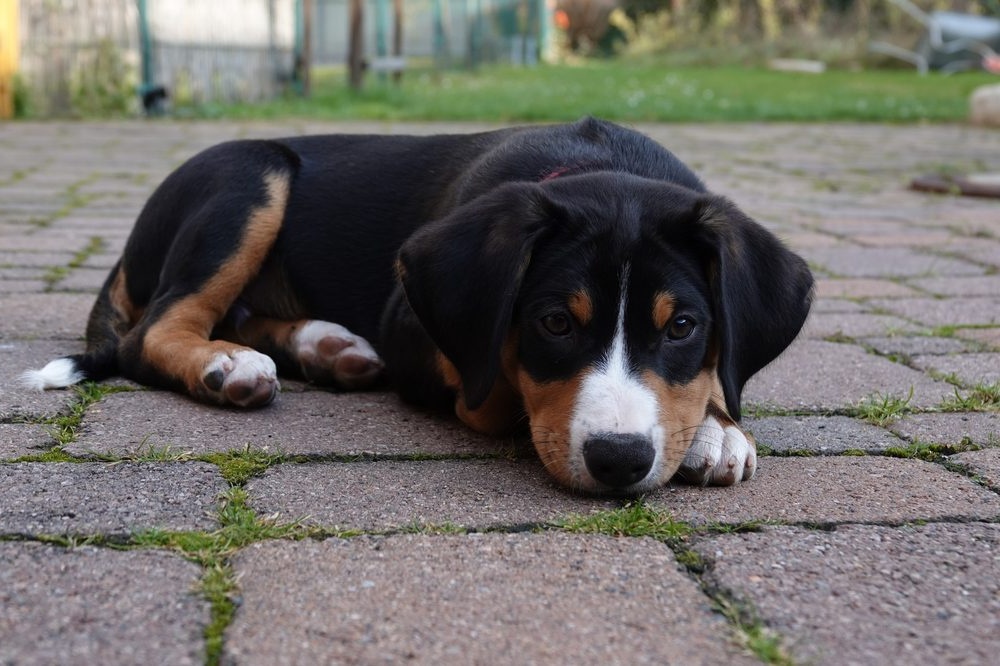
- Coat: Short, dense, double coat, always tri-coloured (black or Havana brown with tan and white).2, 3
- Life expectancy: Often quoted around 12 to 14 years.1
History and origin
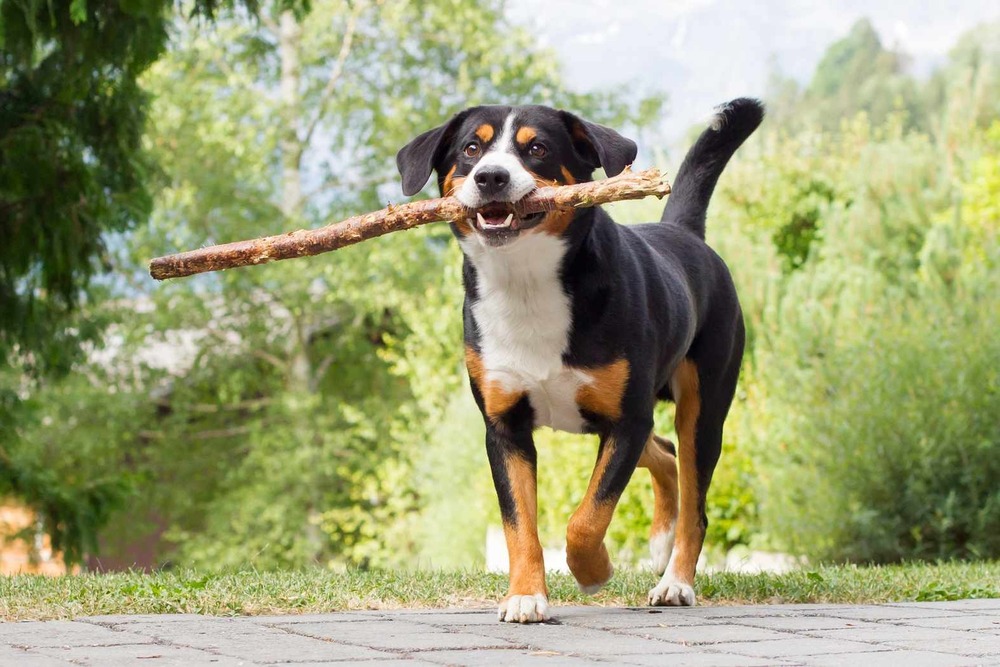
The Appenzeller Sennenhund comes from north-eastern Switzerland, where farmers needed a dog that could move stock, watch the property, and cope with steep ground and changing weather.1, 3 The name “Sennenhund” links back to Alpine herders and dairymen, and the breed is one of four Swiss mountain dog types that share a similar tri-colour look and farm working background.3
It helps to picture the original job when you are trying to understand the modern dog. Herding and guarding are not separate modes for this breed. They blend. Many Appenzellers will naturally scan their environment, notice movement early, and use their voice readily, which can be useful in the right setting and challenging in a close-quarters neighbourhood.
Formal breed organisation and standards arrived later, but the core “farm utility” selection is what shaped the dog most strongly. Even today, you will often see the Appenzeller described as lively, watchful, and capable of independent decision-making, which is exactly what a hillside cattle dog was expected to be.1
Physical characteristics that affect daily life
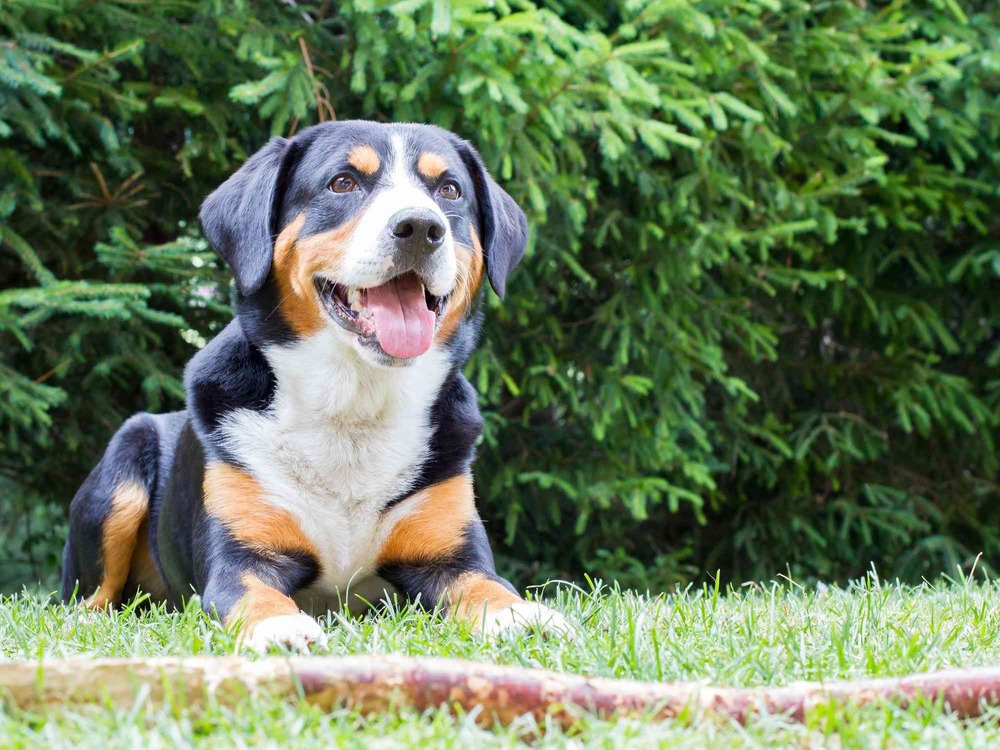
The Appenzeller is a compact, muscular mover with a short, glossy double coat. The tri-colour pattern is not just typical, it is a defining part of the breed standard, along with those symmetrical rust markings and clear white blaze that many people notice first.2
The curled tail is another hallmark. In standards, it is described as being carried in a tight curl over the back when the dog is moving.2 In real life, that tail carriage often goes along with a dog that is physically ready to spring into action.
From a care point of view, the coat is generally low-fuss. What matters more is the body underneath it. This is a dog built for traction, acceleration, and endurance, and their day feels better when their movement needs are met in a structured way.
Temperament and behaviour: bright, busy, and often vocal
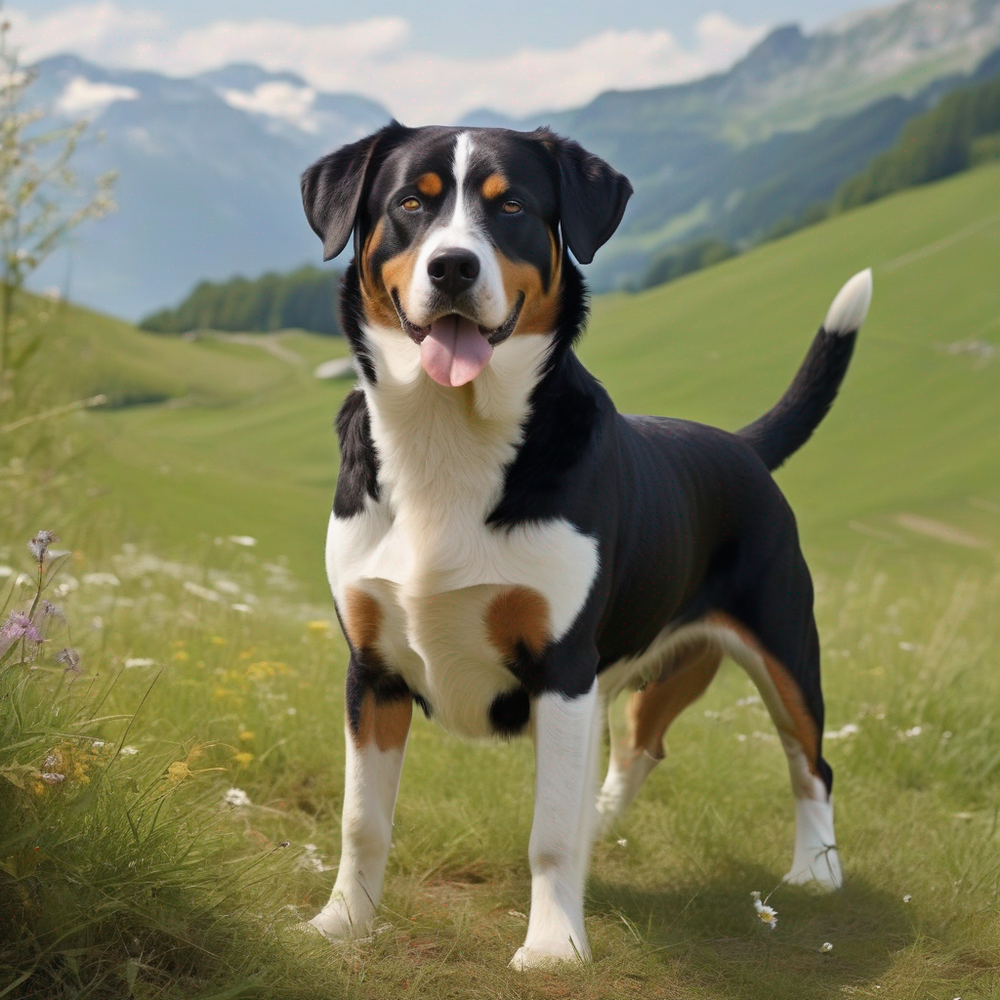
Appenzellers are often described as lively and athletic, and many are naturally watchful around strangers.1 That watchfulness can look like barking at the gate, standing tall when someone arrives, or becoming intensely interested in what is happening beyond the fence line.
It is tempting to interpret this as “protective” in a human sense, but it is more useful to think of it as a breed that is quick to notice change and quick to respond. If you live in a busy street, or you have lots of visitors, you will want a plan for teaching calm behaviours, and for giving the dog something else to do when life gets noisy.
With children and other pets, the same principle applies. Many Appenzellers can live nicely in a family home, but they tend to do best when adults actively manage interactions and teach the dog what is expected. Early socialisation matters, and so does teaching kids how to move around dogs safely, especially around food, toys, and excited play.
Training and exercise needs
This breed is usually quick to learn, but “easy to train” only stays true if the training is consistent and worth the dog’s effort. Reward-based methods (food, play, access to movement) suit most Appenzellers well, and they help you build cooperation without turning every interaction into a contest.
Early socialisation and life skills are particularly important for a dog that is naturally alert. Rather than aiming for a puppy who greets everyone, aim for a youngster who can notice things and then look back to you for guidance.
Daily exercise needs are high, but exercise alone does not always settle an Appenzeller. Many do best with a mix of:
- Long walks with sniffing time, not just marching.
- Short training sessions (recall, loose lead, mat settling).
- Jobs that use the brain, such as scent games, structured fetch, or agility foundations.
If you are seeing nuisance barking, chewing, pacing, or “busy” behaviour, it is often worth asking whether the dog is missing either mental work or predictable downtime, rather than simply adding more high-intensity running.
Health and lifespan
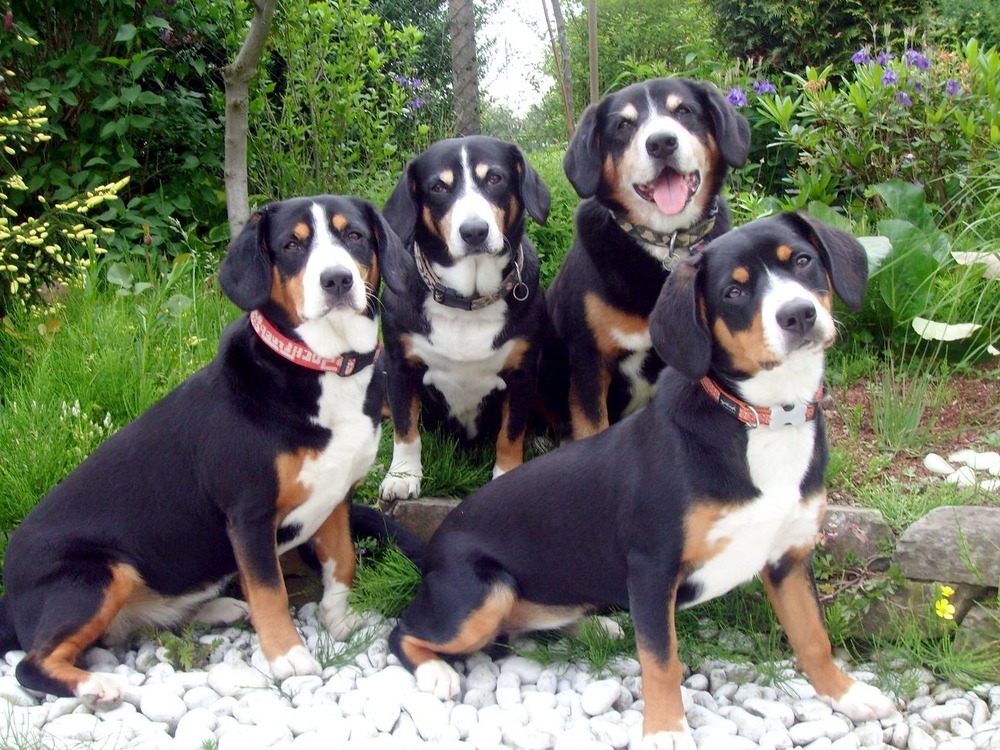
A commonly quoted lifespan for the breed is around 12 to 14 years, although individual longevity varies with genetics, weight, injury history, and overall care.1
As with many medium-to-large working breeds, orthopaedic issues such as hip dysplasia are worth keeping on your radar. Screening programs (such as OFA or PennHIP, depending on country and breeder practices) are commonly used to reduce risk, but no test can guarantee a puppy will never develop joint disease.4
Practical steps that often make a real difference include keeping the dog lean, building fitness gradually, and taking care on slippery floors and repeated high-impact jumping in young dogs whose joints are still developing.
Grooming and day-to-day maintenance
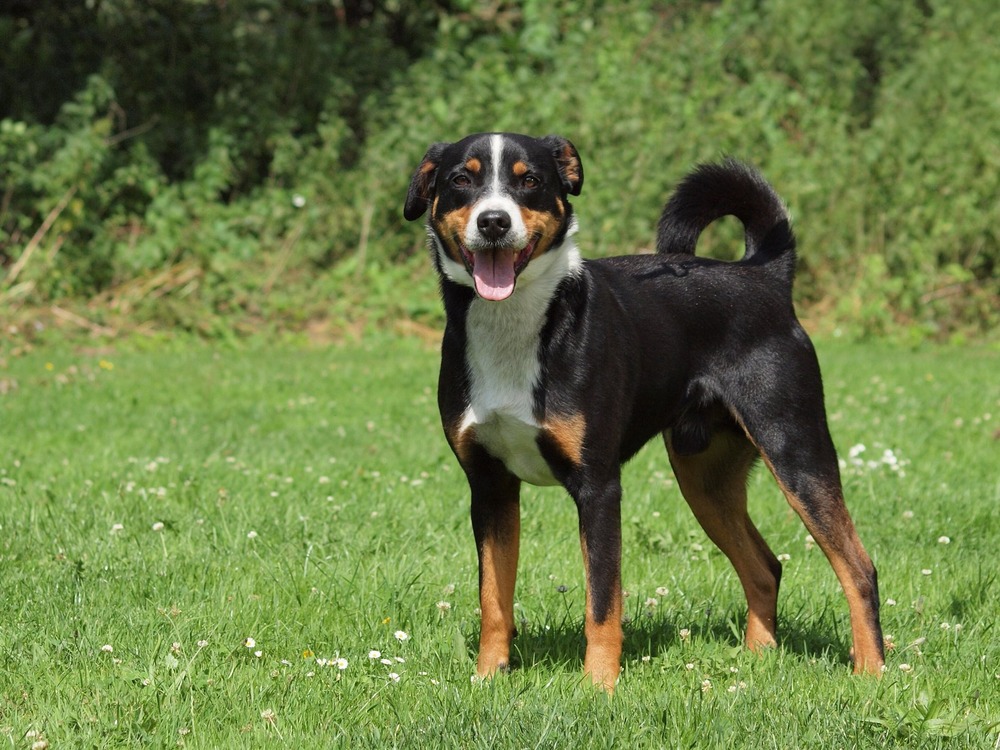
The Appenzeller’s coat is designed for weather and work: short, dense, and protective.2 For most dogs, a weekly brush is enough to lift loose hair and keep the coat looking glossy. You will likely want to brush more during seasonal shedding.
Beyond the coat, the routine “farm dog basics” still apply. Keep nails trimmed so the dog can move comfortably, check ears (especially after bush walks), and build toothbrushing into normal life if you can. If toothbrushing is new to your dog, go slowly and make it a skill, not a wrestle.
Parasite prevention is best discussed with your vet because risks vary by region and lifestyle. In Australia, common concerns include intestinal worms, fleas, ticks, and heartworm, and prevention plans are usually tailored to where you live and where your dog spends time.5
Diet and nutrition
Appenzellers usually do well on a balanced, complete diet that matches their age and activity level. Because they are often energetic and athletic, it can be easy to overfeed in the name of “fuel”. Body condition matters more than the scoop size. A lean working dog build tends to support joint health and endurance over time.
If you add fresh foods, keep it simple and safe, and treat extras as part of the overall diet rather than “free” calories. Many common human foods are unsafe for dogs. Foods such as chocolate, grapes and raisins, onions and garlic, and cooked bones are well-recognised hazards, and they are best kept completely out of reach.6, 7
Raw feeding is a topic people often raise with robust farm breeds. If you do feed raw, it is worth following credible guidance on hygiene and ingredient choice, and avoiding raw meat products marketed as pet mince or pet meat that may contain preservatives such as sulphites.6
Is an Appenzeller right for your household?
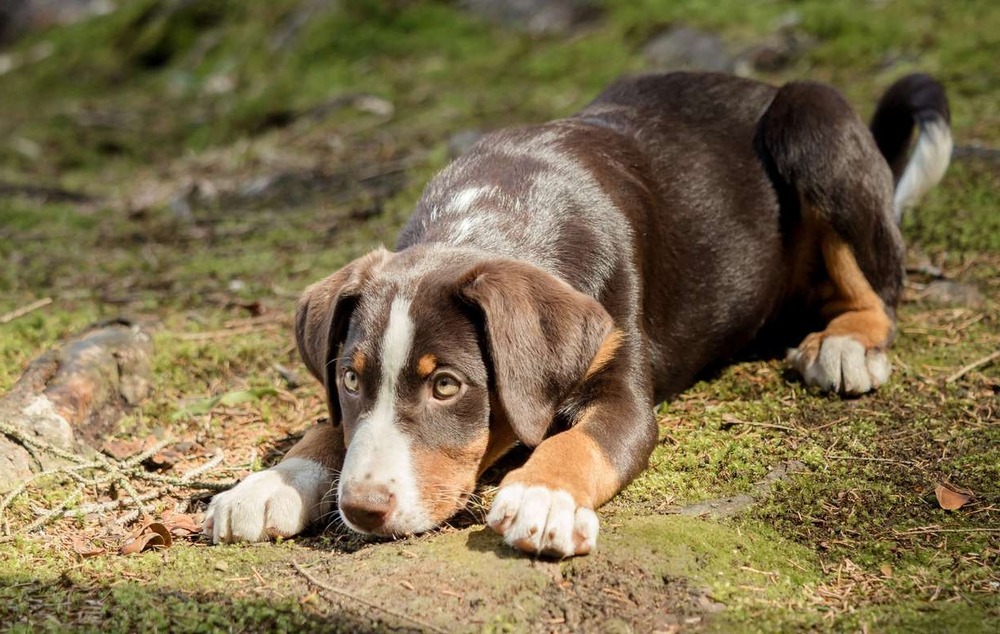
It is not that Appenzellers cannot live in suburban homes, it is that they rarely thrive on a “nice walk and a cuddle” arrangement alone. They tend to suit people who enjoy training, who like being outdoors most days, and who can provide a predictable routine.
They are often at their best with:
- Space to move and opportunities to run safely.
- Clear boundaries around barking and excitement, taught kindly and early.
- Activities that use the brain, not just the legs.
If you want a calm, socially easy dog who is happy to blend into the background, another breed may fit more comfortably. If you enjoy a dog with opinions, stamina, and a strong “working partnership” style of connection, the Appenzeller can be a deeply satisfying companion.
References
- Wikipedia: Appenzeller Sennenhund
- United Kennel Club (UKC): Breed Standard for the Appenzeller
- American Kennel Club (AKC): Sennenhunde (Swiss Mountain Dog) breeds
- American Veterinary Medical Association (AVMA): Hip dysplasia in dogs
- Healthdirect Australia: Worms in dogs
- RSPCA Australia Knowledgebase: What should I feed my dog?
- Agriculture Victoria: Human foods to avoid feeding your dog
- RSPCA Australia: Household dangers to your pet