

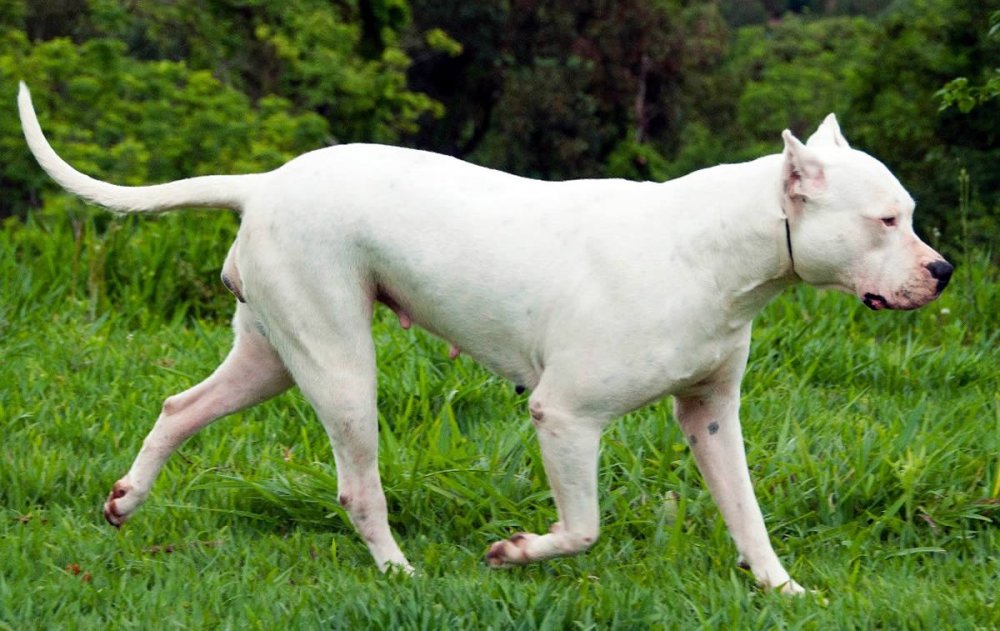
People usually come to the Dogo Argentino after noticing something that does not quite fit the usual “big white dog” stereotype. Maybe you have seen one moving with that quiet, athletic certainty on a lead, or heard stories that swing between “beautiful family dog” and “too much dog for most homes”. The truth sits in the middle, and it depends heavily on management.
The Dogo was created for demanding work, then adapted to modern life where most dogs are expected to be calm in suburbia, cope with visitors, and share space with other pets. That mismatch, between what the breed was built for and what many households can realistically provide, is where most problems and misunderstandings begin.
When a Dogo is well bred, thoughtfully raised, and properly trained, you tend to see a dog that is steady, responsive, and impressive without needing to “perform”. When those pieces are missing, the same physical power and drive can become difficult to live with, particularly around other animals and busy environments.
At a glance: the Dogo Argentino
Country of origin: Argentina.
FCI group: Group 2 (Pinscher and Schnauzer, Molossoid and Swiss Mountain and Cattledogs), Molossian type, mastiff type.1
Typical size: Large, athletic, muscular.
Coat: Short, smooth, predominantly white.
Exercise and enrichment: High needs, best with daily training, structured activity, and purposeful outlets.
Common health considerations: Congenital deafness risk in all-white dogs, and orthopaedic issues seen in many large breeds.4, 5
Origins and what the breed was designed to do
The Dogo Argentino was developed in Argentina in the early 20th century with a clear working purpose: to hunt large game. That history matters, because it helps explain why many Dogos have strong stamina and determination, and why they can be intense about movement, scent, and pursuit.
In the field, the Dogo needed to be physically robust, persistent over distance, and able to work in challenging conditions. In a modern household, those same traits often show up as a dog that needs more than a backyard and a casual walk. Without enough physical exercise and mental work, some Dogos will invent their own jobs, which can look like fence-running, rough play, or reactivity on lead.
The breed is recognised by the FCI, with definitive recognition dated 31 July 1973.1
Appearance and unique traits

Most people notice the Dogo’s white coat first. The coat is short and close, which makes grooming relatively straightforward, but it does mean the dog is more exposed to sun and weather than many double-coated breeds.
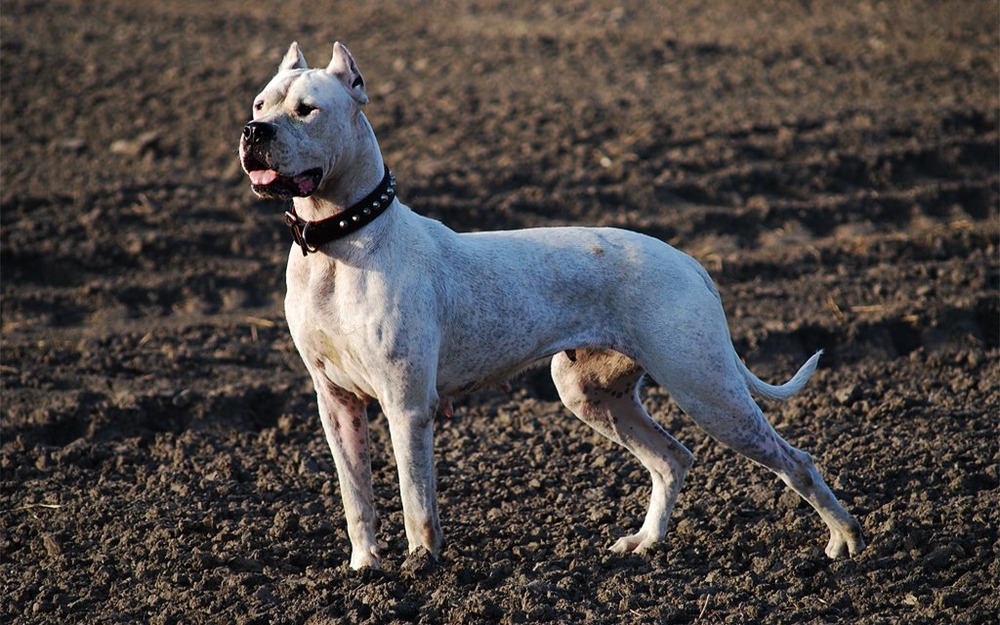
The overall build is what you would expect from a serious working dog: powerful chest, strong neck and shoulders, and an athletic frame. This is not a “heavy” breed in the slow sense. A fit Dogo can be remarkably quick and coordinated.
Breed standards allow for a single dark spot on the head within specific limits, but the overall impression remains a predominantly white dog.1
Ears, cropping, and practical reality
Dogos can be seen with natural ears or cropped ears, depending on country, culture, and owner choice. If you are weighing up cropping, it is worth understanding that veterinary bodies and welfare organisations often oppose ear cropping when done solely for cosmetic reasons, while some kennel organisations argue it can be part of breed tradition and function. If it is even being considered, it should only be discussed with a veterinarian, and within your local legal and welfare context.7, 8
Temperament, drive, and day-to-day suitability
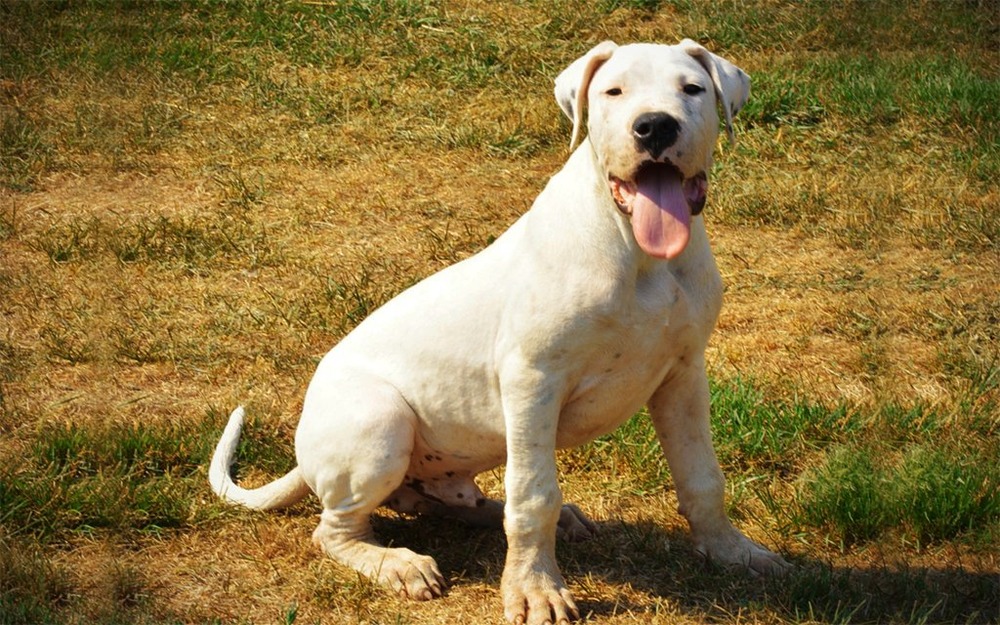
Dogos are often described as loyal and protective, and many owners experience them as deeply attached to their household routines. What tends to be more important than labels, though, is the combination of strength plus motivation. A Dogo that decides to lunge, chase, or body-block does not need to be “aggressive” to cause real risk.
Many individuals can live well with children when raised with sensible boundaries and supervision, but no large, powerful dog should be assumed “child-proof”. The safest approach is to focus on management: calm greetings, separation during high-energy play, and teaching both dog and child predictable patterns.
With other animals, caution is warranted. The breed’s hunting heritage means some Dogos will have a strong prey drive. Early socialisation can help, but it does not erase genetics, and it is not a guarantee. If your household includes cats, small pets, or you regularly visit off-lead areas with small dogs, plan for long-term management, not just a puppy phase.
Training and exercise that actually helps
The most helpful training for a Dogo is not about “being the boss”. It is about building habits that hold up under distraction: checking in, disengaging from triggers, walking on a loose lead, and settling when nothing is happening.
Reward-based training and positive reinforcement are widely recommended by animal welfare organisations because they support learning without relying on fear or pain, and they can reduce the risk of fallout behaviours in sensitive or high-drive dogs.2, 3
What to prioritise early
- Neutral exposure to the world, not forced “meet everyone” socialising.
- Comfort with handling, grooming, vet-style checks, and restraint.
- Impulse-control skills, especially around gates, cars, food, and movement.
- Structured outlets: scent games, obedience foundations, and appropriate tug and retrieve rules.
Exercise, boredom, and the “too much dog” problem
Dogos usually need daily exercise that includes both movement and thinking. A long walk is a start, but many also benefit from training sessions, tracking-style games, or dog sports suited to their body and temperament. Under-exercised Dogos do not always look “hyper”, they can look restless, watchful, and quick to react.
Health considerations and preventive care
Like many all-white breeds, the Dogo Argentino has an increased risk of congenital sensorineural deafness. Hearing status cannot be reliably guessed from behaviour alone, especially with unilateral (one-sided) deafness. A BAER hearing test is the standard diagnostic tool used in research and clinical settings for confirming deafness.4
As a large, athletic breed, Dogos can also be affected by hip dysplasia and secondary arthritis. While not every Dogo will have orthopaedic disease, it is wise to take joint health seriously from the beginning, including sensible growth management and weight control. Large-breed dogs can be more vulnerable to the effects of excessive growth rate and body weight on joints.5
Practical preventive habits
- Keep your dog lean, aim for a visible waist and an easy-to-feel rib outline (without prominent ribs).
- Discuss hearing testing, especially if you are purchasing a puppy from a breeder or considering breeding.
- Ask your vet about joint-friendly conditioning for adolescents, not just “more running”.
Grooming, coat care, and weather comfort
The Dogo’s coat is low-fuss: a weekly brush usually removes loose hair and keeps the coat looking clean. Because the coat is short and light in colour, you may find the dog gets visibly dirty faster than darker breeds, but that does not mean frequent bathing is needed.
Sun and temperature deserve more attention. A white, short-coated dog may be more prone to sun-related skin irritation, and some individuals feel the cold more than owners expect. In practice, that can look like a dog that is reluctant to settle outdoors in winter evenings, or that seeks warm surfaces around the house. Think in terms of comfort and exposure time, rather than assuming the dog “should be fine” because it is large.
Feeding and nutrition: keep it simple and measurable
Dogos do not need a trendy diet so much as a consistent one that supports muscle, maintains a healthy body condition, and fits the dog’s workload. For most households, a high-quality complete diet is the most straightforward option, with adjustments made based on body condition score rather than the feeding guide on the bag.
The WSAVA Global Nutrition Guidelines provide practical tools for veterinary teams and owners, including body condition scoring resources that help you adjust portions before weight becomes a problem.6
If you are considering raw feeding or home-prepared diets, it is worth doing with professional guidance. Nutritional imbalances can be subtle at first, and they matter more in large, fast-growing puppies.
Living with a Dogo Argentino, the honest version
A well-managed Dogo can be a deeply satisfying companion for the right home: active, steady, and capable. The flip side is that this breed is not forgiving of “we will figure it out later” ownership. If you are drawn to the Dogo’s presence and athleticism, plan for the practicalities early: training support, secure fencing, travel and boarding options, and how you will handle visitors, other animals, and busy public spaces.
The goal is not to turn a Dogo into a different kind of dog. It is to build a life where the dog’s natural traits have safe, appropriate outlets, and where everyone in the household knows how to live with a powerful working breed calmly and predictably.
References
- FCI: Dogo Argentino (Breed No. 292) recognition and standard details
- RSPCA Australia Knowledgebase: Training recommendations and reward-based methods
- RSPCA Australia Knowledgebase: What reward-based dog training is and why it is supported
- Strain GM (2021) Vet Record: Congenital sensorineural deafness in Dogo Argentino dogs (BAER-based prevalence study)
- American College of Veterinary Surgeons: Canine hip dysplasia and hip arthritis overview
- WSAVA: Global Nutrition Guidelines and body condition score resources
- American Veterinary Medical Association: Policy on ear cropping and tail docking
- American Kennel Club: Statement responding to AVMA crop and dock policy