

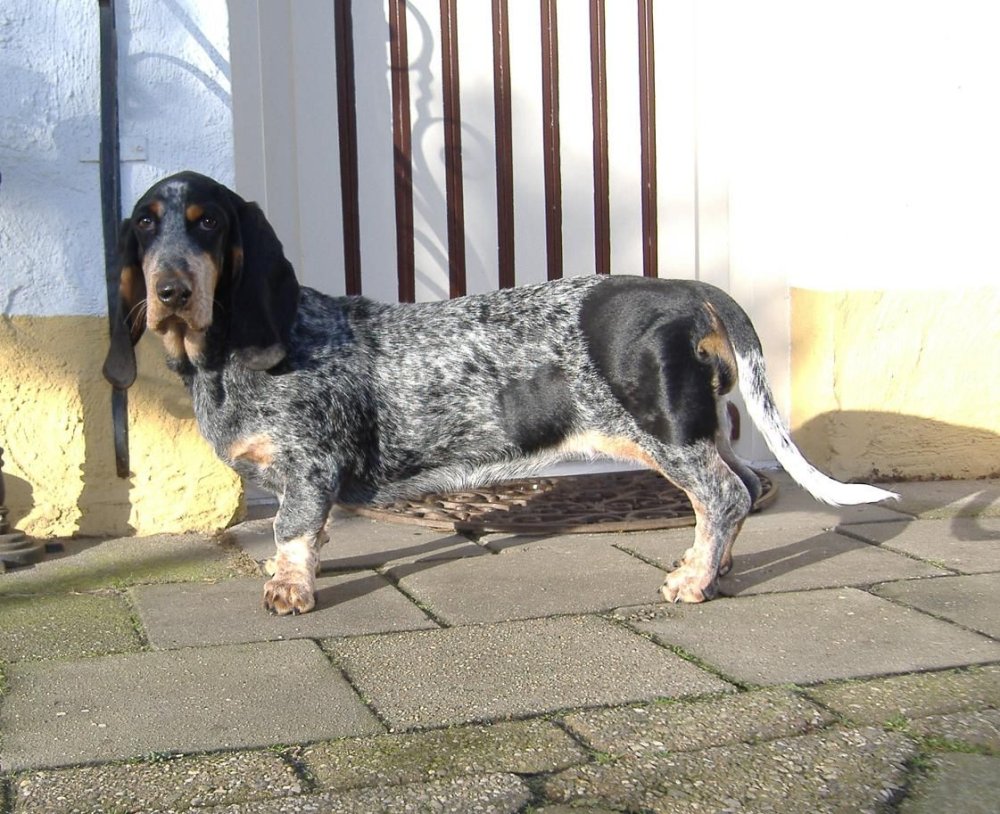
You usually hear about the Basset Bleu de Gascogne one of two ways: you spot a low-slung hound with an unusual blue-speckled coat, or you meet one and realise it is not “just another basset”. They move with a steady, nose-led confidence, and they have that classic hound way of taking their time with the world.
It is easy to assume short legs mean a low-energy dog, or that a relaxed expression means they will be effortless at home. In practice, this breed tends to do best when their instincts are taken seriously, especially their drive to follow scent, their need for company, and their preference for gentle, consistent routines.
If you are considering living with a Basset Bleu, or you already share your house with one, it helps to understand what sits under the charm: a French scent hound built to work for hours, then come home and settle close to their people.
- Breed group: Hound (scent hound)
- Origin: France, associated with Gascony
- Typical height: 30 to 38 cm at the withers1
- Typical weight: often around 16 to 20 kg (varies by individual and condition)
- Coat: short, dense, blue-mottled (ticked) with tan points1, 2
- Life expectancy: commonly 10+ years3
- Grooming: generally low, weekly brush is usually enough
- Exercise: needs meaningful daily activity, scent work helps most3
Where the Basset Bleu de Gascogne comes from
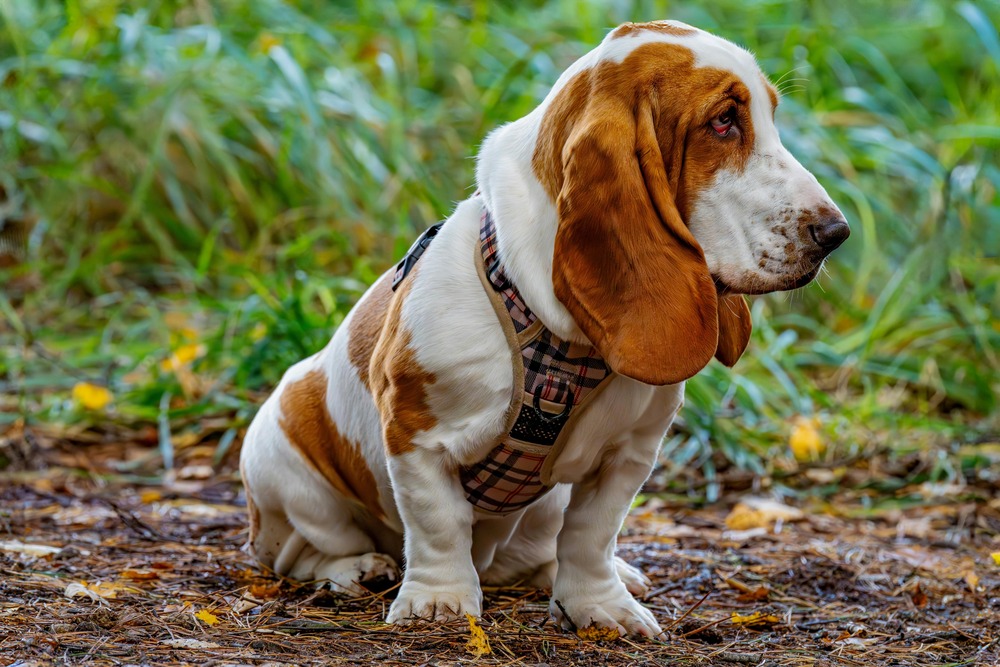
The Basset Bleu de Gascogne sits within a long French tradition of scent hounds bred to be followed on foot. “Basset” is a practical description, a low-set hound designed to work methodically through cover while keeping a pace humans can maintain. In the Basset Bleu, that purpose still shows up in daily life, particularly in how readily they drop their head and start tracking.
Breed histories can be simplified online, so it is worth keeping a few points straight. The breed is recognised by the FCI (Fédération Cynologique Internationale) as the “Blue Gascony Basset”, and has been accepted on a definitive basis by the FCI since the 1960s, with an official standard published in the 1990s.4 In the UK, The Kennel Club lists the Basset Bleu de Gascogne (Imp) and publishes a breed standard describing the dog’s structure, coat and movement.1
In the United States, the United Kennel Club recognised the breed in January 1991, which is where the commonly quoted “1991” recognition date comes from.2 If you see different dates mentioned, they are often referring to different kennel clubs, not a disagreement about the breed itself.
Appearance and the traits people notice first
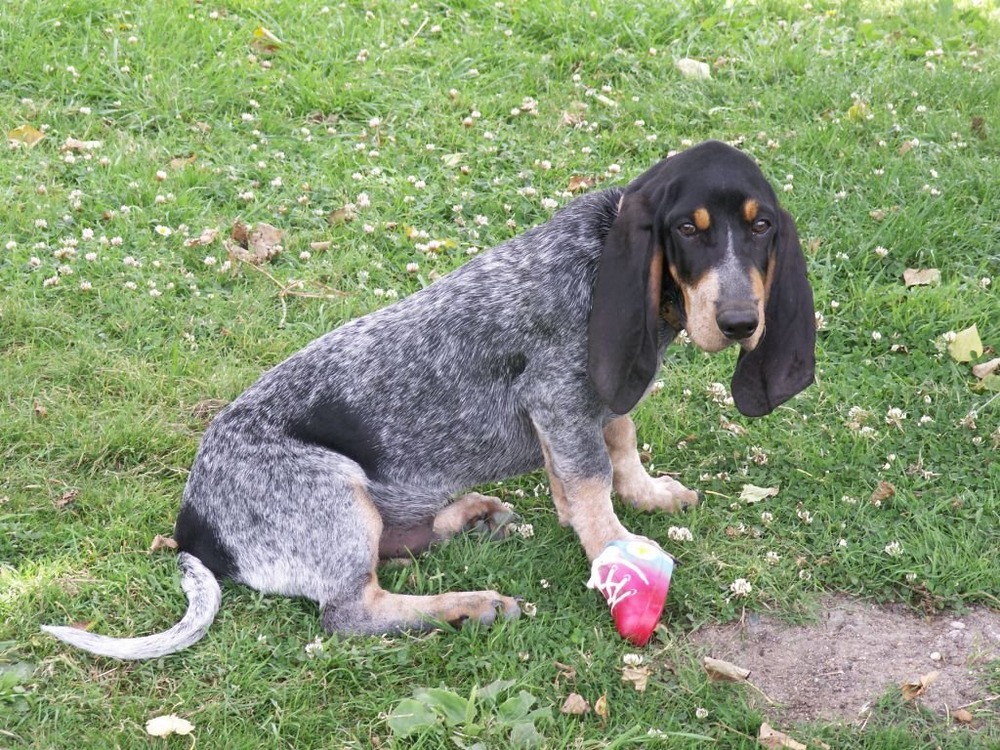
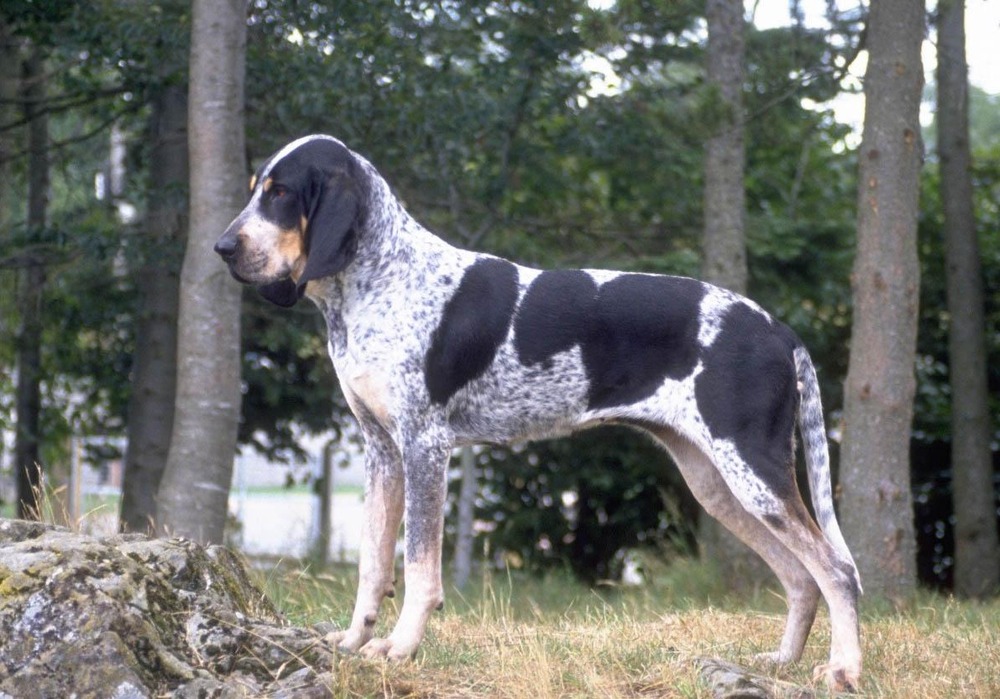
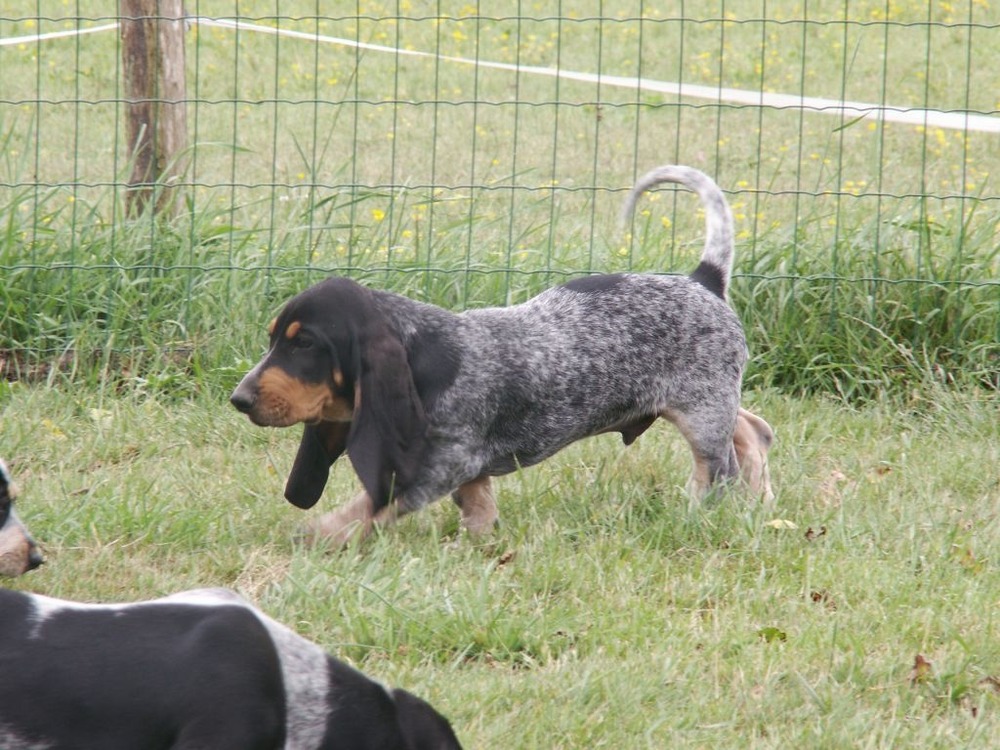
The “bleu” in the name is not a single solid colour. It is a black-and-white mottling that reads as slate-blue from a distance, usually paired with tan points around the eyes, cheeks and legs.1, 2 Up close, it looks like fine speckling, a pattern created by ticking through the coat.
Structurally, they are a basset: long-backed, low to the ground, and more substantial than they may appear in photos. The breed standard describes a dog that is powerful but not too heavy, built for steady, efficient movement rather than speed.1
The ears are part of the classic hound silhouette. Long, low-set ears are described in standards, and while they contribute to the look, they also come with practical care needs, because reduced airflow can make the ear canal a more favourable environment for inflammation and infection in some dogs.1, 6
Temperament, voice, and what they are like to live with
Most people describe Basset Bleus as friendly and social, and that matches the way many scent hounds relate to the world. They often enjoy being part of whatever is happening, without needing to be in the centre of it. The Kennel Club standard also notes a hound that is curious and affectionate, with a tendency to be somewhat reserved in some situations.1
Their voice matters in everyday life. Scent hounds are bred to communicate while working, and the standard even mentions a deep, sonorous voice.1 In a suburban setting, that can show up as baying when they are excited, when they have picked up a scent, or when they are under-stimulated. It is not “naughtiness”, it is a normal behaviour that needs management.
If you want the best version of this breed at home, think in terms of needs met before behaviour: enough movement, enough sniffing time, enough rest, and enough contact with their people.
Exercise that actually suits a scent hound
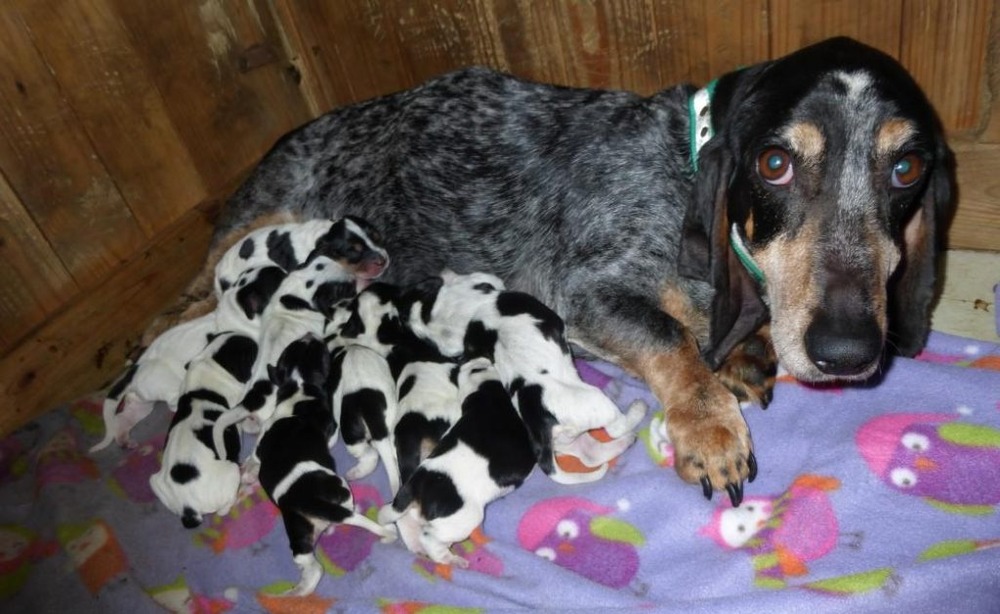
The Basset Bleu de Gascogne is not usually a “quick lap around the block” dog. The Kennel Club’s breed information suggests more than two hours of exercise a day for many individuals, which can be a mix of walking, training, sniff-heavy outings, and play.3 Not every dog needs the same duration, but most do better when their day includes real time to follow scent trails and decompress.
A good routine often includes:
- Long, unhurried walks where sniffing is allowed (use a harness and long line where safe).
- Short training sessions that include “find it” games, scatter feeding, or simple scent puzzles.
- Secure-yard pottering, which many hounds enjoy more than structured fetch.
If they are off lead, it should only be in reliably secure areas. Scent hounds can lock onto a smell and travel far, fast, and with impressive single-mindedness.
Training and socialisation, keeping it gentle and consistent
Basset Bleus are often described as “stubborn”, but a more useful lens is that they are independent problem-solvers. If a scent is rewarding, it can out-compete your recall cue. Training works best when it is built around reinforcement, clear repetition, and rewards that matter to the dog.
The RSPCA recommends reward-based training using positive reinforcement, and advises avoiding aversive methods or equipment that rely on pain, intimidation, or coercion.7, 8 For a scent hound, this approach is not just kinder, it is usually more practical, because it keeps the dog engaged and willing.
Early socialisation should focus on calm exposure, not flooding. Lots of brief experiences, different surfaces, gentle handling, friendly dogs, and everyday noises, paired with treats and distance when needed, tends to produce a steadier adult dog.
Health considerations and preventative care
Every breed has patterns worth watching, but individual dogs vary. With Basset Bleus, owners often pay closest attention to ears, weight, and orthopaedic comfort.
Ear health is a common practical issue in dogs with long, pendulous ears. If you notice redness, odour, head-shaking, increased wax, or sensitivity around the ears, it is worth seeing your vet promptly, because early treatment usually prevents longer, more stubborn episodes of otitis (ear inflammation and infection).6
Joint health matters, too. Hip dysplasia is seen across many breeds, and it is influenced by genetics and environment. Keeping your dog at a lean, athletic condition and building fitness gradually helps reduce day-to-day strain. If you are choosing a breeder, asking about hip screening and general orthopaedic history is reasonable, and many breeders use recognised schemes and databases such as those run by the Orthopedic Foundation for Animals.9
As a baseline, most dogs benefit from:
- regular veterinary checks and parasite prevention suited to your area
- dental care at home, plus professional dental advice when needed
- nail trims before nails change gait and posture
- weight monitoring, especially after desexing or as activity levels change
Grooming, coat care, and the day-to-day “hound smell” question
The coat is short and generally straightforward: a weekly brush removes loose hair and spreads natural oils. Many owners find that a damp cloth wipe after muddy walks is often more useful than frequent baths.
If there is a persistent odour, it is worth thinking beyond shampoo. Ear disease, dental disease, and skin issues can all contribute to smell. A healthy hound may still have a mild “doggy” scent, but it should not be overpowering or suddenly different.
Keep grooming low-key and predictable. A simple routine that includes ear checks, nails, and teeth tends to prevent most of the problems people later assume are “just a basset thing”.
Feeding and keeping them in good condition
Basset Bleus are not a giant breed, but they are built long and low, which makes weight management more than an aesthetic issue. Extra kilos can change how comfortably they move and how well they cope with exercise.
Nutrition advice online can get noisy quickly, so it helps to anchor decisions to veterinary guidance and reputable frameworks. The WSAVA Global Nutrition Guidelines emphasise individual nutritional assessment, including body condition scoring, diet history, and tailoring food choices to the dog in front of you, not just the label on the bag.5
Practical habits that help:
- feed measured meals rather than free-feeding
- use part of daily food as training rewards
- adjust portions when exercise changes
- aim for a visible waist and easy-to-feel ribs under a light fat cover
Final thoughts
The Basset Bleu de Gascogne suits people who like dogs as dogs: curious, sensory, a bit muddy at times, and deeply tuned to the outdoors. When their days include sniffing time, gentle training, and steady companionship, they often settle into the home as calm, engaging housemates.
If you are drawn to the look, it is worth being equally drawn to the lifestyle. This is a breed that tends to thrive with patient routines and real exercise, and with owners who find joy in following a hound as they make sense of the world, nose first.
References
- The Kennel Club: Basset Bleu de Gascogne (Imp) breed standard
- United Kennel Club (UKC): Basset Bleu de Gascogne breed standard
- The Kennel Club: Basset Bleu de Gascogne (Imp) breed information
- FCI: Blue Gascony Basset (Basset Bleu de Gascogne) nomenclature and standard details
- WSAVA: Global Nutrition Guidelines
- MSD Veterinary Manual: Ear infections (otitis externa) in dogs
- RSPCA Knowledgebase: Reward-based dog training and positive reinforcement
- RSPCA Australia: The do’s and don’ts of training your dog
- Orthopedic Foundation for Animals (OFA): Hip dysplasia information