

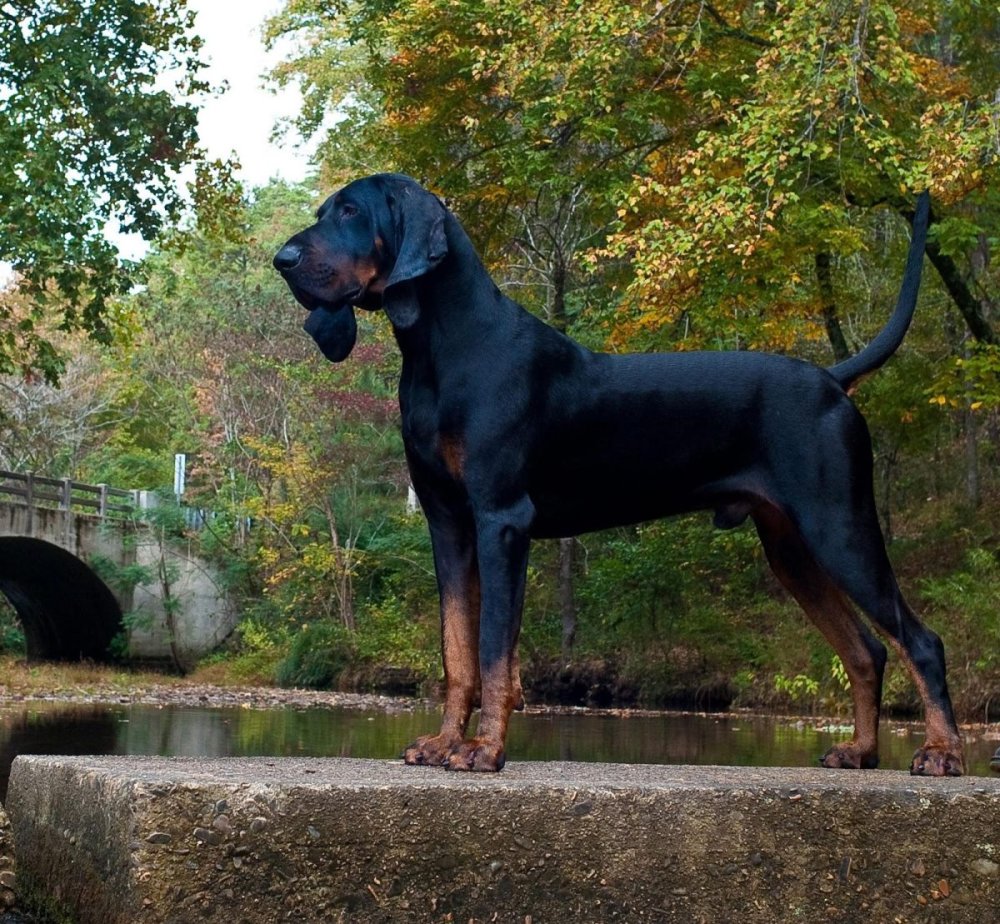
People usually start looking up Black and Tan Coonhounds after noticing a particular kind of dog in the neighbourhood, a long-eared hound with a deep, ringing bay, or after meeting one that suddenly becomes completely absorbed by a scent on an ordinary walk.
It can be tempting to read that intensity as “naughty” or “stubborn”, but with scent hounds it is often something simpler: they have been bred to prioritise their nose, and to keep working when the trail gets difficult. Once you see the breed through that lens, their needs, and their charms, make a lot more sense.
A Black and Tan Coonhound can be a warm, steady companion at home, then surprisingly single-minded outside. Understanding that contrast helps you set up the right routine, choose the right training approach, and avoid a few common pitfalls, especially around exercise, noise, and ear care.
Breed snapshot
Breed group: Hound (scent hound type).1
- Origin: United States.2
- Typical size: Males 58 to 69 cm, females 53 to 66 cm at the shoulder (breed standards vary slightly by organisation).2, 3
- Typical weight: Males 23 to 34 kg, females 18 to 30 kg (working-breed condition matters more than a single number).2
- Life expectancy: Around 10 to 12 years.2
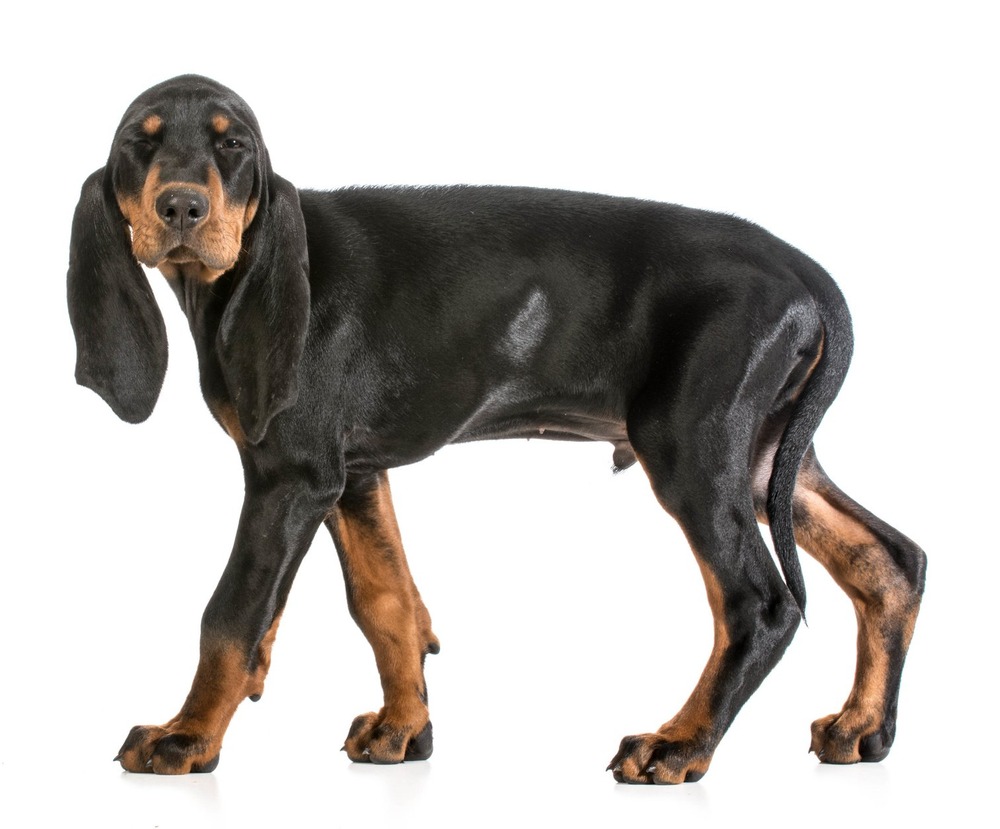
- Coat: Short, dense, black with tan markings.2, 3
- General vibe: Social, independent-minded, and often quite vocal, especially when excited or following scent.2
Where the Black and Tan Coonhound comes from
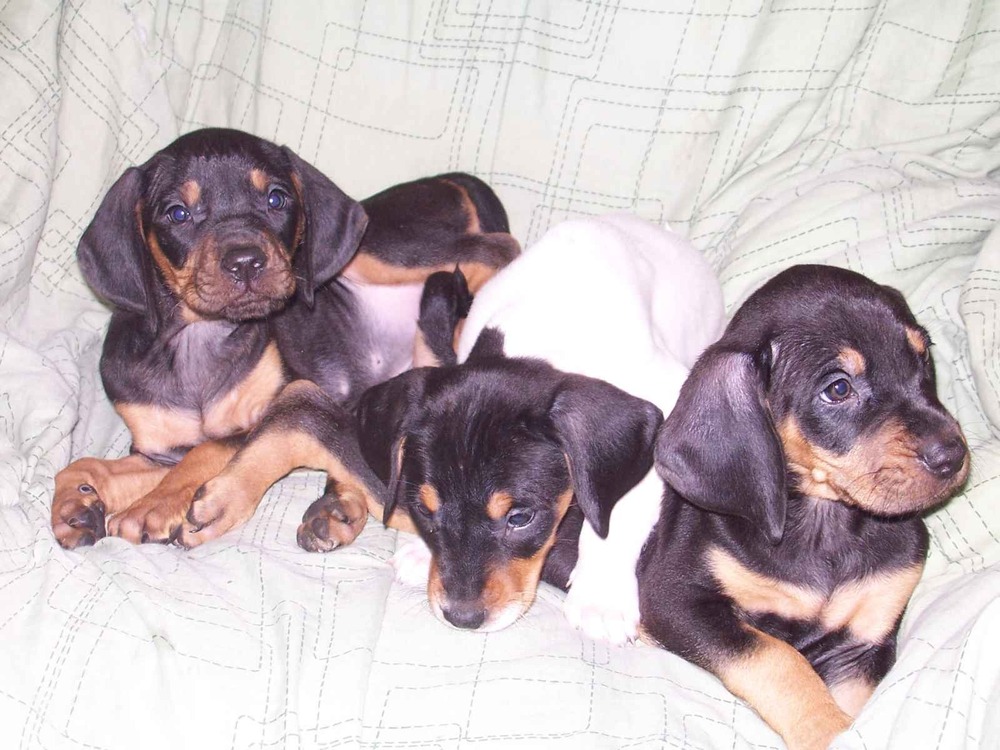
The Black and Tan Coonhound is closely associated with hunting culture in the United States, particularly in the South, where dogs that could trail scent for long distances were highly valued. You will often see the breed described as developing from bloodhound and foxhound types, shaped to work in rugged country and to keep going when the trail is old and complicated.2, 4
In practical terms, that heritage shows up today as stamina, a strong drive to follow scent, and a tendency to make their opinions known by voice. Their “baying” is not a bad habit in the way people sometimes assume. It is part of how working hounds communicate location and progress.2
The American Kennel Club recognised the Black and Tan Coonhound in 1945, making it one of the earlier coonhound breeds to be formally recognised.1
Temperament, day to day
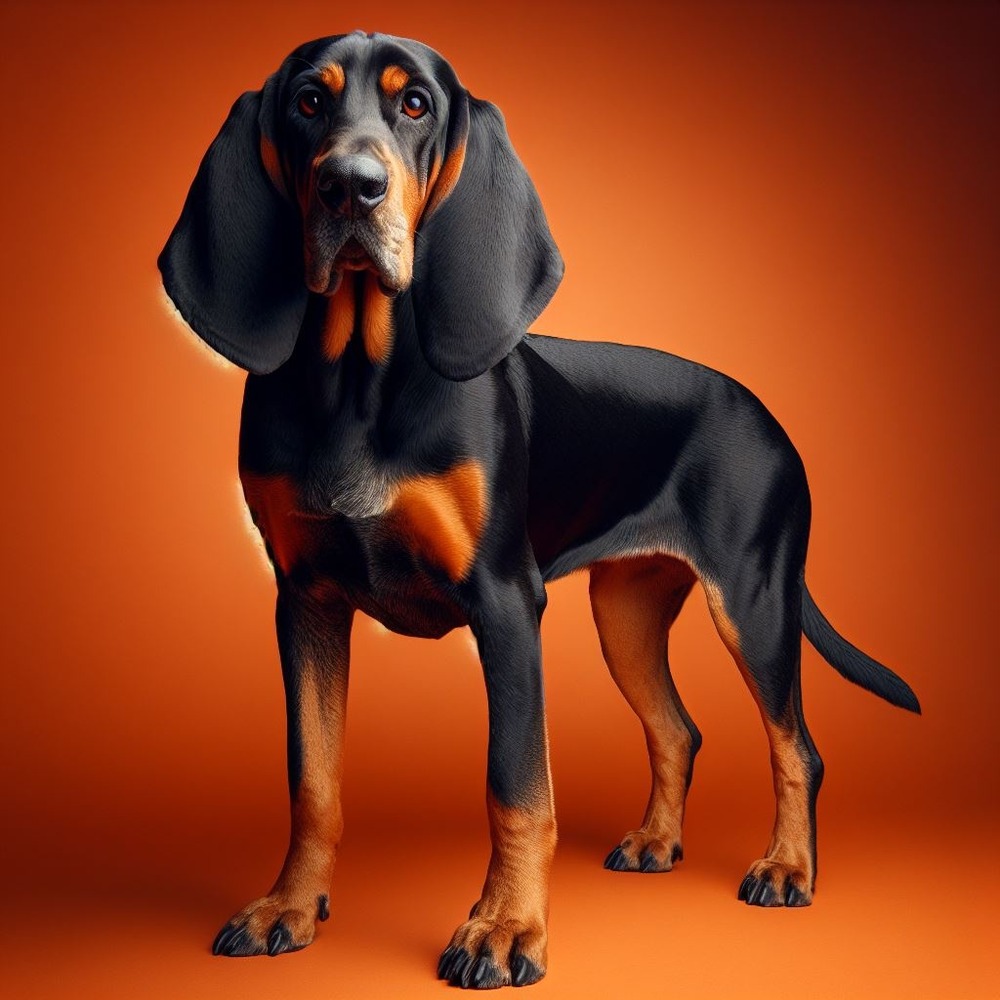
Most Black and Tan Coonhounds are friendly with familiar people and enjoy being part of household life. Many are also quite comfortable making their own choices, which is where the “independent” reputation comes from. It is less about defiance and more about a dog that was designed to work at a distance, making decisions without constant direction.2
That independence can be a delight when you want a dog who can settle and amuse themselves, but it can also be challenging if you expect instant compliance. A useful mental shift is to aim for co-operation over control, especially in distracting environments where scent is doing the heavy lifting.2
Children, visitors, and other pets
With sensible introductions and supervision, Black and Tan Coonhounds are often good with children, especially when the dog has enough space and rest. Like any large dog, they do best when kids are guided to interact calmly and not climb on them, tug ears, or interrupt meals and sleep.
They are commonly sociable with other dogs. With smaller pets, it depends on the individual and the household setup. Because scent and chase can switch on quickly, it helps to plan management early, such as baby gates, structured introductions, and reliable recall alternatives like long lines and secure fencing.
Training that works for scent hounds
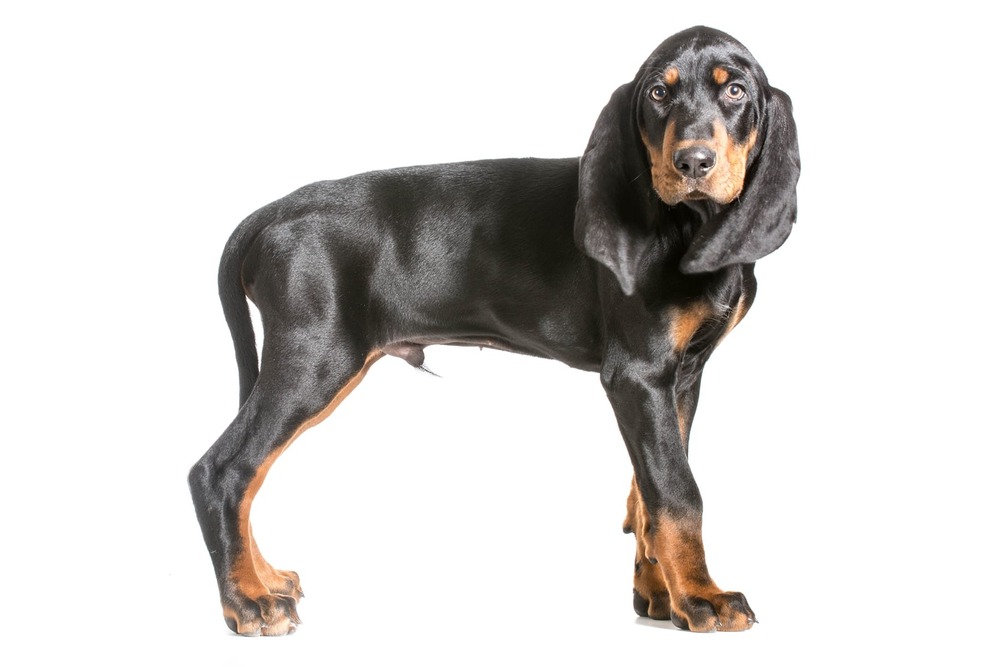
Black and Tan Coonhounds tend to respond best to calm consistency, clear rewards, and training that acknowledges what motivates them. When the environment is rich with smells, food rewards alone can struggle to compete, so it helps to build skills gradually and to use sniffing as part of the reward system, not the enemy of it.
Practical priorities that make life easier include:
- Loose lead walking with permission-based sniff breaks.
- Recall foundations taught indoors and in low-distraction spaces, then carefully generalised. If your dog is likely to “go deaf” on scent, use a long line rather than hoping for the best.
- Settle and quiet cues, especially if you live close to neighbours.
- Handling practice for ears, paws, and mouth, which supports grooming and vet checks.
Exercise and enrichment, beyond just “more walks”
This breed usually needs daily activity, but the form of that activity matters. Long, repetitive walks can leave a clever hound under-stimulated, while the right sniffy, problem-solving work can take the edge off far more effectively.
Good options often include:
- Leashed “sniffaris”, where the dog can investigate and choose the pace.
- Scent games at home, such as scattering kibble in grass, hiding treats, or using puzzle feeders.
- Hikes in safe areas, with a long line if off-lead reliability is not solid.
- Short training sessions that build impulse control without drilling.
If you are raising a puppy, avoid forced, high-impact exercise and let them take breaks. The RSPCA notes that puppies should not be pushed into long, fast walks or repetitive high-intensity games, and that rest and self-paced play are important.5
A note on bloat risk and timing of exercise
Like many larger, deep-chested breeds, hounds can be at higher risk of gastric dilatation-volvulus (GDV), often called bloat. Cornell University’s veterinary guidance lists exercising soon after eating as a risk factor, alongside other factors such as meal size and speed of eating.6
It is worth discussing your dog’s individual risk with your vet, and building calm time around meals as a default household habit.
Health and care: what owners tend to manage
No breed is “problem free”, but a lot of coonhound care is straightforward once you know what to watch. Two themes come up often: ears and joints.
Ear infections and those long, droopy ears
Pendulous ears can reduce airflow and trap moisture, which can make ear problems more likely in some dogs. The Merck Veterinary Manual lists ear conformation factors, including a pendulous pinna, as predisposing factors for otitis externa (inflammation of the external ear canal).7
A practical approach is to aim for gentle, regular checks rather than frequent deep cleaning. If you notice odour, redness, discharge, head shaking, or tenderness, book a vet visit early, because treatment depends on the underlying cause and what is seen on examination and cytology.7
Hip dysplasia and sensible conditioning
Hip dysplasia is seen more often in larger breeds. The American College of Veterinary Surgeons describes it as a condition that begins during growth, where laxity in the hip joint can lead to pain, limb dysfunction, and progressive joint changes over time.8
You cannot train your way out of genetics, but you can support your dog by keeping them lean, building muscle gradually, and avoiding boom-and-bust exercise patterns. If you see stiffness, reluctance to jump, or rear-end lameness, a vet assessment is worthwhile sooner rather than later.8
Grooming and home care routines
The short coat is usually easy to live with. Weekly brushing often keeps shedding manageable and gives you a chance to check skin, paws, and ears. Many owners find that routine handling, little and often, makes veterinary and grooming care much less stressful over the dog’s lifetime.
Small habits that tend to help include:
- Weekly coat brush and a quick body check for lumps, scratches, and ticks after bush walks.
- Nail trims as needed, especially if your dog is mostly on softer ground.
- Ear checks after swimming or bathing, then keeping ears dry and comfortable.
Feeding well, without getting lost in internet nutrition noise

Coonhounds can be enthusiastic eaters, and it is easy for condition to creep up if treats and chews quietly expand over time. The simplest, most protective strategy is to feed a diet that is complete and balanced for your dog’s life stage, then adjust portions based on body condition and activity.
The WSAVA Global Nutrition Guidelines and toolkit are a helpful reality check. They note that ingredient lists can be misleading, and they provide practical guidance for evaluating pet foods beyond marketing claims.9
If you are changing diets, managing weight, or considering a home-prepared approach, it is best done with veterinary input so you are not guessing about nutrient balance.
Is a Black and Tan Coonhound a good fit?
This is often a wonderful breed for people who enjoy the outdoors, can provide secure fencing or reliable lead management, and do not mind a dog that communicates with their voice. They often shine in homes that appreciate “dog time”, slow sniffy walks, patient training, and a bit of humour when the nose takes over.
They can be harder in apartments or noise-sensitive neighbourhoods, not because they are “bad dogs”, but because baying carries. If you are choosing between breeds, it helps to be honest about what you can live with daily, including sound, space, and the time needed for enrichment.
When their needs are met, many Black and Tan Coonhounds settle into a grounded, companionable rhythm, with just enough working-dog spark to keep life interesting.
References
- American Kennel Club, Breeds by Year Recognized
- Hill’s Pet Nutrition, Black and Tan Coonhound
- The Kennel Club (UK), Black and Tan Coonhound Breed Standard
- Purina, Black and Tan Coonhound
- RSPCA Knowledgebase, How should I exercise my puppy?
- Cornell University College of Veterinary Medicine, Gastric dilatation volvulus (GDV) or “bloat”
- Merck Veterinary Manual, Otitis externa in animals
- American College of Veterinary Surgeons, Canine Hip Dysplasia
- WSAVA, Global Nutrition Guidelines