

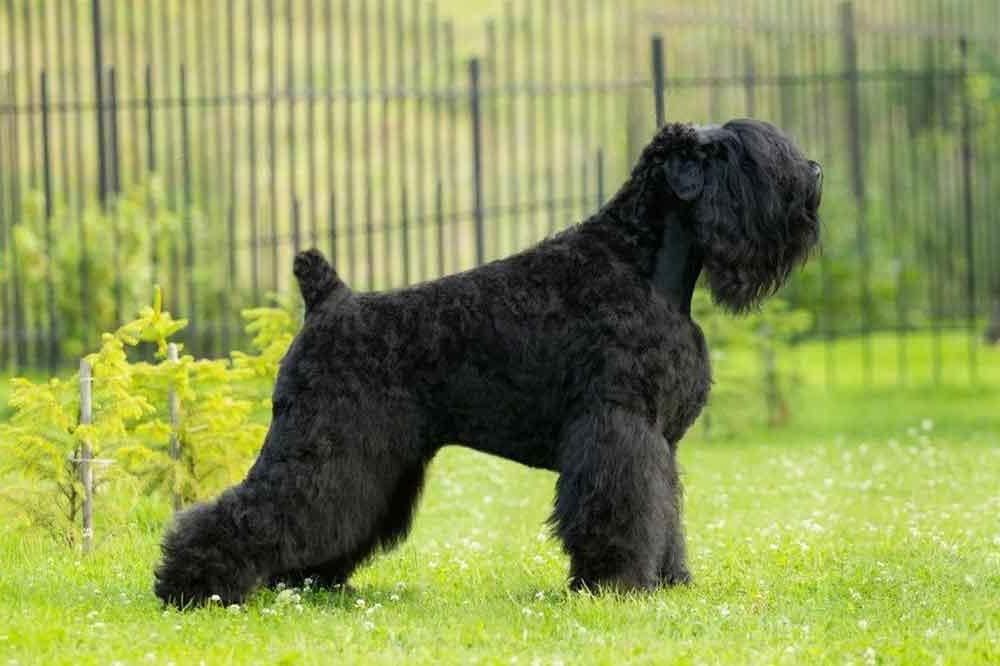
- Breed category: Working group
- Country of origin: Russian Federation
- Typical height: Males 66 to 72 cm, females 64 to 70 cm (common Australian guide)
- Typical weight: Males about 50 to 60 kg, females about 45 to 50 kg
- Typical lifespan: About 10 to 12 years
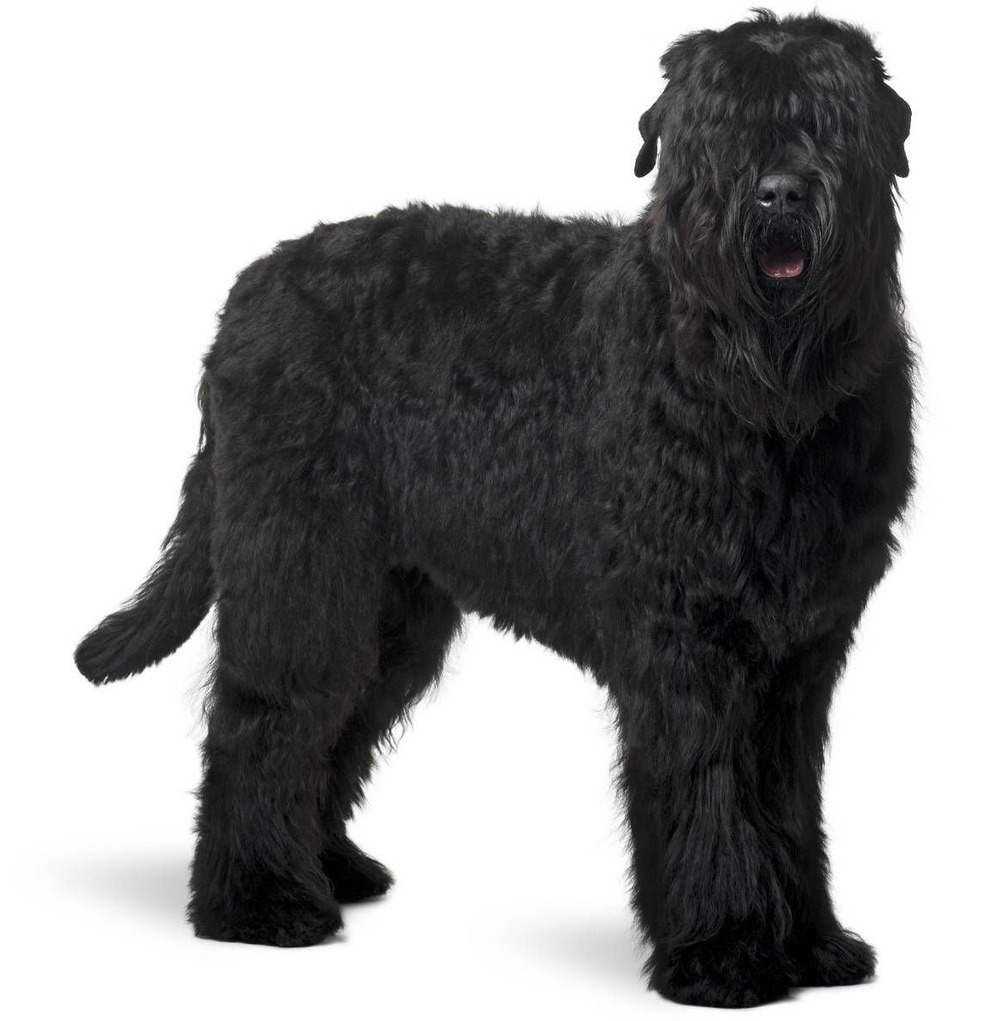
- Coat: Dense double coat, coarse outer coat with undercoat
- Colour: Black (sometimes with a few scattered grey hairs)
- Shedding: Usually low to moderate, undercoat can shed seasonally
- Energy level: Moderate to high
- Exercise needs: Daily movement plus mental work
- Grooming: Regular brushing and combing, routine trimming
- Temperament: Confident, steady, naturally watchful
- Best suited to: Experienced owners, active households, people who like training and routine
People often first notice a Black Russian Terrier because of the silhouette: a big, dark dog with a beard and eyebrows that make it look like it has walked out of a snowbound story. Then you see one moving calmly beside an owner, or sitting quietly while the world goes past, and it raises a practical question. What sort of dog is that, and what sort of life does it need?
It is easy to assume a dog this imposing must be either “naturally obedient” or “too much dog” for ordinary homes. The reality sits in the middle. Black Russian Terriers are capable, trainable working dogs, but they tend to do best when life has structure, boundaries, and regular grooming and handling, not just exercise.
If you are considering the breed, or simply trying to understand one you have met, it helps to look beyond the dramatic coat and focus on what drives their behaviour day to day: breeding history, socialisation, and the way they are managed at home.
Where the Black Russian Terrier came from
The Black Russian Terrier is a modern, purpose-bred dog, developed through Soviet military breeding programs associated with the Red Star kennel in Moscow. The goal was not a pet, but a robust working dog suited to guarding and service roles in difficult conditions.1, 2
Multiple breeds contributed to the foundation stock, with commonly cited influences including Giant Schnauzer, Rottweiler, Airedale Terrier, and Newfoundland, among others. That mixed heritage is part of why the breed can look “terrier-like” in the face while behaving more like a large guardian breed in everyday life.1, 2
International recognition can be confusing in online summaries. The breed was accepted on a definitive basis by the FCI in 1983, with the FCI standard published in 2010 (English version shown on the FCI site). The American Kennel Club recognised the breed in 2004.3, 2
Temperament in real homes
Most people describe Black Russian Terriers as steady and capable, with a natural instinct to keep an eye on their people and their space. It is not unusual for them to be reserved with strangers, especially if they have not had much early, thoughtful exposure to new people and places.4, 5
Protective behaviour is not the same as training. A dog can be naturally watchful and still need careful guidance about what is “normal” in your household. Without that guidance, any large guarding breed can practise the wrong habits, such as barking at visitors, blocking doorways, or becoming over-alert in busy environments.4, 5
With families, many Black Russian Terriers settle well when expectations are clear and day to day life is predictable. With children, supervision and sensible boundaries matter, partly because of the dog’s size and strength, and partly because rough, fast play can unintentionally encourage mouthing or body-checking. Early socialisation helps them learn to cope with the noises and unpredictability of family life.4, 6
Training that suits the breed
These dogs tend to respond best to calm, consistent, reward-based training, with plenty of repetition and clear criteria. Harsh corrections often create more problems than they solve, particularly in a breed that is already inclined to be cautious in unfamiliar situations.4
It is worth putting real effort into early handling: feet, ears, muzzle, brushing, nail trims, and being calmly restrained for short periods. For a breed that needs ongoing grooming, cooperative care is not a “nice extra”. It becomes part of how the dog experiences safety and predictability in daily life.
Socialisation is not about flooding a puppy with strangers. It is more like building a library of ordinary experiences, at a pace the dog can cope with, so the adult dog has a wider definition of “normal”. Puppy classes run through veterinary clinics can help, and they can also support owners to spot early signs of stress or over-arousal.6
Exercise and mental workload
Despite the breed’s working background, many Black Russian Terriers are not “go all day” dogs in the way some herding breeds are. They usually need steady daily exercise, but they also need meaningful jobs: training sessions, scent games, problem-solving, and structured play. Without that mental outlet, large intelligent dogs can invent their own work, which often looks like guarding the fence line, dismantling the garden, or harassing the vacuum cleaner.4, 5
Useful activities for many individuals include:
- Long, sniffy walks rather than constant high-intensity running
- Obedience and rally foundations
- Scentwork games at home
- Controlled strength and body-awareness work (for example, slow step-overs, platforms, balance work, guided by a trainer)
Heat can be a genuine comfort and safety issue for a big, dark, heavily coated dog. In warmer Australian conditions, owners often shift exercise to early mornings or evenings, use shade and rest breaks, and keep water available. If your dog is panting hard, slowing down, or seeking cool surfaces, that is feedback worth listening to.4
Grooming and coat care
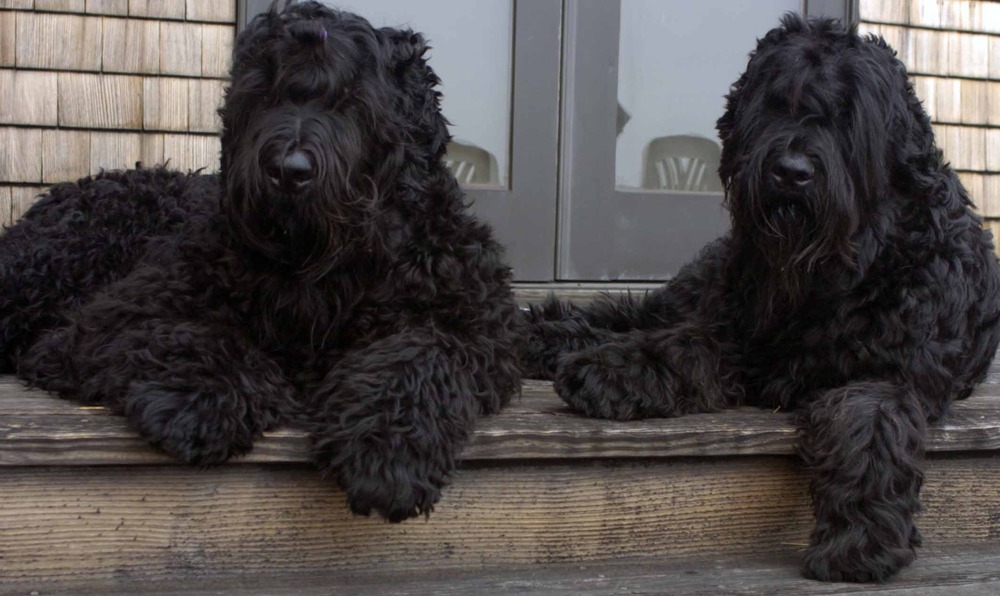
The coat is one of the breed’s defining features, and it is also where many people get surprised. A Black Russian Terrier coat can mat close to the skin, especially behind the ears, under the collar, in the armpits, and in the beard. Once matting sets in, it can pull the skin and make handling unpleasant, which then makes grooming even harder next time.5
A realistic baseline for many households is a thorough brush and comb session weekly, with more frequent spot checks in high-friction areas. Many owners also use a professional groomer regularly for trimming and coat maintenance. Start grooming routines early, while the dog is still small enough that mistakes are easy to fix and the experience can stay low-pressure.5
Do not forget the practical bits that support comfort and health:
- Regular nail care
- Ear checks and cleaning when needed, especially with drop ears
- Keeping hair tidy around eyes and mouth so it does not trap moisture and debris4
Health considerations and preventative care
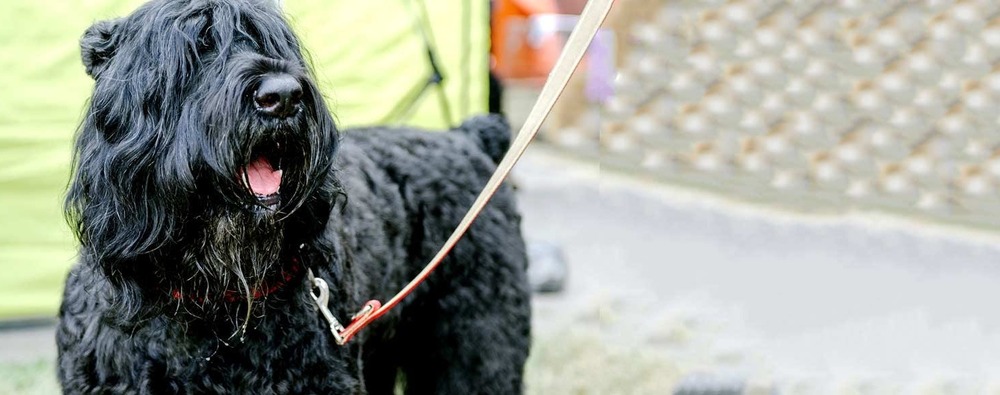
Like many large breeds, Black Russian Terriers are associated with orthopaedic concerns, particularly hip and elbow dysplasia. Not every dog will be affected, but it is worth taking seriously when choosing a breeder and planning long-term care.4, 7
Good preventative care tends to look unglamorous and consistent: maintaining a lean body condition, age-appropriate exercise (especially while growing), routine veterinary checks, parasite control, and dental care. If you are buying a puppy, ask what health screening has been done on the parents, and what the breeder can show you in writing.
Food, feeding routines, and bloat risk
Nutrition advice for this breed is not usually about a single magic ingredient. It is more about choosing a complete and balanced diet that suits the dog’s life stage, then adjusting portions based on body condition and activity. Veterinary teams often use structured nutrition assessments, rather than guessing based on the packet alone.8
For deep-chested dogs, bloat (gastric dilatation-volvulus) is a risk worth knowing about. Practical steps commonly recommended include feeding adult dogs at least twice a day and avoiding hard exercise immediately before or after meals.6
If your dog retches without bringing anything up, has a suddenly swollen abdomen, or becomes restless and distressed, treat it as an emergency and seek veterinary care immediately.
Is this the right dog for you?

A Black Russian Terrier can be a deeply satisfying companion for the right person, especially someone who enjoys training, routines, and hands-on care. They often do well when they live closely with their people and have a clear role in daily life, even if that role is simply being a steady presence on walks, practising obedience, and learning to settle calmly at home.1, 4
They are usually not a low-effort choice. The combination of size, grooming, and protective instincts means you are not just owning a dog, you are managing a set of needs that will be there for the dog’s lifetime. For many households, that is a joy. For others, it becomes stressful.
If you are on the fence, it can help to meet adult dogs from reputable breeders or breed clubs, and to have an honest conversation about what day to day life looks like. The best outcomes tend to come from realistic expectations, not bravado.
References
- American Kennel Club: Black Russian Terrier history (Red Star kennel origins)
- American Kennel Club: Press release noting Working Group eligibility from 1 July 2004
- FCI: Russkiy Tchiorny Terrier (Russian Black Terrier) breed nomenclature and standard information
- PetMD: Black Russian Terrier health and care (exercise, grooming, common issues)
- Black Russian Terrier Club of America: About the breed (grooming and general care)
- RSPCA Pet Insurance Australia: Essential dog care information (training and feeding guidance, bloat caution)
- Orthopedic Foundation for Animals: Hip dysplasia overview
- WSAVA: Global Nutrition Committee (nutrition assessment and guidelines background)
- Dogz Online (Australia): Black Russian Terrier breed information (height guide and breed overview)