

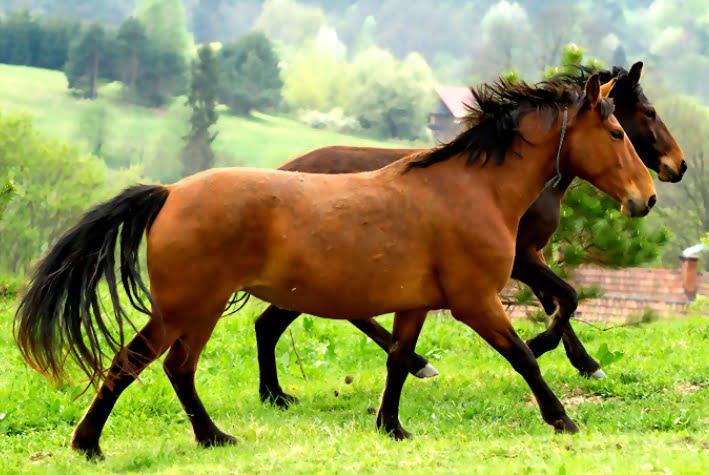
People usually start searching for “Kabardin and Karabakh horse” when they’re trying to identify a horse, sanity-check a breeder’s claims, or work out whether a rare Caucasus breed would cope with Australian conditions and riding goals. Names get blurred online, and the details matter: these are two distinct breeds from different parts of the Caucasus, with different histories, typical sizes, and conservation realities.
Below is a clear, practical snapshot of each breed—where it comes from, what it tends to look like, what it’s typically good at, and what to watch for when someone is selling one as “rare” or “pure”.
Quick profile: Kabarda (Kabardin) and Karabakh
- Kabarda (Kabardin): a mountain riding horse from the North Caucasus, associated with today’s Kabardino-Balkaria (Russia). Noted for endurance, hard hooves, and sure-footed movement on rough ground.1, 2, 3
- Karabakh: a riding/racing horse from Azerbaijan (Karabakh region), traditionally valued for speed, agility, and a compact, athletic build. It is widely described as threatened due to low numbers.4, 5
At-a-glance characteristics (typical ranges, not guarantees)
Important: the original “15–16hh” and “400–600kg” figures can be misleading as breed-wide statements. Both breeds commonly sit closer to the mid-teens in height, and individual size varies with sex, bloodlines, nutrition, and management.2, 3, 4
Kabarda (Kabardin)
- Height: commonly around 145–152 cm (about 14.1–15.0 hh), with some animals taller.2, 3
- Colours: commonly bay and black; grey is also reported.1, 2, 6
- Build: clean, solid conformation; deep chest; short, strong back; legs and joints built for uneven ground; hard hooves are repeatedly emphasised in breed descriptions.1, 2, 3
- Temperament: often described as hardy and reliable; trainability varies horse to horse like any breed, especially once crossed for sport performance.6, 2
Karabakh
- Height: often around 14.1–15.2 hh in breed summaries.4
- Colours: commonly chestnut and bay; some lines are described as having a golden sheen.4, 5
- Build: compact and athletic, with strong legs and sure-footed hooves suited to varied terrain; typically presented as a fast, agile riding horse.4, 5
Origins and history (separate breeds, neighbouring landscapes)
Kabarda (Kabardin): North Caucasus (Russia)
The Kabarda is a horse of mountain routes—developed in the North Caucasus and strongly associated with the Kabardino-Balkaria region. Breed descriptions consistently focus on survival and performance in steep, rocky country: efficient movement, tough feet, and the kind of stamina that matters more than show-ring flash.1, 2, 3
Karabakh: Azerbaijan
The Karabakh is linked to Azerbaijan and the Karabakh region, where it has long been kept as a riding and racing horse. Many modern summaries also highlight its cultural importance and its vulnerability due to small population size.4, 5
What they’re generally used for (and what’s overstated online)
Both breeds are often described as versatile, and they can be. But some claims in the original draft overreach—particularly the idea that these breeds have a documented history of competing at the Olympic Games under their own breed names, or being common fixtures in Australian “Horse of the Year” style competition circuits. In practice, you’re far more likely to see these horses used as hardy saddle horses, for trekking, endurance-type work, and local sport—plus crossbreeding into other lines—than as mainstream warmblood alternatives in Australia.1, 2, 4, 6
Kabarda (Kabardin) strengths
- Sure-footedness and durability on rough terrain.2, 3
- Endurance-oriented work as a saddle/pack horse in mountainous country.1, 3
Karabakh strengths
- Agile riding horse type, often described as quick and athletic.4, 5
- Strong cultural presence in Azerbaijan’s horse traditions.4, 5
Breeding, training, and the “purity” problem
Breed descriptions frequently note historic influences and crossbreeding in the wider region (Arabian, Turkoman/Akhal-Teke types, and others). That doesn’t make modern horses “not real”; it does mean you should be cautious about anyone selling a horse on vague purity claims without paperwork.1, 2, 4
If you’re assessing a horse marketed as Kabardin/Kabarda or Karabakh, ask for:
- Registration or studbook documentation (and translations if issued overseas).
- Clear identity evidence (microchip details, brands, or official ID where applicable).
- A realistic discussion of temperament and handling history—especially if imported, recently broken in, or moved through dealers.
Conservation status and survival risks
The Karabakh is widely described as having very low numbers and being threatened with extinction, which makes careful, documented breeding more important than ever.4, 5
More broadly, the UN Food and Agriculture Organization (FAO) tracks livestock breed risk status through its Domestic Animal Diversity Information System (DAD-IS), which is one of the main global reference points for breed reporting and population monitoring.7, 8
Kabardin and Karabakh horses in Australia
These breeds can appeal in the same way a well-made brumby can: practical strength, toughness, and an ability to keep going when conditions aren’t perfect. But they are not widely established in Australia, and availability can be limited. That scarcity can invite inflated marketing—so it pays to focus on the individual horse: soundness, feet, metabolic management, and a temperament that suits your handling style and riding plans.
Final thoughts
The Kabarda (Kabardin) and the Karabakh are not a single combined breed. They’re two neighbouring, historically connected horses shaped by different places: one a North Caucasus mountain type known for endurance and hardiness, the other an Azerbaijani riding horse with a strong cultural footprint and widely reported conservation concerns. When you meet one in the flesh, the truth is usually in the feet, the joints, and the quiet way it travels across uneven ground.
Kabardin and Karabakh horse FAQs
[ultimate-faqs include_category=”kabardin-and-karabakh-horse” display_all_answers=”yes” orderby=”name” order=”ASC”]References
- FEI (Fédération Équestre Internationale) – Breed Profile: The Kabardin Horse
- Food and Agriculture Organization of the United Nations (FAO) – Animal genetic resources of the USSR (Kabarda section)
- Oklahoma State University – Kabarda Horses
- Karabakh horse (overview, height range, general description)
- PetMD – Karabakh Horse Breed
- Kabarda horse (overview, colours and general conformation)
- FAO – Domestic Animal Diversity Information System (DAD-IS)
- FAO – DAD-IS Data (breed data sheets and population reporting tools)