

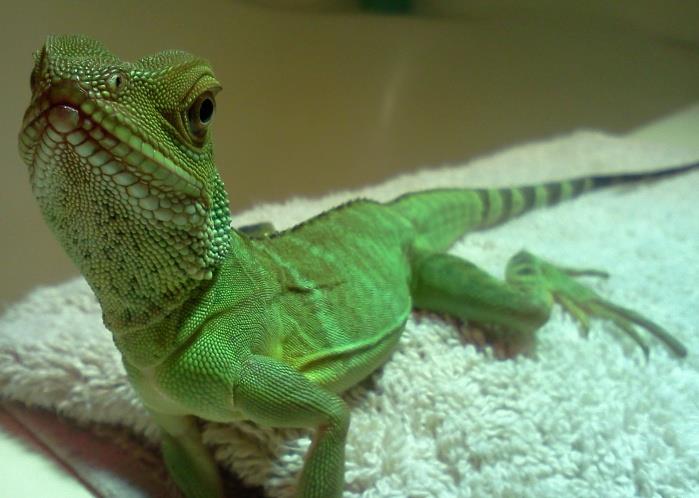
People usually land on “water dragon as a pet” pages when they’re weighing up a purchase (or trying to fix a setup that isn’t quite working): How big do they get, what heat and UV do they need, and what goes wrong when the basics are off.
Australian water dragons are hardy when their environment is built around warmth, climbing space, clean water and strong UVB. Get those wrong and the same problems appear again and again—poor appetite, stress behaviours, respiratory illness, and weak bones that don’t show until real damage is done.
Quick facts: Australian water dragon
- Common name: Australian (eastern) water dragon
- Scientific name: Intellagama lesueurii
- Adult size: often around 80–90 cm total length (tail included)
- Life span: long-lived; can exceed 20 years, and captive animals may live for decades with proper care
Note: “water dragon” is also used for Asian water dragons in the pet trade overseas, but in Australia most pet-keeping and licensing information refers to native Australian species.1, 2
Is a water dragon a good pet?
They can be a rewarding reptile to keep, but “easy” is misleading. A healthy water dragon is the product of a large, well-built enclosure, stable heat and UVB, and food that matches an omnivore—not just a lizard that tolerates a small tank.
They are alert and observant, and many individuals settle with consistent, gentle handling. Even so, they are strong climbers with sharp claws, and large adults can bite if restrained or startled.1
Housing: build the enclosure around climbing, water and light
Water dragons are semi-aquatic and arboreal. In the wild they spend time near waterways and use branches, rocks and sunlit edges to warm up and watch their surroundings.1
Enclosure size and layout
Bigger is better, and height matters. Aim for an enclosure that allows:
- Vertical climbing (sturdy branches, ledges, textured surfaces)
- A proper basking zone (dry, stable, easy to access)
- A water area large enough for soaking, with easy cleaning
- Visual shelter (plants, hides, shaded sections) so the lizard can withdraw without being “handled into calmness”
Temperature and UVB (non-negotiable)
Water dragons need a temperature gradient so they can warm up and cool down as needed. For “water dragon” husbandry, a useful starting point is a preferred optimal temperature zone around 24–30 °C, alongside a hotter basking site created with a basking lamp (measured where the animal sits, not in the air).3
Provide UVB lighting appropriate for a basking lizard, and replace UVB tubes/lamps on the manufacturer’s schedule. UVB supports vitamin D synthesis and calcium balance, which is central to bone health in captive reptiles.3, 4
Humidity and ventilation
Water dragons are often kept too dry, then “fixed” by constant misting without enough airflow. Both extremes can cause trouble. A practical target commonly used for water dragons is high humidity (often cited around 80–90%), paired with good ventilation and clean surfaces so the enclosure doesn’t turn stale.3
Feeding and nutrition: omnivore, not insect-only
In the wild, Australian water dragons are omnivorous.1 In captivity, a steady, varied diet tends to work best:
- Insects (appropriately sized; offered as the main protein source for juveniles, and in moderation for adults)
- Leafy greens and vegetables (a regular part of the adult diet)
- Fruit (small amounts; treat-level rather than a staple)
Many common feeder insects are naturally poor in calcium relative to phosphorus. That’s why calcium supplementation and proper UVB are so tightly linked to long-term health in captive lizards.5, 4
Fresh water should be available at all times, and the water area should be cleaned often enough that it doesn’t become a bacterial soup the animal is forced to sit in.5
Handling and taming: calm repetition beats confidence
Water dragons can become accustomed to routine. The safest approach is slow and predictable:
- Let the lizard settle into the enclosure before regular handling.
- Move slowly; avoid grabbing from above.
- Support the body fully, especially when the animal is large and strong.
- Keep sessions short, and end before the lizard escalates into struggling.
Hand-feeding can build tolerance, but it also teaches some animals to rush the front of the enclosure. Keep your fingers clear of the “strike zone”, particularly with adults.1
Common health problems (and what usually causes them)
Respiratory disease
Respiratory infections are often associated with husbandry issues—incorrect temperatures (especially a cool enclosure), poor ventilation, and chronically dirty, damp conditions. Any wheezing, open-mouth breathing, bubbling at the nose, or persistent lethargy warrants an urgent reptile vet visit.3
Metabolic bone disease (MBD)
MBD is one of the most preventable, and one of the most heartbreaking. It is commonly linked to:
- Inadequate UVB exposure
- Calcium-poor diets (or poor calcium-to-phosphorus balance)
- Incorrect temperatures that impair digestion and vitamin D metabolism
Early signs can be subtle (tremors, weakness, poor growth). Advanced disease can involve deformities and fractures.4, 5
Parasites
Internal parasites can occur, especially in stressed animals or those kept in poor hygiene. A reptile vet can confirm with faecal testing rather than guesswork.
Breeding: not a beginner project
Breeding changes the stakes: more animals, more space, more heat/UV, and more margin for mistakes. Australian water dragons have a defined breeding season in many areas (for example, in the Sydney region it runs through spring and summer), and females can lay sizeable clutches.6
If you’re not set up to house animals separately, manage egg laying safely, and place offspring responsibly under the rules in your state or territory, don’t breed them “accidentally”.6
Legalities in Australia: licences, sourcing and imports
In Australia, native reptiles are protected and rules vary by state and territory. In New South Wales, keeping native reptiles requires the relevant biodiversity conservation licence, and animals must be legally sourced (typically via licensed breeders or dealers). Taking reptiles from the wild, even from your backyard, is illegal.7, 8
Western Australia also requires licences for keeping reptiles as pets, with species lists and licence categories set by the state regulator.9
Importing live reptiles into Australia as pets is not permitted; imports (where allowed at all) are tightly controlled and generally limited to specific purposes such as zoological programs under strict conditions.10
Final thoughts
A water dragon kept well looks unhurried. It basks with its body flattened to the heat, climbs with steady confidence, and spends time in water without turning the enclosure into a swamp. Most of that calm comes from the setup: the right temperatures, strong UVB, space to move, and food that supports bones for decades.
Keeping water dragon as pets FAQs
[ultimate-faqs include_category=”keeping-water-dragon-as-pets” display_all_answers=”yes” orderby=”name” order=”ASC”]References
- Australian Museum — Australian Water Dragon
- Parks Australia (Australian National Botanic Gardens) — Water dragons
- Merck Veterinary Manual — Table: Important Husbandry Requirements for Selected Reptiles (includes water dragon)
- Merck Veterinary Manual — Overview of Reptiles (UVB and calcium homeostasis)
- Merck Veterinary Manual — Nutrition in Reptiles
- Australian Museum — Water dragon breeding behaviours (Sydney region timing, clutch size)
- NSW Environment & Heritage — Reptile keeper licences
- NSW Environment & Heritage — Apply for a native animal keeper licence
- WA Department of Biodiversity, Conservation and Attractions — Fauna licences (pet keeping)
- Australian Government Department of Agriculture, Fisheries and Forestry — Unique or exotic pets (imports)