

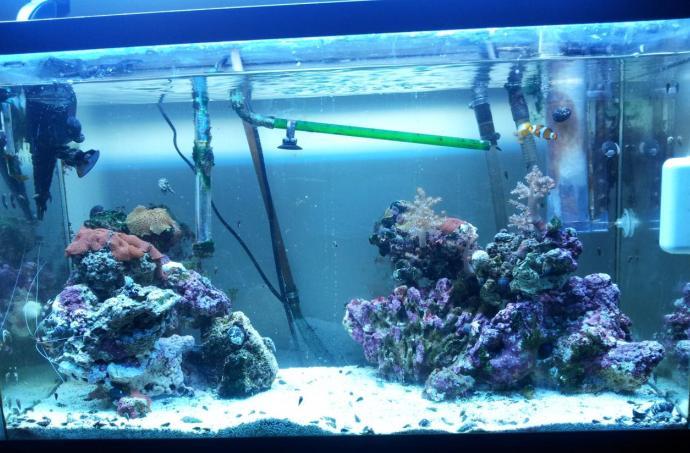
Most people start searching about aquarium lighting when something feels slightly off: algae suddenly takes over, plants stall, fish stay hidden, or the tank just looks harsh and washed out. Light is one of the quiet controls in an aquarium. Set it well and the whole system steadies; set it poorly and you can end up chasing problems that aren’t really “water quality” at all.
The aim is simple: give plants (if you have them) the light they can use, give fish a predictable day–night rhythm, and avoid overheating the water or fuelling nuisance algae. The details depend on what you keep, and that’s where most lighting advice goes wrong—too generic, too confident, and often measured in the wrong units.
What aquarium lighting actually does
Light in a fish tank serves two different worlds.
For plants and other photosynthetic life, the light’s intensity and spectrum drive photosynthesis and growth. The wrong light can leave plants stretching, melting, or slowly starving even if the water tests “fine”.
For fish, light is mostly about rhythm and shelter. Fish use changes in brightness to time feeding, resting, and hiding. Sudden light changes and overly bright tanks can increase stress behaviours, especially if the aquarium has limited cover.
How long should aquarium lights be on?
For many home aquariums, a steady daily photoperiod is more important than chasing a perfect “sunrise” effect. A common starting point is around 8–10 hours per day for fish-only tanks, and 10–12 hours when you’re running live plants or other photosynthetic systems—then adjust based on what you observe (plant growth, algae pressure, fish behaviour).1
Consistency matters. Use a timer so the tank doesn’t drift between long, bright days and abrupt blackouts that make the system feel unstable.
Quick signs the photoperiod needs adjusting
- Too long/too intense: algae films appear quickly after cleaning; fish avoid open areas; water temperature climbs during the “day”.
- Too short/too dim (planted tanks): plants become leggy; older leaves yellow and drop; growth stalls even with nutrients and CO₂.
Choosing a lighting type: LED, fluorescent, and metal halide
Most modern aquariums do best with LED lighting because it gives strong usable light with low heat and long service life. Fluorescents still work well for many setups, but they are less efficient and need more frequent tube changes. Metal halides can deliver very intense light for deep or specialised tanks, but they run hot and usually require careful mounting and ventilation.
LED lighting
- Pros: efficient, cool-running, long lifespan, easy to dim and program.2, 3
- Watch-outs: very bright fixtures can overwhelm a low-tech tank unless dimmed or raised; cheap units may have poor colour stability over time.
Fluorescent (T5/T8, compact fluorescents)
- Pros: even spread of light; usually cheaper upfront; plenty of proven planted-tank combinations.
- Watch-outs: tubes age faster (brightness and spectrum drift), and they’re less efficient than LEDs.2, 3
Metal halide
- Pros: high intensity and strong “sun” effect for deep tanks and some reef applications.
- Watch-outs: significant heat and higher running costs; installation needs care to avoid overheating the water column.2
Stop choosing lights by wattage
The old “watts per litre” rules don’t translate well to modern fixtures. Wattage tells you how much power the light consumes, not how much useful light reaches your plants.
Instead, look for:
- PAR (Photosynthetically Active Radiation) data if you’re keeping live plants or corals (best indicator, when provided).
- Adjustability (dimming, height, spread) so you can fine-tune without replacing the unit.
- Coverage across the tank length, not just a bright spot in the centre.
Light, heat, and fish comfort
Heat from lighting matters most in small tanks and enclosed hoods. LEDs generally waste less energy as heat than fluorescent and metal halide systems, which helps keep temperature swings smaller over the day.2, 3
Brightness is not automatically “better”. Many fish do best when the tank includes shaded areas—floating plants, timber, caves, or taller stems—so they can choose their exposure rather than being lit like a shopfront all day.
Positioning your aquarium light
A well-positioned light is even, stable, and protected from splashes.
- Aim for even spread: centre-mounted fixtures can leave dark ends; long tanks often benefit from a fixture designed for the tank length.
- Control glare and hotspots: raise the light slightly or dim it if the substrate is glaringly bright while plants still struggle.
- Keep it dry and ventilated: use splash guards and allow airflow, especially in closed hoods.
- Use a timer: steady on/off times reduce stress and make algae troubleshooting much simpler.1
Maintenance: keeping light output steady
Light loss is often gradual, so the tank slowly changes while you don’t notice.
- Clean covers and lenses: salt creep, condensation marks, and dust can noticeably cut output.
- Replace fluorescents on schedule: tubes can keep glowing while delivering less useful light as they age.3
- Check LED cooling: blocked vents and trapped heat shorten LED lifespan and reduce output stability.
Creative lighting (without stressing the tank)
If you want a more dramatic look, treat “effects” as decoration layered on top of good husbandry.
- Use gentle ramps (sunrise/sunset programming) if your fixture supports it, rather than snapping from dark to full intensity.
- Keep night viewing dim: if you use moonlight modes, make them low and brief. Constant bright blue light at night can blur the day–night cycle.
- Let plants do the styling: floating plants and tall stems create natural shafts of light and shade without extra gadgets.
Disposal and safety: fluorescents contain mercury
Fluorescent lamps (including CFLs) contain small amounts of mercury and should be handled and disposed of carefully. If one breaks, follow safe clean-up guidance and ventilate the area.4, 5
In Australia, lamp recycling programs exist for mercury-containing lamps, and many organisations participate in schemes designed to keep these lamps out of landfill.6
Final thoughts
Aquarium lighting works best when it’s boringly consistent: the right intensity for what you keep, a stable daily photoperiod, and enough shade that fish can choose where to sit. Start with a sensible schedule, make one change at a time, and watch the tank’s response over the next couple of weeks. The aquarium will tell you the rest—quietly, in plant growth, algae patterns, and where the fish spend their day.
References
- Petco – Understanding aquarium lighting (photoperiod guidance)
- PacLights – LED vs fluorescent lifespan and efficiency
- PacLights – LED vs fluorescent: heat output, lifespan, durability
- HealthyWA (WA Health) – Mercury and compact fluorescent lamps
- US EPA – Cleaning up a broken CFL (mercury-containing bulbs)
- FluoroCycle – National voluntary scheme for recycling mercury-containing lamps
- US EPA – Recycling and disposal of CFLs and other mercury-containing bulbs
- Recycling Near You – Halogen lamps and recycling guidance (notes on mercury-containing lamp categories)