


You might first notice a Boston Terrier because of how they move through the world, bright-eyed, compact, and surprisingly sturdy for a small dog. They often fit neatly into everyday life: apartment living, short walks, a bit of play, and then a long stretch of quiet company on the couch. It is easy to assume that a dog this size is automatically low-effort.
But Boston Terriers have their own practical considerations, especially around heat, breathing, and eyes. Understanding those details does not take away from their charm. It simply helps you choose well, and care well, so the dog you bring home can live comfortably in the life you actually have.
What follows is a grounded look at the breed’s history, temperament, and day-to-day care, with particular attention to the things owners tend to learn only after the honeymoon period.
The Boston Terrier’s story, and why it still matters

The Boston Terrier developed in the Boston area in the late 1800s, from crosses involving Bulldog-type dogs and the now-extinct White English Terrier.1, 2 Early dogs were larger and shaped by the tastes of the time, but the type quickly shifted towards a more companionable, consistent breed.
Breed histories can feel like trivia until you connect them to the dog in front of you. The Boston Terrier’s short muzzle and compact build are part of what makes them distinctive, and part of what shapes their care needs, particularly around breathing efficiency and temperature regulation.
The breed was recognised by the American Kennel Club in 1893, which is often used as a shorthand marker that the breed had become established and standardised.3 Massachusetts later named the Boston Terrier its official state dog in 1979, a nod to the breed’s local roots and cultural staying power.4
Appearance and those unmistakable “tuxedo” markings

Most people recognise a Boston Terrier by the neat, high-contrast coat and the squared outline: a small, muscular dog with a smooth coat, upright ears, and a short tail. Their markings often read as formal, which is where the long-running nickname “American Gentleman” comes from.2
Size sits roughly in the small-to-medium range, and many adults land around 6.8 to 11.3 kg, though individual dogs vary.2 In practice, what matters is not a perfect number, but a dog that can move easily, breathe comfortably at rest, and maintain a healthy body condition.
Their large, prominent eyes are part of the appeal, and also one of the reasons owners need to be careful. With shallow eye sockets and a more exposed eye surface, eye injuries can happen easily in rough play, scrubby bushes, or even an accidental paw swipe.
Temperament, family life, and what they are like to live with
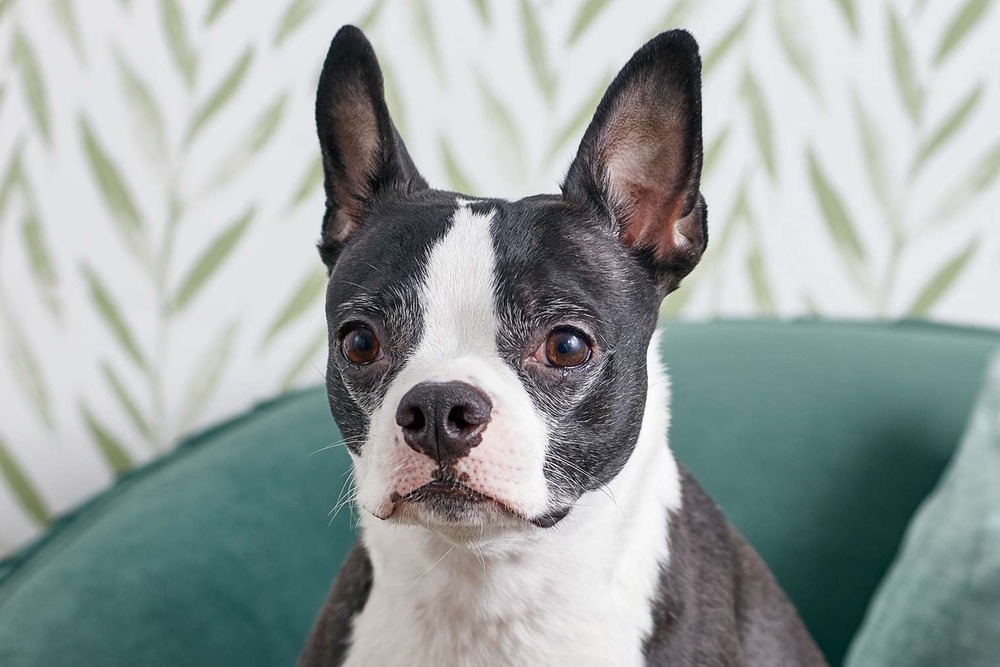
Well-bred Boston Terriers are typically friendly, people-focused, and quick to engage. Many enjoy being close to their humans, and they often cope well with the rhythms of busy households, provided they are not left to improvise their own entertainment for long stretches.
They are often a solid match for families, singles, and older households because their needs tend to be moderate rather than extreme. That said, “easy” does not mean “self-training”. A Boston Terrier who gets away with jumping up, mouthing, or barking for attention as a puppy can carry those habits into adulthood.
With children and other pets, the same basics apply as for any breed: supervise early interactions, reward calm behaviour, and give the dog somewhere to retreat. Many Boston Terriers are social, but they can also become overstimulated if play is loud, grabby, or constant.
Training and exercise, keeping it steady and realistic

Boston Terriers usually respond best to short, upbeat training sessions and clear boundaries. They tend to do well with reward-based methods, especially when you keep the goal simple: teach the behaviour you want, practise it in real settings, and pay it well.
Exercise needs are often described as moderate, which is broadly true. Many are happy with daily walks and play, plus a bit of training that gives their brain something to do. The nuance is that Boston Terriers are brachycephalic, and some individuals have more airway restriction than others. Recent research into respiratory health in Boston Terriers highlights that a meaningful portion of the breed can be affected by brachycephalic obstructive airway syndrome (BOAS), and risk relates to factors like stenotic nostrils and facial foreshortening.5
So the best approach is not “how much exercise should a Boston Terrier get?” but “how does this dog cope?” Aim for steady movement with breaks, watch recovery time, and avoid intense bursts in warm weather.
Health considerations, breathing, heat, and eyes
Boston Terriers are often robust little dogs, but there are a few themes that come up again and again: airway efficiency, eye health, and heat tolerance. Flat-faced dogs cool themselves largely through panting, and when airflow is restricted, cooling becomes less efficient. Australian RSPCA guidance on heat stress specifically lists Boston Terriers among the flat-faced breeds at higher risk of overheating.6
In day-to-day life, this means being conservative with heat and humidity. Choose early or late walks in summer, prioritise shade, and keep water accessible. RSPCA Australia also notes that if you suspect heatstroke, you should begin cooling first aid with cool or tepid water and seek veterinary help promptly, rather than waiting to see if the dog improves on its own.7
It also means taking “noisy breathing” seriously. Snuffling can be normal for some individuals, but if your dog struggles after mild activity, cannot settle breathing at rest, or becomes distressed in warm conditions, it is worth discussing BOAS assessment with your vet.
Finally, keep an eye on eyes. Because of their shape, Boston Terriers can be prone to corneal injuries. If you notice squinting, redness, discharge, or rubbing at the face, treat it as time-sensitive and get veterinary advice.
Grooming, coat care, and the small routines that add up
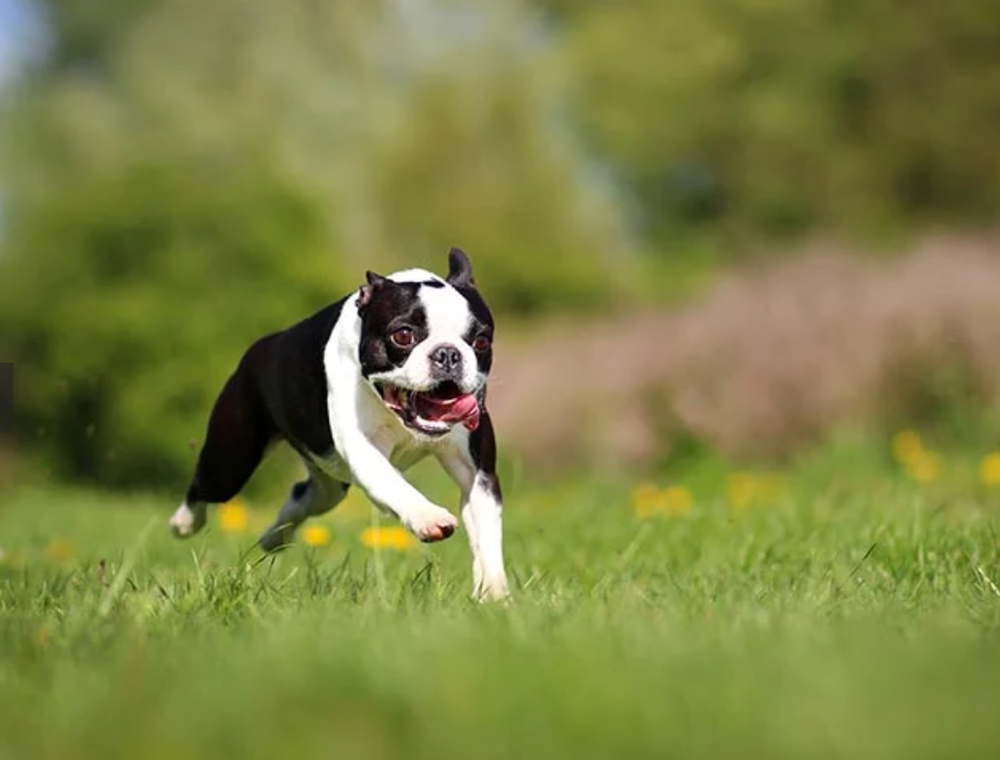
The Boston Terrier’s coat is short and smooth, which keeps grooming fairly simple. A weekly brush is often enough to lift loose hair and spread skin oils. Bathing can be occasional, based on how grubby the dog gets, and on what your vet recommends if skin sensitivity is an issue.
Where owners can get caught out is the “small stuff”:
- Nails that grow long can change gait and comfort, so trim regularly.
- Ears should be checked for redness, wax, or odour.
- Teeth benefit from routine care, as with most companion breeds.
If your Boston Terrier has facial wrinkles, keep any skin folds clean and dry. Not every dog has pronounced folds, but when they do, moisture and friction can contribute to irritation.
Feeding and weight, the quiet driver of comfort
Boston Terriers can gain weight more easily than people expect, partly because they are small enough that extra calories add up fast. Keeping them lean is not about looks. It directly supports breathing comfort and heat tolerance, both of which matter for this breed.
A practical rule many veterinary nutrition sources use is to keep treats to a small fraction of daily calories. UC Davis Veterinary Medicine recommends that treats and extra foods make up no more than 10 percent of a dog’s daily caloric intake, with the rest coming from a complete and balanced diet.8
If you are unsure about portions, ask your vet to help you set a target weight and feeding amount, then adjust based on body condition over time. For brachycephalic dogs, this is one of the simplest ways to improve day-to-day comfort.
A few cultural notes, and why the breed stays so popular
Boston Terriers have had an unusually strong cultural presence for a companion breed. Their “American Gentleman” nickname persists, and the breed’s ties to the city of Boston show up in places like Boston University, whose mascot is a Boston Terrier named Rhett.9
That popularity makes it even more important to choose carefully. Look for breeders who prioritise health and breathing function, or consider reputable breed-specific rescue. With Boston Terriers, good selection upfront often means fewer problems later.
Final thoughts
A Boston Terrier can be a genuinely easy companion in the best sense of the phrase: adaptable, affectionate, and content with a modest daily routine. They often do beautifully in apartments, and they can suit a wide range of households.
The key is to treat the breed’s signature features with respect. Keep them cool in summer, watch breathing and recovery, protect those prominent eyes, and stay on top of weight. When you do, you tend to get the Boston Terrier at their best: lively without being relentless, social without being demanding, and very good at being where you are.
References
- Wikipedia: Boston Terrier
- Westminster Kennel Club: Boston Terrier
- American Kennel Club: Breeds by Year Recognized
- Boston.com: How the Boston Terrier became the most beloved breed in Massachusetts
- The Kennel Club: New research explores respiratory health of Boston Terriers
- RSPCA NSW: Heat Stress
- RSPCA Australia: Keeping your pet safe during the heat
- UC Davis Veterinary Medicine: Treat Guidelines for Dogs
- Boston University Timeline: Rhett the Terrier