

- Breed category: Gundog (pointing dog)
- Country of origin: France (Auvergne, Cantal)
- Typical height: Males 57 to 63 cm, females 53 to 59 cm2, 3
- Typical weight: Around 22 to 30 kg (varies with build and condition)
- Average lifespan: Often 12 to 15 years
- Coat: Short, glossy, black and white (ticked or roan, sometimes with black patches)2
- Exercise needs: High, usually more than two hours a day for a fit adult dog4
- Grooming needs: Low to moderate, weekly brush is usually enough
- Temperament: Typically gentle, affectionate, intelligent, and keen to work with people2
You might notice one on a quiet lead walk and do a double take. At first glance, the Braque d’Auvergne can look like “just another pointer”, all tidy lines, long ears, black and white coat. Then you see the way they move, that steady, economical trot, the habit of checking in, the soft, thoughtful expression that often comes with a dog bred to work in partnership.
People often come looking for this breed after living with a high-drive gundog that was a bit too much, or after meeting a calm, biddable hunting dog that also settled beautifully at home. The Braque d’Auvergne sits in that interesting middle space. It is a serious working breed, but not typically a dog that needs to live at full volume all day.
What matters in practice is the match. This dog tends to thrive with structure, movement, and plenty of time outdoors. If your week is mostly short strolls and long stretches alone, you can end up with a bored athlete in the lounge room. If your life has room for training, scent work, and steady daily exercise, you often get a companion that is both capable and easy to live with.
Origins and what the breed was shaped to do
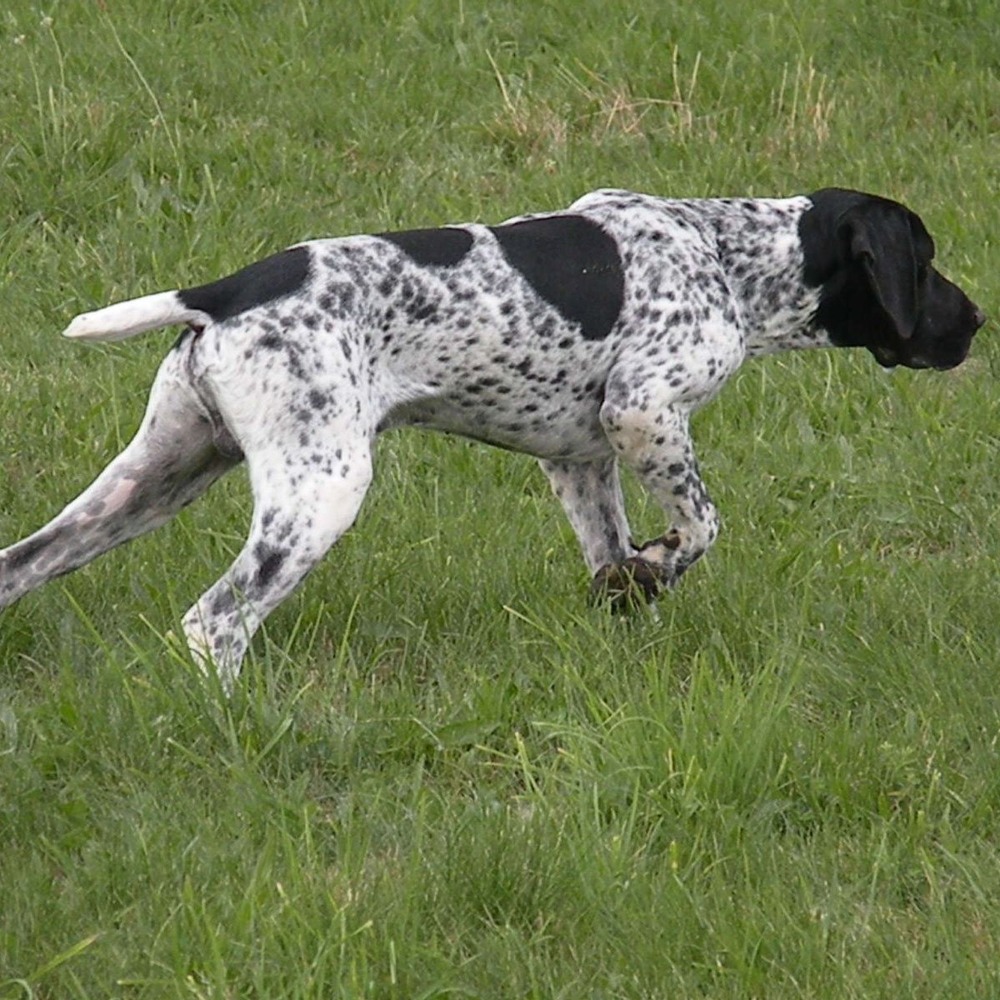
The Braque d’Auvergne (sometimes called the Auvergne Pointer) developed in the Auvergne region of France, where hunters wanted a dog that could cover ground for hours, handle rough country, and work within gun range rather than disappearing over the horizon.1, 2
In modern terms, this is a continental pointing dog designed for an all-day job: searching, pointing, and retrieving where needed, with a style that tends to be close-working and cooperative rather than wildly independent.2
If you are reading older material, you may see slightly different stories about exact ancestry. Breed histories can be patchy, and many regional gundogs were shaped over time rather than “invented” in one neat moment. What is stable across reputable standards is the functional outcome: a medium-sized pointer with stamina, a good nose, and a temperament suited to working alongside people.2, 3
Appearance and movement: what you will actually notice
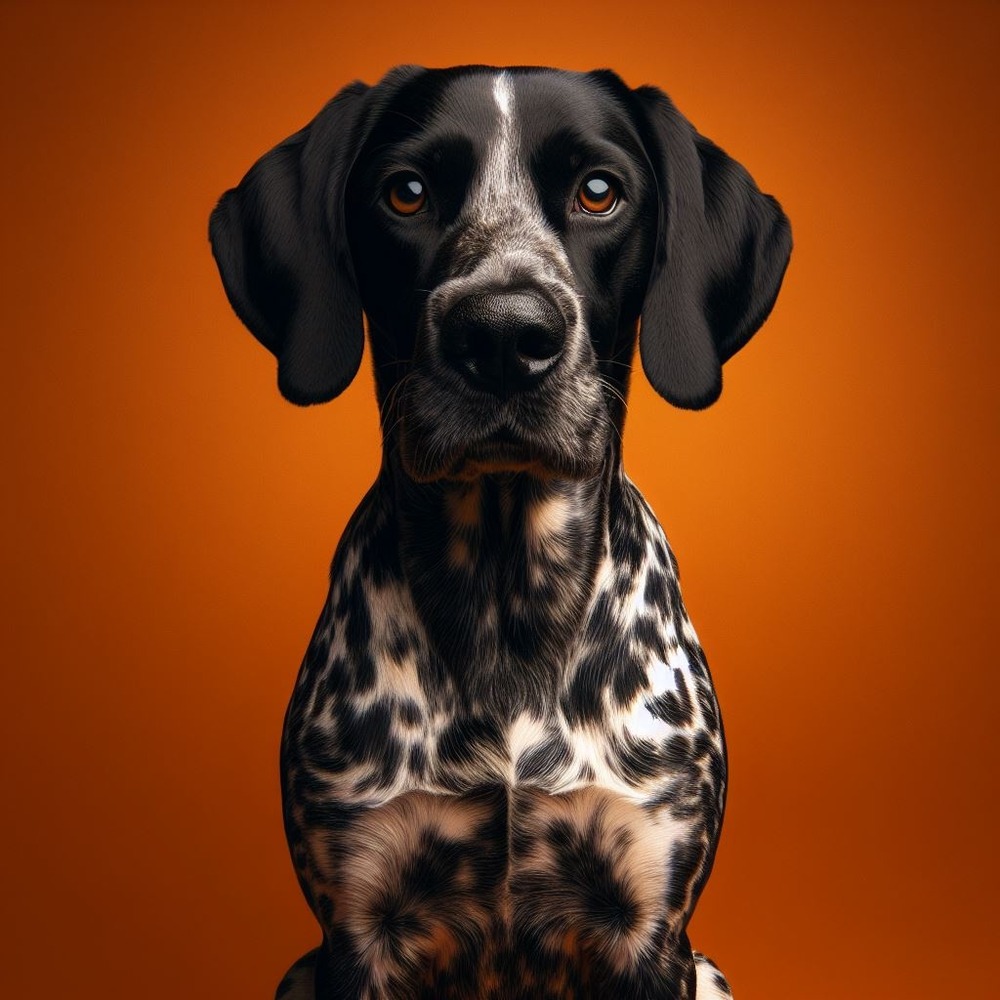
The coat is short and glossy, and the colour is always some variation of black and white. In many dogs, the fine mottling creates a bluish effect, which is why you might hear the informal “bleu d’Auvergne” nickname.2
In build, the breed is robust and strongly boned without being heavy. A good Braque d’Auvergne should look like it can keep going, not just sprint. The trot described in breed standards is an “endurance” movement: steady, efficient, and able to hold up over distance on difficult terrain.2
One detail that is often misunderstood is the tail. You may see references to docking in older descriptions, and some breed standards describe both docked and undocked tails in jurisdictions where docking is permitted.2
Temperament and suitability for everyday life
Well-bred, well-raised Braques d’Auvergne are often described as gentle, affectionate, intelligent, and obedient, and many do adapt well to family life.2, 4
That said, “gentle” does not mean low-energy. This is a dog made to work, and the day goes better when there is a clear rhythm of activity and recovery. Many owners find the breed is at its best when it gets a proper run or training session, then is encouraged to switch off and rest. You are aiming for fitness plus an off-switch, not constant motion.
With children, it is less about breed slogans and more about management. A calm adult Braque can be wonderful, but any young, energetic gundog can bowl into a small child if excitement gets the better of them. Supervision, dog-free zones, and teaching kids how to interact (no hugging, no cornering, no grabbing ears) makes the relationship safer and more predictable.
If you have other pets, remember that pointing dogs are bred to notice movement and use their nose. Many live peacefully with other animals, but introductions should be thoughtful, and you should assume you will need to train impulse control around running birds, cats that bolt, and anything small that triggers chase behaviour.
Training and exercise: keeping the mind as busy as the body
Most Braques d’Auvergne respond best to reward-based training, clear cues, and steady repetition. Harsh handling tends to create stress and avoidance, which is the opposite of what you want in a dog bred for cooperative work.5, 6
Start early with socialisation and handling, not in a rushed “meet everything” way, but in a way that builds confidence: different surfaces, calm dogs, friendly strangers, gentle restraint, and positive experiences with grooming and vet-style checks. A dog that is comfortable being handled is easier to care for across its whole life.
Exercise needs are high. In UK breed guidance, this type is commonly placed in the “more than two hours per day” bracket for a healthy adult, and many will happily do more if conditioned appropriately.4
Beyond walks, the breed often thrives on activities that let it use its nose and brain:
- scatter feeding in grass (easy scent work at home)
- hide-and-seek with treats or toys
- retrieving games with rules (wait, release, bring back)
- tracking-style games and structured sniff walks
- agility foundations or obedience games for body awareness
A common trap is relying on “just running” as the only outlet. Fitness is important, but dogs also need to practise settling, being calm on a mat, and switching from action to rest. That is often where the real day-to-day harmony is built.
Health considerations and sensible prevention
No breed is free of health issues, and individual dogs vary widely. For the Braque d’Auvergne, two practical areas that come up often in real homes are joints (including hip dysplasia) and ear health.
Hip dysplasia is a developmental condition where joint laxity and poor fit can contribute to arthritis over time. Signs can be subtle early on, and diagnosis typically involves a veterinary exam and radiographs (X-rays), often with sedation for proper positioning.7, 8
Long, floppy ears can make the ear canal more prone to moisture build-up, and that environment can suit yeast and bacteria. If your dog is shaking their head, scratching at ears, or you notice odour or discharge, it is worth getting it checked promptly. Dogs with pendant ears can have a higher risk of otitis externa, particularly when moisture is trapped after swimming or bathing.9, 10
Practical prevention tends to be boring, but effective:
- keep your dog lean and fit, especially through growth and early adulthood
- ask your vet what hip screening makes sense for your dog, particularly if you plan to breed
- check ears regularly, and dry them after water exposure
- avoid “routine cleaning” unless your vet recommends it for your dog, as over-cleaning can irritate some ears
Grooming, feeding, and the kind of home that suits them
The coat is usually straightforward. A weekly brush will remove loose hair and bring up the natural shine, and it gives you a chance to check skin, paws, and any developing lumps or soreness after big outings.
Feeding is less about a perfect brand and more about outcomes. For an active gundog, look for a diet that supports muscle, recovery, and steady energy, then adjust portions based on body condition rather than the packet alone. Many owners find that splitting meals into two feeds helps with routine and reduces the risk of gulping.
In terms of lifestyle, this is not usually an “apartment dog” in the casual sense. Some can cope if exercise and enrichment are excellent, but most do better with easy access to outdoor space and a home that enjoys being out and about. What they need most is not a big backyard as a substitute for walks, but daily purposeful activity and time with their people.
Closing thoughts
The Braque d’Auvergne is a thoughtful, athletic pointer that often suits people who like training, long walks, and a dog that wants to work with them. It can be an affectionate family companion, but it is still a gundog at heart, and it tends to do best when its instincts have somewhere appropriate to go.
If you are considering one, spend time with adult dogs if you can, not just puppies. Watch how they settle after exercise, how they handle new environments, and how they respond to gentle guidance. Those everyday details usually tell you far more than any single “temperament” label.
References
- The Kennel Club: Braque d’Auvergne (Imp) breed information
- The Kennel Club: Braque d’Auvergne (Imp) breed standard
- FCI: Braque d’Auvergne (Standard No. 180) nomenclature entry
- The Kennel Club: Exercise and care overview for Braque d’Auvergne (Imp)
- RSPCA Knowledgebase: Training recommendations and reward-based methods
- Association of Pet Dog Trainers Australia: Position statements on dog-friendly training
- Cornell University College of Veterinary Medicine: Canine hip dysplasia overview
- American College of Veterinary Surgeons: Canine hip dysplasia
- The Kennel Club: Otitis externa (ear infection) in dogs
- Animal Medical Center: Ear infections in pets, causes and risk factors