

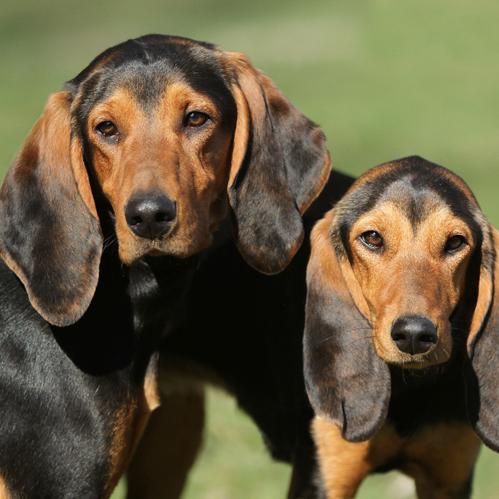
You might first notice a Bruno Jura Hound in the same way many people meet scent hounds, through a behaviour that feels bigger than the dog in front of you. A nose that seems to switch on mid-walk, a sudden pull toward a patch of grass, or a focus so intense that your voice briefly stops cutting through. It can look like stubbornness, but more often it is simply a dog built to follow information carried in scent.
It is also common to assume that a short-coated, medium-sized hound will be an “easy” dog at home. Low grooming can be true, but day-to-day life tends to be shaped more by drive and stamina than by coat length. The Bruno Jura Hound, also known as the Jura Hound within the Swiss Hound group, is a working scenthound from the Jura region on the Swiss side of the French-Swiss border, and that heritage still shows up in modern routines.1, 2
If you are drawn to this breed, it helps to think in practical terms: how you will provide structured exercise, safe off-lead choices, and training that respects a dog that can be independent when the environment is interesting. When those pieces come together, the Bruno Jura Hound can be a steady, capable companion, especially for people who genuinely enjoy being outside and moving.
Breed snapshot: what owners tend to notice first
The Bruno Jura Hound is commonly described as a medium-sized scenthound with a short coat, long drooping ears, and a body built for all-day work rather than quick bursts. In many sources it is presented as black and tan or in two-tone brown shades, with a clean, functional outline rather than heavy feathering or thick undercoat.1
Because it sits within the Swiss Hound (Schweizer Laufhund) standard as the Jura Hound variety, you may see it referred to interchangeably as “Bruno du Jura” or “Jura Laufhund”. That naming can be confusing when you are searching for care advice or breed recognition, so it is worth keeping the alternative names in mind.2
- Group and type: Scent hound, developed to trail game on foot with hunters
- Typical size range: often listed around 49 to 59 cm at the withers, and commonly under about 20 kg in many descriptions (figures vary by source and variety)2, 3
- Coat: short and dense, usually straightforward to maintain
Origins and working background
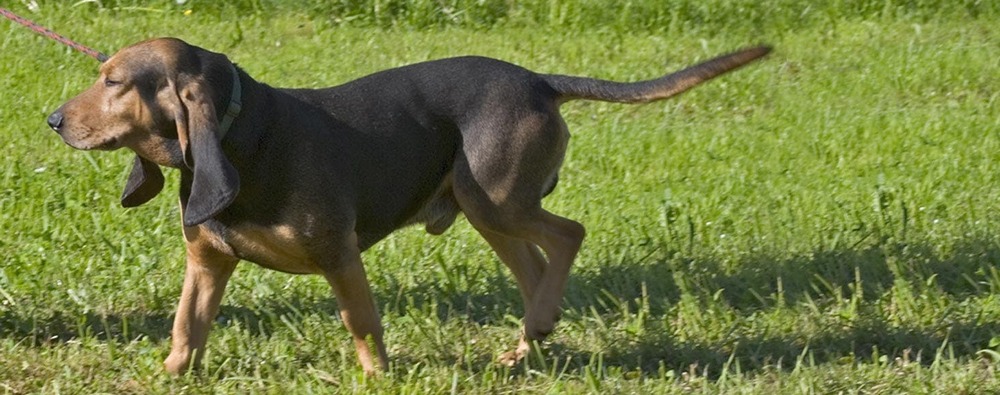
The Jura region is rugged and heavily scented, full of the sort of terrain where a dog needs to keep going and keep thinking. The Bruno Jura Hound developed in that context as a scenthound used to pursue quarry such as fox and hare, and sometimes small deer, with a reputation for sticking to faint scent across difficult ground.1, 3
In the modern kennel-club landscape, the Jura Hound sits under the FCI-recognised Swiss Hound standard (Standard No. 59), alongside the Bernese, Lucerne, and Schwyz varieties. This matters mainly because it helps you find more consistent information about general type, function, and expectations around working trials in FCI contexts.2
It is also sometimes discussed as being related to other regional hounds and historically influenced by older scent hound types. Rather than getting stuck on a single neat origin story, it is more useful to focus on what that heritage produces today: a dog that prioritises scent, often with the confidence to work at a little distance from the handler.1
Temperament: affectionate, capable, and not always convenient
Many Bruno Jura Hounds live as calm, friendly dogs in the home once their needs are met. Outside, the priorities can shift quickly. Scent hounds are designed to notice and follow details in the environment, and that can show up as selective hearing when a trail is fresh.
A helpful way to frame this breed is: social and people-oriented, but also built to make decisions. That combination can be lovely when you respect it, and frustrating when you expect instant compliance in distracting places. For many households, the main skill is not “more control”, it is better management: long lines, well-chosen off-lead areas, and training that is maintained rather than assumed.
With children and other pets, individual temperament and early socialisation matter. As with many hunting breeds, supervision around smaller animals is sensible until you have a clear picture of your dog’s arousal level and chase behaviour in real situations.
Training that suits a scent hound brain
Bruno Jura Hounds generally do best with reward-based training that makes it clear what you want, and why it is worth doing. Harsh corrections often create fallout, especially in dogs that are environmentally focused, because it can add stress without improving understanding.6
Keep sessions short, build habits in low-distraction places, then gradually add complexity. Recall is a long-term project with many scent hounds. It is not that they cannot learn, it is that the environment frequently competes with you.
Practical training focus areas that tend to pay off:
- Loose-lead walking skills, including patterned “check in” moments
- Reliable collar-grabs and calm re-leashing
- Stationing behaviours (mat settle, wait at doors and gates)
- Scent-based enrichment that is allowed and contained, such as scatter feeding in the yard or simple “find it” games
Exercise and enrichment: think duration, not intensity
These dogs were built for long periods of steady work. Two short loops around the block often does not touch the sides. A better fit is daily exercise that includes time to sniff, varied terrain where safe, and a mixture of movement and thinking.
Many owners find that the most settling routine is a longer walk or hike where sniffing is encouraged, paired with one or two short training games at home. Scent work does not need to be formal to be useful. A simple trail of treats in the grass can be surprisingly effective because it meets the dog on its own terms.
If you have to limit exercise temporarily due to health or injury, focus on calm enrichment: food puzzles, basic nosework games, and short training drills. The goal is not to “tire them out” so much as to give the brain a job.
Health considerations and preventative care
No single breed profile can predict an individual dog’s health, but there are patterns worth keeping in mind for a medium-to-large working hound type.
Hip dysplasia and joint care
Hip dysplasia is a developmental condition associated with joint laxity and can lead to pain and arthritis over time. Genetics is a major risk factor, and rapid growth and excessive weight gain in young dogs can worsen outcomes.7
If you are choosing a puppy, ask what screening has been done in the breeding lines. If you are caring for an adult, keep an eye out for subtle signs such as reluctance to jump, stiffness after rest, or reduced drive on walks, and discuss them with your vet early.
Ear health, especially with drooping ears
Long, pendulous ears can increase the risk of otitis externa, particularly when moisture is trapped in the canal after swimming or bathing. Ear conformation is recognised as a predisposing factor, which is one reason routine ear checks are so valuable for hounds.8
A good routine is simple: check the ears weekly, keep them dry after water play, and get veterinary advice before using cleaners or drops if you see redness, discharge, odour, or persistent scratching. Overcleaning can also irritate the canal, so aim for gentle, evidence-based care rather than frequent scrubbing.8
Grooming and everyday maintenance
The short coat is usually easy to live with. A weekly brush is often enough to lift dead hair and keep the coat looking tidy. It is also a chance to check for ticks, grass seeds, minor cuts, and sore spots after bush walks.
Do not overlook the basics: nails, teeth, and skin. Working-type dogs can be stoic, and small problems are easiest to manage when you catch them early.
Feeding: quality, consistency, and a cautious eye on “extras”
For an active hound, what matters most is a complete and balanced diet that suits life stage, body condition, and activity level. If you are unsure what to choose, the World Small Animal Veterinary Association (WSAVA) provides practical guidance on evaluating pet foods, including the importance of nutritional adequacy and appropriate quality control from manufacturers.9
Many owners like offering occasional human-food toppers. If you do, keep it simple and safe, and avoid foods known to be risky for dogs. In Australia, RSPCA guidance lists several common household foods that should not be fed to pets, including chocolate, grapes and raisins, and alliums such as onions and garlic.4
If you are training with food, you can often reduce meal portions slightly and use part of the daily ration as rewards. This helps prevent slow weight gain, which is especially relevant for joint health over time.
Is the Bruno Jura Hound a good fit for you?
In the right home, this breed can be a pleasure: steady, bright, and deeply engaged with the world. The “right home” tends to be one where people enjoy daily outdoor time, accept that sniffing is not a nuisance but a need, and are willing to train thoughtfully without expecting instant, tidy outcomes.
If your life is mostly indoors, or you need a dog that will reliably ignore wildlife and distractions from day one, a scenthound like this can feel like hard work. If you want a dog that will happily accompany you through long walks and give you a window into how powerful scent can be, the Bruno Jura Hound makes a lot of sense.
References
- Bruno Jura Hound (Wikipedia)
- FCI Standard No. 59: Swiss Hound (Chien Courant Suisse)
- Europetnet: Bruno Jura Hound
- RSPCA Australia: Household dangers to your pet
- Agriculture Victoria: Human foods to avoid for cats and dogs
- RSPCA ACT: Reward-based dog training methods
- American College of Veterinary Surgeons: Canine Hip Dysplasia
- Merck Veterinary Manual: Otitis externa in animals
- WSAVA: Global Nutrition Guidelines