

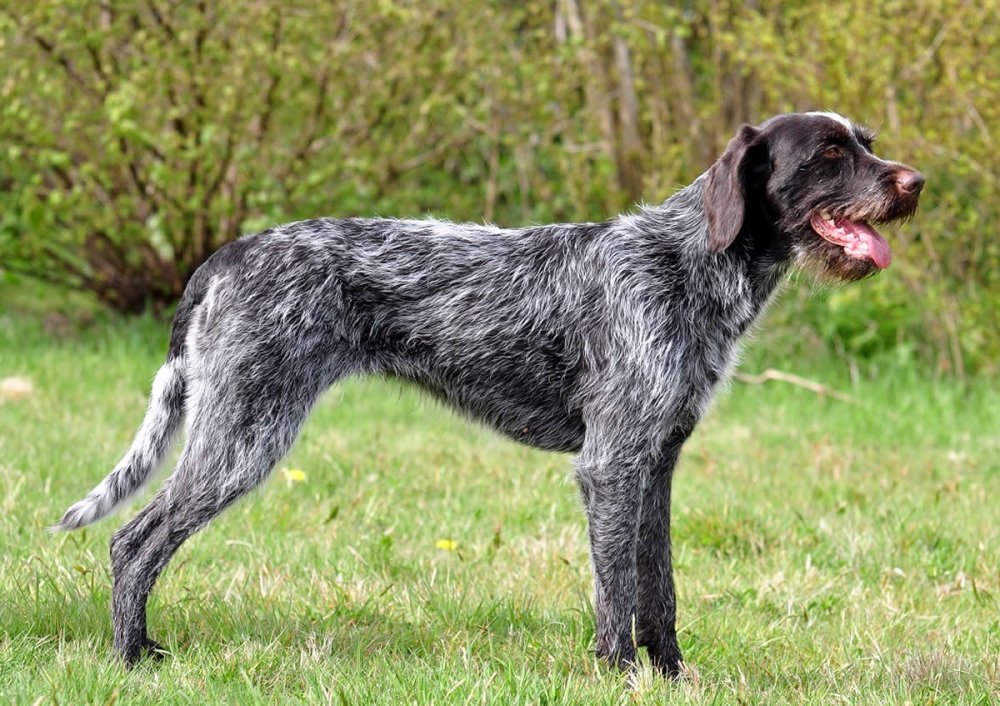
- Breed category: Gundog (pointing)
- Country of origin: Czech Republic
- Average height: Males 60 to 66 cm, females 58 to 62 cm1
- Average weight: Males 28 to 34 kg, females 22 to 28 kg1
- Average life span: Often around 12 to 15 years (varies by lines and lifestyle)
- Grooming requirements: Moderate, regular brushing, occasional hand-stripping
- Exercise requirements: High, daily movement plus mental work
- Coat type: Wiry with undercoat
- Coat colour variations: Dark roan with or without brown patches, brown with ticking, solid brown1, 3
- Shedding level: Moderate, often seasonal
- Ear type: Drop ears
- Tail type: Natural medium length, docking may be seen in some countries, but is generally prohibited for cosmetic reasons in Australia7, 8
- Temperament: Typically biddable, social with their people, steady when well exercised
- Intelligence level: High
- Barking tendency: Often moderate, can increase with under-stimulation
- Compatibility with children: Often good with sensible handling and supervision
- Compatibility with other pets: Often workable with early socialisation, prey drive still matters
- Training ease: Usually trains well with reward-based methods
- Common health issues: Hip dysplasia risk (as in many medium to large breeds), ear problems can occur in drop-eared dogs
- Dietary needs: Balanced, complete diet matched to activity and body condition6
- Energy level: High
- Drooling tendency: Usually low
- Sensitivity to weather: Coat suits cold and wet work, heat management is still important in summer
- Overall maintenance level: Moderate
- Original purpose: Versatile hunting dog (pointing and retrieving)
- Unique traits: Field versatility, strong nose, coat built for rough cover
People usually come across the Cesky Fousek in a fairly ordinary way: you see a bearded, wiry-coated gundog at a training ground, in a hunting photo, or popping up on a breeder’s page, and it looks a bit like several other wirehaired pointers at once. It can be hard to tell what is “just the look”, and what hints at the dog’s day-to-day needs.
There is also a common assumption that a dog bred for the field will automatically settle in a suburban home if it gets a good walk. With many versatile gundogs, the picture is a bit more layered. They often cope beautifully in family life, but they do best when their minds are used as much as their legs.
The Cesky Fousek is one of those breeds where the practical details matter. If you understand what the coat is for, how the dog tends to work, and what “enough” activity really means, you are far more likely to end up with a companion who is calm, responsive, and genuinely easy to live with.
History and origin
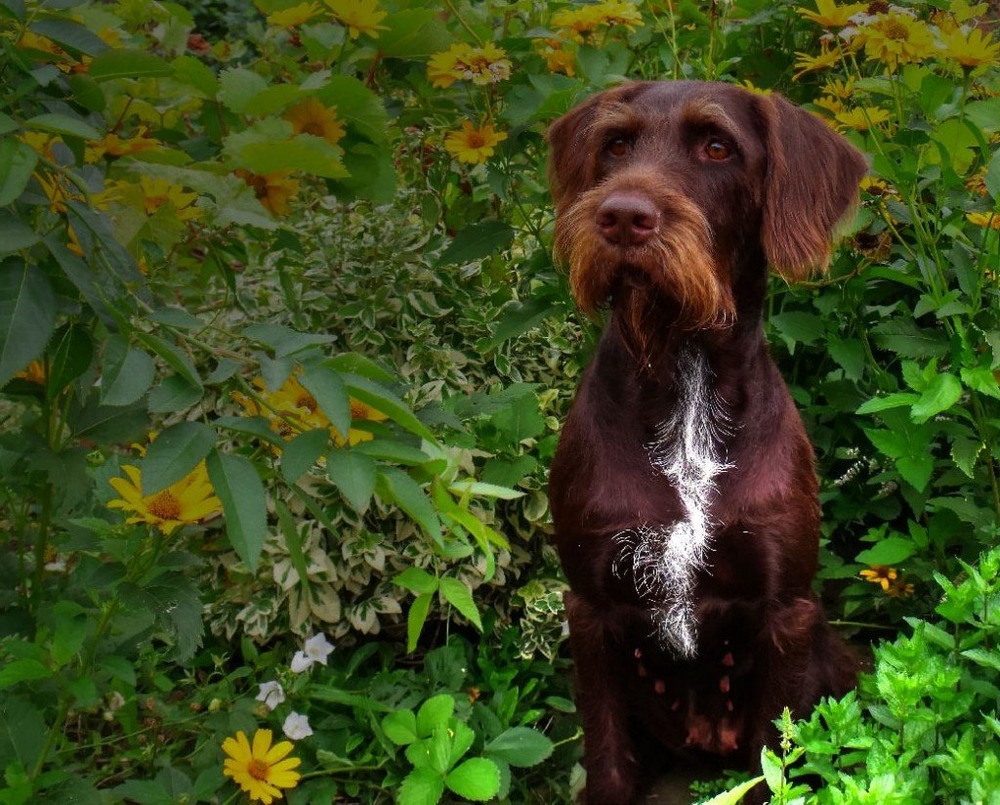
The Cesky Fousek is recognised internationally as a Czech pointing breed, and is also known as the Bohemian Wire-Haired Pointing Griffon.2 Breed histories written for enthusiasts sometimes reach back centuries, but the most reliable summaries focus on what can be traced in breeding records and official standards.
In the FCI breed standard’s historical summary, the Cesky Fousek is described as having been widely kept in the region before the First World War, then nearly dying out in the 1920s, followed by planned regeneration using typical remaining dogs as the foundation for the modern type.1 That “near disappearance then careful rebuilding” story is worth keeping in mind, because it helps explain why dedicated breed clubs and purposeful selection are often emphasised by people who care about the breed.
If you are looking at a puppy today, it is sensible to think of the Cesky Fousek as a working-bred, versatile gundog first, and a distinctive bearded silhouette second. The temperament and coat make a lot more sense when you see them as tools for long days in cover, water, and changeable weather.
Physical characteristics that affect daily life
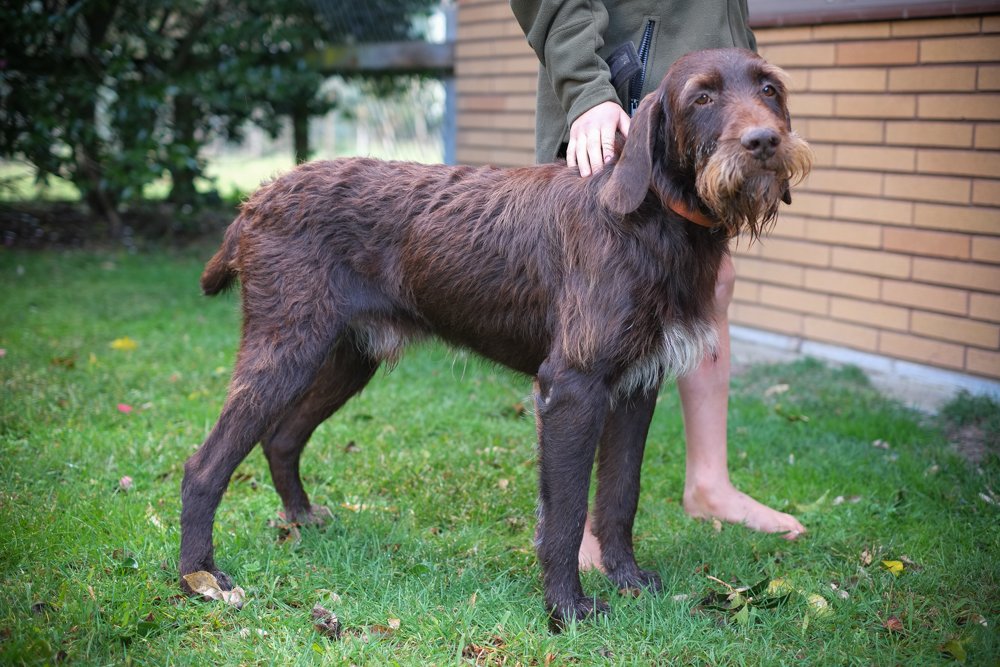
In size, the Cesky Fousek sits in the medium to large range. The FCI standard lists height at the withers as 60 to 66 cm for dogs and 58 to 62 cm for bitches, with weight ranges of 28 to 34 kg for dogs and 22 to 28 kg for bitches.1 That is substantial enough that good handling skills and training are not optional, especially through adolescence.
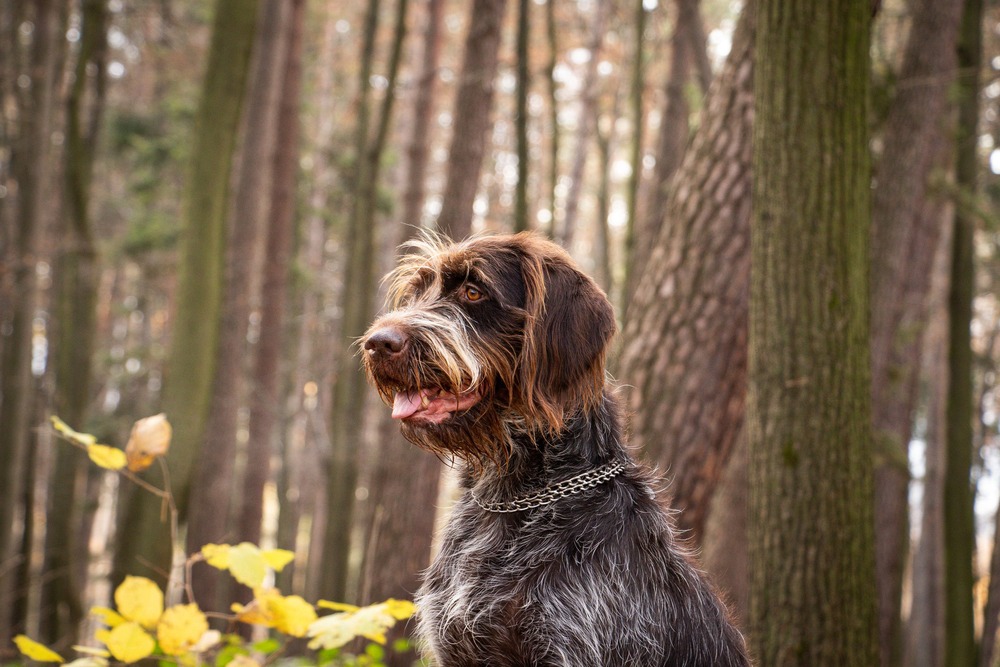
The coat is one of the breed’s defining features. The FCI standard describes a three-part coat: a soft, dense undercoat; a harsher topcoat; and longer, very harsh guard hair, with furnishings that form the characteristic beard and eyebrows.1 In practical terms, this usually means the dog brings less “wet dog smell” than you might expect after a rainy walk, but more dust, burrs, and garden debris can hitch a ride home.
Colour is limited to a few patterns, including dark roan (with or without brown patches), brown with ticked markings, and solid brown.1, 3 If you are comparing dogs that look similar at a glance, checking the breed standard can be a useful anchor for what is typical, and what is more of an outlier.
Temperament and behaviour
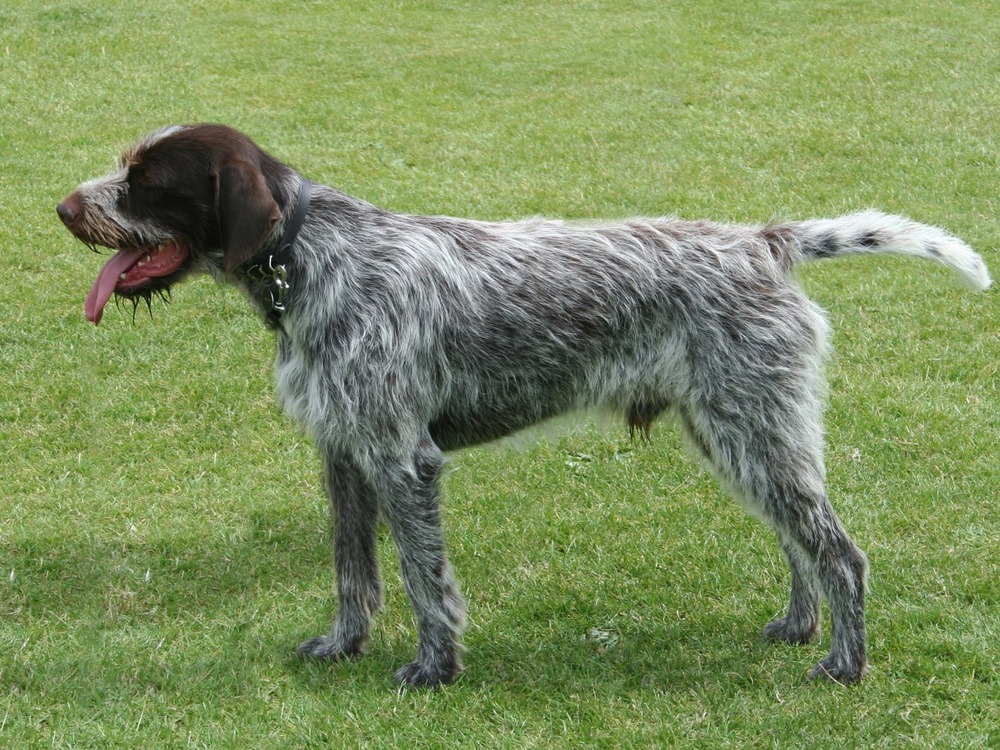
Most people are drawn to the Cesky Fousek because it promises a blend that is not always easy to find: a dog that can work with intensity outdoors, then come home and live as part of the household. When that balance goes well, it tends to be because the dog has clear outlets for its instincts, not because the instincts have disappeared.
A helpful way to think about the breed is as social and people-oriented, but not “decorative”. These dogs commonly do best when they are included in daily routines, trained with clarity, and given work that makes sense to them, like scent-based games, retrieving, tracking, or structured field-style exercises.
If you have other pets, early management matters. Even when a dog is friendly, a pointing breed can still be triggered by fast movement or fluttering wildlife. That is not “bad temperament”, it is simply a reminder that training needs to cover real-world scenarios, not just polite behaviour in the lounge room.
Training and exercise: what helps them settle
With a breed like this, exercise is not only about distance. A long run can still leave a dog restless if there is no chance to sniff, search, problem-solve, and practise self-control. The goal is daily decompression plus training, not just “wearing them out”.
Reward-based training tends to suit pointing dogs well because it builds cooperation without dulling initiative. Short, frequent sessions are often more effective than long drills, especially if you rotate between obedience foundations, recall work, and breed-relevant skills like retrieving to hand or searching for a hidden scent.
As a guide, many adult Cesky Fouseks need a meaningful daily plan that includes a brisk walk or run, plus a second session that is mentally rich. That might look like:
- Sniffing walks on a long line in safe areas
- Retrieving games with rules (wait, release, return, swap)
- Tracking or scent work exercises
- Swimming in appropriate conditions
If you are raising a puppy, the temptation is to do “more” because the pup seems keen. For growing joints, it is usually wiser to build fitness gradually, keep high-impact jumping controlled, and focus on skill-building and calmness as much as physical exertion.
Health and lifespan
Many Cesky Fouseks live into the early teens, and owners often quote a range around 12 to 15 years, though any individual dog’s lifespan is shaped by genetics, weight, workload, and general care. It is best to ask breeders what their lines tend to do, and to sanity-check that with veterinary advice.
As with many medium to large breeds, hip dysplasia is part of the wider risk landscape. Screening programs and responsible selection are the main long-term tools here, because they aim to reduce the likelihood of passing on poor hip structure. When you are choosing a breeder, asking for documented health results is a practical step, not an awkward one.
Ear health is also worth staying on top of. Drop-eared dogs can be more prone to ear trouble because reduced airflow can allow moisture to linger, especially after swimming or bathing.5 A simple routine of checking for odour, redness, sensitivity, and keeping ears dry can prevent many problems from becoming chronic.
Grooming and coat maintenance
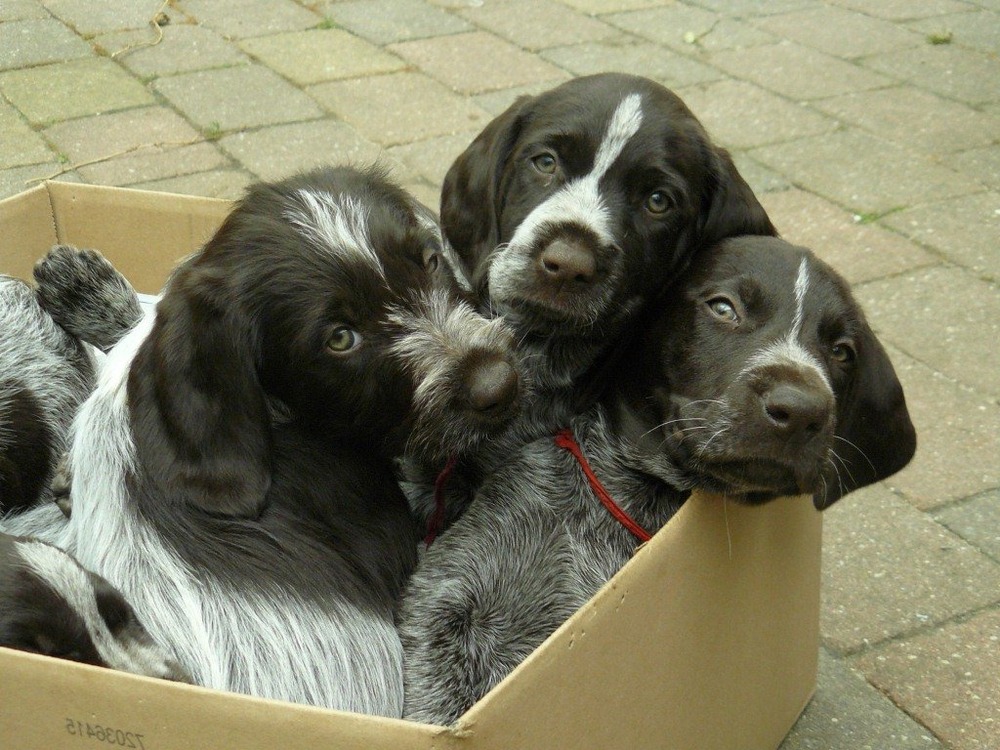
The wiry coat is often described as “low fuss”, but it is more accurate to say it is practical rather than pretty. Weekly brushing helps lift dirt and loose undercoat, and it gives you a chance to check skin, paws, and the feathering on the backs of the legs for seeds and grass awns.
Some owners choose occasional hand-stripping or a tidy-up with a groomer who understands wire coats. Clipping can soften coat texture over time, which may be a cosmetic issue for some, but it can also change how the coat sheds water and debris. If you are unsure, a good groomer can talk you through options based on your dog’s coat and lifestyle.
Do not overlook the simple care tasks that keep an active dog comfortable: nails, teeth, and ears. Dogs Australia notes that floppy-eared breeds can be more prone to ear infections due to reduced air circulation and drainage, so routine checks are worthwhile even when everything looks fine.5
Diet and nutrition
For a high-energy gundog, food is not just fuel, it is part of maintaining joints, muscle, and body condition across seasons. The most useful approach is to pick a complete, balanced diet and adjust portions based on the dog in front of you, not the numbers on the bag.
The WSAVA Global Nutrition Guidelines emphasise that nutrition should be assessed and tailored to the individual, and they provide tools for veterinary teams to support nutritional assessment and feeding choices.6 That is especially helpful for active breeds, where “fit” can slide into “too lean”, or “resting season” can quietly become weight gain.
A few practical habits make a difference:
- Keep an eye on body condition and waistline, not only the scales.
- If training heavily, use part of the daily ration as rewards rather than adding extra treats.
- If you change foods, transition slowly to reduce digestive upsets.
Tail docking, what you may see and what it means in Australia
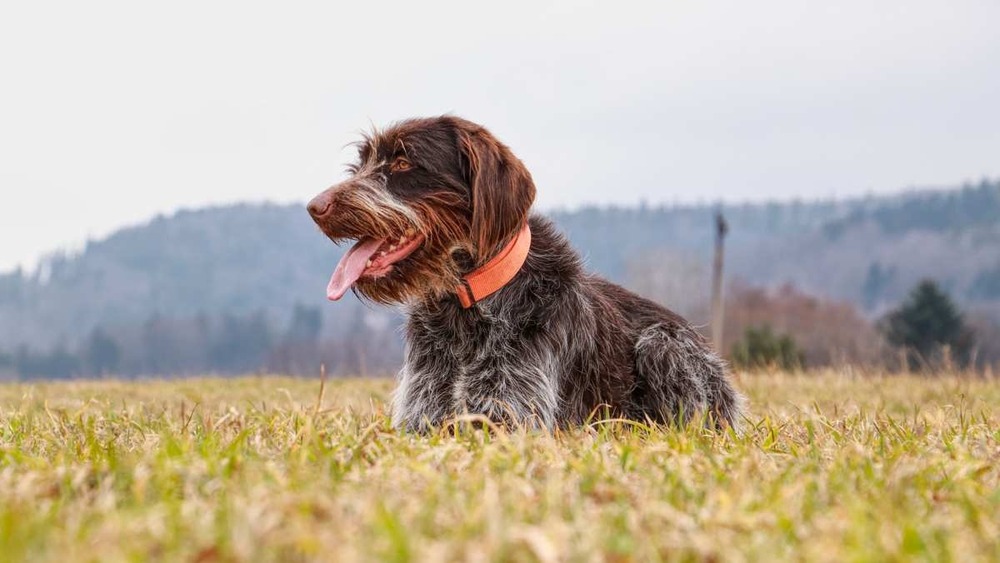
You will sometimes see Cesky Fouseks, and other gundog breeds, pictured with docked tails. That can create confusion, especially if you are used to seeing natural tails in Australian parks.
In Australia, cosmetic tail docking has been illegal since 2004, with docking generally only permitted for therapeutic reasons and performed by a veterinarian, with the exact legal framework set by each state and territory.7, 8 In other words, if you are looking for a puppy in Australia, a docked tail should prompt careful questions and a willingness to walk away.
If you are importing a dog, or looking at overseas lines, it is worth learning the rules in the country of origin and in your Australian state. Legal differences do not tell you everything about welfare standards, but they do change what you can expect to see.
Living with a Cesky Fousek: who they suit best
At their best, these dogs slot into an active life with surprising ease. They are often happiest where there is a daily rhythm, time outdoors, and a person who enjoys training as an ongoing practice rather than something you “finish” after puppy school.
They can suit families well, but it helps if adults set the tone. That means reinforcing calm greetings, supervising play with children, and giving the dog a predictable place to rest. A tired gundog is often easier, but a dog that has learned how to settle is easier still.
If you live in a smaller home, it is not automatically a deal-breaker, but it does raise the standard for your routine. Without reliable off-lead outlets, enrichment, and recall training, an energetic pointing breed can become noisy, pushy, or distractible. With the right plan, many are simply busy dogs who learn to be calm indoors.
References
- FCI Breed Standard No. 245: Cesky Fousek (Bohemian Wire-Haired Pointing Griffon) (PDF)
- Federation Cynologique Internationale (FCI) breed information: Cesky Fousek (245)
- United Kennel Club (UKC) breed standard: Cesky Fousek
- RSPCA Australia Knowledgebase: Is ear cropping of dogs legal in Australia?
- Dogs Australia: Essential guide to canine care
- WSAVA: Global Nutrition Guidelines
- RSPCA Australia Knowledgebase: Is the tail docking of dogs legal in Australia?
- Business Queensland: Queensland’s ban on docking dogs’ tails
- Agriculture Victoria: Prohibited procedures on dogs