

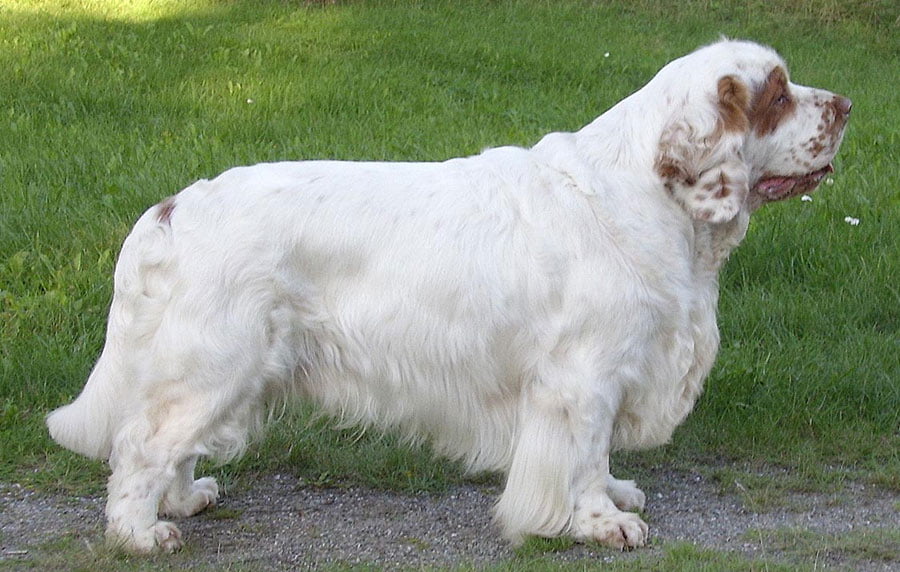
You might come across a Clumber Spaniel the way many people do, as a calm, slightly scruffy white dog at a park, or in a photo where the dog looks almost solemn until it starts moving. They are spaniels, but they do not have the light, busy feel people often associate with the word. Clumbers tend to be steady, deliberate, and surprisingly strong for their height.
Because they are less common, it is easy to assume they must be fragile, difficult, or “rare” in the sense of being impractical. In reality, most of what makes a Clumber Spaniel a good companion comes down to ordinary, day-to-day things: how they cope with heat, how much they shed, whether you can keep up with coat and ear care, and whether you enjoy a dog that prefers a measured pace.
When the match is right, Clumbers can be wonderfully grounding to live with. They were built for working through thick cover, so they carry a certain patience and determination that still shows up on modern walks, especially when a scent catches their attention.1, 2
Clumber Spaniel at a glance

- Breed group: Gundog (sporting type)
- Origin: United Kingdom, associated with Clumber Park in Nottinghamshire
- Typical size: About 43 to 51 cm at the shoulder (17 to 20 inches)
- Typical weight: Dogs about 29.5 to 34 kg, bitches about 25 to 29.5 kg
- Life expectancy: Commonly 10 to 12 years
- Coat and colour: Dense, straight coat, mostly white with lemon or orange markings
- General vibe: Steady, kind, intelligent, often quieter than many other spaniels
Measurements vary by individual and by breed standard. If you are comparing dogs, look at the overall build and condition, not just the numbers on paper.2, 3
History and origin

The breed takes its name from Clumber Park in Nottinghamshire, where Clumber-type dogs were developed and kept by the Dukes of Newcastle in the late 1700s. Clumbers were valued as practical gundogs, built to push through dense cover at a steady pace rather than skim across open ground.1
That original job still explains a lot about the modern Clumber. They are long, low, and substantial, with the kind of bone and muscle that helps them keep going when conditions are heavy. Their working style is often described as quiet and efficient, with a strong nose and a determined approach once they are on scent.2
Physical characteristics that affect day-to-day life

Clumber Spaniels are the largest of the flushing spaniels, and they feel it when you live with one. They tend to take up space quietly, lean their weight into you, and move with an unhurried roll that makes sense for a low, heavy dog designed for thick undergrowth.4
The classic look is a mostly white coat with lemon or orange markings, often around the head. White was useful in the field because it made the dog easier to see. Today it also means you will notice mud, leaf litter, and grass seeds quickly, which is not a bad thing if you are doing regular checks.2
Those soft, low-hanging ears are part of the breed’s charm, but they also mean you need to be comfortable with routine ear care. It is not complicated, it is just one of those small jobs that is easier when it is done consistently.
Temperament and behaviour

Clumbers are often described as steady, kind, and dignified, with a thoughtful sort of intelligence. Many are quieter than other spaniels, and they can be a little more reserved with strangers while still being affectionate with their own people.2, 4
In family life, their appeal is usually their calm presence. They often cope well with children, particularly when kids are guided to be gentle around a big dog with a heavy body and a slow turning circle. As with any breed, good outcomes come from supervision, sensible boundaries, and giving the dog a place to rest undisturbed.
If you have other pets, many Clumbers settle nicely, but their gundog instincts can show up as interest in movement and scent. Early, careful introductions and reward-based training are worth the effort, especially if your household includes smaller animals.
Training and exercise
Clumber Spaniels generally respond well to positive reinforcement. They tend to do best with short sessions, clear cues, and a calm, consistent approach. Harsh handling is rarely useful with a dog that can be determined by nature.4
Exercise needs are usually moderate. Many Clumbers are content with daily walks and opportunities to sniff, explore, and do a little gentle retrieving. Aim for up to around an hour a day in total for many adult dogs, adjusting for age, fitness, and the weather.1
Two practical notes that matter with this breed:
- They can be food-motivated, which is helpful for training, but easy for weight to creep up if treats are not accounted for.
- Scent can override “good manners” in the moment, so building reliable recall and lead skills is more realistic than expecting a dog to ignore every interesting smell.
Health and lifespan

Average lifespan is often quoted as about 10 to 12 years.3, 4
Like many heavier, substantial breeds, Clumbers can be predisposed to orthopaedic issues such as hip dysplasia. Eye problems can also occur, including eyelid conditions such as entropion in some lines. The point is not to assume your dog will have these problems, but to choose breeders carefully, keep your dog in lean body condition, and stay consistent with veterinary checks.5
They can also struggle in hot weather. Their dense coat and solid build make it sensible to walk early or late in summer, prioritise shade and water, and avoid hard exercise on warm days. Heat stress can become serious quickly in any dog, so it is worth learning the early signs and responding promptly.6
Grooming and maintenance
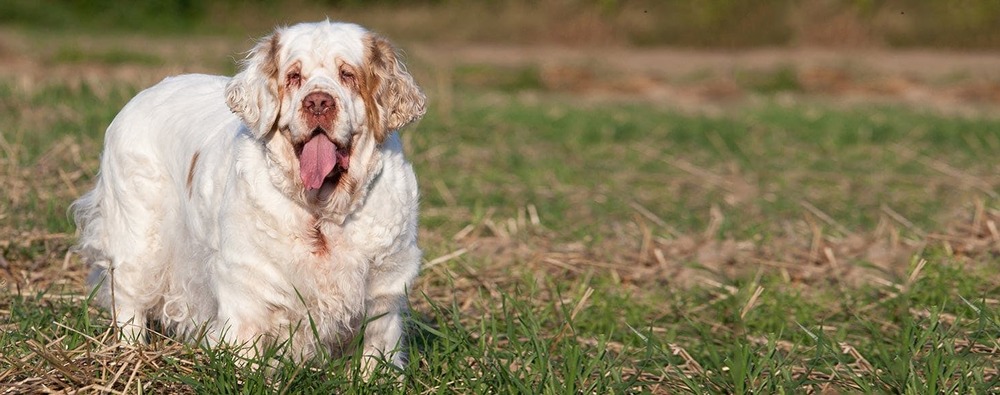
A Clumber coat is straight, dense, and designed to handle weather. In a home setting, that translates to regular brushing and a realistic acceptance of shedding. If you keep on top of it, grooming is more about steady maintenance than big makeovers.
A practical routine usually includes:
- Brushing several times a week, more often during heavier shedding periods
- Checking feathering on legs, chest, and ears for tangles and grass seeds
- Regular ear checks and cleaning as advised by your vet, especially if your dog swims or gets frequent ear wax build-up
- Nail trims and paw checks, particularly if your dog walks on softer ground most of the time
Many Clumbers also drool to some extent, especially around food or after a drink. It is normal for the type, but it is worth knowing before you fall in love with the face.
Diet and keeping a healthy weight

Clumber Spaniels tend to do best on a balanced diet that supports joints and maintains a lean body condition. Because they are sturdy and often food-oriented, it is easy to overfeed without meaning to, especially if multiple family members share treats.
A few habits help in real life:
- Measure meals and adjust based on body condition, not just the packet guide.
- Use part of the daily food allowance for training, rather than adding extra treats on top.
- If weight starts creeping up, address it early. Extra kilos matter more on a heavy, low-set dog.
Be cautious with people food and make sure everyone in the household knows what is dangerous. Grapes and raisins, chocolate, and foods containing xylitol (a sweetener) are well-known examples of items that can seriously harm dogs.7, 8
Living with a Clumber Spaniel
A Clumber can suit many homes, including quieter households and some apartment situations, provided daily walks and enrichment are non-negotiable. What they often struggle with is being under-stimulated, left without companionship for long stretches, or exercised hard in heat.
If you are considering the breed, it helps to be honest about what you want:
- If you want a sporty running partner, a Clumber may feel too steady.
- If you want a calm dog that enjoys walks, sniffing, and being near the family, the fit can be excellent.
- If you cannot tolerate shedding, some drool, and regular grooming, it is better to choose a different breed.
In the UK, Clumbers are recognised as a Vulnerable Native Breed, which reflects how relatively uncommon they are. That can mean fewer breeders, longer waits, and more importance placed on finding people who health test and raise puppies thoughtfully.1
References
- The Kennel Club (UK): Spaniel (Clumber), breed information
- The Kennel Club (UK): Spaniel (Clumber), breed standard
- Clumber Spaniel Club of America: Clumber 101 (size and life expectancy)
- Clumber Spaniel Club of America: About the breed
- PetMD: Clumber Spaniel breed health and care
- American Veterinary Medical Association (AVMA): Heatstroke in pets
- RSPCA Pet Insurance (Australia): Foods to avoid feeding your dog
- Cornell University College of Veterinary Medicine: Xylitol poisoning in dogs
- United Kennel Club (UKC): Clumber Spaniel breed standard