

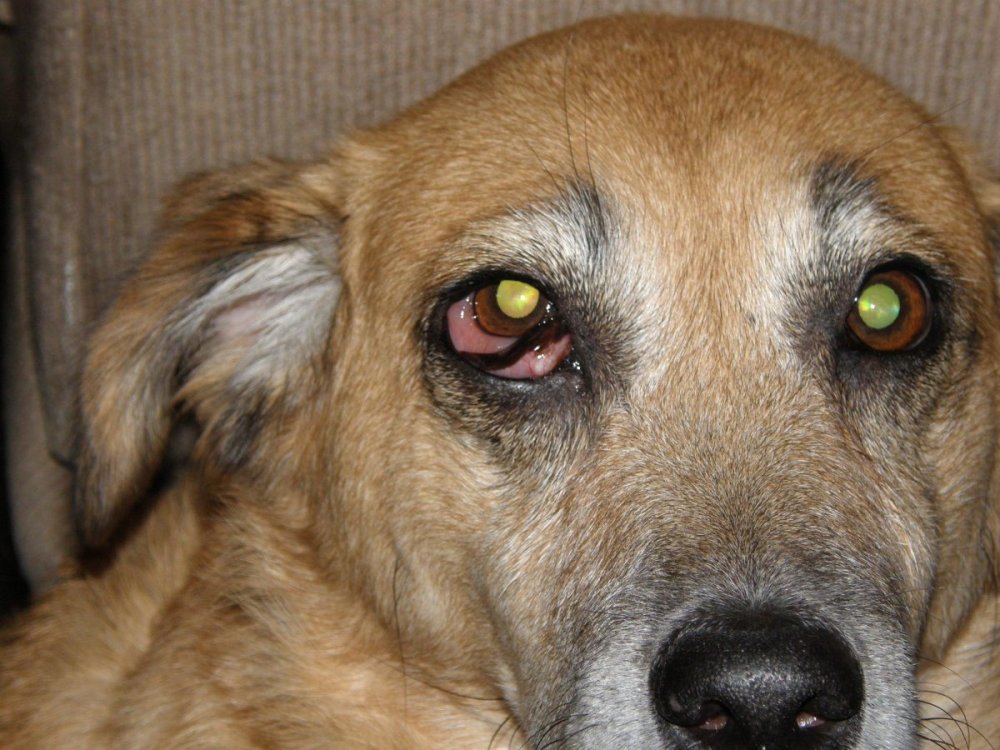
You usually notice it in passing. Your dog blinks a little more than usual, holds one eye half-closed after a walk, or develops a bit of crust in the corner that keeps coming back. It is tempting to assume it is just dust, wind, or “a bit of allergy”. Sometimes that is true, but eyes are also one of those places where small changes can mean something important.
Dog eyes are exposed, delicate, and surprisingly easy to irritate. A seed head, a scratch from rough play, or eyelids that sit slightly the wrong way can all start the same pattern: watering, redness, squinting, then rubbing that makes everything worse. The tricky part is that very different conditions can look similar in the early stages.
It helps to think of eye problems in dogs as a mix of everyday irritations and time-sensitive emergencies. The aim is not to panic over every watery eye, but to know what is normal for your dog, what is not, and when it is worth getting help sooner rather than later.
Common eye problems in dogs
Most canine eye complaints fall into a handful of categories. Some are uncomfortable but straightforward, while others can threaten sight if they are missed or treated too late.
Conjunctivitis (red, sticky, irritated eyes)
Conjunctivitis is inflammation of the tissue around the eye. You might notice redness, extra tearing, blinking, and discharge that ranges from clear to thicker and coloured. The cause matters, because conjunctivitis can be linked to allergies and irritants, dry eye, eyelid problems, infection, or something deeper in the eye.1
Corneal ulcers (scratches on the eye surface)
A corneal ulcer is a break in the surface of the cornea, often from trauma or rubbing. Ulcers are typically painful, so dogs often squint or hold the eye shut, tear excessively, and resist being touched around the face. These are a common reason vets use fluorescein dye during an eye exam, because it highlights damage on the corneal surface.2, 3
Dry eye (keratoconjunctivitis sicca)
Dry eye happens when tear production is reduced or the tear film is poor quality. Instead of a watery eye, you may see a “dull” surface, stringy discharge, recurrent redness, and repeated infections. Dry eye tends to be managed rather than cured, which is why consistent treatment and follow-up checks make such a difference over time.4
Cataracts versus normal ageing changes
A cloudy-looking eye does not always mean cataracts. Cataracts are an opacity in the lens that can affect vision and sometimes lead to complications. In older dogs, a bluish-grey haze can also be a normal age-related lens change (often called nuclear sclerosis), which usually does not affect vision in the same way. Your vet can generally tell the difference during an exam, and may recommend further checks if vision seems affected.5, 6
Glaucoma (raised pressure inside the eye)
Glaucoma involves increased pressure within the eye (intraocular pressure). It can be extremely painful and can damage the optic nerve and retina. Owners often notice a suddenly red eye, squinting, tearing, a “hard” looking eye, or a cloudy appearance. Because vision can be lost quickly, glaucoma is treated as urgent.7
What you might notice at home
Eye signs are often subtle at first, and dogs can be stoic. A quick daily glance at both eyes, especially in bright light, can tell you a lot.
Common signs worth taking seriously include:
- Squinting or holding an eye closed
- Redness of the whites of the eye or the inner eyelids
- Watery tearing that does not settle
- Discharge (clear, yellow, green, or blood-tinged)
- Cloudiness, a blue haze, or a surface that looks “dull”
- Pawing at the face, rubbing on carpet, or avoiding light
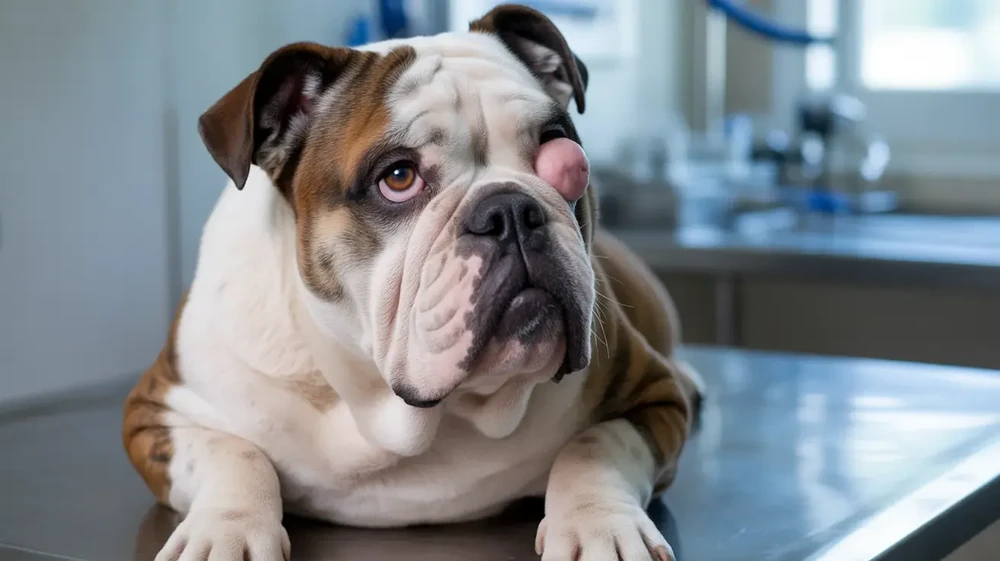
- Swelling around the eye, or a change in the shape of the eyeball
If the two eyes look different from each other, or if the change came on quickly, that is often a clue that this is more than mild irritation.
Causes and risk factors
Eye problems are rarely random. They tend to sit at the intersection of anatomy, environment, and underlying health.
Breed and facial shape
Some dogs have eyelids, lashes, or facial folds that predispose them to ongoing irritation. Flat-faced breeds with prominent eyes can be more vulnerable to trauma and corneal ulcers, and skin folds can contribute to eyelid issues like entropion (where the eyelid turns inward and rubs). Knowing these risks helps you spot problems early, and it also explains why one dog seems to have repeat issues while another never does.8
Age and “normal” changes
As dogs get older, the eyes can change in ways that look alarming but are not always painful or vision-threatening. At the same time, some age-related conditions do affect sight. This is why it is helpful to treat “cloudy eye” as a description, not a diagnosis, until it has been properly checked.6
Everyday exposures
Dust, pollen, smoke, shampoo, grass seeds, and rough play can all irritate eyes. A brief flare-up after a windy walk might settle, but ongoing squinting or discharge suggests the eye is struggling to recover, or there is a scratch, foreign material, or dryness underneath it.
How vets diagnose eye conditions
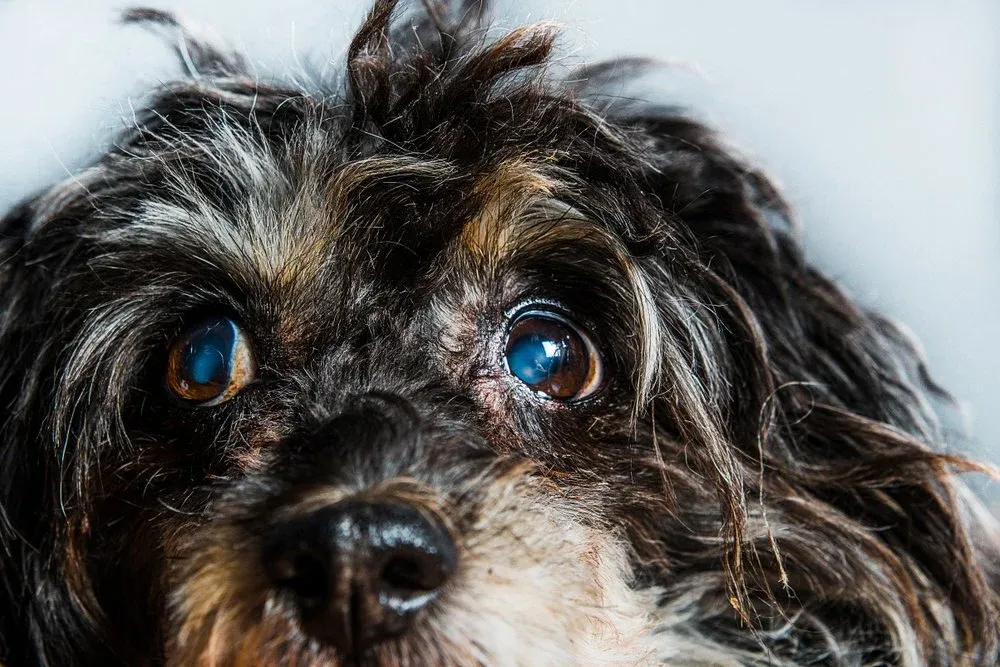
A proper eye assessment is more than a quick look. Vets usually start by checking the eyelids, lashes, tear film, and the eye surface, then move deeper if needed.
Common in-clinic tests include:
- Fluorescein staining to look for corneal ulcers and surface damage2, 3
- Tear testing when dry eye is suspected4
- Tonometer readings to measure intraocular pressure if glaucoma is a concern7
Depending on what they find, your vet may recommend referral to a veterinary ophthalmologist, especially for complicated ulcers, suspected glaucoma, or cataract assessments.
Treatment, and what not to do
Treatment depends entirely on the cause. Two dogs can both have a red, watery eye, but one needs lubricants and long-term management for dry eye, while the other needs urgent ulcer treatment or pressure-lowering glaucoma medication.
Common treatments your vet may use include topical antibiotics, anti-inflammatory medications, lubricants, pain relief, and an Elizabethan collar to prevent rubbing. For cataracts that significantly affect vision, surgery may be discussed as an option in suitable cases.3, 5
One practical caution is worth stating plainly: do not use leftover eye drops (including human products) unless your vet has advised it for this specific episode. Some medications, particularly steroid-containing drops, can make corneal ulcers worse.3
Prevention and everyday care
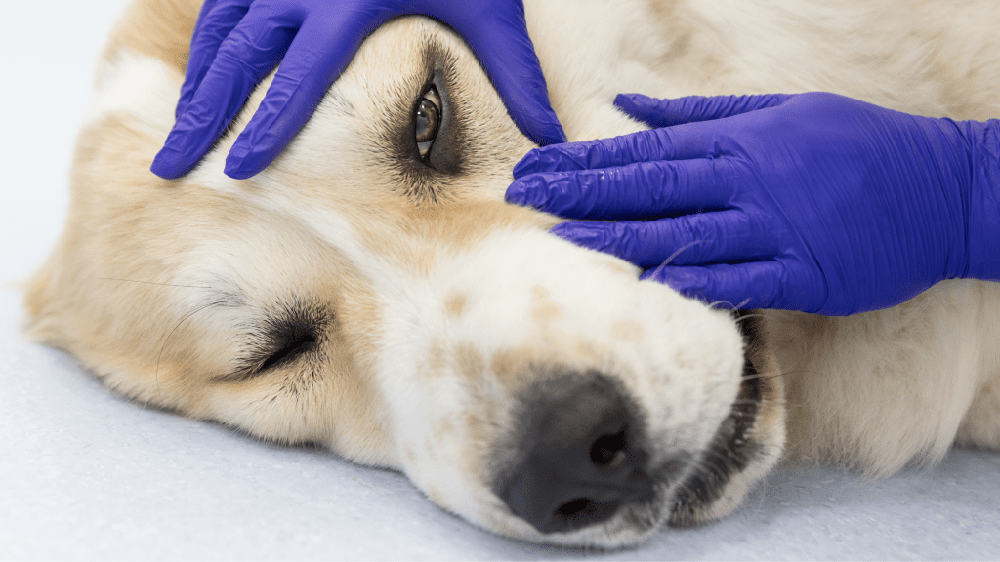
You cannot prevent every eye issue, but you can reduce the odds of irritation becoming a bigger problem.
Simple habits that help:
- After beach trips, dusty walks, or grooming, gently wipe around the eyes with a clean, damp cloth (avoid poking the eye itself).
- Keep fur trimmed so it does not constantly brush the eye surface, especially in long-coated dogs.
- Discourage head-out-the-window car rides if your dog is prone to eye flare-ups or has prominent eyes.
- If your dog has known dry eye or eyelid conformation issues, stick with the plan your vet has given you, even when things look “fine”.
Prevention is often less about special products and more about noticing patterns early. If the same eye keeps playing up after the same trigger, it is worth mentioning at the next check-up.
When to see a vet (and when it is urgent)
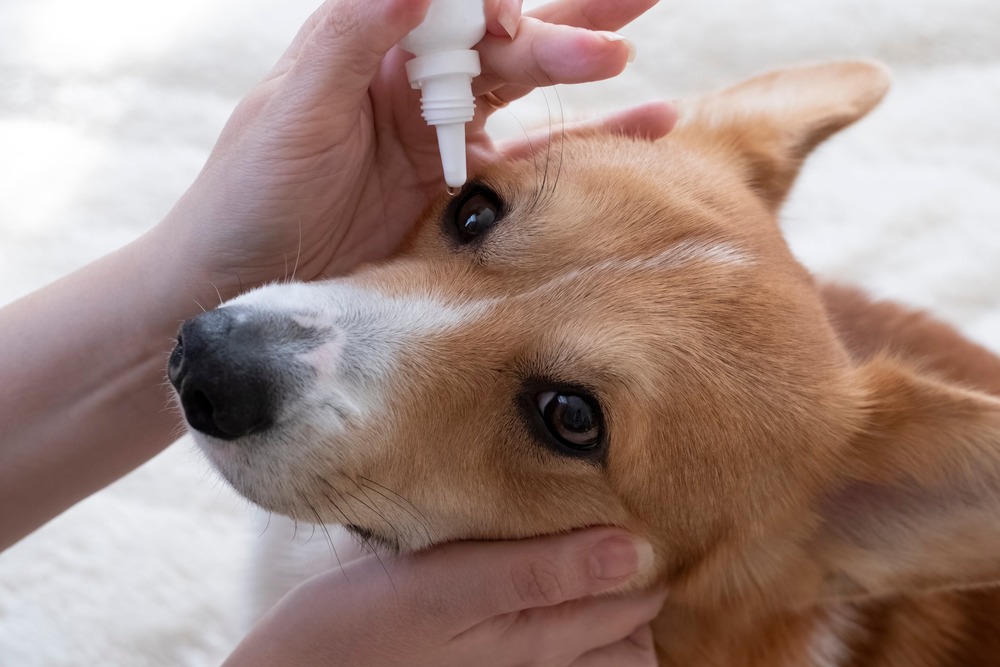
Eye problems are one area where timing matters. A mild irritation can sometimes be monitored briefly, but pain, cloudiness, and sudden change are different.
Arrange veterinary care promptly if you notice:
- Squinting, eye held closed, or obvious discomfort2, 9
- Cloudiness, a blue-white film, or a sudden change in eye appearance7, 9
- Yellow or green discharge, swelling around the eye, or an eyelid wound9
- Any suspected trauma (including cat scratches or a hit during play)
- A bulging eye, or an eye that looks “bigger” than the other7, 9
If the eyeball is out of the socket, or there has been major trauma, treat it as an emergency and seek immediate care.9
Final thoughts
Most people who live with dogs will deal with an eye worry at some point. The reassuring part is that many problems are very treatable when they are caught early, and your observations at home are genuinely useful for guiding the vet towards the right tests.
If you take one thing from this, make it this: painful eyes are not a wait-and-see problem. A dog that is squinting or rubbing needs help finding the cause, not just something to “take the redness down”. With timely care and a steady routine, many dogs keep comfortable eyes and good vision well into older age.
References
- Animal Eye Care (Australia): Conjunctivitis
- American College of Veterinary Ophthalmologists (ACVO): Corneal Ulcers
- The Animal Medical Center: Corneal Ulcers in Dogs
- PetSecure (Australia): How to take care of your dog’s eye health
- American Kennel Club: Cataracts Can Occur as Your Dog Ages
- Animal Eye Care (Australia): Geriatric Eye Problems
- VCA Animal Hospitals: Glaucoma in Dogs
- RSPCA Australia: Love is Blind (brachycephalic health problems, including eye disease)
- VCA Urgent Care: Eye Issues (when to seek urgent or emergency care)