


You might come across the Continental Bulldog after meeting one at the park: a bulldog-shaped dog that can actually move freely, breathe a little easier, and keep pace without looking uncomfortable. People often assume it is simply an English Bulldog with a different name, or a crossbreed, but the story is more deliberate than that.
In Switzerland, breeders set out to keep the steady, people-oriented bulldog “type” while leaning away from the extremes that can make some flat-faced dogs struggle in everyday life, especially with heat, exercise, and recovery after excitement. The result is a younger breed, still uncommon in many places, and worth understanding on its own terms.
If you are considering a Conti, it helps to look past the broad promises of “healthier bulldog” and focus on what good breeding, sensible conditioning, and realistic care look like in practice.
At a glance: Continental Bulldog traits

Breed type: Companion and family dog (molosser type), developed in Switzerland.1
- Size: Medium, solid, athletic build.
- Typical height and weight: Commonly described around 40 to 50 cm at the shoulder and roughly 20 to 30 kg, depending on sex, height, and condition.1
- Coat: Short and smooth, moderate shedding, occasional brushing.
- Temperament (general): Often described as friendly, confident, and people-focused.
- Exercise needs: Moderate, daily walks plus play and training.
- Heat sensitivity: Like many bulldog types, can be more vulnerable in hot, humid weather, particularly if overweight or if breathing is noisy at rest or after mild effort.4, 5
History and development in Switzerland

The Continental Bulldog is a modern Swiss breed developed with the intention of producing a more functional, mobile bulldog type than some existing lines. A key name associated with the breed’s development is Swiss breeder Imelda Angehrn, who is widely credited with driving the early breeding program and club formation around the 1990s and early 2000s.2
Internationally, the breed has been recognised by the Federation Cynologique Internationale (FCI) on a provisional basis, with the FCI listing provisional recognition dated 30 March 2022 and publication of the standard dated 4 April 2022.1
That timing matters because you will still see older dates repeated online (and different kennel clubs may not all recognise the breed). If registration is important to you, check exactly what your local registry offers, and what paperwork a breeder can provide.
Physical characteristics that shape daily life

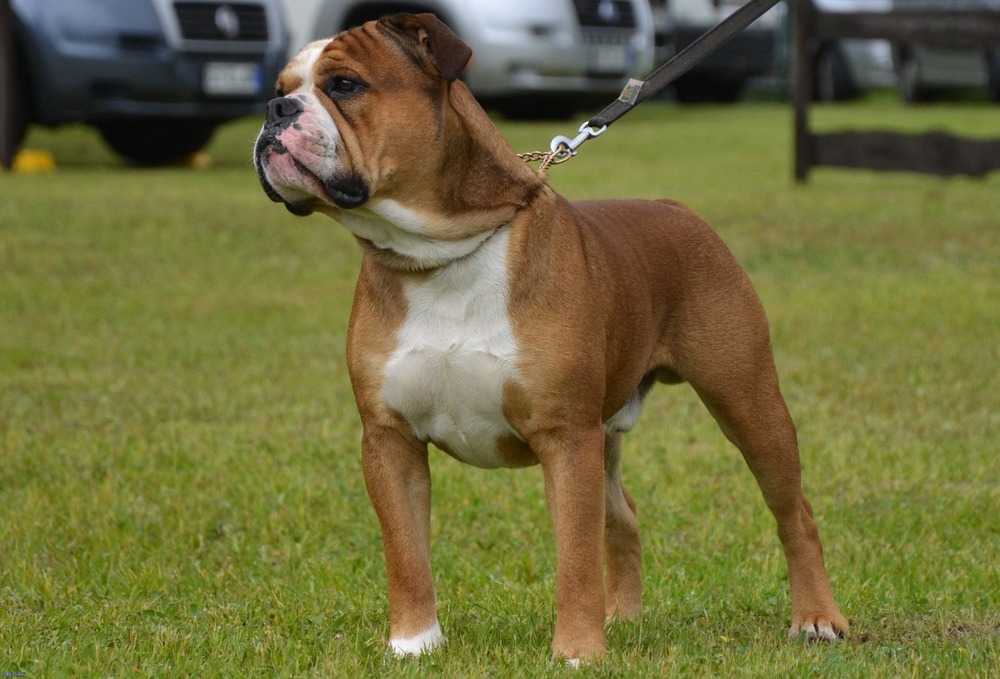
In the best examples, the Conti looks like a bulldog that can comfortably live like a dog: balanced proportions, strong limbs, and movement that is not laboured. The FCI standard describes an athletic, medium-sized bulldog type, with a short coat and a head that is not as extreme as some other bulldog breeds.1
It is still a compact, heavy-bodied dog, which means conditioning matters. Extra weight can quickly tip a sturdy build into strain on joints and poorer heat tolerance, even when a dog is otherwise well made.
Coat colours vary, and you will see brindle, fawn, and combinations with white. Rather than chasing a particular look, it is usually more helpful to prioritise sound movement, clear nostrils, and a dog that recovers quickly after mild exercise.
Temperament and behaviour in a household
Continental Bulldogs are commonly described as stable, friendly, and suitable for family life when well socialised. In real homes, that often shows up as a dog that wants to be close by, settles with the household rhythm, and enjoys joining in without needing constant activity.
That said, “easy family dog” is not automatic. Like any medium, muscular companion breed, a Conti benefits from early guidance on greetings, lead manners, and calm behaviour around visitors. Think of this as teaching good habits early, not “fixing” a problem later.
With children, the usual rules still apply: supervise interactions, teach kids to give the dog space when eating or resting, and avoid rough play that encourages body slamming. With other pets, careful introductions and positive experiences tend to matter more than breed stereotypes.
Training and exercise: what tends to work

Many Contis respond well to reward-based training, especially when sessions are short and consistent. A calm, steady approach usually suits bulldog types, where pressure and repetition can lead to shutdown or stubbornness rather than learning.
Daily exercise is typically moderate: walks, sniffing time, gentle play, and basic training. If you want to do more, build fitness gradually and keep an eye on breathing and recovery. Noisy breathing at rest, frequent gagging, or struggling on mild walks are all reasons to speak with a vet.4, 6
Practical ideas that suit many Contis include:
- Two shorter walks rather than one long one in warmer months.
- Food puzzles and scatter-feeding for mental work without overdoing physical exertion.
- Loose-lead walking practice in low-distraction areas, then gradually adding busier environments.
Health considerations and lifespan
You will often hear the Continental Bulldog described as a healthier alternative within the bulldog “family”. The intention of the breeding program was to prioritise more functional structure and breathing, but it is still important to stay realistic: no breed is risk-free, and individual dogs vary.
As a bulldog type, the Conti may still share some vulnerabilities seen in brachycephalic dogs, particularly around heat and exercise tolerance. Research reviews and veterinary guidance consistently note that brachycephalic dogs are over-represented in heat-related illness cases, and that breathing restrictions can make cooling harder.3, 4, 5
Orthopaedic issues (including hip dysplasia) and skin sensitivities can also appear in many medium, muscular breeds. The most practical protections are not glamorous: choose a careful breeder, keep the dog lean, build fitness steadily, and do regular vet checks.
Heat, breathing, and everyday warning signs
If your dog is snoring loudly when awake, struggling to settle after mild effort, or overheating quickly, it is worth discussing brachycephalic airway issues with your vet. Clinical guidance commonly recommends maintaining a healthy weight, avoiding heat and humidity, moderating exercise, and using a harness rather than a neck collar in dogs with breathing compromise.5, 6
Grooming and general maintenance
The Conti’s short coat is usually straightforward: an occasional brush to lift loose hair and a bath when needed. The more important maintenance tends to be the unglamorous basics: nails, ears, teeth, and skin checks.
If your dog has skin flare-ups, it is often more useful to track patterns (seasonal change, grass contact, diet changes, detergents) than to assume it is “just allergies”. Many skin problems are manageable, but they respond best when you identify triggers early and work with a vet on a plan.
Diet, weight, and body condition
Bulldog types can be enthusiastic eaters, and it does not take much extra food to blur the outline of a sturdy dog. For Contis, staying lean is not about aesthetics. It is about breathing comfort, joint load, and heat tolerance.
A helpful tool is a Body Condition Score (BCS), which combines looking and feeling. You want ribs that are easy to feel under a light fat covering, and a visible waist from above. If you are unsure, your vet can score your dog and help you set a realistic target.7
In day-to-day terms, the simplest approach is often the best:
- Measure meals, do not free-feed.
- Use part of the daily ration for training.
- Adjust portions when exercise drops (for example, during hot spells).
Choosing a breeder, and what to look for

Because the Continental Bulldog is still relatively new and less common, the gap between good and poor breeding can be wide. It is worth taking your time.
Things that are generally reasonable to ask about include:
- Health testing relevant to the lines (orthopaedics, airway assessment where appropriate, and skin history).
- How the breeder selects for functional movement and comfortable breathing, not just a particular head shape.
- Puppy socialisation practices and what the pups are exposed to before they go home.
- Whether the breeder can provide documentation aligned with recognised standards and registrations (bearing in mind the FCI status is provisional as of 30 March 2022).1
A good sign is a breeder who talks as comfortably about limitations and management as they do about strengths. That kind of honesty is often what leads to the happiest match.
Final thoughts
The Continental Bulldog appeals to people who love the bulldog look and steadiness, but want a dog that is more likely to cope with everyday life: walking, playing, travelling, and settling into a family routine. When well bred, well trained, and kept in good condition, the Conti can be a genuinely practical companion.
The best approach is simple and a little unromantic: meet adult dogs, ask careful questions, and prioritise sound structure and sensible care over hype. Your future self, and your dog, will feel the difference.
References
- FCI: Continental Bulldog (No. 369) breed information and standard dates
- Wikipedia: Continental Bulldog (overview and breed history summary)
- Veterinary Evidence (2022): Heatstroke risk in brachycephalic dogs (evidence review)
- The Kennel Club: Breathing problems in brachycephalic dogs
- Cornell University College of Veterinary Medicine: Brachycephalic Obstructive Airway Syndrome (BOAS)
- University of Florida Small Animal Hospital: Brachycephalic Obstructive Airway Syndrome
- FOUR PAWS Australia: Body Condition Score guidance for overweight pets