

You might come across a Dandie Dinmont Terrier in a park and do a double take, a long, low little dog with a soft topknot, moving with more purpose than you would expect for their size. Or you might be scrolling through breed photos, trying to work out whether that distinctive silhouette would actually fit your household, your routines, and your energy.
It is easy to assume that a small terrier will be either a constant whirlwind or a delicate lap dog. The Dandie is a useful reminder that breeds can sit in the middle: sturdy and practical, often quite thoughtful, and still very much a terrier when something catches their interest.
For people living in smaller homes, or anyone who likes a dog with character but not constant intensity, the details matter. Coat care, back safety, and early social learning make a noticeable difference to how a Dandie settles into everyday life.
- Breed category: Terrier
- Country of origin: Scotland (Border country of Scotland and England)
- Average height: 20 to 28 cm
- Average weight: 8 to 11 kg
- Typical lifespan: Around 12+ years (often 12 to 15)
- Coat: Double coat with a soft undercoat and crisp topcoat
- Colours: Pepper or mustard
- Shedding: Low
- Exercise needs: Moderate, up to about an hour a day suits many
- Grooming: More than once a week, with periodic trimming
History and origin
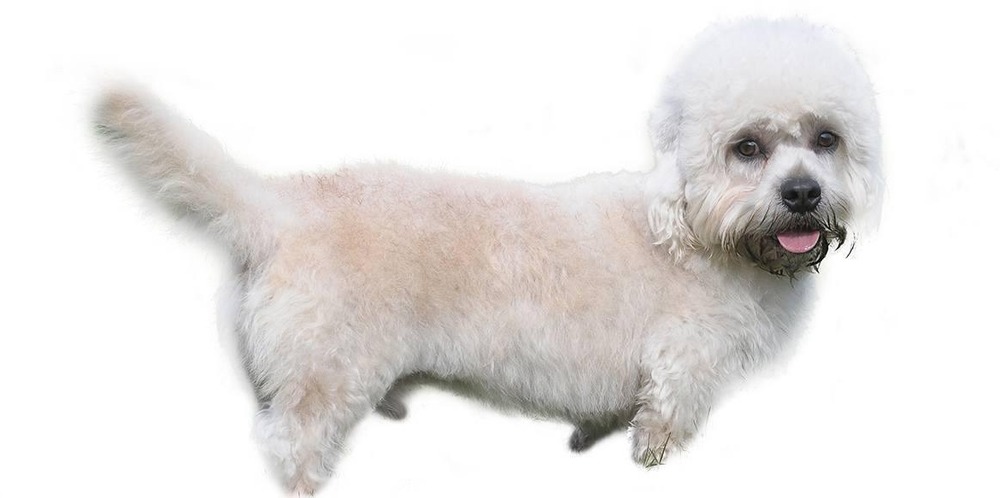
The Dandie Dinmont Terrier developed in the border country between Scotland and England, where small, determined dogs were valued for practical work, especially controlling vermin and going to ground. Over time, a particular type became recognisable for its long, low shape and distinctive head furnishings.1, 2
The breed name comes from literature. Sir Walter Scott used a character called Dandie Dinmont in Guy Mannering (published in 1814), and the association stuck, along with the memorable colour names “pepper” and “mustard”. It is still widely noted as the only dog breed named after a fictional character.1, 2, 3
Today, Dandies remain comparatively uncommon. In the UK, the breed is listed as a Vulnerable Native Breed, which is a practical indicator of low registration numbers rather than a comment on temperament or suitability.4, 5
Physical characteristics
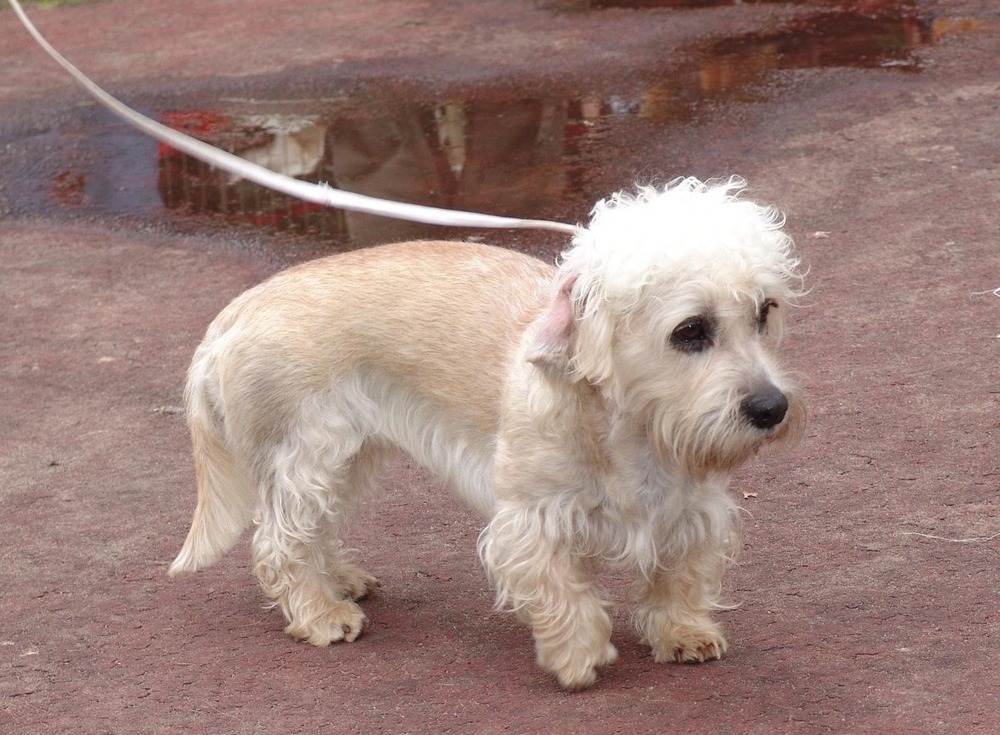
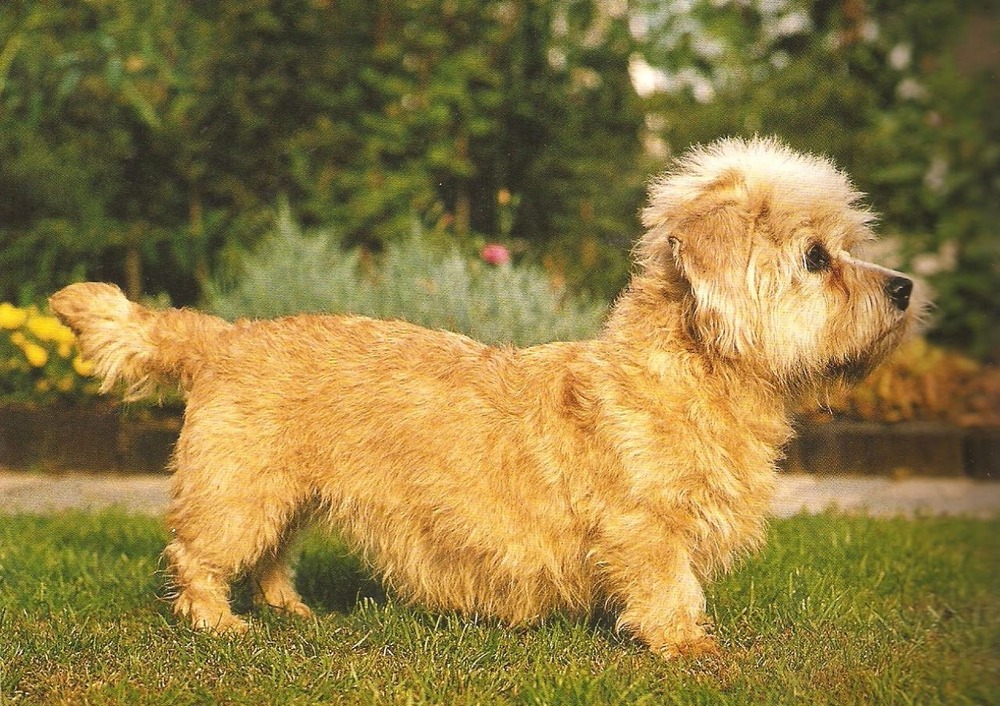
The Dandie is small, but not fine boned. Breed standards describe a long, low body, short strong legs, and a distinctive head with a silky topknot. The overall outline is often described as curved rather than angular, which gives the breed its unusual “weaselly” shape and steady, ground-hugging movement.1, 6
The coat is part of the appeal and part of the commitment. It is a mix of harder and softer hair, with two recognised colour families: pepper (ranging through grey to blue-black) and mustard (ranging from fawn to reddish-brown). The topknot is typically softer and lighter, which highlights the dog’s expressive head even at a distance.1, 6
Those pendulous ears, large eyes, and feathering around the face contribute to a gentle look, but it is worth remembering this is still a terrier body built for purpose. Stairs, jumping on and off furniture, and slippery floors are the kinds of everyday details that can matter more for this shape than people expect.
Temperament and behaviour
Dandies are often described as independent, intelligent, and affectionate, which can be a good shorthand as long as you read it as behaviour, not human intent. Many enjoy being close to their people, but they may not be constantly biddable in the way some companion breeds are.6
In practical terms, their terrier heritage can show up as alertness, persistence, and a quick response to movement. That might mean enthusiasm for sniffing trails, interest in small wildlife, or a tendency to hold a position when they think they are right. With calm handling, these traits can become part of what people love about living with them.
With children, it is often less about the breed and more about the household. Dandies tend to do best with respectful handling and predictable interactions. As with any dog, supervision helps, especially with younger kids, and especially around food, resting spots, and busy doorways.
Training and exercise needs
A Dandie can learn quickly, but many will test the logic of what you are asking. The most effective approach tends to be short, reward-based sessions, consistent cues, and enough repetition that the dog can succeed without feeling pressured. Harsh methods risk creating conflict, particularly in a small terrier that is built to push back when challenged.
Early socialisation matters, not as a box-ticking exercise, but as a gentle way of building a pup’s comfort with the ordinary world: handling, visitors, other dogs at a safe distance, traffic noise, vet visits, and quiet time alone. Well-run puppy programs can help owners practise these skills with guidance.7
For exercise, many Dandies suit moderate daily activity. Think one or two walks plus a bit of play, with room for sniffing and exploring. Mental work counts too, for example food puzzles, basic scent games, and simple training refreshers. A good rule is to aim for steady movement rather than lots of jumping, especially if your dog is long-backed or not particularly athletic.
Health and lifespan
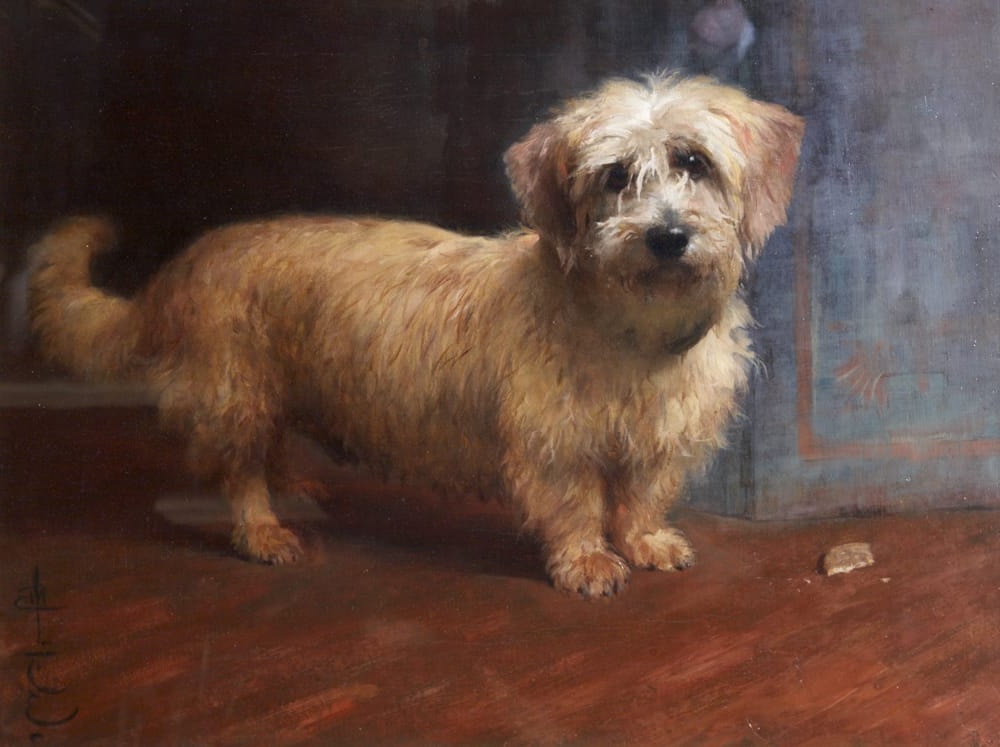
Dandies often live into their teens, with many sources placing the typical lifespan around 12 to 15 years.1, 4
The body shape that makes the breed distinctive can also bring some risk. Long-backed dogs can be more prone to spinal issues such as intervertebral disc disease, and that risk is influenced by everyday management, including body weight and how often the dog jumps up and down from height. If you notice reluctance to jump, changes in gait, pain, weakness, or toileting changes, it is worth treating it as a same-day vet question.8
Eye conditions are also part of the conversation in the breed, including glaucoma. Regular veterinary checks help, and prompt assessment matters if you see redness, cloudiness, squinting, watering, or a sudden change in how your dog navigates familiar spaces.9
- Keep them lean, extra weight can add strain.
- Use ramps or steps for couches and beds if your dog likes to climb up.
- Choose controlled exercise over repeated high-impact jumping.
- Keep routine vet visits, including eye checks where recommended.
Grooming and maintenance
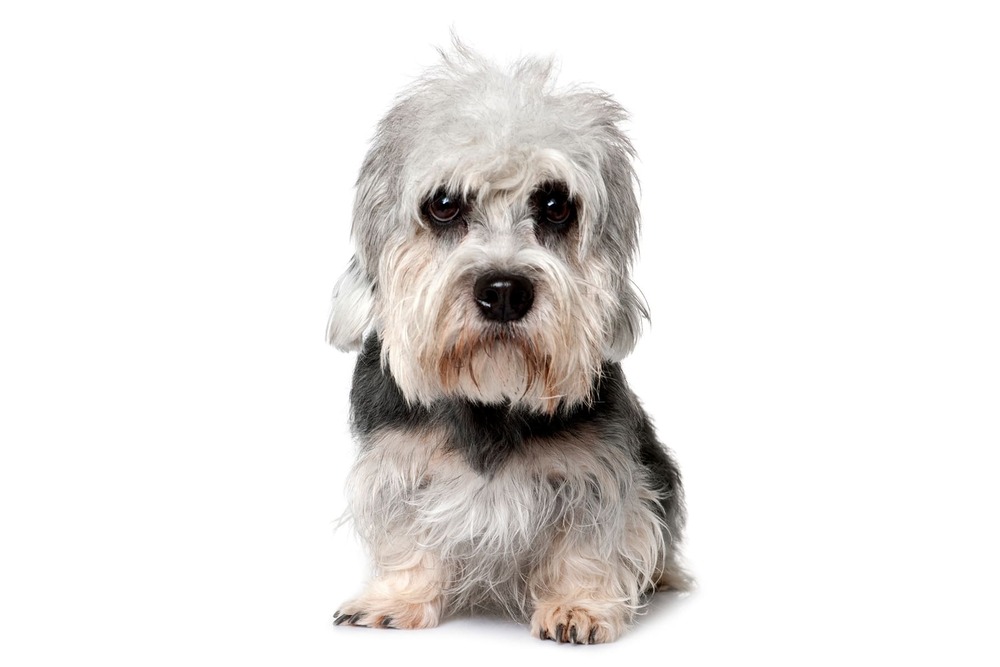
The Dandie coat is often described as low-shedding, but that does not mean low-maintenance. You are dealing with a coat that can mat if neglected, especially around the legs, armpits, ears, and the topknot. A realistic baseline for many households is brushing and combing more than once a week, with extra attention after wet weather or bush walks.4, 6
Most owners find they need periodic trimming to keep the coat comfortable and to maintain the breed’s outline. Whether you use a groomer or learn to do some tidying at home, the aim is not perfection, it is skin health and comfort.
Do not forget the small things that add up: nails kept short for good movement, ears checked for wax and debris, and teeth maintained with regular brushing. Those routines can feel fiddly at first, but they tend to be easier when introduced gradually and paired with calm rewards.
Diet and nutrition
For a Dandie, nutrition is not just about a shiny coat. It is also about keeping a long-backed dog at a healthy weight, supporting joints and muscle, and avoiding the slow creep of overfeeding that can happen with small breeds.
Choose a complete and balanced diet suited to your dog’s life stage, then adjust portions based on body condition, not the feeding guide on the bag. If you are not sure where to start, it can help to use vet-led tools for assessing diet quality and making changes methodically, especially if your dog has a sensitive stomach or fluctuating weight.10
Treats are useful in training, but they can quietly become a large part of daily calories. Many owners do well with a simple habit: measure the day’s food, then take training treats out of that amount so you are not accidentally doubling dinner.
Living with a rare breed
Because Dandies are relatively uncommon, you may have fewer options when it comes to meeting adult dogs, finding breed-experienced groomers, or locating a breeder with a litter available. That is not necessarily a problem, but it does reward patience and planning.
If you are considering a puppy, ask practical questions about temperament, health testing relevant to the breed, and how the pup has been raised. A thoughtful breeder should be willing to talk about coat care, typical training challenges, and how they support new owners beyond handover day.
For many people, the appeal is exactly this blend: a dog that feels a bit different, with a look you do not see every day, and a personality that tends to be steady but not bland. When their needs are met, Dandies often fit nicely into households that enjoy a small dog with quiet grit and a strong sense of presence.
References
- Encyclopaedia Britannica, Dandie Dinmont terrier
- Westminster Kennel Club, Dandie Dinmont Terrier
- The Royal Kennel Club, Dandie Dinmont Terrier (breed information)
- The Kennel Club (UK), Dandie Dinmont Terrier (breed information)
- The Royal Kennel Club, Vulnerable native breeds
- Dogs Australia, Dandie Dinmont Terrier breed standard (last updated 22 Feb 2017)
- RSPCA ACT, Puppy Socialisation Sessions
- Royal Veterinary College (RVC), Intervertebral disc disease (IVDD) in dogs
- American College of Veterinary Ophthalmologists (ACVO), Glaucoma
- WSAVA, Global Nutrition Committee