


You usually don’t go looking for a Dogo Argentino out of idle curiosity. More often, you notice one at the park, broad-chested and white as chalk, moving with a calm, watchful confidence. Or you meet someone who owns one and realise this isn’t just “a big dog”, it’s a dog built for a job, with the kind of physical power that changes what everyday management looks like.
It’s also a breed that attracts assumptions. Some people see the white coat and imagine an easy-care companion. Others see a muscular working dog and assume it’s automatically “hard” or unsafe. The truth sits in the middle: a Dogo Argentino can be a steady, affectionate family dog in the right hands, but it is rarely a low-effort dog.
Understanding where this breed came from, and what it was designed to do, helps you make sense of the behaviours owners talk about: the intensity outdoors, the strong interest in movement, and the importance of training that goes beyond basic manners. That practical understanding matters, whether you’re considering a puppy, adopting an adult, or simply trying to read the dog in front of you.
- Breed category: Working group (in some registries)
- Country of origin: Argentina
- Typical height: Males 60 to 68 cm, females 60 to 65 cm
- Typical weight: Often around 35 to 45 kg, depending on sex and build
- Coat: Short, smooth, predominantly white
- Exercise needs: High, daily physical and mental work
- Common health concerns: Congenital deafness, hip dysplasia
- Best suited to: Active, experienced owners with time for training
History and origin

The Dogo Argentino was developed in Argentina in the early 20th century, with Dr Antonio Nores Martinez and his brother Agustín most often credited for formalising the breed and its early standard. The goal was a dog capable of hunting large game in challenging terrain, while still being stable enough to live closely with people.1, 2
Those origins matter because they explain why many Dogos are both highly people-focused and intensely driven when something triggers their hunting instincts. The breed’s history is closely tied to pack hunting of animals such as wild boar, where stamina, grip, persistence, and the ability to work around other dogs were essential.2, 3
In terms of modern recognition, the Dogo Argentino entered the American Kennel Club stud book on 1 January 2020 and became eligible to compete in the Working Group on the same date, which is why you will sometimes see “AKC recognised in 2020” stated in breed summaries.4
Physical characteristics
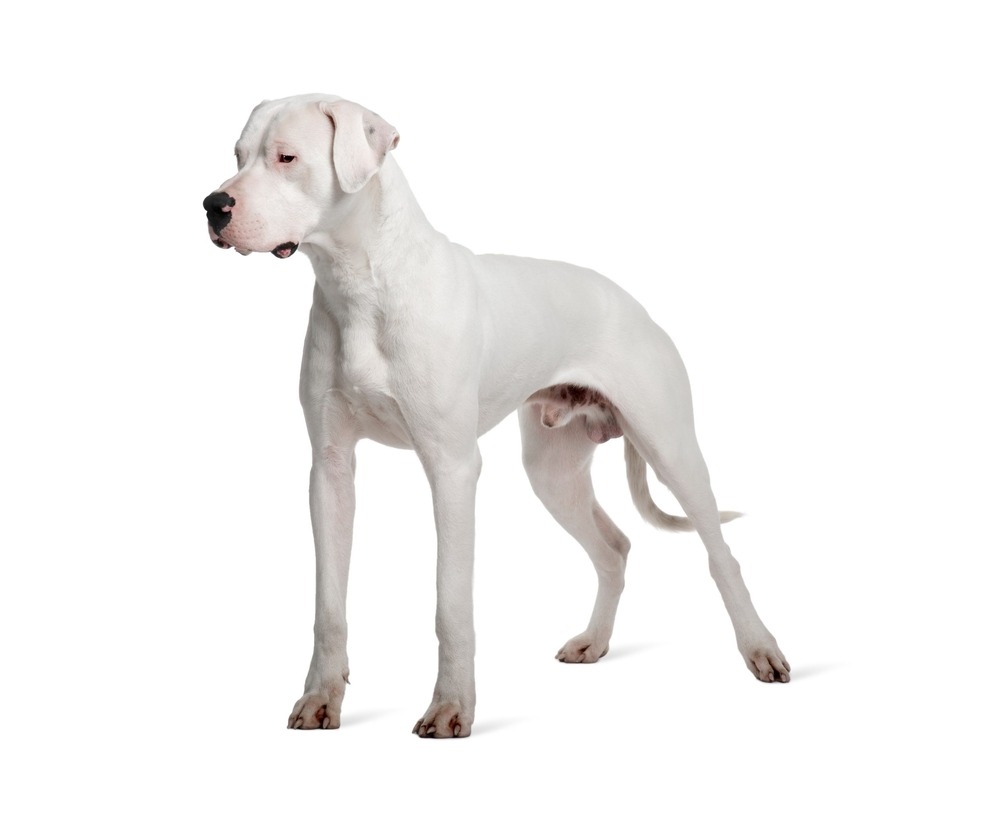
The Dogo Argentino is athletic and substantial without being cumbersome. Breed standards generally place adult height around 60 to 68 cm for males and 60 to 65 cm for females, with a powerful chest, strong neck, and a balanced outline designed for endurance as much as strength.5
The coat is short and smooth, and the colour is expected to be entirely white. Most standards allow one dark patch on the head, often around one eye or on the skull, usually limited to a small proportion of the head. Dark patches elsewhere on the body are typically considered a fault or disqualification in conformation contexts.5, 6
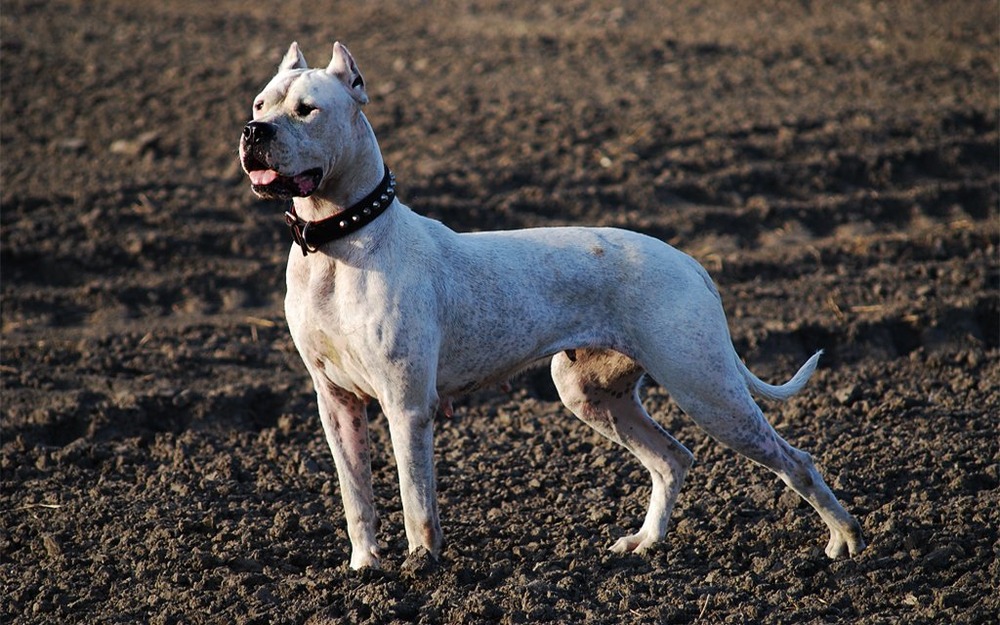
You may also hear about cropped ears. In Australia, cosmetic ear cropping is illegal in all states and territories, and only permitted for therapeutic reasons performed by a veterinarian. So if you are seeing cropped ears locally, it raises legal and welfare questions worth taking seriously.7
Temperament and behaviour in real homes
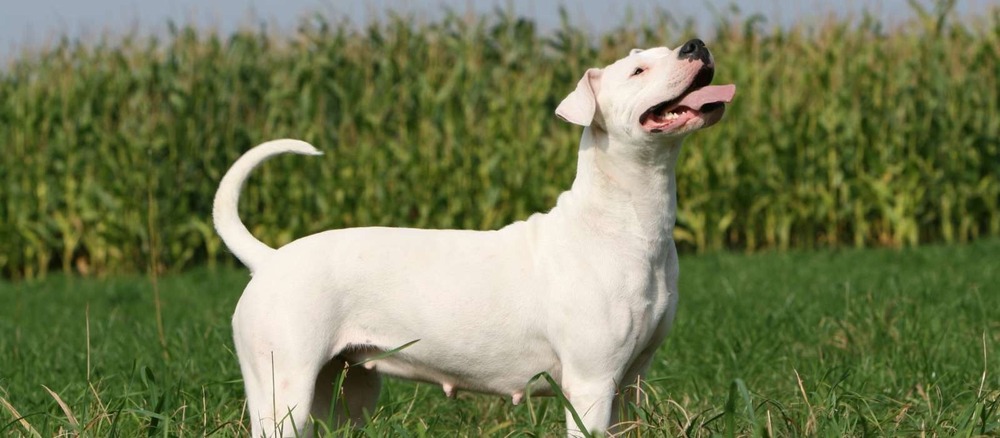
Well-bred, well-raised Dogos are often described as steady at home and very connected to their people. Many are naturally watchful, and that can look like quiet scanning, choosing a spot with a view, or standing between visitors and family members without being noisy about it. It is more accurate to think of this as a tendency towards guarding than a promise of protection.
Outdoors, the picture can change. A Dogo that is calm on the couch can become very animated by scent, movement, and sudden noise. This isn’t “bad behaviour” as such, but it does mean owners need skills: secure fencing, reliable equipment, and training that is practised around real-world distractions.
With children, success tends to come down to two things: the dog’s individual temperament and the adults’ supervision and management. A large, powerful dog can accidentally knock over a small child even in friendly play. The safest households treat kids and dogs as a supervised combination, rather than assuming any breed is automatically “good with children”.8
With other animals, particularly cats and small dogs, you need to be honest about prey drive. Early socialisation can help, but it does not erase genetics. In multi-pet homes, plan for slow introductions, physical barriers when you cannot supervise, and a trainer who can read dog body language in the moment.
Training and exercise needs
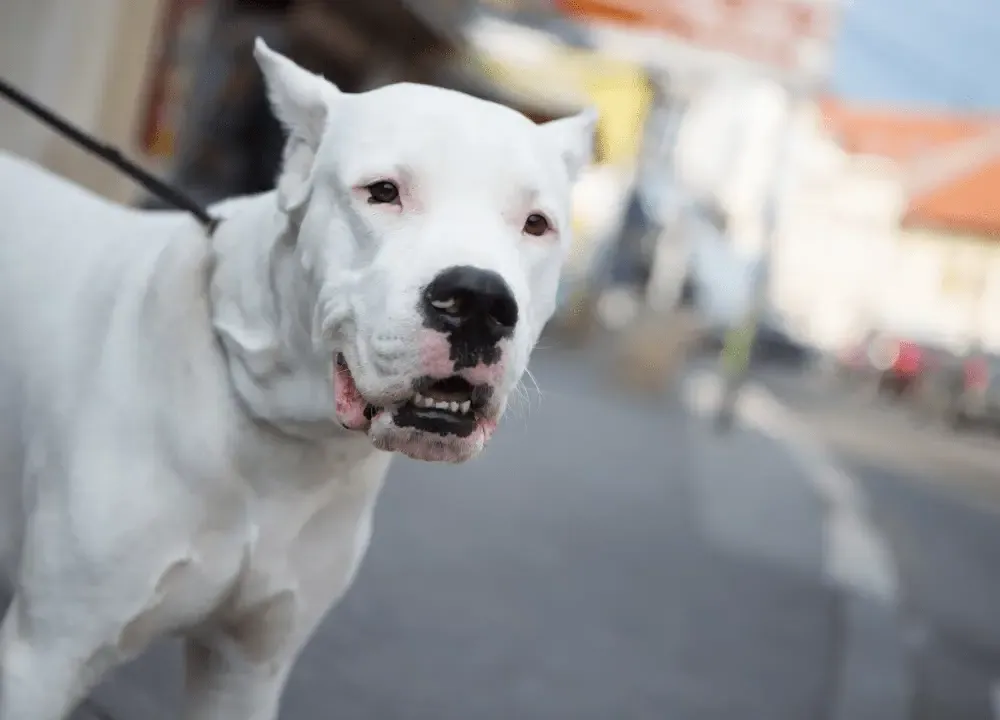
The Dogo Argentino usually does best with early, structured training that focuses on impulse control, calm handling, and leash skills, not just tricks. “Friendly puppy classes” are a useful start, but many Dogos also benefit from ongoing coaching as adolescence arrives and the dog’s confidence and physical strength increase.
Positive reinforcement training is widely recommended, and for this breed in particular it often pairs well with clear boundaries and careful management. You are aiming for a dog that can disengage from distractions when asked, settle when nothing is happening, and move with you calmly through the everyday friction points of life: the front gate, visitors, other dogs on lead, and wildlife scents on walks.
Exercise needs are high, but it’s not simply about kilometres. Many Dogos cope better when you combine physical activity with mental work. Useful options include:
- Sniff-based games (searching for treats, scent trails in the garden)
- Obedience skills in new locations (short, upbeat sessions)
- Secure-area running and structured play
- Enrichment at home (food puzzles, chew time, training for calm)
Because the breed can be powerful and determined, your everyday equipment matters. A well-fitted collar or harness, a sturdy lead, and a plan for what you will do when the dog locks onto something are not “extras”, they are part of safe ownership.
Health and lifespan

Many Dogos live into their early teens, with 10 to 15 years often quoted as a typical range. Like many medium to large athletic breeds, health outcomes depend on genetics, early growth, body condition, and basic preventative care.
Two issues come up often in this breed:
- Congenital deafness, which is commonly associated with white pigmentation in dogs. Deafness can be unilateral or bilateral, and BAER testing is commonly used to confirm it.9
- Hip dysplasia, a developmental condition influenced by genetics and environment. Screening (such as radiographs assessed through established schemes) helps breeders make better decisions, and keeping dogs lean supports joint comfort over time.10
If you are buying a puppy, ask what health testing has been done in the parents, and what that means in plain language. If you are adopting an adult, speak with your vet early about gait, fitness, and a realistic plan for exercise and weight.
Grooming, skin, and everyday maintenance
The Dogo’s coat is short and generally easy to care for. A weekly brush usually keeps shedding manageable and helps you notice small changes early: dry skin, new lumps, minor cuts, or irritation after a run through long grass.
Because the breed is white, owners sometimes underestimate how visible skin issues can be. Keep an eye on redness, recurring itch, and any sores that do not resolve quickly. Regular nail trims, ear checks, and dental care make an outsized difference over a dog’s lifetime, especially in large breeds where handling becomes harder if a dog is not used to it.
Diet and nutrition
Dogos tend to thrive on a balanced, complete diet that supports lean muscle and steady energy, rather than rapid growth or excess weight. If there is one practical nutrition principle that helps most, it is this: aim for a lean body condition and review it regularly, not just when a dog “looks heavy”.6, 10
When choosing a commercial food, it can help to use veterinary team resources that focus on overall quality control and suitability for the individual dog, rather than marketing claims. The WSAVA nutrition guidelines are often used by vets as a framework for assessing diets and discussing feeding plans with owners.6
Whatever feeding style you choose, avoid sudden diet changes, keep treats as a modest portion of daily intake, and talk with your vet if you are planning a home-prepared diet. Large, active dogs can look “fine” right up until a nutrient imbalance catches up with them.
Living with a Dogo Argentino, who tends to do well
The best matches for this breed are usually people who enjoy training, can provide daily activity, and are comfortable managing a strong dog in public. Space helps, but it is not the whole story. A bored Dogo on acreage can be harder than a well-managed Dogo in a smaller home with consistent enrichment and routine.
It is also worth thinking about your wider environment. If you regularly walk in areas with off-lead dogs, wildlife, or tight footpaths, you will need reliable lead skills and a dog that can recover quickly from arousal. That is trainable, but it takes time, repetition, and sometimes professional support.
If you are unsure, an honest conversation with a reputable breeder, a breed rescue, or a trainer who has worked with powerful guarding breeds can clarify whether a Dogo fits your household, not just your preferences.8
Final thoughts
The Dogo Argentino is striking, but the real story is in the daily rhythm: a dog that wants to be close to its people, needs purposeful outlets, and benefits from calm, capable handling. In the right home, with training that is built patiently and maintained, many Dogos settle into a steady companion who is both impressive and surprisingly easy to live with.
In the wrong match, the same traits that make the breed special, strength, determination, sensitivity to movement and scent, can become stressful for everyone. The most respectful approach is to see the Dogo as it is: a working dog in a modern world, deserving of both admiration and realistic planning.
References
- Dogo Argentino Club: Breed History
- American Kennel Club: Dogo Argentino History
- Wikipedia: Dogo Argentino
- American Kennel Club: Foundation Stock Service News and Updates (Dogo Argentino stud book and Working Group eligibility, 1 Jan 2020)
- Fédération Cynologique Internationale (FCI): Dogo Argentino Breed Standard (No. 292)
- WSAVA: Global Nutrition Guidelines
- RSPCA Australia Knowledgebase: Is ear cropping of dogs legal in Australia?
- RSPCA Pet Insurance: Considerations when choosing a dog
- Merck Veterinary Manual: Deafness in Animals
- Orthopedic Foundation for Animals (OFA): Hip Dysplasia