


- Breed category: Working group
- Country of origin: England
- Height: About 70 to 76 cm at the shoulder (dogs are typically taller than bitches)1, 2
- Weight: Highly variable, many adults are well over 70 kg, with some much heavier1, 2
- Average lifespan: Often under 10 years2
- Coat: Short and dense
- Common colours: Fawn, apricot, brindle (often with a dark mask)2, 3
- Grooming: Low to moderate, weekly brushing suits most dogs2
- Exercise needs: Moderate, steady daily activity rather than high-impact bursts2
- Drool: Common, often substantial
- Heat sensitivity: Many struggle in hot weather, plan walks for cooler parts of the day
People usually start looking up English Mastiffs after a moment that sticks in the mind: a dog so large it feels almost unreal, yet so still and watchful that the whole room seems to adjust around them. Sometimes it is a puppy that suddenly looks like it has grown overnight. Sometimes it is the practical questions that arrive first, like, “Will a dog this big fit in our home?” or “Is that calmness real, or is it just a dog that has not been tested yet?”
It is easy to assume that giant breeds are simply “big dogs” with the volume turned up. In practice, size changes everything, from training mechanics to flooring, car boot space, and how carefully you manage joints and weight. With Mastiffs, there is also a quiet, old-fashioned steadiness that many people love, but it comes with responsibilities that are less visible than the impressive silhouette.
What matters most is not whether the English Mastiff is gentle. Many are. It is whether their needs, health risks, and everyday management fit your life, and whether you can support a dog whose body is powerful even when their temperament is calm.
Where the English Mastiff comes from, and why it still matters

The Mastiff is often described as an ancient type, and the modern breed carries that history in its presence. The Kennel Club (UK) notes references to mastiff-type dogs in Britain in the Roman era, and outlines the breed’s later roles as guardians and, historically, in now-outlawed blood sports such as bull and bear baiting.2
That background does not mean today’s Mastiff is a “war dog” in your lounge room. It does help explain two enduring traits: physical capability and an instinct to notice what is unusual in their environment. In a well-raised dog, that tends to show up as steady observation rather than constant barking or busy reactivity.
A quick note on the name
In the UK, The Kennel Club lists the breed as “Mastiff”. In everyday conversation, many people say “English Mastiff” to distinguish it from other mastiff-type breeds.2
Appearance and the traits you actually live with

An English Mastiff has a broad head, deep chest, heavy bone, and a short coat that sits close to the body. Breed standards describe a powerful, well-knit dog where size is valued only when paired with soundness.1, 3
In daily life, “giant” translates to the small, unglamorous details: a tail that clears a coffee table, a body that needs space to turn, and the reality that you will be lifting, supporting, or manoeuvring a heavy dog at some point, even if only to help them into the car as they age. Drool management is also not a joke for many Mastiffs, and neither is the amount of sofa they can occupy.
Coat and colour
Mastiffs commonly come in fawn, apricot, or brindle, and many have a dark mask that makes their expression look especially serious, even when their body language is relaxed.2, 3
Temperament, family life, and what “protective” usually means
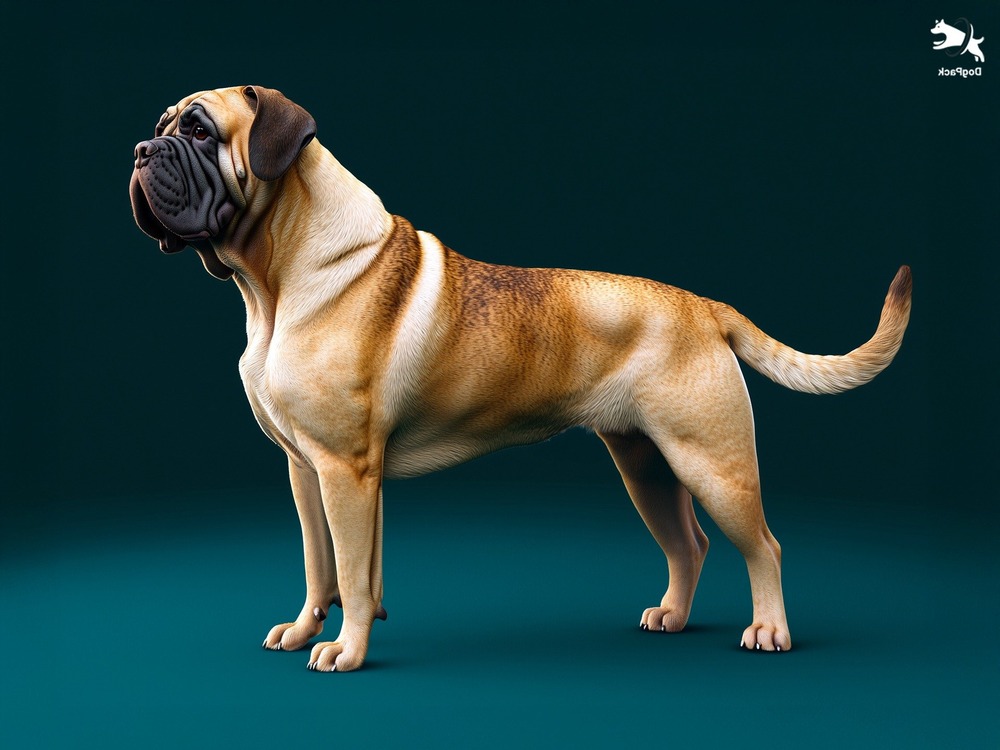
Well-bred, well-socialised Mastiffs are often calm, owner-focused, and not especially interested in fuss from strangers. The Kennel Club breed standard describes them as calm and affectionate with owners, capable of guarding, and usually indifferent to strangers.3
That “indifferent” part is worth sitting with. Some people interpret a Mastiff’s quiet watchfulness as stubbornness or “dominance”. Often it is simply a dog that is slow to decide, and not naturally inclined to perform friendliness on cue. Early, gentle exposure to visitors, kids’ noise, delivery people, and everyday handling helps them learn what is normal.
In families, the biggest risk is rarely malice. It is physics. Even a friendly Mastiff can knock over a toddler while turning around, or lean into a visitor with the full confidence of a 70 kg body. Supervision, calm greetings, and teaching kids how to give space are part of responsible ownership, not a sign that your dog is “unsafe”.
Living with other animals
Many Mastiffs can live peacefully with other pets, particularly when raised with them, but assume you will need time and management at the start. Slow introductions, separate feeding areas, and giving each animal escape routes matter more than optimism.
Training and exercise that suits a giant breed body
Training a Mastiff is less about drilling commands and more about building habits that make a huge dog easy to live with. If your Mastiff cannot walk on a loose lead, step off a footpath on cue, or tolerate basic handling, daily life becomes hard quickly.
Positive reinforcement tends to work well because it builds cooperation without escalation. Harsh corrections can create resistance, particularly in dogs that are naturally steady and not quick to switch gears.
What “moderate exercise” looks like
The Kennel Club suggests up to an hour of exercise a day for Mastiffs.2 For many dogs, that looks like one or two steady walks, plus sniffing time and low-impact play. Think stamina, not speed. If your dog is young, ask your vet about appropriate activity while they are still growing, because joint and soft tissue strain is easier to create than to undo.
- Short, regular walks are usually better than weekend-only blowouts.
- Choose soft surfaces where possible, and avoid repetitive jumping for balls on hard ground.
- Include calm mental work: food puzzles, scent games, or simple training in the backyard.
Health considerations, bloat risk, and day-to-day prevention

Large breeds tend to have a shorter average lifespan than smaller dogs, and the Mastiff is often listed as living under 10 years.2 It is not a reason to avoid the breed, but it does change how you plan, especially financially.
Like many giant, deep-chested dogs, Mastiffs are also in the conversation around gastric dilatation volvulus (GDV), often called bloat. Cornell’s canine health guidance lists risk factors that include large size, deep chest, eating quickly, feeding one large meal per day, exercising soon after eating, and use of raised food bowls.4
The day-to-day advice that tends to hold up across sources is simple: feed at least two meals, discourage gulping, and avoid vigorous exercise around meals. The RSPCA also advises feeding adult dogs at least twice a day and not exercising immediately before or after eating to help reduce bloat risk, particularly in deep-chested dogs.5
When to treat it as urgent
If your dog has a suddenly swollen abdomen, unproductive retching, restlessness, or looks distressed, treat it as an emergency and contact an after-hours vet immediately. GDV can progress quickly, and time matters.4, 6
Grooming, handling, and the unglamorous parts that add up
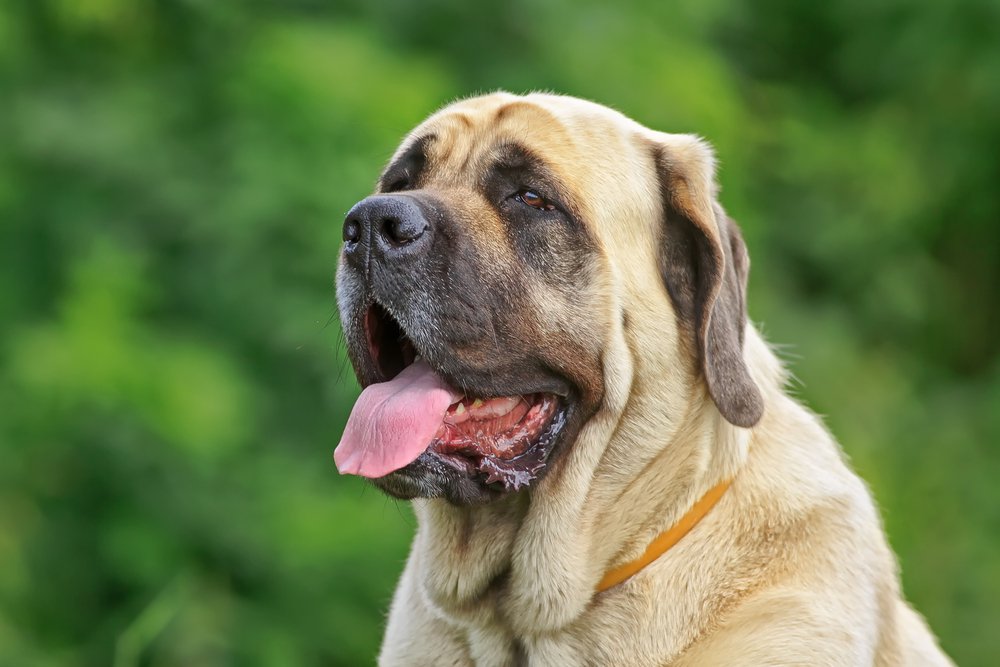
A short coat is usually straightforward, but “low grooming” does not mean “no care”. Weekly brushing helps with shedding and gives you a regular chance to check skin, ears, nails, and any lumps or sore spots. It also builds comfort with handling, which becomes important if your dog needs veterinary care later.
Plan for the practicalities: a non-slip surface where they eat and sleep, a bed that supports a heavy frame, and a grooming set-up that does not rely on lifting. Many owners find it easier to teach a Mastiff to step onto a low platform or mat for nail trims, rather than trying to manoeuvre a reluctant giant.
Feeding a Mastiff: nutrition, weight, and sensible structure
Mastiffs do best when food is treated as part of health management, not just routine. You are aiming for steady growth in puppies, and stable, lean condition in adults. Even small amounts of extra weight are harder on joints in a giant breed.
WSAVA’s nutrition resources emphasise using tools like body condition scoring so feeding decisions are based on your individual dog, not a packet suggestion or a comparison to another Mastiff.7 If you are unsure, your vet can help you learn what “healthy condition” looks like on your dog’s frame.
Feeding patterns that reduce problems
For deep-chested dogs, feeding patterns matter. The RSPCA recommends feeding adult dogs at least twice a day and avoiding exercise immediately before or after meals to reduce bloat risk.5 If your dog gulps food, consider a slow feeder bowl or feeding strategies that make them work a little more calmly for meals.
Bones and raw feeding, a careful note
Some people like to include bones, but the RSPCA notes that bones and raw meat are not recommended due to risks such as broken teeth, internal blockage, and bacterial contamination that can affect both animals and humans.5 If you want to go down that path anyway, do it with veterinary guidance and clear risk awareness.
Interesting notes about the breed, without turning them into myths
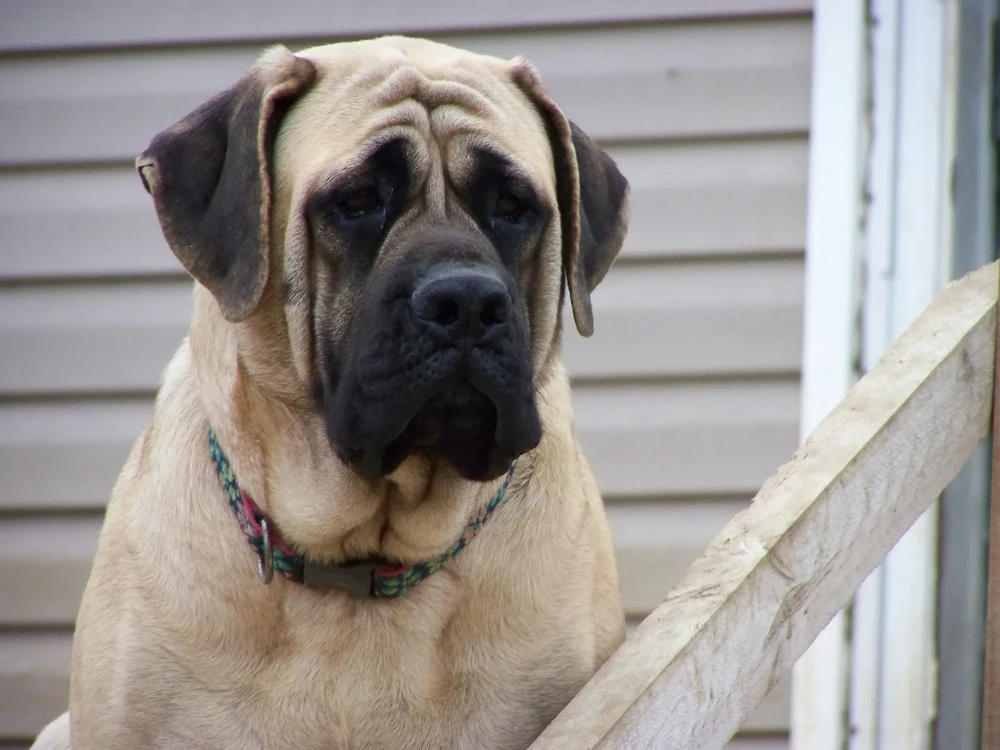
Mastiffs have a long history in art and literature, often used as a symbol of strength and guardianship. That cultural image is part of why people are drawn to them, but it can also create unrealistic expectations. A well-bred Mastiff is not a costume for toughness. They are a companion animal that needs training, boundaries, and thoughtful care.
If you have heard about record-setting size, there is truth behind the stories, with one famous Mastiff, Aicama Zorba of La-Susa, recorded by Guinness World Records with measurements including very substantial weight and length in the late 1980s.8 It is an interesting piece of trivia, but it should not become a breeding goal. Bigger is not automatically better, and soundness matters more than spectacle.3
Final thoughts on whether an English Mastiff fits your life
The English Mastiff can be a deeply grounding presence in a home: slow-moving, observant, and often content to be near their people rather than constantly entertained. That steadiness is real, but it is supported by training, socialisation, and routines that suit a giant breed body.
If you are considering one, think beyond temperament descriptors and focus on the practical match: your space, your climate, your willingness to manage weight and health risks, and your comfort handling a very large dog kindly and consistently. When those pieces align, life with a Mastiff can feel surprisingly calm for such an enormous animal.
References
- American Kennel Club (AKC): Mastiff
- The Kennel Club (UK): Mastiff breed information
- The Kennel Club (UK): Mastiff breed standard
- Cornell University College of Veterinary Medicine: Gastric dilatation volvulus (GDV) or bloat
- RSPCA Knowledgebase: What should I feed my dog?
- American College of Veterinary Surgeons (ACVS): Gastropexy and GDV
- WSAVA: Global Nutrition Guidelines and Body Condition Score tools
- Guinness World Records: Longest dog ever (Zorba)