


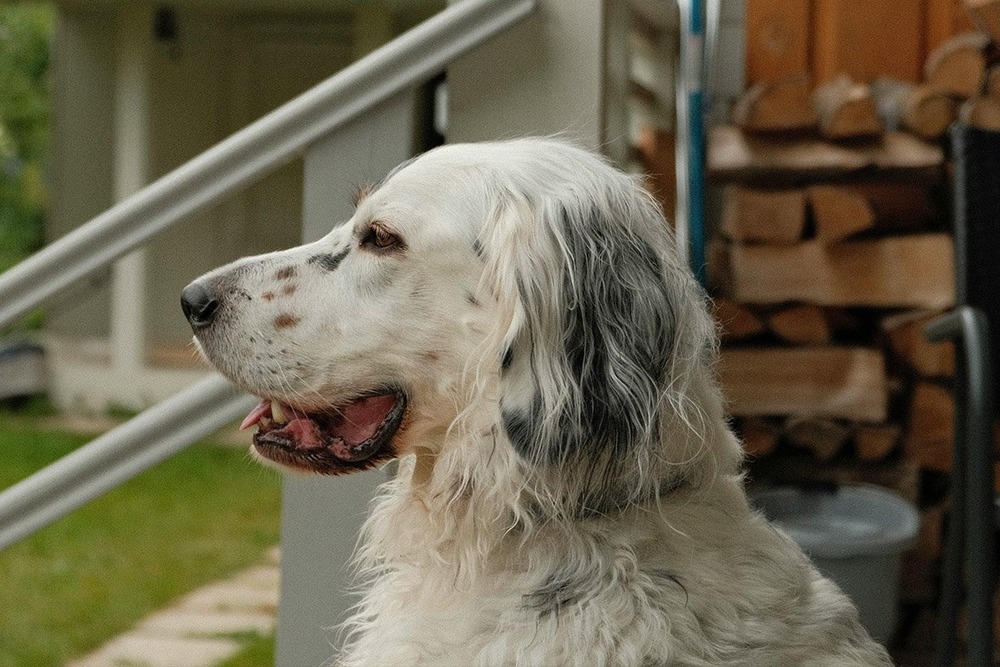
You might first notice an English Setter at a park because of the coat: soft feathering, a white base, and that speckled “belton” pattern that looks almost painted on. Or you might meet one through a friend and be surprised by how gentle and sociable a gundog can seem in everyday life.
They are often described as elegant, but that word can make them sound delicate. In practice, an English Setter is a dog built to move for hours, nose down, reading scent, then flowing back indoors like nothing happened. That contrast is part of their charm, and also the part that can catch people out if they expect a quieter companion.
Understanding where the breed came from, and what they were shaped to do, makes day-to-day care much easier. It helps you choose the right kind of exercise, grooming routine, and training approach, and it also helps you recognise what is normal for the breed versus what needs a vet’s attention.
- Breed category: Gundog
- Country of origin: England
- Typical height (Dogs Australia standard): Males 65 to 69 cm, Females 61 to 65 cm1
- Typical weight: Often around 20 to 36 kg, depending on sex, build, and lines2
- Life expectancy: Commonly around 10 to 12 years, with individual variation2, 3
- Coat: Long, silky, feathered
- Shedding: Moderate, with seasonal increases
- Exercise needs: High, best with daily opportunities to move and sniff
- Temperament (typical): Friendly, gentle, people-oriented4
History, purpose, and what “setting” really means

The English Setter developed in Britain as a bird dog, bred to find game birds and then “set” by lowering the body to indicate scent and location. That style made sense in the days of nets and early shooting, and it still shows up today as a distinctive pause or freeze when a Setter catches an interesting scent.
In the nineteenth century, particular strains shaped what many people now think of as the modern English Setter. Edward Laverack and R. Purcell Llewellin are often mentioned in breed histories, because their breeding programs influenced conformation and field performance, and their names still come up when people talk about “types” within the breed.5
Even if you never plan to do field work, it is worth remembering the original purpose. A dog bred to range, quarter ground, and follow scent does not suddenly stop needing that outlet just because they live in suburbia. The best-kept English Setters are usually the ones whose daily routine includes unhurried sniffing time, not just brisk lead walking.
Appearance and coat: belton colours and the practical side of beauty

Breed standards describe a coat that is long and silky, with feathering on the ears, chest, legs, and tail. Colours include blue belton (black and white), orange belton, lemon belton, liver belton, and tricolour, with “belton” referring to the flecked patterning rather than a single colour.1, 6
That coat is part of the appeal, but it comes with everyday consequences. Burrs, grass seeds, and tangles are not just cosmetic issues, they can become skin irritations, tight mats, or (in the case of seeds) a reason for a vet visit. A good routine tends to be steady and simple rather than elaborate.
What helps most is a few minutes of brushing several times a week, plus a quick check after bush walks or long grass. Many owners also keep light trimming around the feet and feathers to reduce tangles and make post-walk clean-ups easier.
Temperament and family life: gentle does not mean low-energy

English Setters are widely described as good-natured, affectionate, and socially inclined. They often enjoy being near people and can do very well in family homes where they are included in daily life, not treated like a backyard accessory.4
It is also common for the breed to be sensitive to the tone of training. Harsh corrections can flatten confidence or create avoidance, particularly in young dogs. They tend to do best when handling is calm, clear, and consistent, with plenty of reinforcement for the behaviour you want.
If you have other pets, early introductions matter. Many Setters live peacefully with other dogs, and some with cats, but it is sensible to assume there may be a chase reflex around fast movement outdoors. Think management first, then training, especially in unfenced areas.
Training and socialisation: starting early, keeping it kind
Early socialisation is not about forcing a puppy into overwhelming situations. It is about safe, steady exposure to people, environments, surfaces, sounds, and friendly animals, paired with enough distance and choice that the puppy stays curious rather than worried. Behaviour specialists have long emphasised that the earliest months are a key window for social development.7
For training, English Setters typically respond well to reward-based methods that make sense to a dog who is naturally motivated by scent and movement. Short sessions help. So do games that build attention and recall without turning every walk into a negotiation.
Useful training priorities for many English Setters include:
- Recall foundations before off-lead freedom
- Loose-lead walking, taught gradually rather than demanded
- “Settle” skills for calm time indoors
- Polite greetings, especially with jumpy adolescents
Exercise and enrichment: meeting a gundog brain in modern life
Most English Setters need daily exercise that is more than a quick loop around the block. You are usually aiming for a mix of physical movement and mental work, particularly scenting. Sniffing is not a distraction for this breed, it is a core need.
Options that suit many Setters include long walks with time to explore, structured off-lead runs in safe areas, scent games, and training that uses searching or retrieving as a reward. If you notice restlessness, scavenging, or constant “busy” behaviour at home, it is often a sign the dog needs more meaningful outlets, not necessarily stricter discipline.
In hot weather, take extra care. English Setters are active and enthusiastic, and they may not self-regulate well when excited. In Australia, that often means choosing early or late walks, carrying water, and avoiding hot surfaces.
Health considerations: what to watch, and how vets usually approach it

No breed is “problem-free”, but you can stack the odds in your favour by understanding common issues and keeping preventative care boring and consistent. In English Setters, owners and breed clubs often mention orthopaedic concerns such as hip dysplasia, along with ear problems linked to long, hanging ear leather and a hairy, moisture-trapping ear environment.
Hip dysplasia is a developmental condition involving joint laxity and, over time, arthritis. It is influenced by multiple factors including genetics, growth, body condition, and environment. Signs can include stiffness, reluctance to jump, soreness after exercise, or a “bunny hop” gait, but symptoms do not always match X-ray changes. Vets diagnose it with examination and radiographs, then tailor management which may include weight control and pain relief, physical therapy, and, in some cases, surgery.8
On ears, the goal is not constant cleaning for its own sake. It is recognising what is normal for your dog, keeping ears dry after swims, and getting a vet check if you notice persistent redness, odour, discharge, head shaking, or pain. Ear infections need proper diagnosis and treatment, not guesswork.
Grooming and everyday care: small routines that prevent big problems

Regular grooming is part coat care and part health check. Brushing helps prevent mats, but it also gives you a natural moment to look at skin, paws, and ears. For many English Setters, a practical rhythm is brushing several times a week and doing a quick post-walk comb-through if they have been through scrub or long grass.
Pay attention to the feathering on legs and tail, and the fur between toes, which can hold mud and seeds. If you live near grass seeds (common in many parts of Australia in warmer months), consider keeping foot hair neat and checking paws daily during peak season.
When it comes to ears, avoid cotton buds, and do not clean a painful or obviously inflamed ear at home. If you are unsure, your vet can show you a safe technique and recommend an appropriate product.9
Feeding and weight: supporting joints, coat, and stamina
English Setters do best on a diet that matches their age, activity, and body condition. The most useful tool is often not a brand debate, but a regular check of your dog’s shape and muscle cover. If you can no longer feel ribs without pressing, or the waist disappears, it is worth adjusting portions early, because extra weight can quietly increase strain on joints.
Feeding habits also matter around exercise. Animal welfare guidance commonly recommends feeding adult dogs at least twice daily and avoiding vigorous exercise immediately before or after meals, partly to reduce bloat risk in susceptible dogs.10
If you are overwhelmed by nutrition marketing, veterinary organisations encourage using evidence-based guidance and working with your vet team, especially for puppies, highly active dogs, and dogs with medical needs.11
Living setup: space, fencing, and the reality of “apartment friendly”
English Setters can be calm indoors when their needs are met, but they are not usually at their best in a tiny space paired with limited daily exercise. What matters most is not acreage, it is access to movement, enrichment, and good fencing. Many Setters will follow scent if given the chance, so a secure yard and thoughtful lead habits are practical, not optional.
If you are choosing a puppy, it is reasonable to ask breeders about temperament, energy levels, and health screening relevant to the breed. Breed clubs also encourage buyers to look for breeders who can provide documentation and transparent information about health testing and care.12
Final thoughts
An English Setter suits people who enjoy an active rhythm, but also appreciate a dog who can soften into family life when the day has been properly spent. They tend to flourish with kind training, daily opportunities to sniff and run, and steady coat care that prevents tangles and skin trouble from building up.
If you meet the breed where it is, as a gundog with a gentle manner rather than a decorative dog with occasional zoomies, the relationship often feels straightforward. Not effortless, but deeply companionable.
References
- Dogs Australia: English Setter breed standard
- American Kennel Club (AKC): English Setter
- The Kennel Club (UK): English Setter breed standard
- English Setter Association (Australia): Breed overview
- Wikipedia: English Setter (history and strains overview)
- Hill’s Pet Nutrition: English Setter breed profile
- American Veterinary Society of Animal Behavior (AVSAB): Puppy Socialization Position Statement
- Merck Veterinary Manual (Pet Owner Version): Hip dysplasia in dogs
- Turramurra Veterinary Hospital: Managing and preventing dog ear problems
- RSPCA Australia Knowledgebase: What should I feed my dog?
- WSAVA: Global Nutrition Guidelines
- Dogz Online (Dogs Australia): English Setter information (provided by breed club)