


People often come across the English Shepherd by accident. You might see a medium-sized farm dog who looks a bit like a Collie, works all day without fuss, and still has enough steadiness left to settle at your feet at night. Then you try to look the breed up and realise it does not fit neatly into the familiar “show dog” categories.
It is tempting to assume a dog like this will automatically be easy in any home, because they are clever and “good on a farm”. In practice, the English Shepherd’s strengths are very real, but they come with specific needs. They tend to do best with meaningful daily work, thoughtful training, and a household that notices early signs of boredom or over-arousal rather than waiting for problems to set in.
When the match is right, an English Shepherd can be a calm, capable companion with a long tradition of practical usefulness. Understanding that tradition helps you make better decisions about exercise, socialisation, grooming, and health care, especially if you are choosing a puppy or bringing an adult dog into a new environment.
- Breed category: Herding
- Country of origin: United States
- Typical height: Males about 46 to 58 cm, females about 46 to 54 cm
- Typical weight: Males about 20 to 30 kg, females about 18 to 27 kg
- Typical lifespan: Around 12 to 15 years
- Coat: Medium length, double coat
- Shedding: Moderate
- Energy level: Very high
- Exercise needs: High, daily physical activity plus mental work
Where the English Shepherd comes from
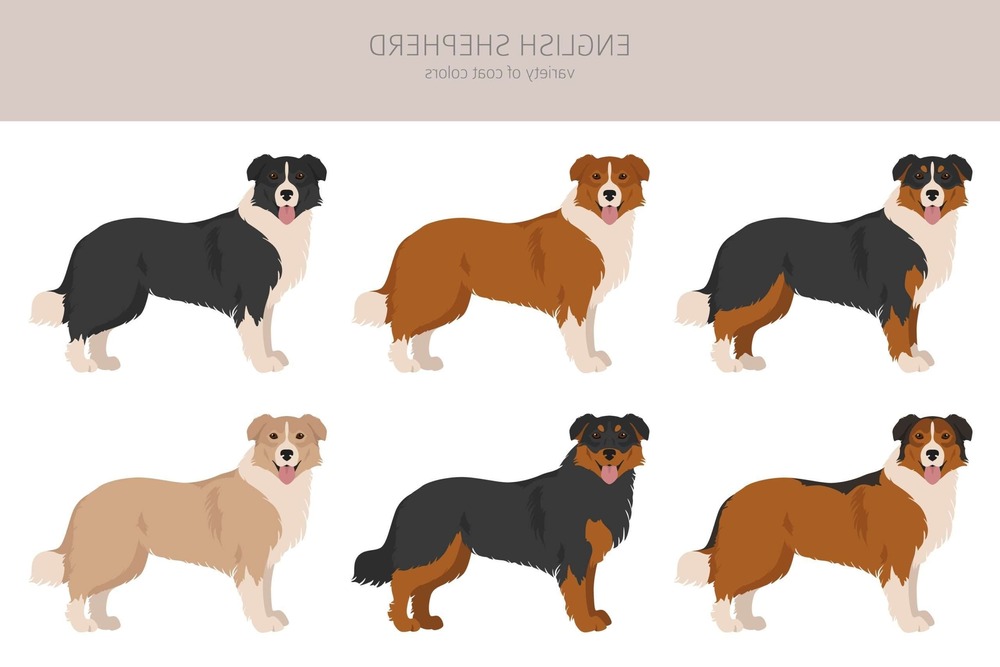
The English Shepherd developed in the United States as a practical farm collie type, shaped by the daily realities of livestock, property boundaries, and family life. Historical accounts commonly describe their ancestors as collies brought to North America by settlers from Britain and Ireland, then selected over generations for versatility rather than a single specialised job.1
That background still shows up in the way many English Shepherds move through the world. A lot of them have a natural “checking in” habit, scanning the environment, tracking movement, and staying aware of where their people are. It can look like devotion, but it is also part of a working style built around managing space and motion.
In registry terms, it is worth knowing the breed is recognised by the United Kennel Club (UKC), which has registered English Shepherds since 1927. The UKC originally used the name American Farm Shepherd, then renamed it English Shepherd in 2003. The breed is not recognised by the American Kennel Club (AKC).1
Temperament in real homes
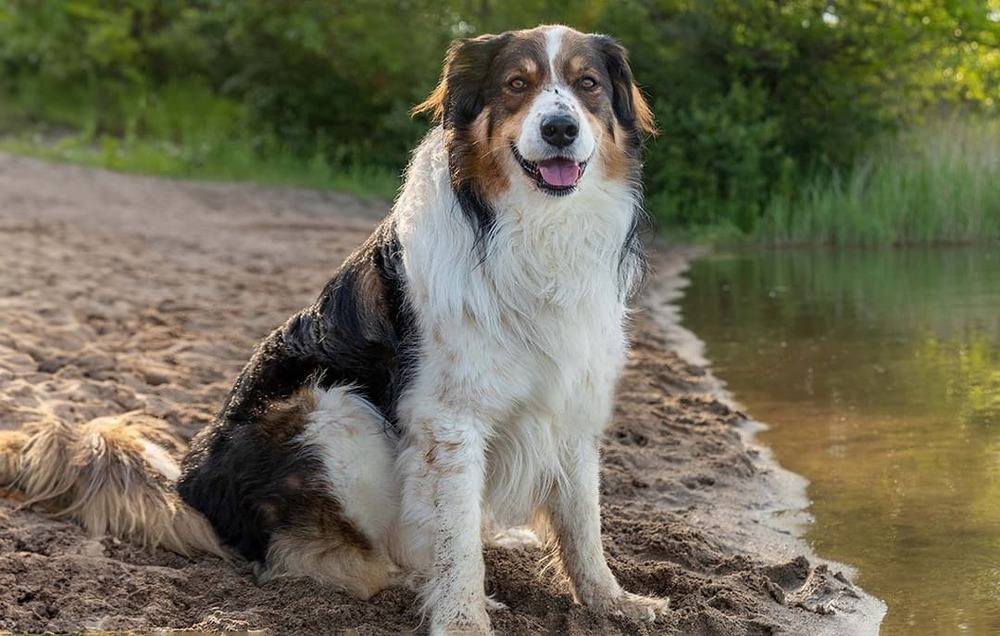
An English Shepherd is often described as intelligent, loyal, and energetic. Those words can be accurate, but they can also hide the more useful truth: many of these dogs are highly responsive to routine. If life is predictable and training is consistent, they tend to settle well. If the household is chaotic or their needs are met only in bursts, you can see more pacing, vocalising, and “busy” behaviour.
They are commonly steady with familiar children, particularly when the dog has been raised with appropriate boundaries and supervised interactions. As with any herding breed, it is sensible to watch for early signs of chasing, circling, or body blocking during fast games, then redirect to more suitable activities before that pattern becomes a habit.
With other pets, many do well, especially when introduced carefully and early. A herding background can mean they are sensitive to movement, so the goal is to teach calm behaviour around motion rather than simply hoping the dog “gets used to it”.
Training that suits a thinking herding dog

English Shepherds tend to learn quickly, but speed is not the same as stability. Early training is most effective when it focuses on small, repeatable behaviours that support everyday life, such as mat training, recall, loose-lead walking, and a reliable “leave it”.
Reward-based training is widely recommended by veterinary behaviour organisations because it is effective and reduces welfare risks associated with aversive methods. In practical terms, it also helps sensitive, observant dogs stay engaged rather than becoming wary or defensive in training contexts.2
For many English Shepherds, the hardest skill is not “sit” or “down”. It is switching off on cue. Build that deliberately by rewarding calm choices, teaching a settle, and using enrichment that produces relaxation, such as sniffing walks, slow food delivery, and simple search games.
Socialisation, without flooding
Socialisation works best as steady exposure to everyday life, at a pace the dog can process. Aim for lots of neutral experiences, such as watching cyclists from a distance, walking past school ovals, or meeting visitors one at a time, with the dog able to move away if they need space.
Exercise and mental work
English Shepherds are not usually happy with exercise that is only physical. A long run can still leave a dog mentally under-stimulated, especially if their day has no problem-solving, no sniffing time, and no meaningful interaction.
A more realistic aim is a blend of:
- Daily movement, such as brisk walks, hikes, or structured play
- Mental engagement, such as scent work, trick training, or puzzle feeding
- Impulse control, such as waiting at gates, settling on a mat, and calm greetings
If you live in a smaller space, the breed is not automatically unsuitable, but you will need to provide deliberate outlets. It helps to think in terms of “how will this dog do a job today?” rather than “how will this dog burn energy?”
Health, screening, and what to ask breeders

English Shepherds are often robust, but like many medium herding dogs they can be affected by hip dysplasia and inherited eye conditions. Hip dysplasia is influenced by both genetics and environment, and screening programs rely on radiographs assessed through established schemes such as those run by the Orthopedic Foundation for Animals (OFA).3
One eye condition to be aware of in collie-type breeds is Collie Eye Anomaly (CEA), an inherited disorder of eye development that can range from mild changes with little impact to severe impairment. Diagnosis can be made early by a veterinary ophthalmologist, and DNA testing is also used in breeding decisions.4
If you are speaking with a breeder or a rescue group, useful questions include:
- Have the parents had hip screening, and can you see the documentation?
- What eye screening or DNA testing is done for known inherited risks in the line, including CEA?
- How are puppies raised in the home, and what early experiences do they get (surfaces, noise, visitors, car travel)?
Everyday preventative care
Good care is rarely complicated. It is consistency that matters. Regular veterinary checks, parasite control suited to your area, dental care, and keeping the dog in a lean body condition all make a measurable difference over a lifetime.
Coat care and grooming
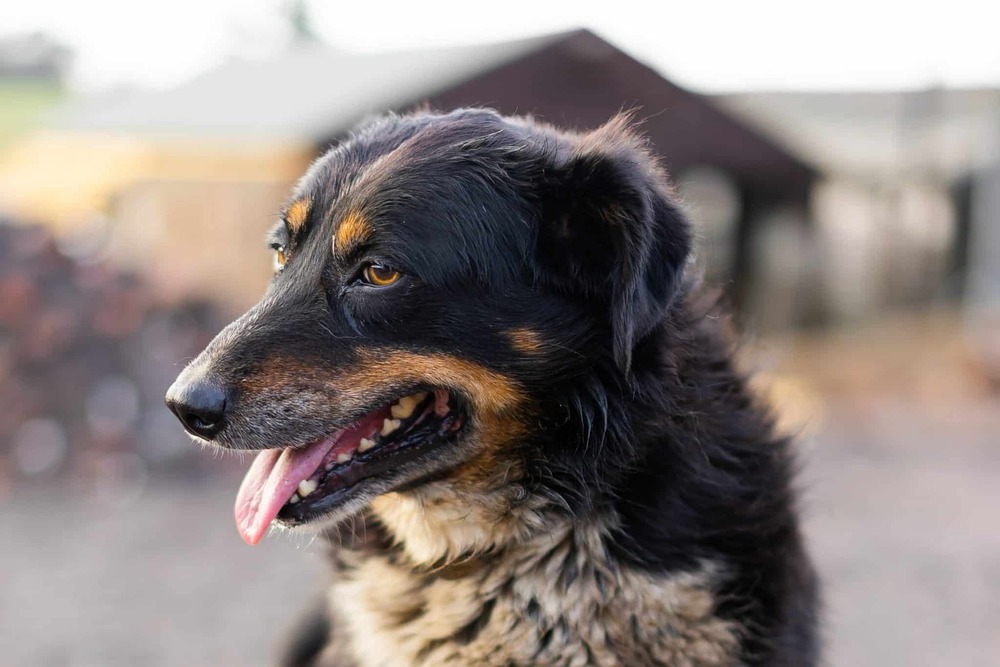
The English Shepherd coat is usually medium length with a double coat, designed for weather and work rather than fashion. Most need moderate grooming, not constant clipping. A thorough brush once or twice a week is often enough, with more frequent brushing during seasonal shedding.
Focus on the places that tangle quietly: behind the ears, the feathering on the legs, and the tail. Use grooming as a low-pressure handling lesson. Short sessions, plenty of breaks, and rewarding stillness will help your dog accept brushing, nail trims, and checks for grass seeds.
Bathing is typically occasional. Over-bathing can strip oils and leave the coat feeling dry. When you do wash, rinse thoroughly and dry the undercoat well, especially in cooler weather.
Feeding and day-to-day management
Most English Shepherds do well on a balanced commercial diet that meets recognised nutritional standards for the dog’s life stage. The practical challenge is often not what to feed, but how to feed it. Active dogs can swing between being too lean and gradually creeping into weight gain once adolescence ends.
A few habits help:
- Measure meals, at least some of the time, so portions do not drift upwards.
- Use part of the daily food for training, especially recall and calm behaviour.
- Watch body condition. You should be able to feel ribs with light pressure, and see a waist from above.
If your dog is doing sustained work, such as long hikes or farm work, talk with your vet about adjusting calories and protein rather than simply increasing treats.
Living with an English Shepherd
The English Shepherd tends to suit people who like training and routine, and who enjoy a dog that notices things. They are often at their best when they have a role: accompanying you around property, learning tasks, joining structured dog sports, or being the steady companion on daily walks where they can sniff, observe, and decompress.
They are not always the easiest fit for a household that wants a dog who is content with minimal interaction. If you are drawn to the breed, it helps to choose with your eyes open, and to plan for daily work and rest in equal measure.
References
- English Shepherd (history and registry notes)
- American Veterinary Society of Animal Behavior (AVSAB): Humane Dog Training Position Statement
- Orthopedic Foundation for Animals (OFA): Hip Dysplasia overview and screening
- Orthopedic Foundation for Animals (OFA): Collie Eye Anomaly (CEA)
- United Kennel Club (UKC): English Shepherd breed information
- United Kennel Club (UKC): English Shepherd breed standard (PDF)
- Cornell University College of Veterinary Medicine: Notes on OFA hip radiograph evaluation
- Australian Government Department of Agriculture, Fisheries and Forestry: Dog import step-by-step guide (microchip and health preparations)