

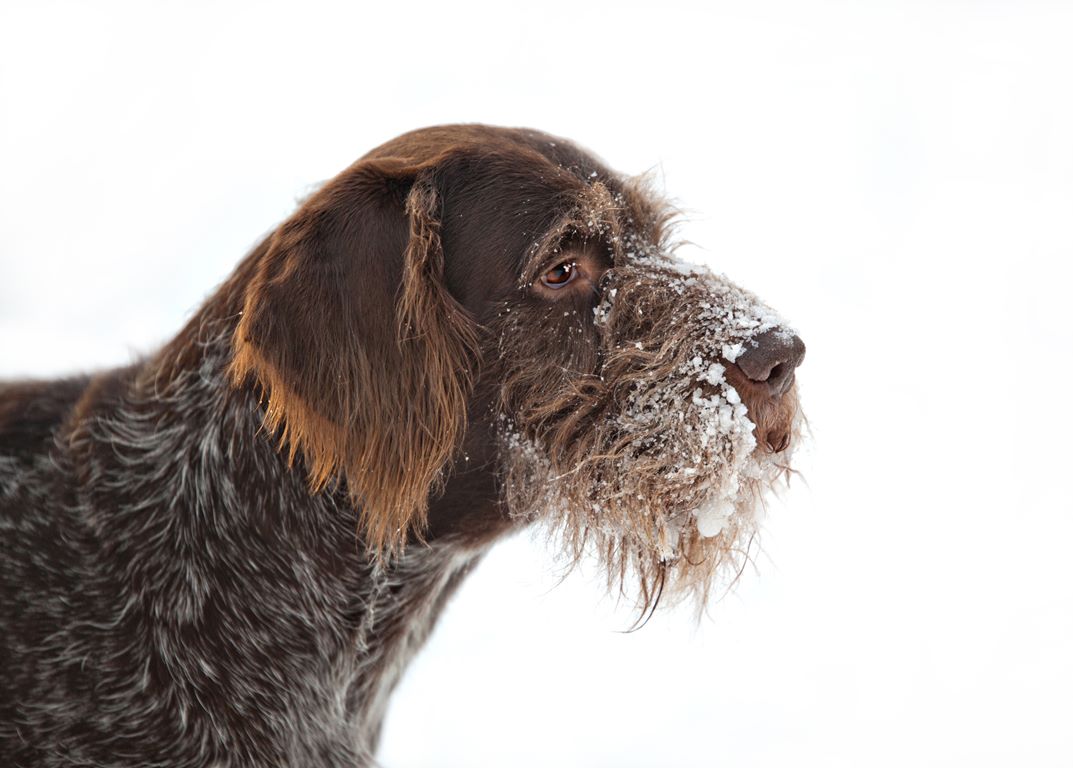
You might notice a shaggy, bearded pointer at the dog park, all eyebrows and wire coat, and wonder whether it is simply a rough-coated version of a German Shorthaired Pointer. Or you might meet one through sport, hunting, or an active household where the dog seems switched on from morning to night, and start asking the practical question: what does a German Wirehaired Pointer actually need to live well?
It is a breed that often gets described in a few tidy phrases, “versatile”, “loyal”, “high energy”, but those labels can hide the lived reality. These dogs were shaped for long days of work in uncomfortable conditions, and that history still shows up in the way they move, learn, and cope with boredom.
When the match is right, they are deeply rewarding companions. When the match is off, the same qualities that make them brilliant in the field can spill into restlessness, overexcitement, and a dog that feels harder than expected to live with.
Breed snapshot (at a glance)
Breed group: Gundog (versatile pointing and retrieving dog)1, 2
Origin: Germany, developed in the late 1800s as an all-purpose hunting dog1, 2
Size: Dogs about 60 to 67 cm, bitches about 56 to 62 cm at the shoulder3
Weight: Dogs about 25 to 34 kg, bitches about 20.5 to 29 kg3
Life expectancy: commonly around 12 to 14 years2
Coat: harsh, wiry outer coat with a dense undercoat, designed for protection in weather and cover3
Where the breed came from, and why it matters
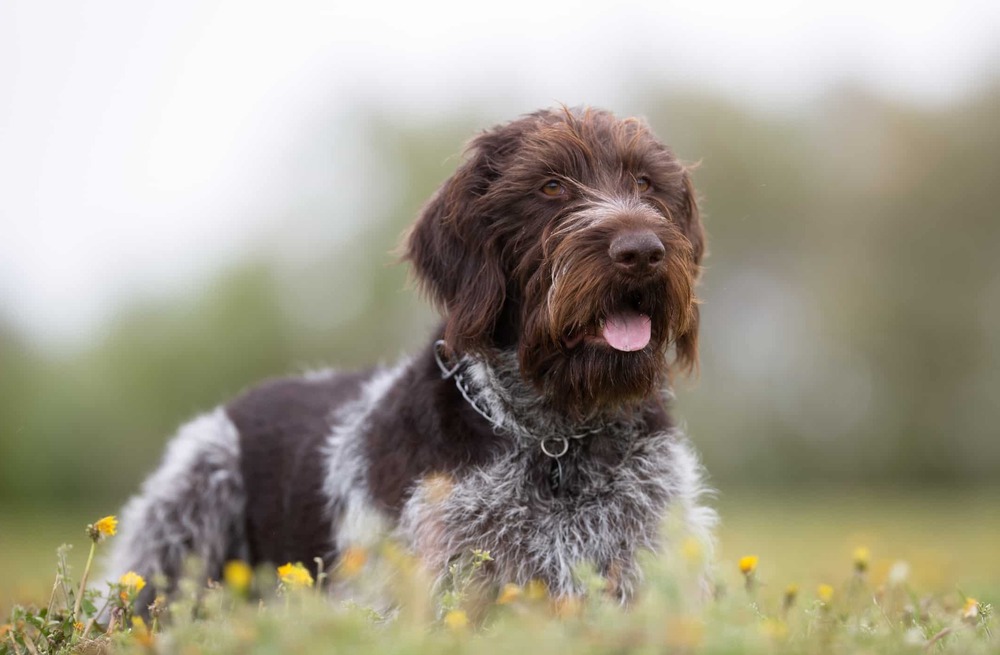
The German Wirehaired Pointer was developed in Germany in the late 19th century with a clear job in mind: a dog that could hunt across land and water, work in cold weather and thick cover, and do it all with steadiness and stamina.1, 2
That “versatile gundog” brief explains many modern-day traits. A dog bred to search, point, track, and retrieve is rarely content with a quick loop around the block. Even in a non-hunting home, they tend to do best when their days include purposeful movement and a bit of problem-solving, not just free running.
You will sometimes see the breed linked to Baron Sigismund Freiherr von Zedlitz und Neukirch (often called “Hegewald”) as an influential figure in early development and standard-setting.1 It is a useful detail, but the bigger point for owners is simpler: this is a dog shaped by function, and it still behaves like it.
Appearance, coat, and those distinctive eyebrows
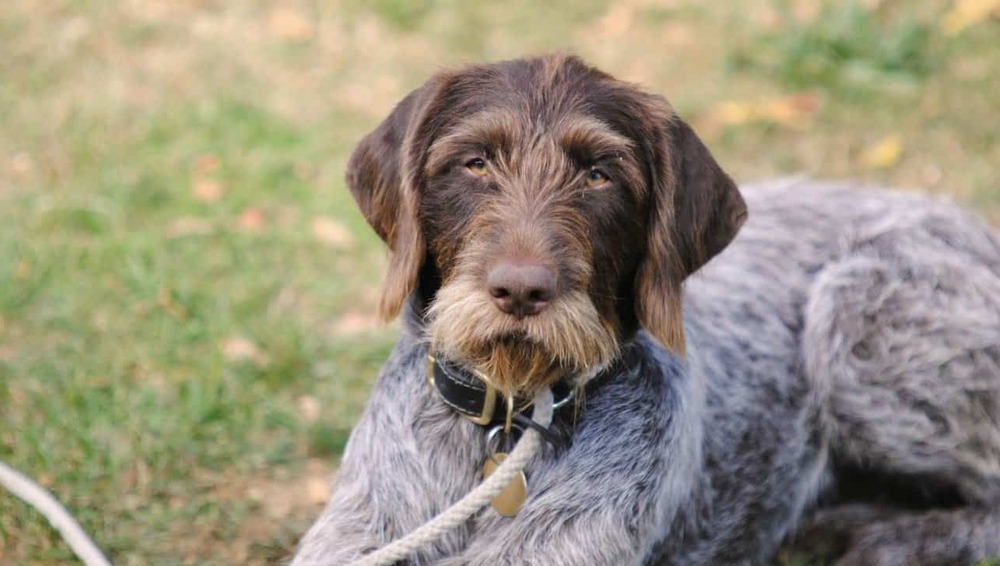
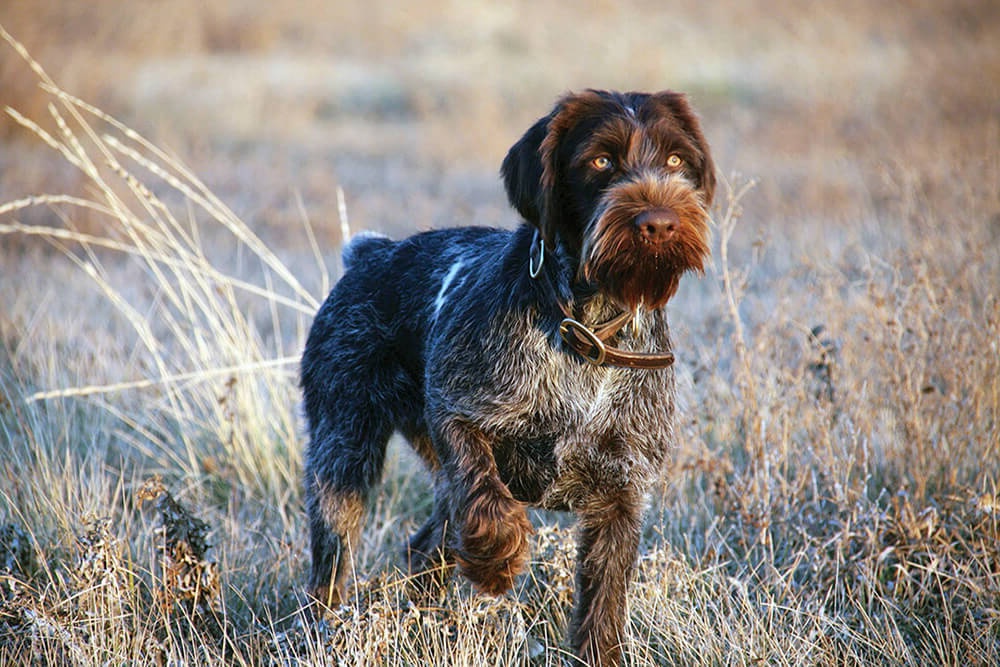
German Wirehaired Pointers are built for endurance rather than ornament. They are medium to large, athletic, and generally “nearly square” in outline, with a deep chest and strong back.2, 4
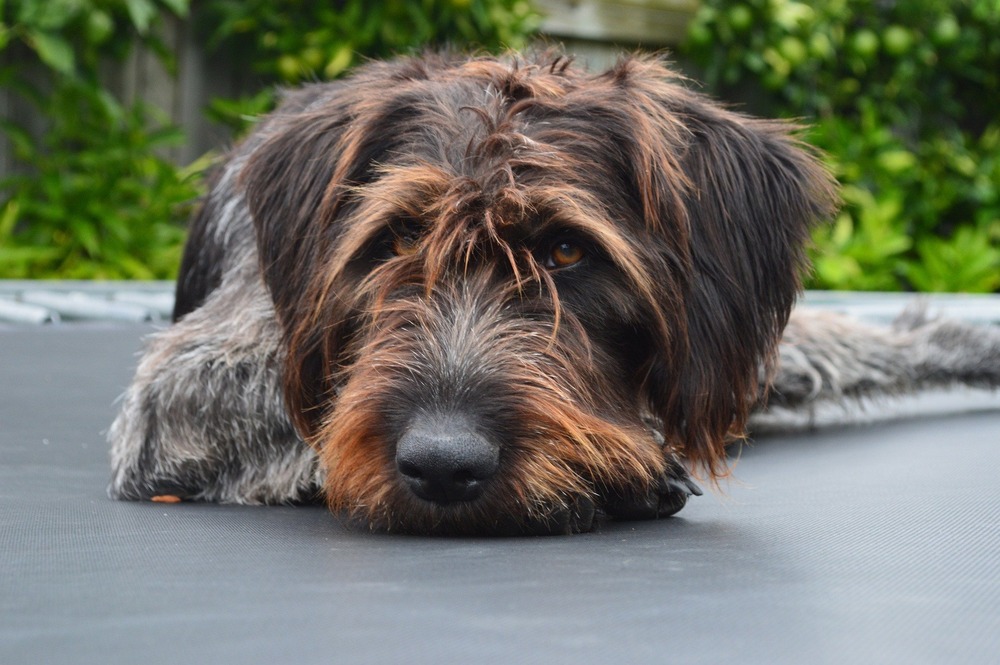
The signature look comes from coat texture and furnishings. The coat should be harsh and wiry with a dense undercoat, offering real protection from cold water, prickly scrub, and rough ground. Eyebrows and a beard are typical, and they are practical, helping shield the face in heavy cover.3, 4
Colour varies by standard, commonly liver and white and solid liver, and some standards also include black and white. In pet homes, you will see plenty of variation across lines and countries, even when dogs are clearly “typey”.3
Temperament in real households
Most German Wirehaired Pointer people recognise the same core mix: alert, energetic, quick to learn, and inclined to stay close to their person when properly engaged. Many are friendly, but some can be a bit reserved with strangers, especially if under-socialised, which can read as watchfulness rather than sociability.4
It helps to think in terms of drives rather than “naughtiness”. A young dog that shadows you through the house, steals socks, patrols the fence line, or fixates on birds is not trying to cause trouble. More often, it is a bright working dog looking for a job and rehearsal.
If you are weighing up the breed, one practical question matters: can you offer a routine where the dog gets to use its body and brain most days? With that in place, they often settle well. Without it, you may find yourself managing boredom behaviours like barking, chewing, and constant pacing.
Children and other pets
With children, success tends to come down to supervision and structure. These dogs can be gentle and tolerant, but their size and enthusiasm can bowl over toddlers, and their play style can be busy. Calm greetings, clear boundaries, and giving the dog a quiet place to retreat to make a noticeable difference.
With other animals, early socialisation matters, and so does management. Many live peacefully with other dogs. Small pets can be more complicated because a pointing dog’s attention can “lock on” to movement. It is not a reason to rule the breed out automatically, but it is a reason to plan introductions carefully and avoid assuming instinct will switch off indoors.
Training that suits the breed
German Wirehaired Pointers usually respond best to training that is clear, consistent, and worth their time. They are intelligent, but they are also practical. If the environment is more rewarding than you are, they will notice.
Positive reinforcement tends to build reliability without unnecessary conflict, particularly for recall, loose lead walking, and calm behaviour around visitors. Harsh corrections often create fallout in sensitive or high-drive dogs, including avoidance, frustration, or a dog that becomes more reactive in exciting environments.
A few habits that help in everyday life:
- Teach calm on purpose, for example a mat settle after exercise, not only when the dog is already tired.
- Use food, toys, and sniffing as rewards, then gradually shift to “real life” reinforcers such as getting to greet a friend or go through a gate.
- Keep training sessions short and frequent, and finish while the dog still wants more.
Exercise and enrichment, beyond “a long walk”
This is a high-energy working breed. A single daily walk, even a decent one, often does not meet the underlying need for varied movement and engagement. Think in layers: aerobic exercise, skill practice, and decompression time.
Activities many German Wirehaired Pointers genuinely enjoy include scent work, tracking games, retrieving, structured off-lead runs in safe areas, and canine sports such as agility. Even ten minutes of sniff-and-search in the garden can take the edge off in a way that pure running sometimes does not.
If you are short on time, aim for one or two high-quality outlets you can do consistently, rather than a rotating plan you cannot maintain. This breed does well with routines that are predictable and mentally satisfying.
Health considerations and lifespan
Most German Wirehaired Pointers are robust dogs, but like many medium to large breeds, orthopaedic issues such as hip dysplasia can occur. Eye conditions are also mentioned in breed discussions, and responsible breeders generally screen and select with health in mind.5, 6
A sensible approach is to plan for:
- Regular veterinary check-ups, including monitoring weight, joints, and dental health.
- Age-appropriate exercise, especially in adolescence when enthusiasm can exceed coordination.
- Keeping the dog in a lean body condition, since excess weight increases strain on joints.
The breed is often described as living around 12 to 14 years, although individuals vary with genetics, lifestyle, and healthcare.2
Coat care, grooming, and seasonal maintenance
The wire coat is practical, but it is not maintenance-free. Regular brushing helps remove debris and prevents tangles in the furnishings, especially the beard and legs.
Many owners use a combination of brushing and occasional hand-stripping or professional grooming to keep coat texture harsh and functional. Over-bathing can soften the coat, so it is usually better to rinse mud off and shampoo only when genuinely needed.
Do not overlook the everyday bits:
- Ear checks, especially after swimming or running through long grass.
- Nail trims, since active dogs can still end up with long nails if they run mostly on soft ground.
- Beard rinses, because water bowls and food can leave the face damp and grubby.
Feeding well for an active pointer
An athletic dog does not automatically need a high-calorie diet, but it does need a balanced one, and portion sizes that match the season and workload. If your dog’s activity drops, the food usually needs to drop too.
A helpful, practical tool is body condition scoring. Veterinary organisations recommend assessing body condition routinely so you can adjust early, not after weight gain is obvious.7
For many households, the simplest feeding approach is:
- Choose a complete and balanced diet appropriate for the dog’s life stage.
- Measure meals (at least loosely) and adjust based on body condition, not just the packet guide.
- Factor treats into the daily total, especially if you train a lot.
About tail docking (an important note for Australian readers)
You may still see German Wirehaired Pointers with docked tails in older photos and overseas breed material. In Australia, cosmetic tail docking has been banned since 2004, with exemptions generally limited to therapeutic reasons and performed by a veterinarian under relevant state and territory laws.8, 9
In practical terms, if you are meeting puppies locally, it is reasonable to expect full tails. If a breeder is offering docked-tail pups, ask questions and seek guidance from your state or territory animal welfare regulator or the RSPCA.
Living with a German Wirehaired Pointer, a quiet reality check
A German Wirehaired Pointer can be a wonderful fit for the right person. They often thrive with owners who enjoy training, spend time outdoors, and like a dog that is present and engaged, not purely decorative.
The main challenge is rarely “difficulty” in the usual sense. It is the mismatch between a dog built for long, complex work and a home life that does not offer enough to do. If you can provide purposeful daily outlets, you are much more likely to see the steadier, softer side of the breed that long-time owners value.
References
- Wikipedia: German Wirehaired Pointer
- Encyclopaedia Britannica: German wirehaired pointer
- The Kennel Club (UK): German Wirehaired Pointer breed standard
- United Kennel Club (UKC): German Wirehaired Pointer breed standard
- Orthopedic Foundation for Animals (OFA): Breed statistics and health testing
- Canine Inherited Disorders Database (CIDD): Inherited conditions in dogs
- WSAVA: Global Nutrition Guidelines (body condition scoring tools)
- RSPCA Australia Knowledgebase: Why do some dogs still have docked tails?
- RSPCA Australia Knowledgebase: Is the tail docking of dogs legal in Australia?