

You might come across the Grand Anglo-Français Blanc et Orange after noticing a photo of a striking white-and-orange hound, or after meeting a dog whose nose seems to switch on the moment it hits grass. People often assume a dog like this is simply a bigger Beagle type, friendly and sporty, and then wonder why the same dog can feel suddenly deaf when a scent trail appears.
This breed sits firmly in the working scenthound world. It was shaped for long days, steady pace, and following odour with commitment. That background matters in everyday life because it influences everything from recall training to how much space the dog needs to feel settled.
For the right home, the Grand Anglo-Français Blanc et Orange can be a grounded, social companion. It just helps to meet the dog where it is, a pack hound with a job built into its body and brain.
- Breed category: Scenthound (large hound)
- Country of origin: France
- Typical height: About 60 to 70 cm at the withers
- Typical weight: Often around 28 to 35 kg (varies by build and conditioning)
- Life expectancy: Commonly around 10 to 12 years
- Coat: Short, fairly dense
- Colour: White with orange (or lemon) markings, orange should not tend towards red
- Exercise needs: High, best with daily, meaningful activity
- Grooming: Low to moderate
Where the breed comes from, and what it was built to do
The Grand Anglo-Français Blanc et Orange is recognised by the Fédération Cynologique Internationale (FCI) as a large scenthound (Group 6).1 It was developed in France for hunting with hounds, typically as part of a pack, where endurance and a reliable nose matter more than flashy speed.
Breed histories are often simplified online, but the consistent theme is that it sits within the Anglo-French hound tradition, developed by combining French hound types with English Foxhound influence to produce a steady, athletic hunting dog.1, 2 In practical terms, that mix tends to show up as stamina over short bursts, a strong tendency to track, and comfort working around other dogs.
Why this heritage shows up in pet homes
Even when kept as a companion, many individuals will still behave like a dog that expects to move, follow information through scent, and check in with its people on its own terms. That is not disobedience so much as prioritisation. A scent hound can be highly trainable, but it often learns best when the training feels relevant and the environment is set up for success.
Appearance and everyday care implications
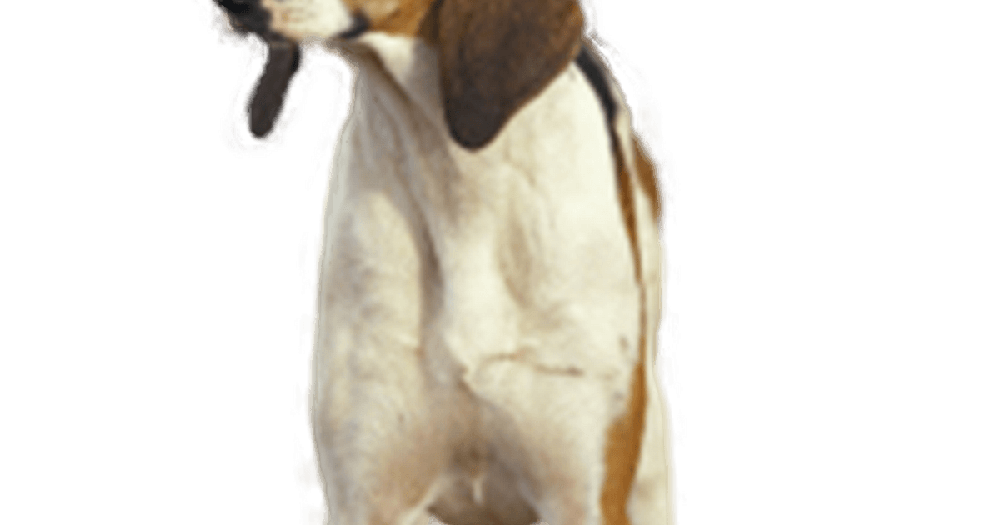
The breed is a tall, powerful hound with a short coat and long, pendant ears. The white-and-orange markings are part of the official description, with the note that orange should not appear red.1 These details might sound cosmetic, but they hint at what owners tend to notice day to day: a dog designed to cover ground, with ears that need sensible hygiene, and a coat that is easy to maintain but still sheds.
A short coat usually means mud and burrs are simpler to deal with than in long-coated breeds. On the other hand, a big, active hound can bring plenty of the outdoors indoors, especially in wet weather. A routine of quick checks after walks, plus a weekly brush, is often enough for most households.
Temperament, sociability, and what to expect at home

Many Anglo-French pack hounds are described as being manageable in a kennel and comfortable around other dogs, which fits their traditional use.1 In a home setting, that often translates to a dog that appreciates company, prefers not to be isolated for long periods, and can be socially fluent with other dogs when introduced thoughtfully.
With children, the important point is less about a fixed breed label and more about management. A large, energetic hound can knock over a small child without meaning harm, and excitement can escalate quickly if the dog has not learnt calm routines. The best matches tend to be homes that can offer steady boundaries and daily outlet, rather than expecting the dog to self-entertain quietly.
Small pets and wildlife
Because this is a hunting scenthound, it is wise to assume there may be chase behaviour, especially with cats, poultry, and pocket pets. Some individuals live well with smaller animals, but it usually takes careful introductions, secure containment, and ongoing supervision, particularly outdoors.
Training a scent hound without getting into a battle of wills
Training tends to go better when it respects what the dog is built to do. If recall falls apart the moment the dog finds a scent, the fix is rarely louder commands. Instead, think in layers: teach skills in low-distraction environments, pay well for check-ins, and use management tools that keep everyone safe while learning is still in progress.
Practical approaches that often suit scenthounds include:
- Rewarding orientation, paying the dog for looking back to you on walks.
- Using long lines in open areas until recall is genuinely reliable.
- Providing legal outlets like sniffy walks, tracking games, and structured scent work so the dog does not have to invent its own entertainment.
- Keeping sessions short, varied, and frequent, rather than drilling the same cue until the dog switches off.
Exercise is still essential, but it is worth avoiding the trap of trying to run the dog into calmness. Many working hounds simply get fitter. The more sustainable goal is a balance of movement, sniffing, training, and downtime, alongside safe routines around meals and activity.6, 7
Exercise needs, space, and daily rhythm
This is not an ideal apartment breed for most households. A secure yard helps, but it is not a substitute for proper exercise. Many hounds will pace or vocalise if their day lacks purpose, particularly if they are young and under-stimulated.
General exercise guidance from animal welfare sources highlights gradual increases for young dogs, caution around overdoing forced exercise, and sensible planning in hot weather.6, 7 For a big scenthound, that usually looks like one longer outing plus one shorter outing most days, with extra sniffing time built in.
Safety note on containment
A keen nose can lead a hound a long way from home. Good fencing, secure gates, and a habit of using a lead until recall is proven are not pessimism, they are simply realistic risk management for a tracking breed.
Health considerations, with a sensible level of caution
No breed is guaranteed to have or avoid specific conditions, and there is limited breed-specific health data published in English for this rare hound. Still, it is reasonable to watch for issues commonly seen in large, athletic dogs and in dogs with pendant ears.
Hips and joint health
Hip dysplasia is a developmental condition seen most often in large breeds, involving hip joint laxity and potential progression to arthritis and pain.8 If you are considering a puppy, ask what screening the breeder does. If you already have an adult dog, keep an eye on signs like stiffness after rest, reluctance to jump, or hind-end weakness, and discuss early management with your vet.
Ears and recurrent infections
Floppy-eared dogs can be more prone to ear problems, especially if they swim, have allergies, or have a history of recurrent infections. Cornell University notes that healthy ears do not necessarily need routine cleaning, and that over-cleaning can irritate the ear. Cleaning is often most relevant when debris is present or after ears get wet.9 If you notice redness, odour, head shaking, or discharge, it is time for a vet check.
Grooming, coat care, and the small routines that prevent big problems
The short coat generally needs only occasional brushing, with more attention during heavier shedding periods. Focus on the practical basics:
- Brush weekly to remove loose hair and check skin.
- Trim nails as needed, especially if the dog does not wear them down naturally.
- Check ears regularly, and dry them well after swimming or bathing.9
- Maintain dental care, as dental disease can affect overall health in any breed.
These routines are not about perfection. They are about noticing small changes early, which is where owners have the most power to help.
Feeding and weight management for an active, big-framed dog
Owners often focus on ingredient lists, but the World Small Animal Veterinary Association (WSAVA) points out that ingredient lists can be misleading, and encourages choosing foods based on stronger quality indicators, including manufacturer expertise and nutritional adequacy.5
For a breed that can be both active and food-motivated, weight management matters. Extra body weight can worsen joint strain, particularly if a dog is predisposed to hip issues.8 Your vet can help you choose a feeding plan that matches the dog in front of you, not just the numbers on the bag.
Living with a Grand Anglo-Français Blanc et Orange, the good fit matters
If your idea of a good day includes long walks, time outdoors, and a dog that enjoys following the world through scent, this breed can make a lot of sense. If you need a dog that stays close off-lead by default, or is content with short strolls and a small courtyard, it can be a frustrating match.
The most rewarding part of living with a working scenthound is often the same thing that challenges people at first: they notice everything. When you provide structure and outlets, that sensitivity becomes a kind of quiet competence, a dog that moves through the world with purpose and, in the right hands, learns to bring that purpose back to you.
References
- Fédération Cynologique Internationale (FCI): Grand Anglo-Français Blanc et Orange (No. 324)
- Wikipedia: Grand Anglo-Français Blanc et Orange (overview and history summary)
- Société de Vénerie: Le Grand Anglo-Français Blanc et Orange (breed background and FCI standard references)
- PETS.fr: Grand Anglo-Français Blanc et Orange (general breed information)
- WSAVA: Global Nutrition Guidelines (pet food selection guidance)
- RSPCA Pet Insurance (Australia): Tips for exercising your dog
- RSPCA Knowledgebase: How should I exercise my puppy?
- American College of Veterinary Surgeons (ACVS): Canine hip dysplasia
- Cornell University College of Veterinary Medicine: How to clean your dog’s ears